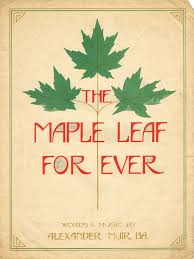
Over the past couple of months we have been breathing a lot of smoky air from our burning neighbor to the north. Alas, we’re back to those pesky facemasks!
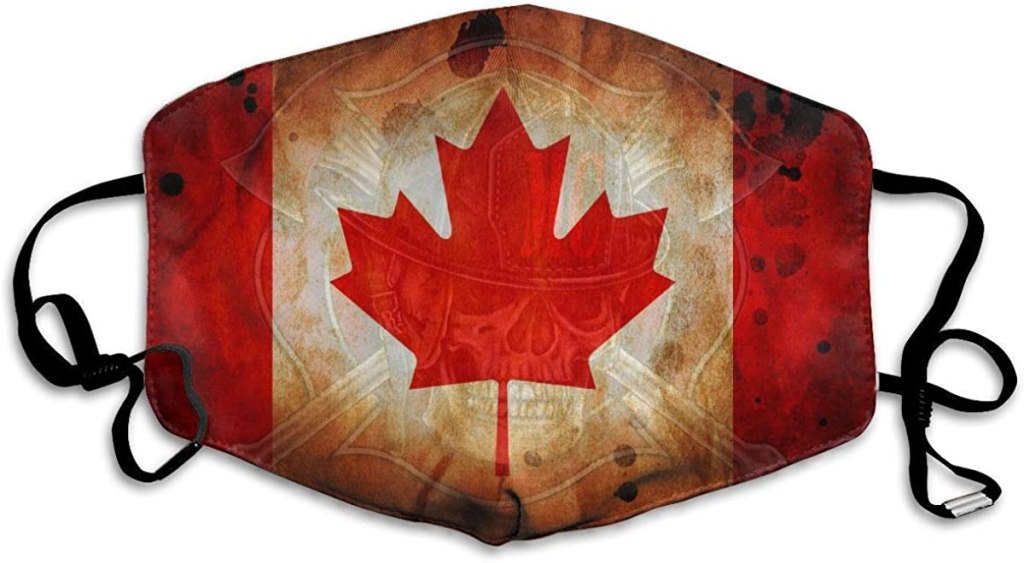
Ah, the sad loss of so many maple leaves and pine needles! Still I am reminded that over the past four or five years a lot of frustrated folks have contemplated “escaping” from the good old USA to what they believe to be safer, saner, or at least more comfortable havens in other lands. One of the top choices has, of course, always been our neighbor to the north, Canada. Maybe with the forest fires that notion will be snuffed out a bit but, why not direct a musical muse in that direction? Besides, who doesn’t like Mounties!
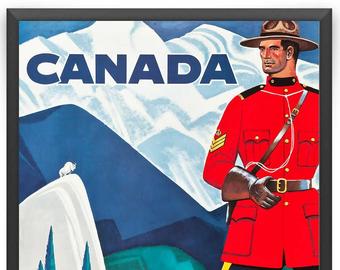
Or poutine!

Canada has long been an attractive refuge from the varieties and vagaries of US politics and policies. For example, there were the Loyalists of the American Revolution and the war and draft objectors of the Vietnam era. And the Prohibition era in the USA was another factor driving thirsty folks to head up north.


Click or tap on the triangle in the next image to join the exodus!
Moving on . . . Canada has long been known for its variety of music from the country/cowboy songs of the Rocky Mountain West to the Celtic and Acadian music of the maritime east.
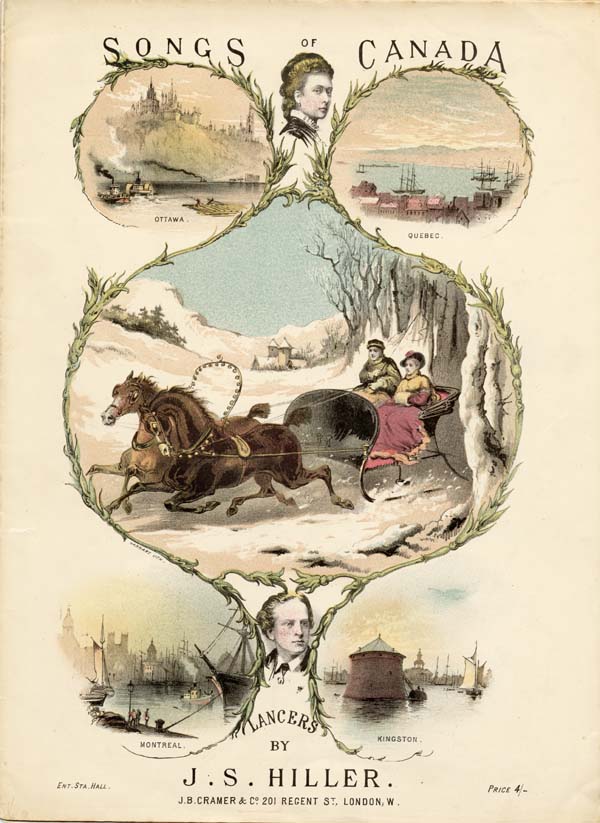
It has also been strongly influenced both by its neighbor to the south—us!—and its motherlands to the east—the British Isles and France and the rest of Europe.
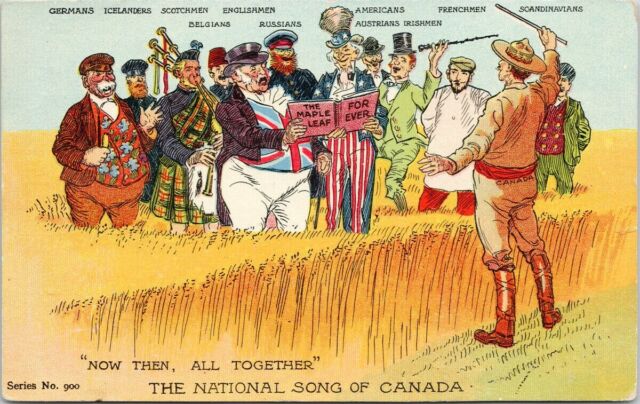
Needless to say, the music of Canada is way, way too vast—like the country itself—to be explored by my simple form of musing. But, soldier on I must!

Just a quick tour of some musical place names . . .

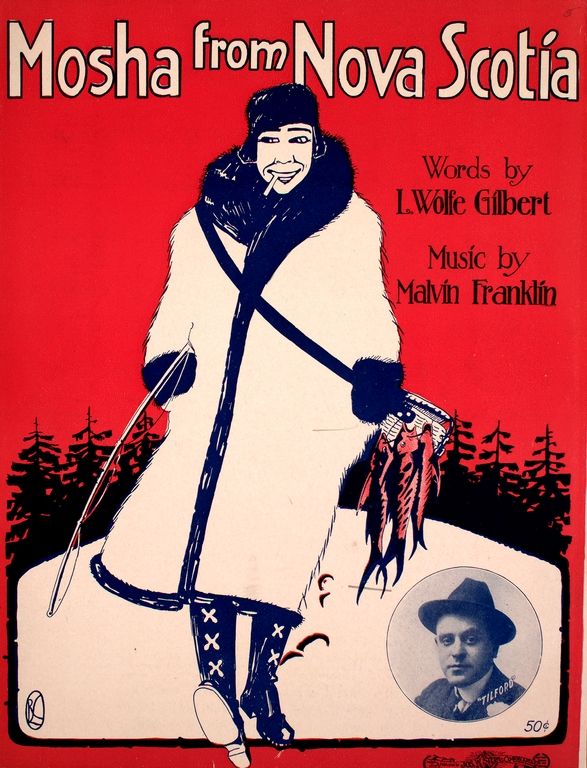

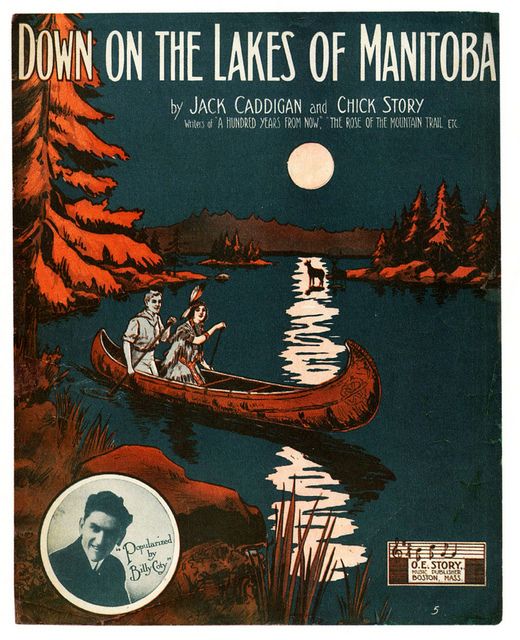
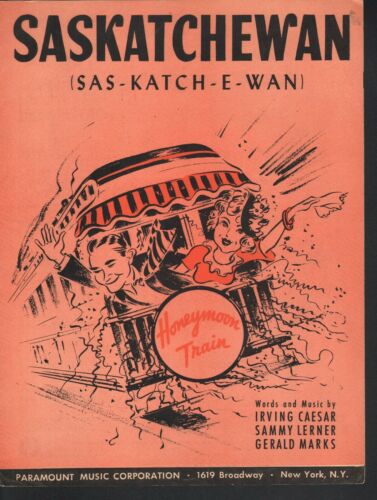
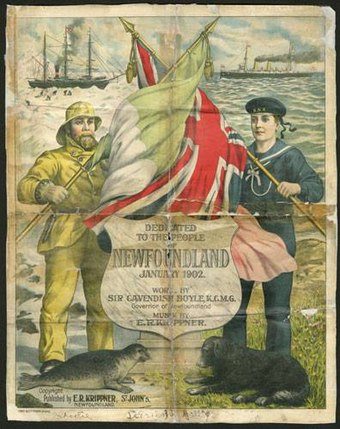
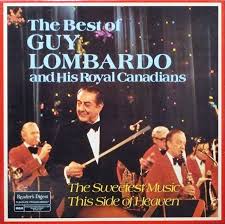
One can see that the music of Canada is not just Guy Lombardo and his Royal Canadians,
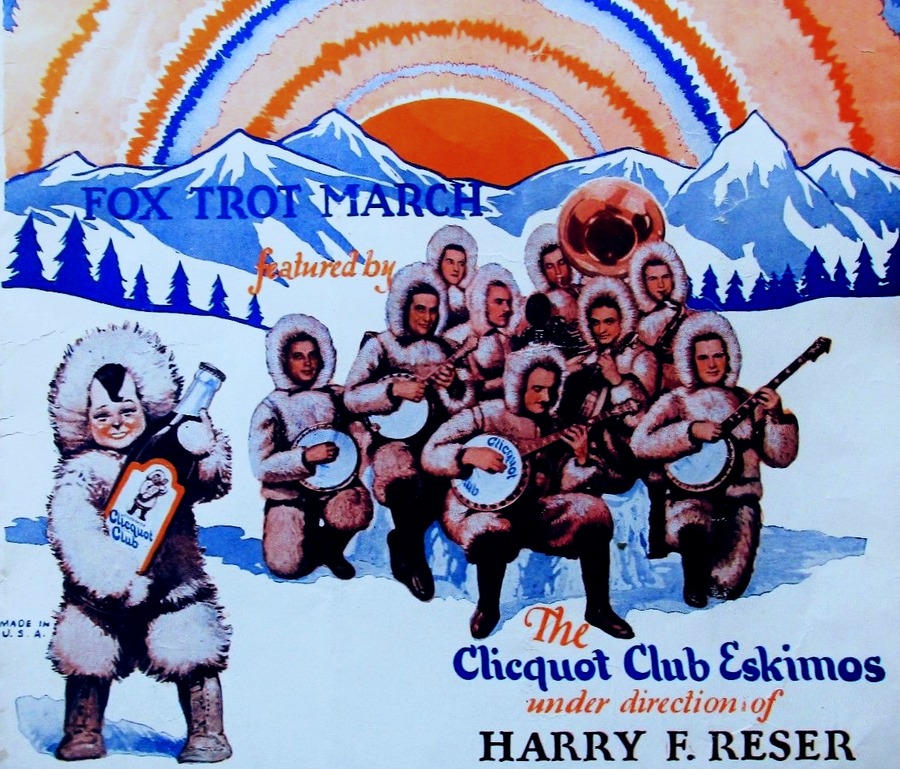
nor Harry Reser and his Cliquot Club Eskimos.
But I will limit myself, gentle readers, and touch on just one theme that has long been a fascination to me—the ragtime era rush to the frozen gold fields of the Klondike and the Yukon. Brrrrrrrr! A good musical journey for this steamy July here in New England.

But first, a lively ragtime tune to get us warmed up during this peek at freezing weather.
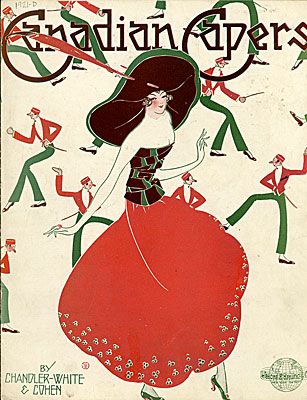
Here’s a showy version of this song by that great pianist from just a bit south of the Canadian border (Wisconsin, no less). Click or tap on the triangle in the next image or link for a look and listen.
Just as in the USA, Canadians in the late 19th and early 20th centuries had a fascination with the “piano in the parlor” and the popular tunes of those early years clearly were “ragtime.” We could also call it “gold rush” music!
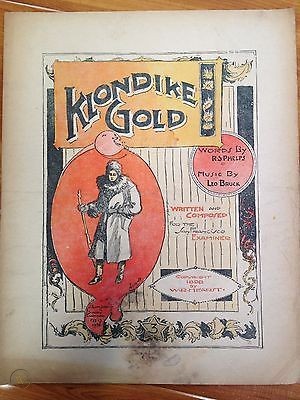
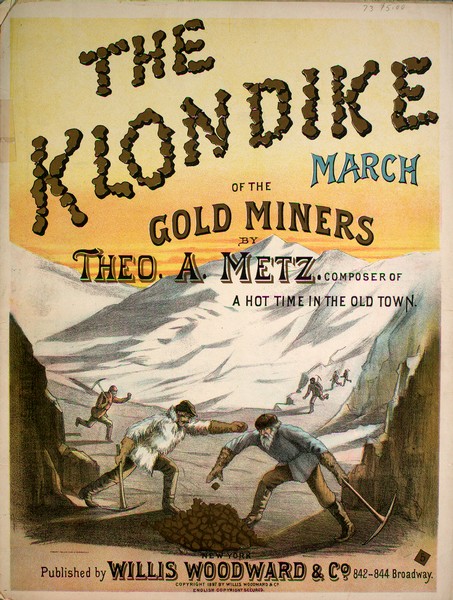

The late, late 19th century brought thousands of seekers (if not finders) of gold to the wilds of Northwest Canada and Alaska. And, needless to say, songwriters on both sides of the border recognized these “sourdoughs” and their travails.

Tap or click on the triangle in the next image or link to hear this ragtime nugget!
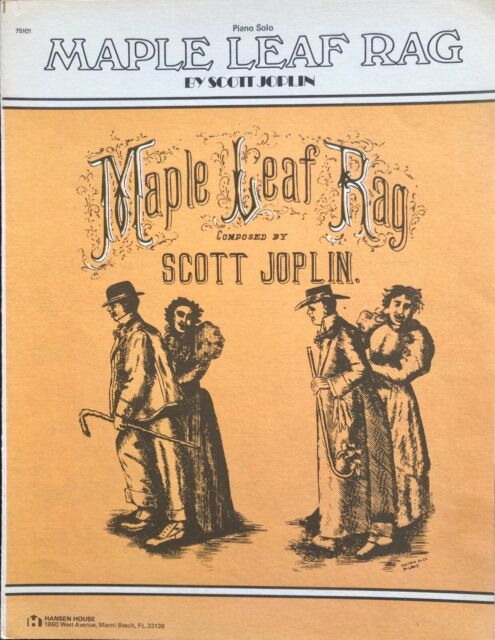
Care to try “The Maple Leaf Rag,” on the banjo anyone? Scott Joplin was, of course, not Canadian but this ragtime tune certainly has some Canadian cred! Tap or click on the triangle in the next image or link to hear this on a vintage four-string plectrum banjo. A ragtime treat as good as poutine!
But, the greatest “song” writer of the gold rush days didn’t actually compose songs as we think of them but poetry; or, as he insisted it be called, “verse.”
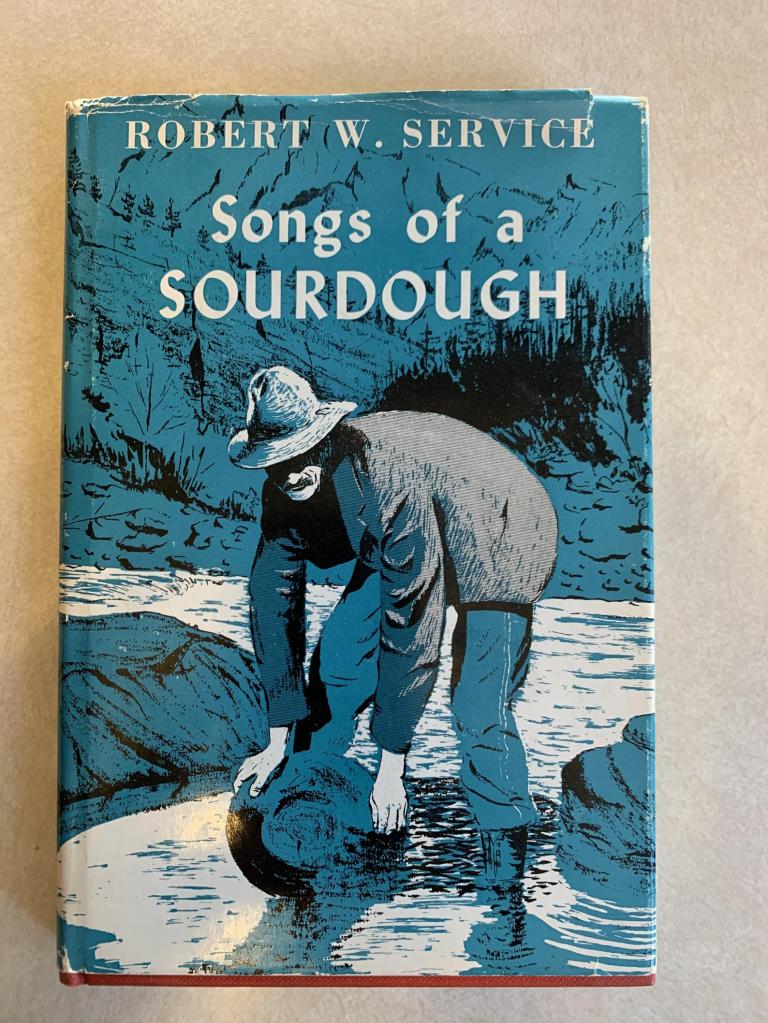
Born in England of Scottish descent, Robert W. Service (1874-1958) was a bank clerk by trade, but spent long periods travelling in Western America and Canada, often in some poverty. When his bank sent him to the Yukon, he was inspired by tales of the Gold Rush and began to dabble in writing verse based on what he saw and learned.
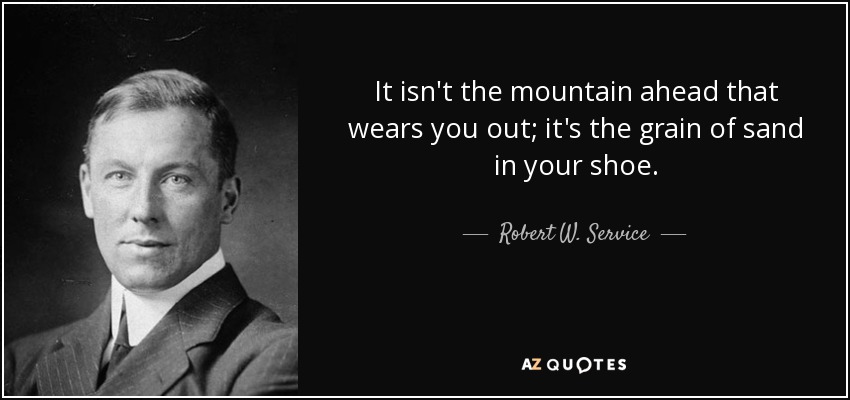
Despite having no actual experience of gold mining, he showed remarkable authenticity in his use of vivid “miner’s” language and he enjoyed immediate and huge popularity. Regarded by many as “the Kipling of Canada,” he wrote dozens of the most popular, most published, and most recited “story songs” of his day.
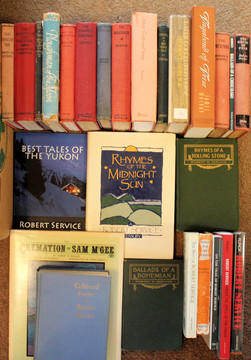
Click or tap on the triangle in the next image or link for what is probably his best-known “song,” and one that touches on the theme of ragtime music. Sorry no musical accompaniment with this one, but it’s worth the time to both read and hear his verse.
Now for another look, this time with some really nice guitar and old-time banjo, here is a more modern take on the times and tragedies of the Gold Rush days. Tap or click on the triangle in the next image or link to give a listen and look to this one.
So, what we have when we think of Canada is folk music, music hall music, vaudeville music, popular music, and—yes—parade music! Tap or click on the triangle in the next image to see the sharp contrast of discipline and demeanor between American and Canadian soldiers in this scene from that chestnut of a World War II movie made in 1968 “The Devil’s Brigade.
And, of course, we have to wind up this rambling musing with a version of–what else?–“Oh Canada.” Click or tap on the next image or link for a look and listen to Canada’s National Anthem.
So, stay safe, stay as cool or warm as need be,

stay sequestered, stay masked with all that maple leaf smoke still in the air . . .

And let’s stay in our own countries–as long as we can and want!

Or not! It’s OK to entertain the though as long as you STAY TUNED!


 NOHOBANJO OF NORTHAMPTON, AND NOW EASTHAMPTON, "MUSICAL MUSINGS"