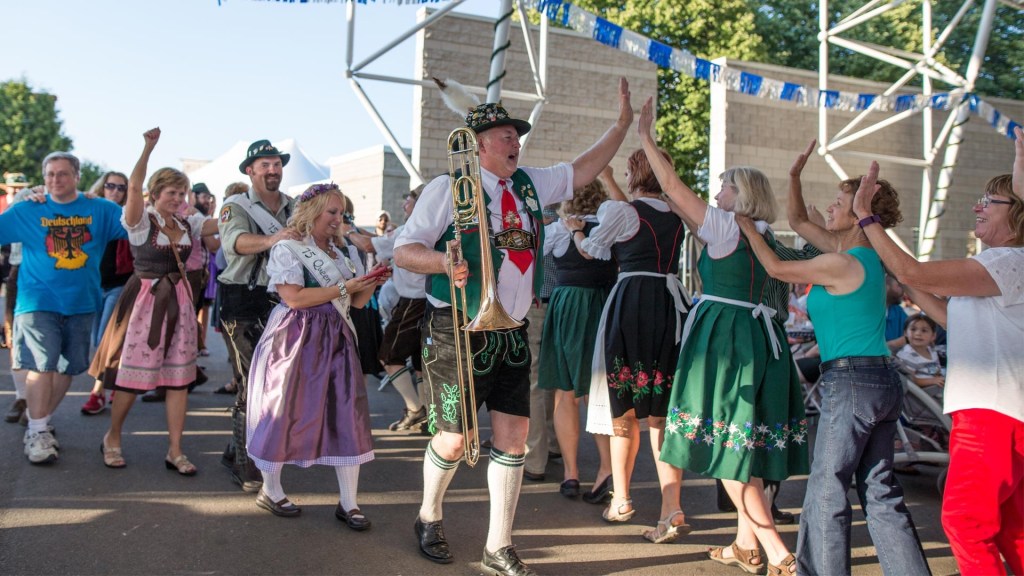
This weekend Alison and I are hosting a big family get-together. Daughters, sons, partners, and grandkids from Boston, Oregon, and Milwaukee are heading into town. Many songs from these places are worth a muse but, just for fun, I’m going to go with Milwaukee!

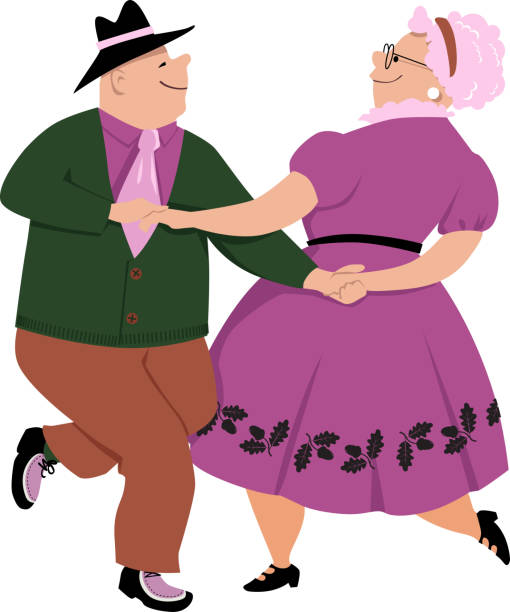
So, gentle readers, just pop a brewski, sit back, and go along with the show. Or, better still, head to the dance floor in an oom-pa, oom-pa, oom-pa “Polka Mood!”
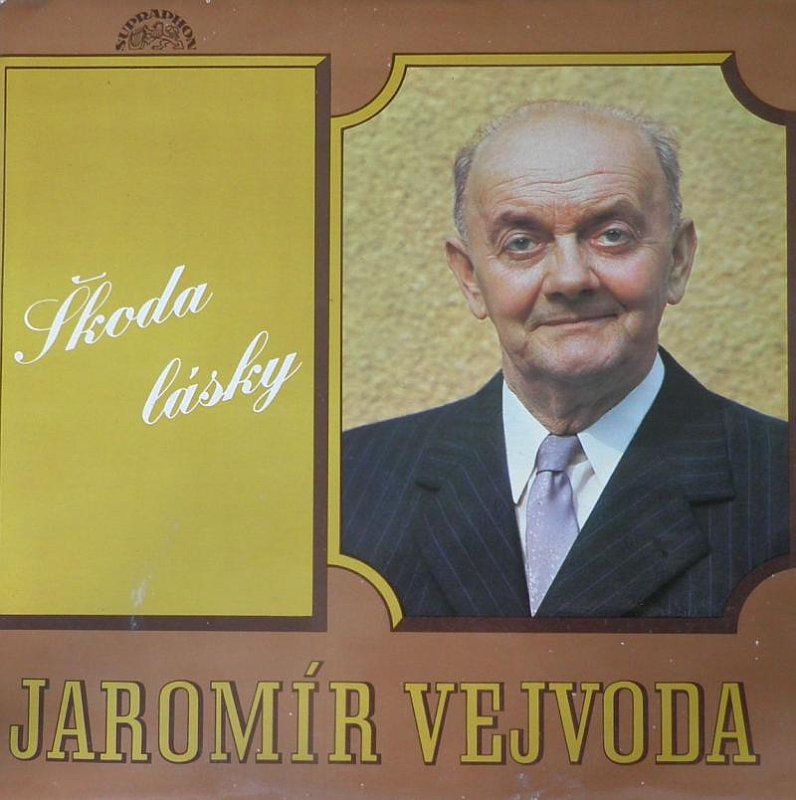
The “Beer Barrel Polka“, also known as “Roll Out the Barrel,” is a song that became popular worldwide during Word War II. The original music was composed by the Czechoslovakian classical musician Jaromir Vejyoda (1902-1988) in 1927 as part of the score for a Czech movie comedy titled: “Skoda Lasky,” roughly translated as “the shame of a woman who jilts a man.” The movie didn’t even mention beer! Who knew?
Click or tap on the triangle in the next image for a classical interpretation of Vejvoda’s song. Let this week’s earworm begin!
The catchy polka tune became a hit with dance bands around the world after 1934 when Czech and English lyrics about happy dancers in a beer garden (nothing to do with shameful ladies!) were added. And, in 1939, a recording of “Beer Barrel Polka” rose to number one on the popular American radio program “The Hit Parade.” Do any of you gentle readers remember this Sunday night radio staple?
Anyway, the popularity and rapid, world-wide spread of the song was probably due to the occupation of Czechoslovakia by Nazi Germany and the subsequent diaspora of thousands of Czechs to other parts of the world.

Although the times were trying, they carried this happy polka tune in their hearts.
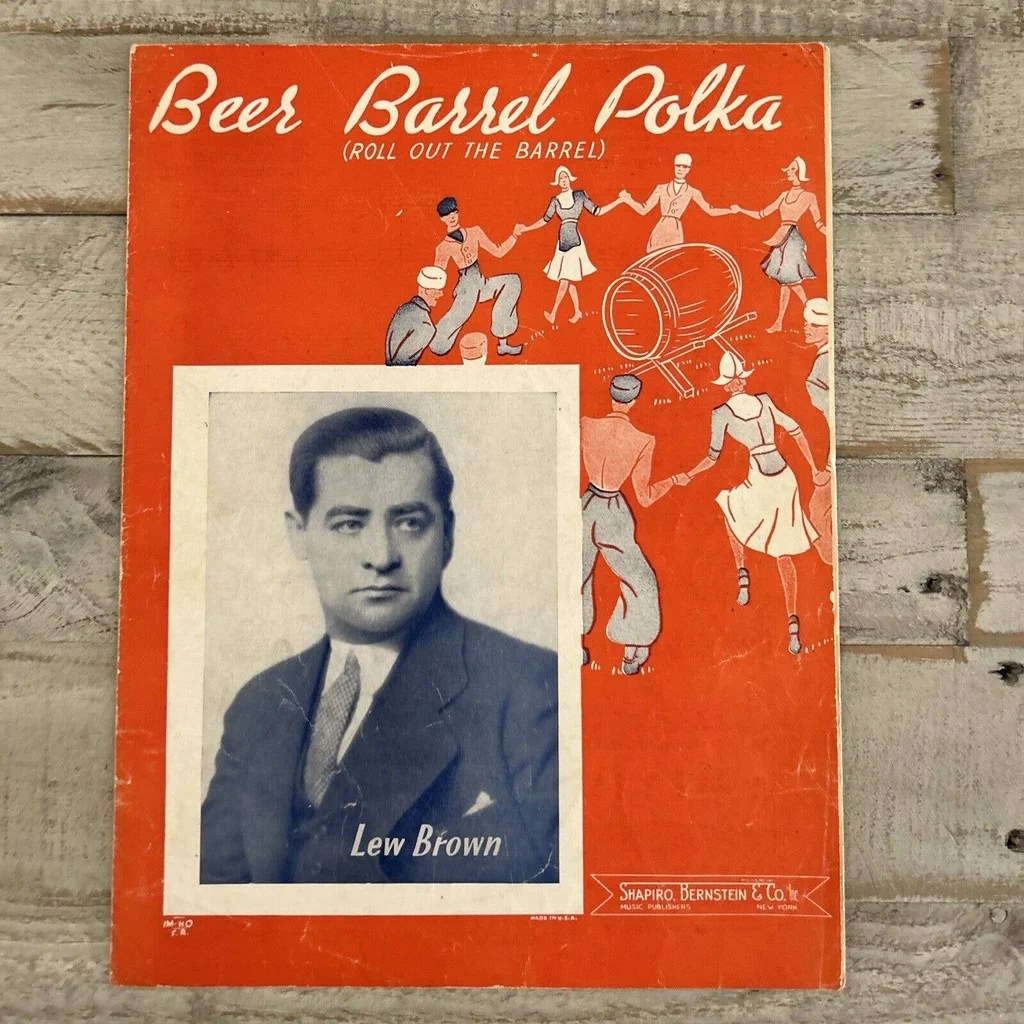
The English lyrics for our song were written by Lew Brown (1893-1958), a Jewish, Russian-born American bandleader and songwriter of Tin Pan Alley hits such as “Button Up Your Overcoat,” “Don’t Sit Under the Apple Tree,” and “Life is just a Bowl of Cherries.” Wladimir Timm (1885-1958), another lyricist, collaborated and translated the lyrics into his native Czech. Meanwhile, the song was recorded and played by many, many others during the war years including the Andrews Sisters, the Glen Miller Orchestra, and Benny Goodman.
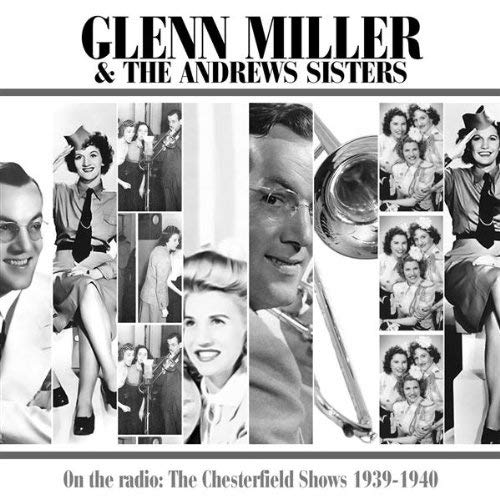
During World War II, versions in many other languages were created and the song was popular among soldiers and their sweethearts regardless of their allegiances.

It was claimed many times that the song was written in the country where it had just become a hit, and its original composer was not widely known until after the war. It was even popular in Germany until it was banned after Hitler was made aware of its Czech, not German, origin and Jewish-American lyrics. Verboten!
Click or tap on the triangle in the next image for a favorite wartime version.
Anyway, for those of you who are interested in the nuances of language, the term “terrara,” as found in the song, is roughly translated as “a source of pride–something to be cheered and to drink to.” Now we know!
The “Beer Barrel Polka” soon became multi-ethnic Milwaukee’s own. It resonated with the city’s many breweries and polka dancing immigrant generations who came from every European country plus a few dozen other places around the world.
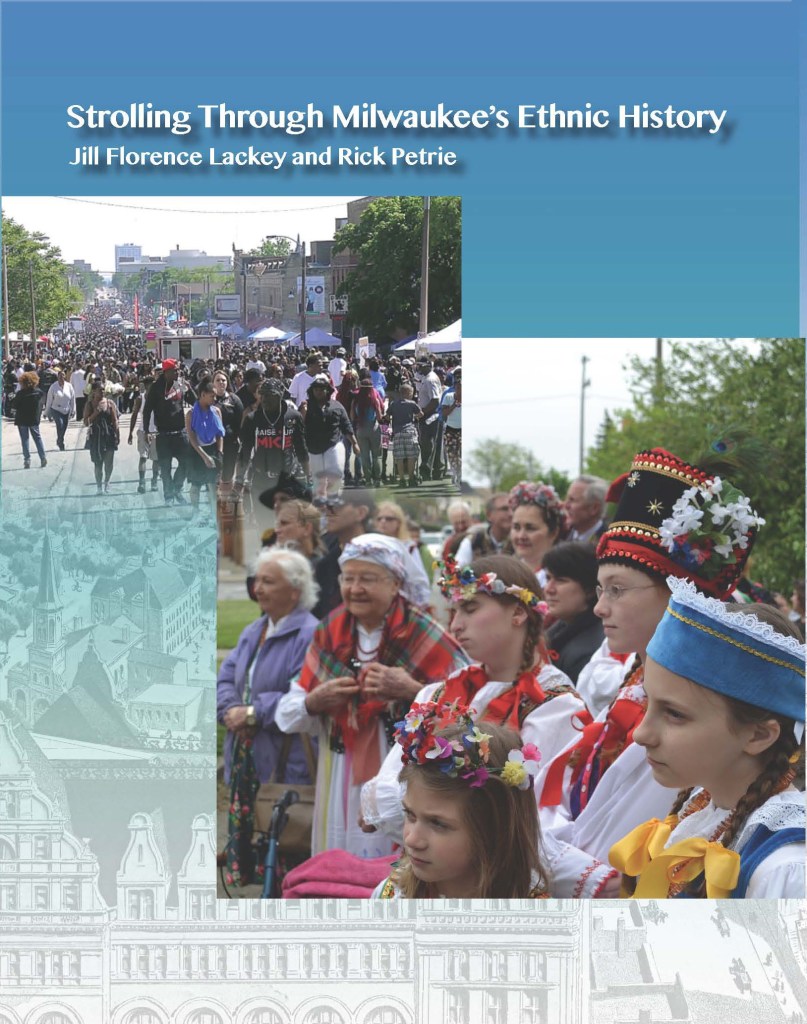
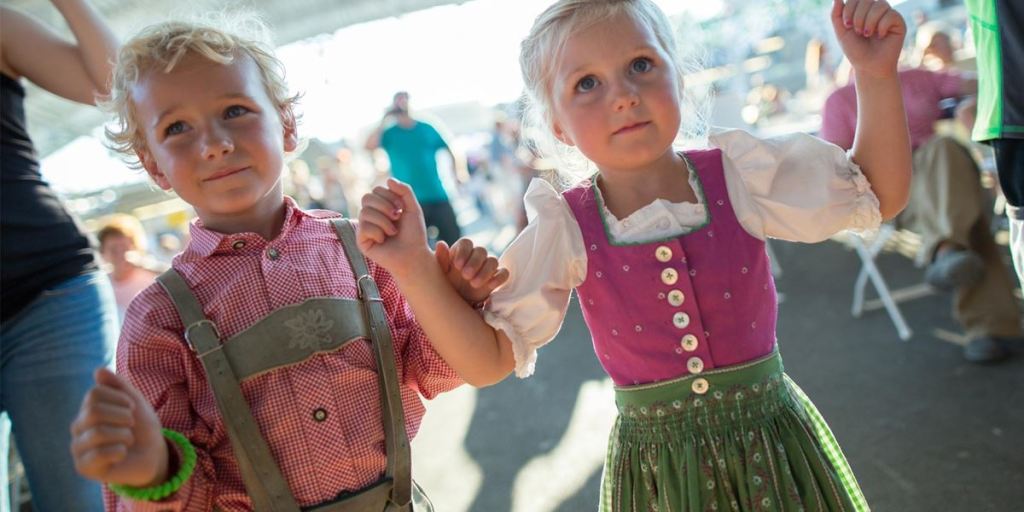
I understand it’s taught in kindergarten in that “great city on a great lake.” Why not? After all, Milwaukee is the city that made beer famous–so they say!
The Frankie Yankovic polka band version of “Beer Barrel . . .” is played during the 7th inning stretch at every Milwaukee Brewers baseball game. It also became a standard at Green Bay Packers and University of Wisconsin football games.
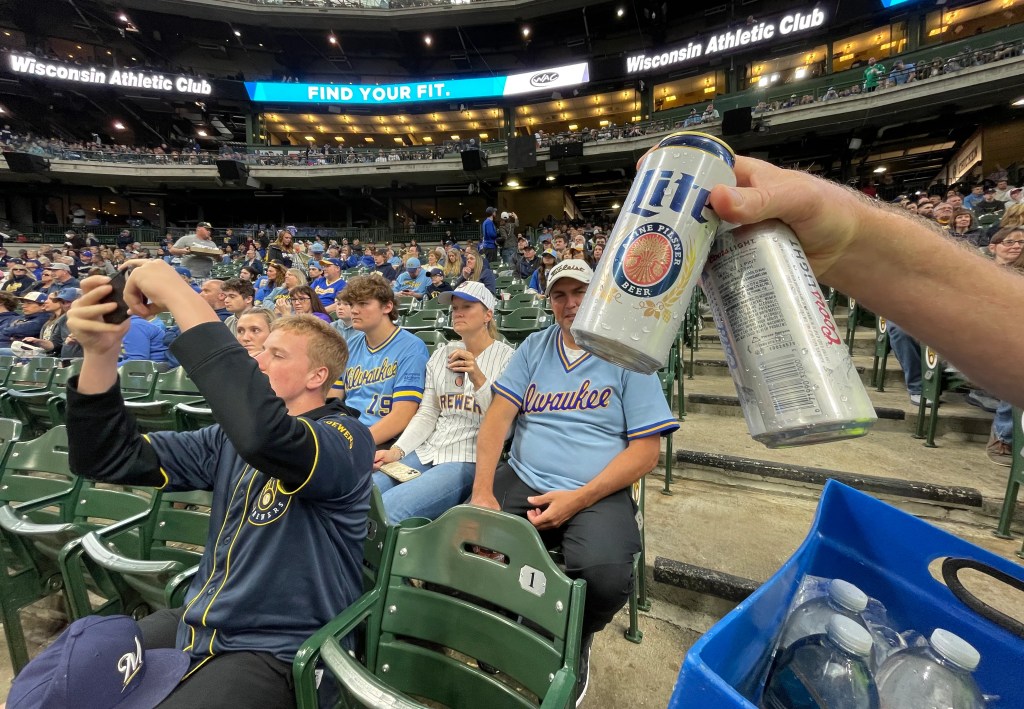
So, shout “gimmie anuder brewski” to the vender in the stands and join in by tapping the triangle in the next image.
Here it is again with those “Beer Barrel . . .” musical essentials–accordions and dancers. Remember these guys? Click or tap on the triangle in the next image for a look and listen.
Needless to say, having lived and worked in Milwaukee and Wisconsin for quite a few years, I have absorbed some of the cultural, historical, and gastronomic highlights—namely beer, brats, cheese, . . .

. . . brandy,

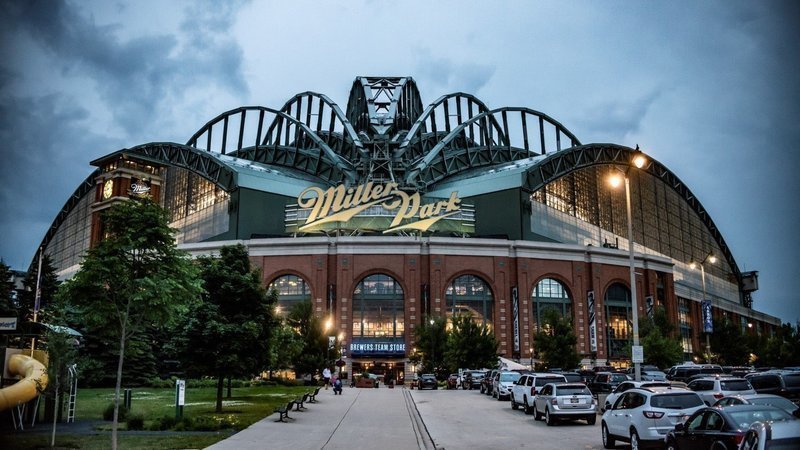
. . . and baseball with the Brewers . . .
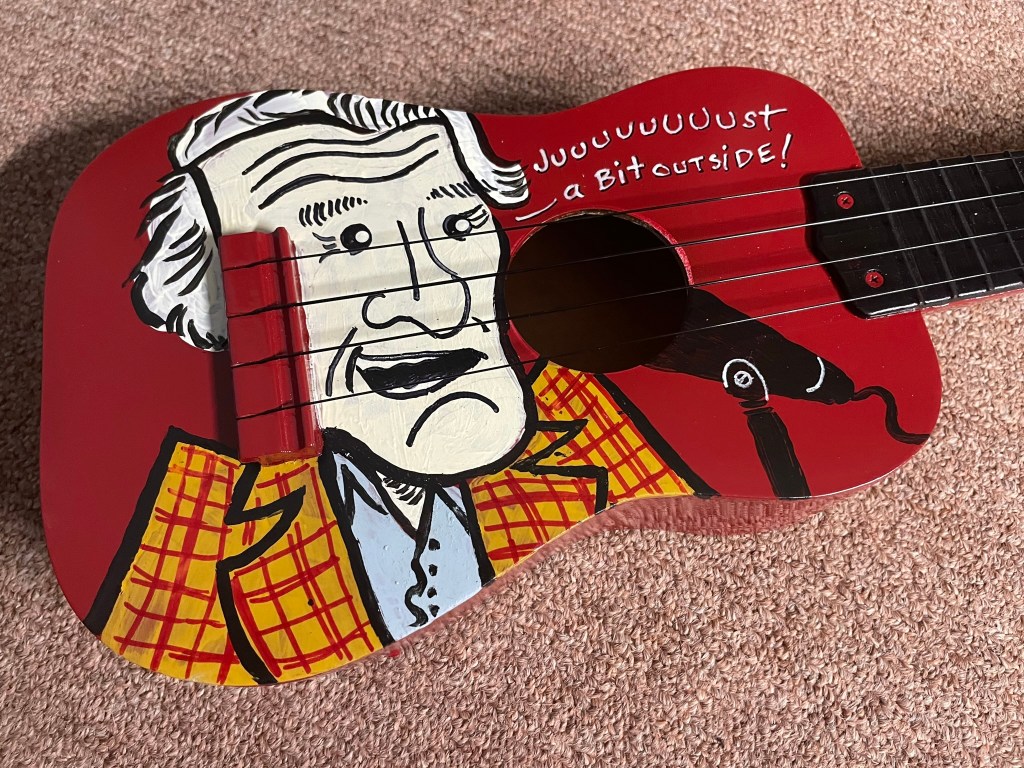
. . . and their famous movie actor/radio announcer/former player Bob Uecker. From my collection a Ueckerlele!
The Milwaukee downtown is booming, the lakefront and coastline looks as good as New England’s, and Lake Michigan’s waters do have a couple of advantages.

There are also some local icons of American pop-culture!


Back to our song . . . For a real musical hoot, click or tap on the triangle in the next image for a version by a local boy who made good!
And to assure that our well brewed earworm is fully implanted, click or tap on the triangle in the next image . . .
By the way, the phrase “Ya der, hey!” is Milwaukee-ese for what here in New England would be “I comprehend and concur with unrestrained enthusiasm.”)

Try to shake that oom-pa, oom-pa, 00m-pa earworm, but STAY TUNED!

 NOHOBANJO OF NORTHAMPTON, AND NOW EASTHAMPTON, "MUSICAL MUSINGS"