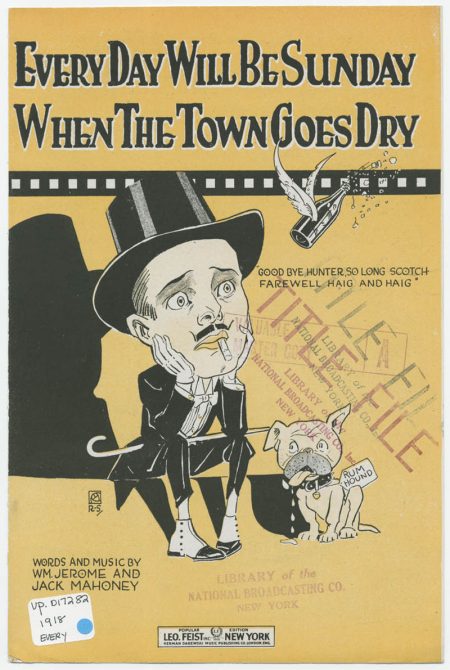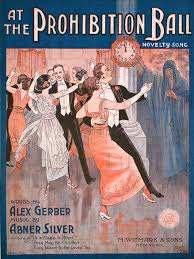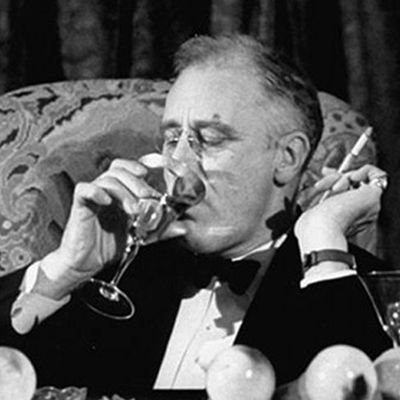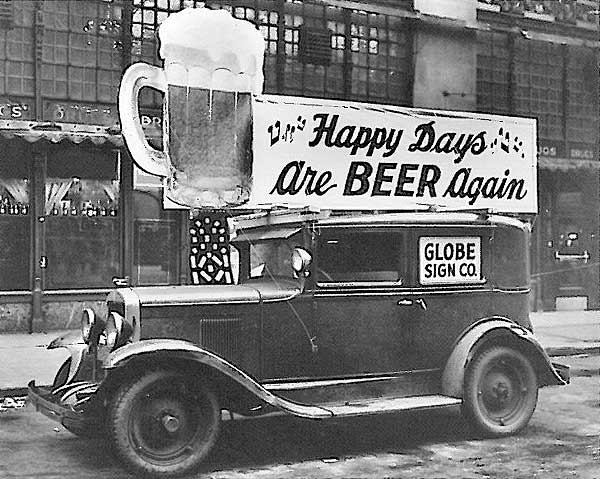
Another Musical Musing, 16 February 2024–“AFRICAN-AMERICAN SPIRITUALS, A Gift to the World”

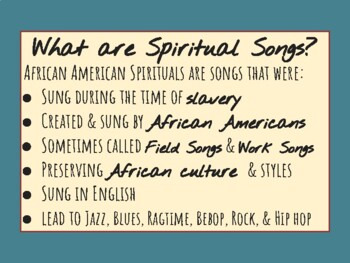
Most of the songbooks available to us today are dotted with beautiful, traditional songs identified not by any named composer or lyricist but simply as “African-American Spiritual.”  Most of these we have listened to, sung, and played nearly all of our lives.  Needless to say, there is a good backstory to all this—one we should know. 

While these songs originated in and were common throughout the American South during slavery days, they were virtually unknown in the American North until the late 19th century. 
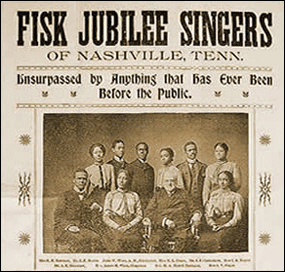
Credit for telling this “spiritual story” goes to a group of students and faculty of Fisk College, a historically African-American school in Nashville, Tennessee, who “took their music on the road” with the hope of raising funds for their cash-strapped school.

This was back in 1871 and their early repertoire consisted mostly of traditional spirituals—songs handed down orally, not from published hymn books, and sung a cappella.  Their original tour took them along the route of the historic Underground Railroad and eventually they toured in England and Europe. 
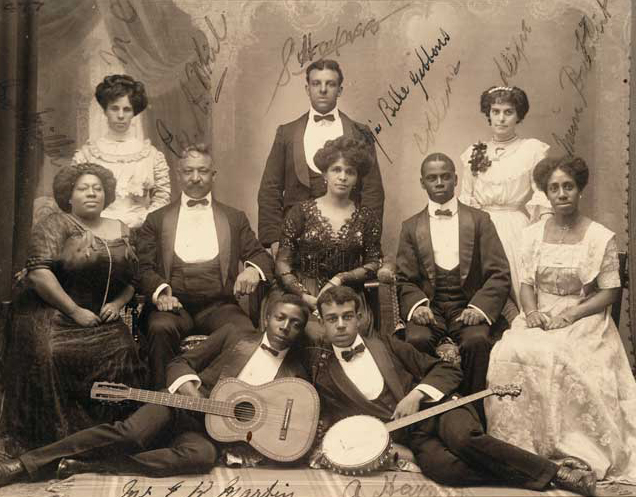
Fisk College was founded after the end of the Civil War to educate freedmen and other young African-Americans.  After its first five years, however, the university was facing serious financial difficulty. To avert bankruptcy and closure, Fisk’s treasurer and music director, George L. White,...

. . . a white Northern missionary dedicated to music and proving African-Americans were the intellectual equals of whites, gathered a nine-member student chorus, both men and women, to go on a singing tour to earn money for the university. The group of students, consisting of two quartets and a pianist, started their tour under White’s direction.

Taking sabbaticals on and off from their studies over the next eighteen months, the group toured through Ohio, Pennsylvania, New York, Connecticut, Rhode Island, New Jersey, Massachusetts, Maryland, and Washington, D.C.  After their first concert in Cincinnati, the group donated their small profit, which amounted to less than sixty dollars, to the relief to the victims of the great Chicago fire that had just occurred. Another form of gift!
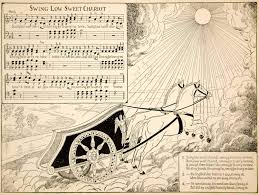
Click or tap on the triangle in the next image to hear them sing a song new to their audiences.

 The group traveled on to Columbus, Ohio, where lack of funding, poor hotel conditions, and overall mistreatment from the press and audiences left them feeling tired and discouraged.The group and their leader gathered and prayed about whether to continue with the tour.  They decided to go on but White believed that they needed a name to capture audience attention. The next morning, he met with the singers and said “Children, it shall be Jubilee Singers in memory of the Jewish year of Jubilee.” This was a reference to the biblical “Year of Jubilee” in which all slaves would be set free.  Since many if not most of the students at Fisk University and their families were newly freed slaves,  the name “Jubilee Singers” seemed
fitting.
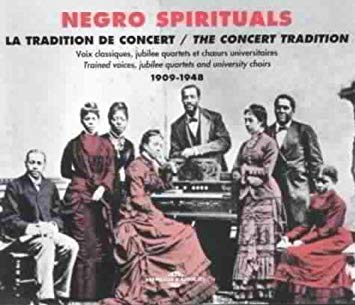
The Jubilee Singers’ performances were a departure from the familiar “black minstrel” genre of white musicians’ performing in blackface and, not surprisingly, more or less of a puzzle to the critics and audiences of the time. 
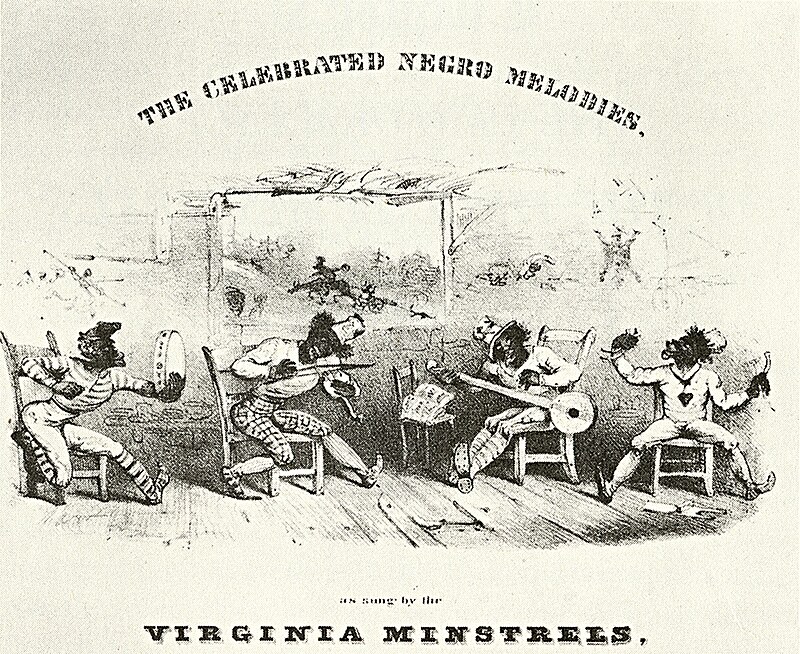
One early review of the group’s performance was headlined “Negro Minstrelsy in Church–Novel Religious Exercise,” while further reviews highlighted the fact that this group of “Negro minstrels were, oddly enough, genuine negroes,” not the burnt cork caricatures of negro minstrelsy so familiar to most audiences of the day.
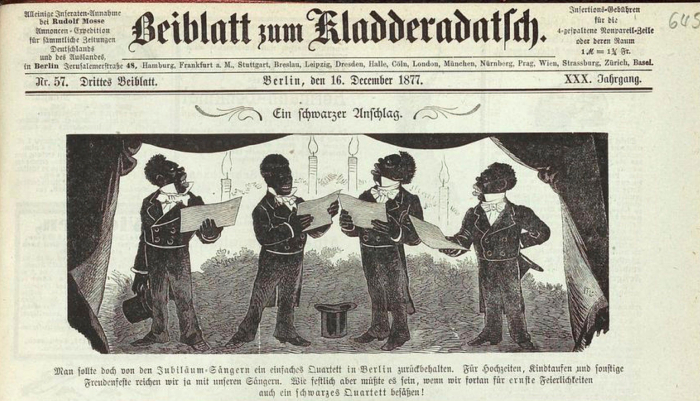
This was not a uniquely American response to the group’s performance, but was typical of European audiences as well.  

As the tour continued, however, audiences came to appreciate the singers’ voices, and the group began to be praised.  So, historically, the Fisk Jubilee Singers are credited with the early popularization of the Negro Spiritual tradition in the 19th century—particularly among white and northern audiences, many of whom were previously unaware of this musical genre.
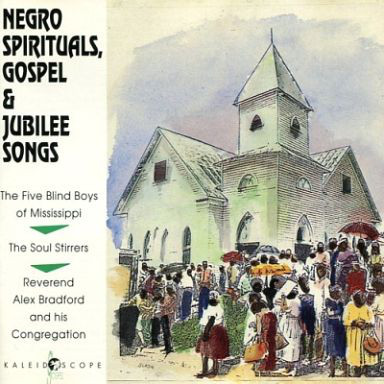
 Audiences soon began to appreciate the wonderful beauty and power of the songs and, after the rough start, the first United States tours eventually earned $40,000 for Fisk University.  
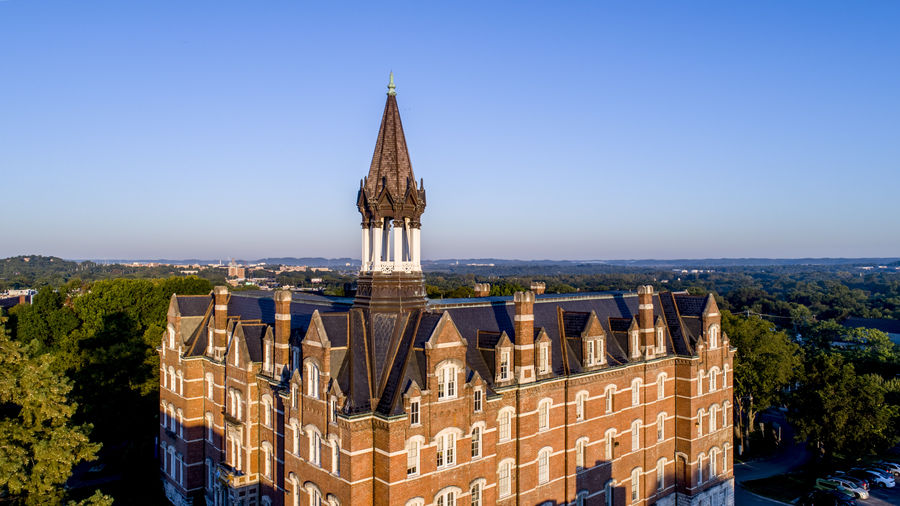
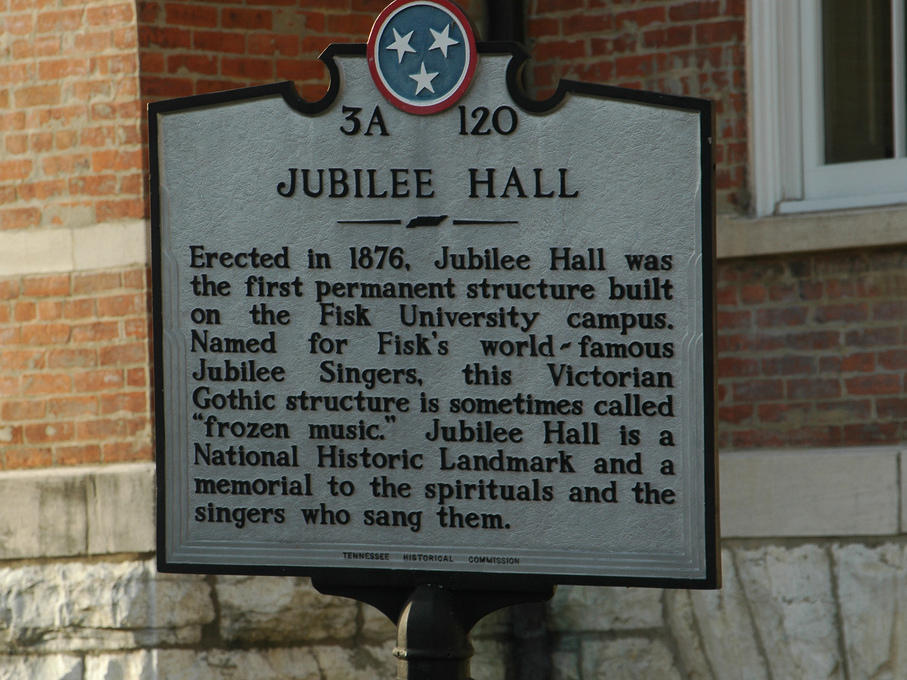
The singers then toured Great Britain and Europe, New York and Washington, and by 1878, had raised over $150,000 for the university.  These funds were used to construct Fisk’s first permanent building named, appropriately, Jubilee Hall.  The building still stands and was designated a National Historic Landmark in 1975—a building made with, if not of, music.
The Fisk Jubilee Singers are still touring and performing around the world today and, in 2008, they were awarded a National Medal of Arts—not bad for what began a century and a quarter ago as a simple fundraiser!
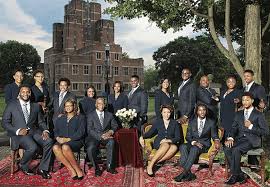
Click or tap on the triangle in the next image to hear the singers do something a bit more contemporary!

Their biggest legacy, however, is the sparking of an appreciation throughout the United States and the World for a true American musical art form—the African-American Spiritual. 
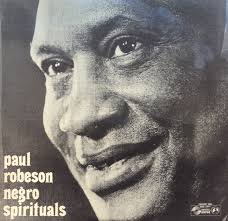
Click or tap on the triangle in the next image for more, much more!

So, as we sing any of these songs from our songbooks, know that they came from the dark days of slavery to the bright lights of today.  A gift to us all.  
Stay Tuned!

ANOTHER MUSICAL MUSING, 2 February 2024: A Portentous Day, both Musically and Climatically!

Here’s a musing from a few of years back that I keep polishing, updating, and reposting. I do this because of the confluence of two of the most portentous days of the year! Some say . . .

Anyway, enjoy–and for many of you gentle readers who have let me onto your screens over the past few years–re-enjoy!

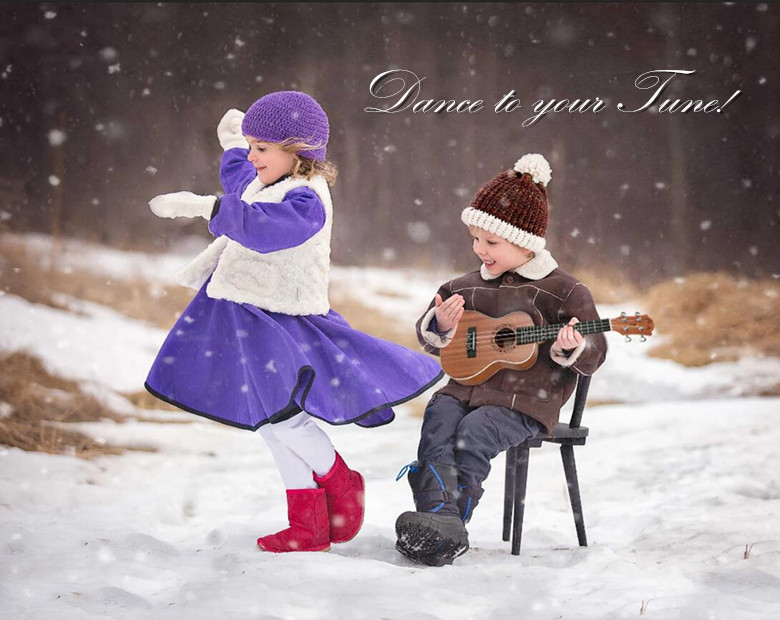
Admittedly, Groundhog Day is more of an annual “event” rather than a “holiday.”  Nonetheless, it takes on importance in that is it also “World Play Your Ukulele Day.” 

Who knew? 

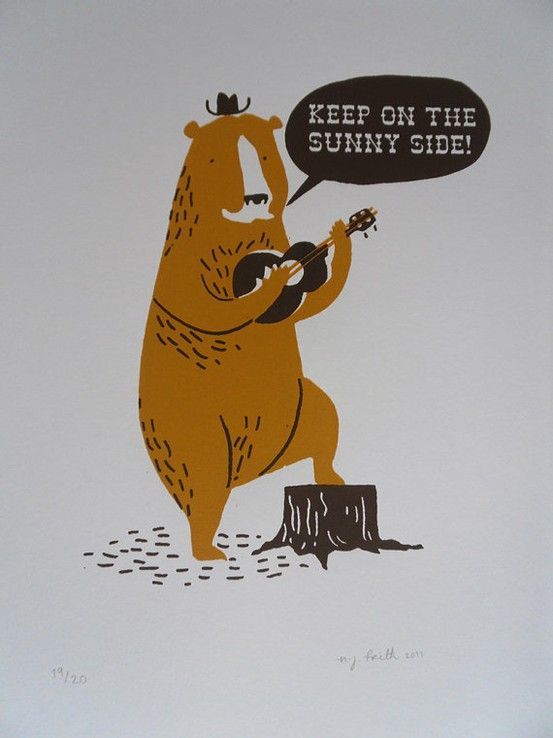
Always a bit of a contrarian, let me add here a song for those of you who yearn for sunshine in these dreary winterish days.But beware!Keep your wishes hidden from those groundhog “weather guessers” out there.Don’t let them listen. Click or tap on the triangle in the following image for a bit of bad advice for our furry friends. Again, don’t let them listen!

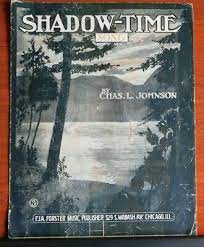
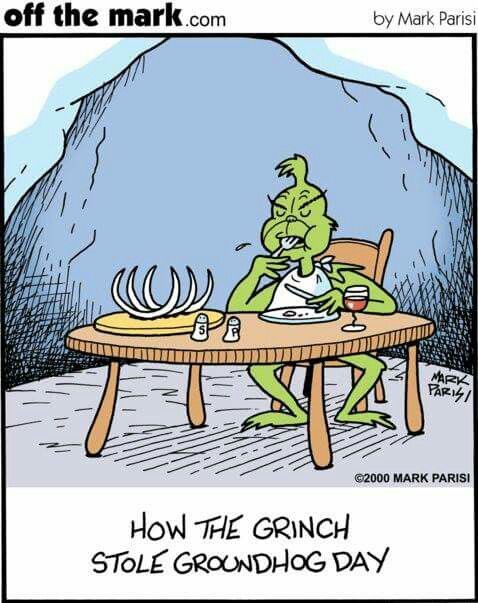
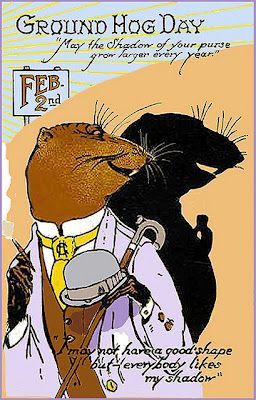
It is also a day that we New Englanders strive to sense the beginning of the end of Winter and the beginning of Spring—at least those New England natives of the groundhog persuasion.  Pray for a cloudy day!  Avoid shadows except in song!

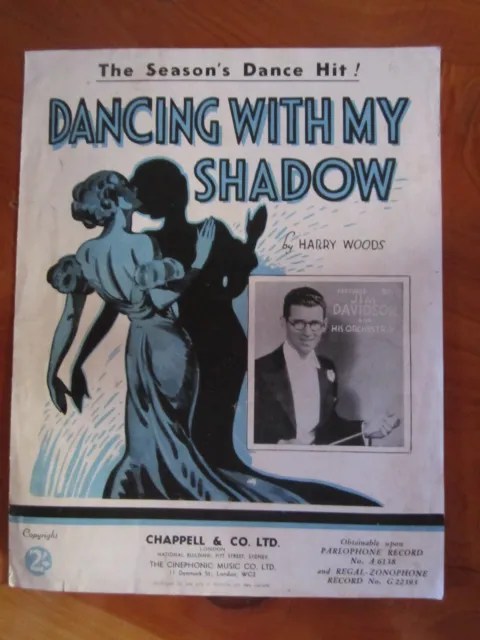
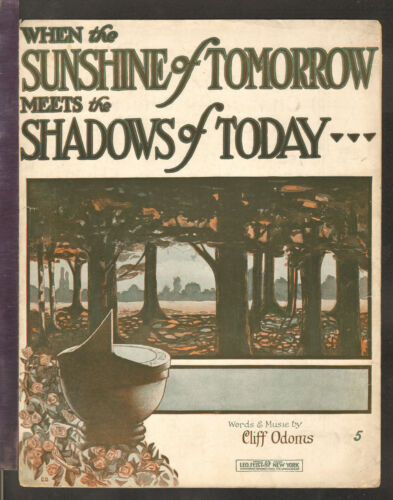
And, “shadowy” songs are out there!

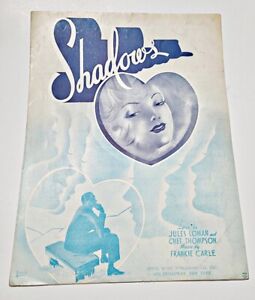
Here’s another that we can take a listen to. Shadow Walz was featured in the “Gold Diggers of 1933,” one of the great musical review movies of the depression era.

Click or tap on the triangle in the next image for a Busby Berkeley, Ruby Keeler, Dick Powell over-the-top take on this shadow tune!

Here’s a more modern take on the shadow theme.

Click or tap on the triangle in the next image for the inimitable Ella!

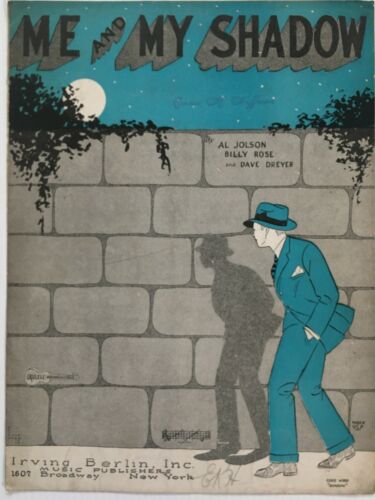
This next one is one of my favorite shadow songs of the era.

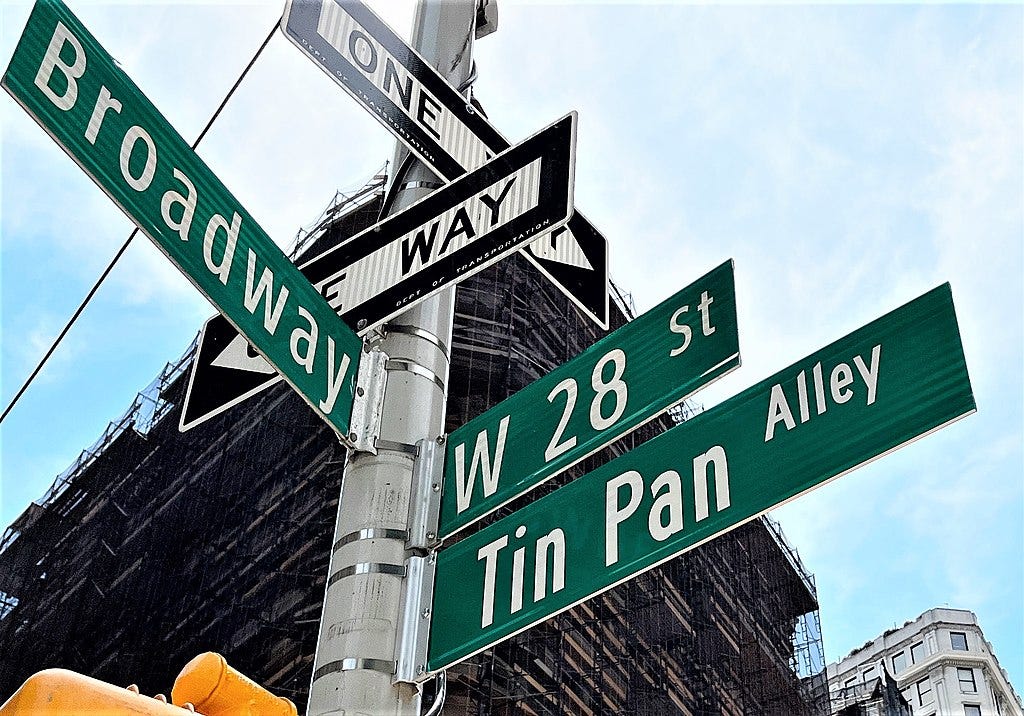
Me and My Shadow” was published in 1927. Officially the credits show it as written by Al Jolson, Billie Rose, and Dave Dreyer. Alas, Jolson was often given credits on sheet music so he could earn more money by popularizing them, but he played no actual part in writing this song and never recorded it! Those were the shady song-plugging days of Tin Pan Alley. But, dozens of others did making it one of the jazz standards of the day!

Click or tap on the triangle in the next image to listen to one of the earlier recordings and one of the few that includes the verse.

Now if you want to take the time and have a bit of fun, here’s an example of what became a favorite vaudeville routine based on our song–the “shadow dance.” It starts a bit slowly but the hammed up performance by Zero Mostel and Tommy Tune is worth the wait! So, click or tap on the triangle in the next image for the intro by Dean Martin and the “schticky” performance of the dancers!

Now, back to our furry friend of the day. I couldn’t find many ukuleles directly associated with a groundhog.  But, our animal friend has a long and historic association with that older cousin of the ukulele, the banjo.  It seems that it wasn’t uncommon back in 19th century Appalachia to use a groundhog skin to make a primitive banjo. 

There is also a great old-time tune called “Groundhog.”  Here it is played on a fretless banjo just like an old Appalachian mountain one!

At the risk of all my vegan and vegetarian friends—to say nothing of those simply of the squeamish persuasion—I must add a good ole recipe for groundhog stew.  Well, why not?

Or, take the easy way out.

Oooops!

Now go seek out a groundhog, before he sees his shadow, and chase him back into his hole with a tune on “World Play Your Ukulele Day!”      

Let’s wind up this merry stroll into the wildness of wintry Februarymythology with a groundhog song based on–of all things–a sea shanty! Click or tap on the triangle in the next image for listen and a look.

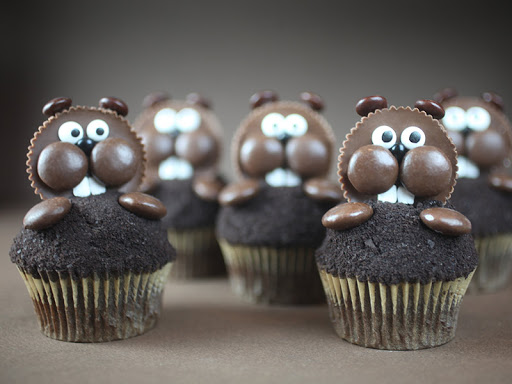
And now, some groundhog cupcakes and milk while we wait for the shadowy forecast! 

It might be a strange weather prediction for us in these days of division and we could all use a little sweetness!

Keep those critters in the shade and STAY TUNED!

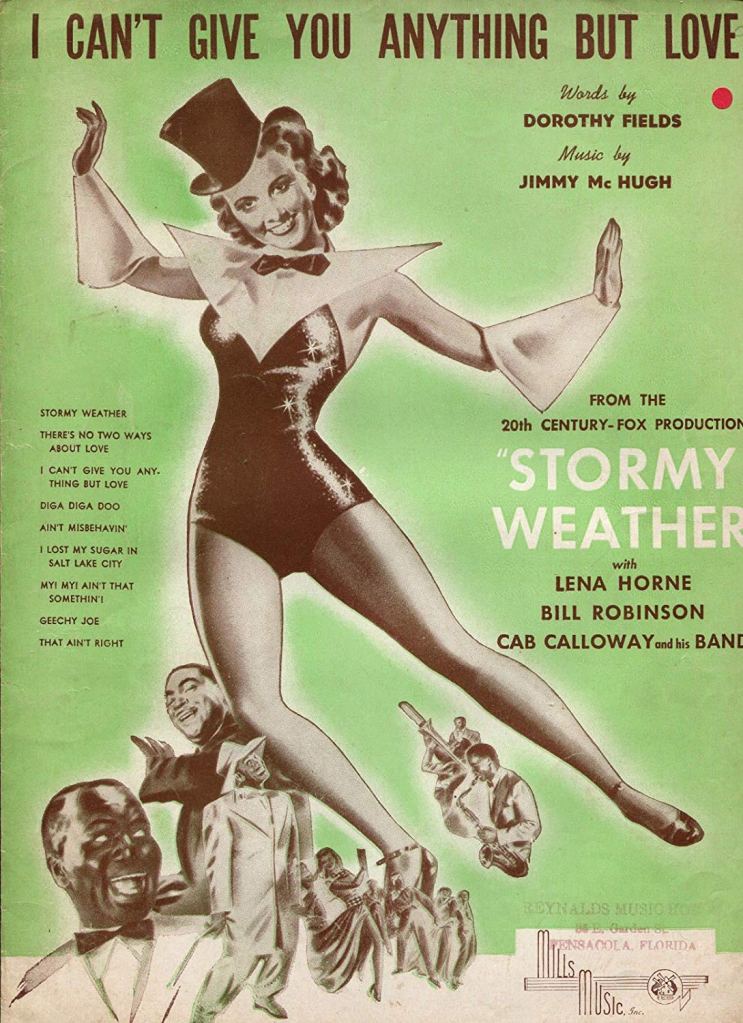
ANOTHER MUSICAL MUSING, 26 January 2024:”I Can’t Give You Anything But Love, Baby” and “On the Sunny Side of the Street,” songs from the distaff side of the alley . . .

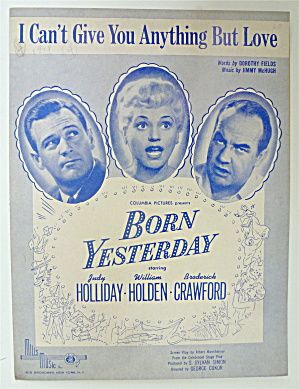
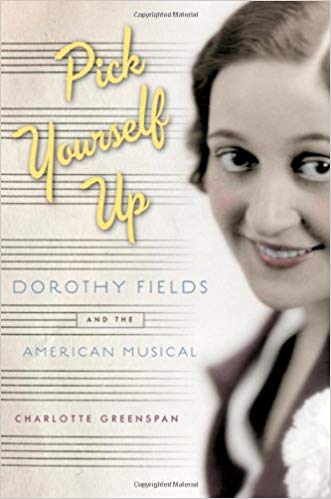
While many of our favorite songs from the Tin Pan Alley days were first recorded by female artists, few were written by female songwriters.  So today, let’s take a look at a musical “two-fer”—“I Can’t Give You Anything But Love, Baby” and “On the Sunny Side of the Street.”

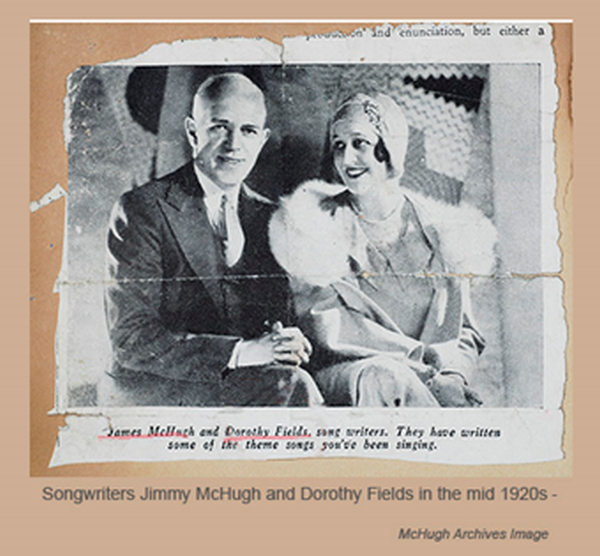
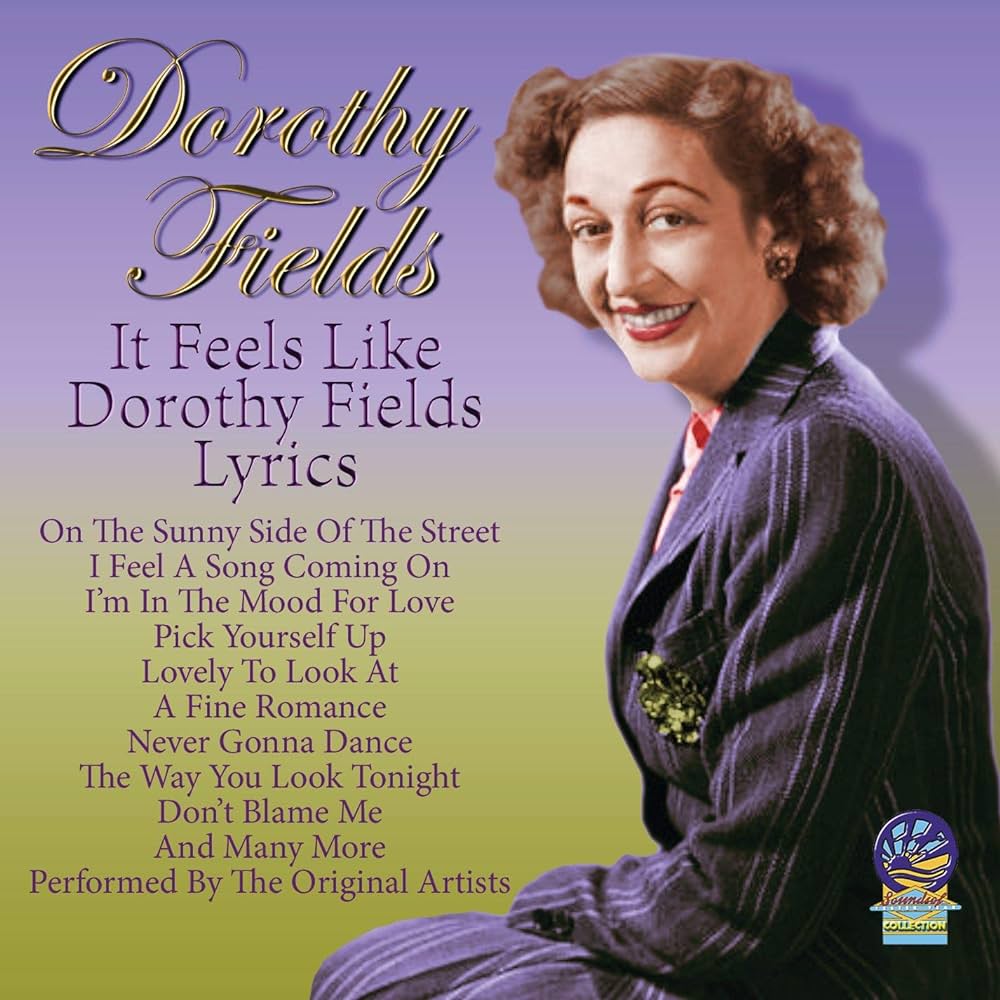
Both were the work of librettist Dorothy Fields (1904-1974) and composer Jimmy McHugh (1894-1969). Fields was probably the most widely respected songwriters–male or female– of her day.

On top of this, both songs helped pioneer the way for talented Black artists to thrive and become popular with both Black and White audiences on Broadway, movies, and throughout musical America—a key part of the Harlem Renaissance. 

I Can’t Give You Anything but Love, Baby” became an American jazz standard performed by just about every performer in the book, Black or White. 

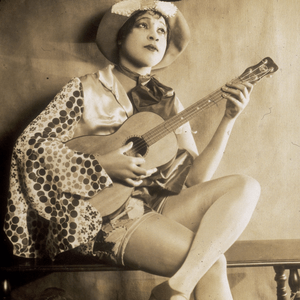
The song was introduced by singer/actress Adelaide Hall (shown here with a four-string tenor guitar, an instrument popular in the 1920s) . . .

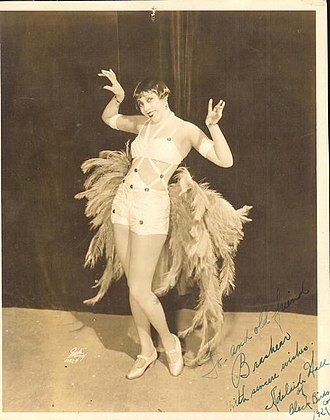
. . . at New York’s Les Ambassadeurs Club in 1928.She was featured later that year in producer Lew Leslie’s highly successful Broadway revue “Blackbirds of 1928.” 

Fields and McHugh wrote the entire show—book and music—and It became the longest running, all-Black show on Broadway.  Although White, Lew Leslie was the first major impresario to present African-American artists on the Broadway stage.

Click or tap on the triangle in the next image for a look and listen to our song by the original performer, Adelaide Hall.

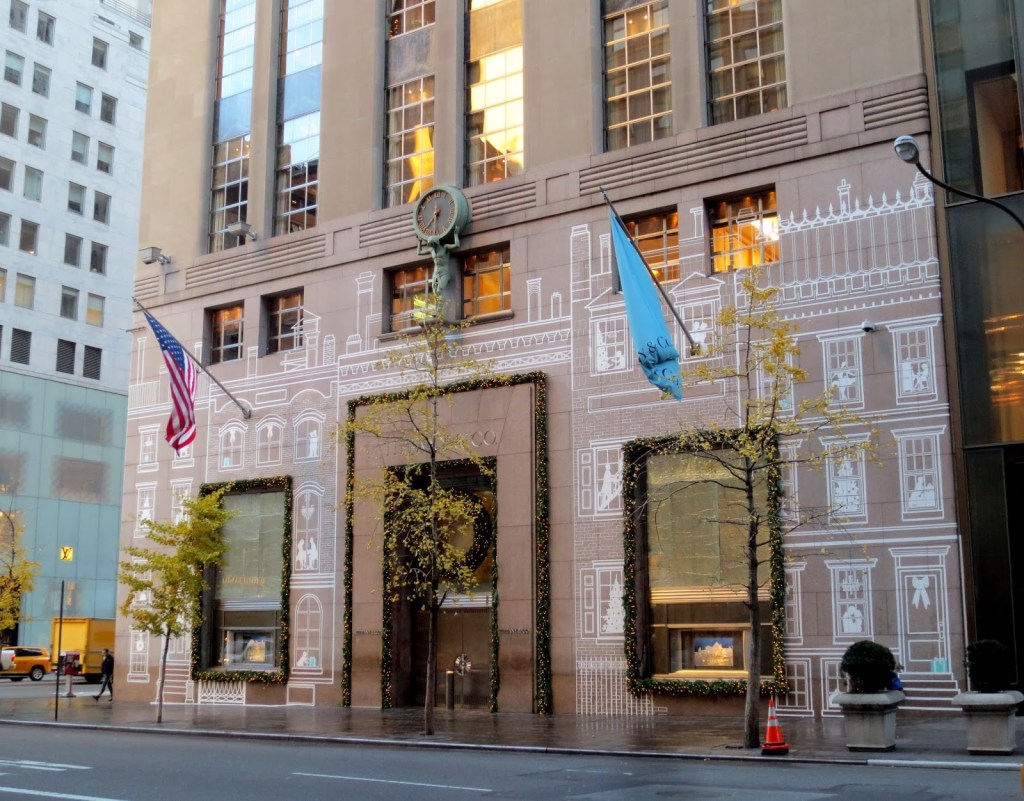
The idea behind the song came during a stroll Fields and McHugh were taking one evening down Fifth Avenue when they saw a young couple window-shopping at Tiffany’s.It was obvious that they were without the resources to even think about buying any of the showcased jewelry. 

Fields overheard the man say “Gee, honey I’d like to get you a sparkler like that, but right now, I can’t give you nothin’ but love!” Hearing this, McHugh and Fields rushed into a nearby bar and, within an hour, they came up with their song. Click or tap on the triangle in the next image for an interpretation of our song by the one and only “Ella.”

Moving on down the alley. . .

On the Sunny Side of the Street” is another song written by the pair.  In 1930, it was introduced in another all-Black Broadway musical by the same producer as “Blackbirds,” “Lew Leslie’s International Revue.”  

Here we have two songs that came to us written by Whites and performed by Blacks—in shows mostly for an all White audience. 

Click or tap on the triangle in the next image for a recording of our song by Billie Holiday.

Click or tap on the triangle in the next image for something a bit different–a singer from today with pictures from yesterday. How fashionable!

Fields wrote over 400 songs for Broadway and Hollywood and, over her long career, collaborated with top figures in the American musical theater, including Jerome Kern and Irving Berlin.  Needless to say, she was one of the most prolific and successful songwriters of Tin Pan Alley. 

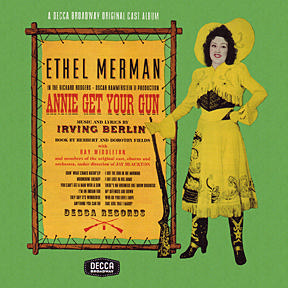
On Broadway, she collaborated on a dozen or so musicals including “Annie Get Your Gun,” “Redhead,” and “Seesaw.” 

Her musical movie credits include “Roberta,” and “Swing Time.”   As a pianist and lover of classical music, Fields was noted for being able to fit witty lyrics to a range of melodies by some of the greatest composers of the time.

There are quite a few interesting backstories from the distaff side of these two songs songs we’ve heard, played, and sung—tunes that also helped train the spotlight on Black performers in America. 

American eyes and ears were opened and the musical world has never looked back.   

And, of course, we have to wind up with a jazzy vintage-ukulele version that includes both verse and chorus! Click or tap on the triangle in the next image for a look and listen.

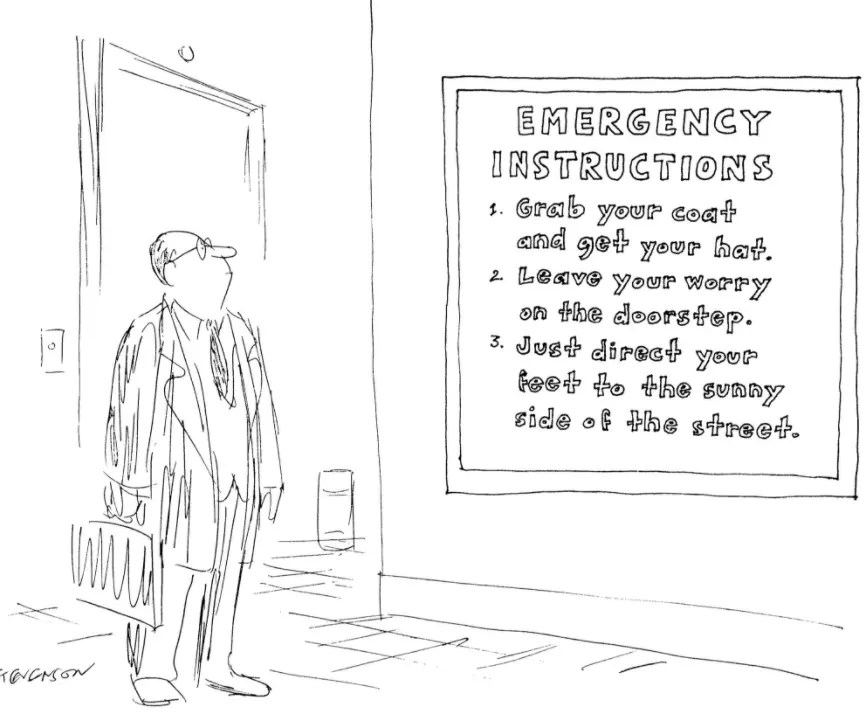
So, in the words of Dorothy Fields,

Stay safe, stay warm, follow those “instructions“ ...  

And, most important, STAY TUNED!

ANOTHER MUSICAL MUSING, 19 January 2024–“We’re New Englanders! Let it Snow, Let it Snow, Let it snow!”

Well, we’re having our first really big snow storm set of the season. Despite the off and on sunshine, and up and down temperatures, I’m looking out the window at our so-called “mauntains” and onto what is a snowy, snowy landscape.  Needless to say, Alison and I are happy to be retired with no “shoulds or musts” on the calendar, just the thankfulness of watching all those folks in their plow-prowed pickups patrolling the wintry streets here in our neighborhood and our Happy Valley. They are ready and able to help however they might be needed!

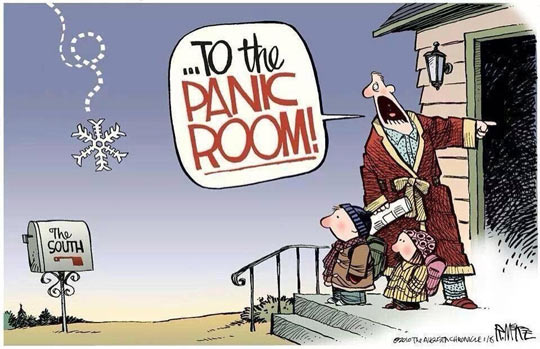
Having lived for many years in northern climes and then northern Virginia before “escaping” to New England, Alison and I were always amused at the way folks “down South” panicked at the mere thought of snow.Bless their hearts!

So, needless to say, my musical muse began to swell and–shall we say–snowball!

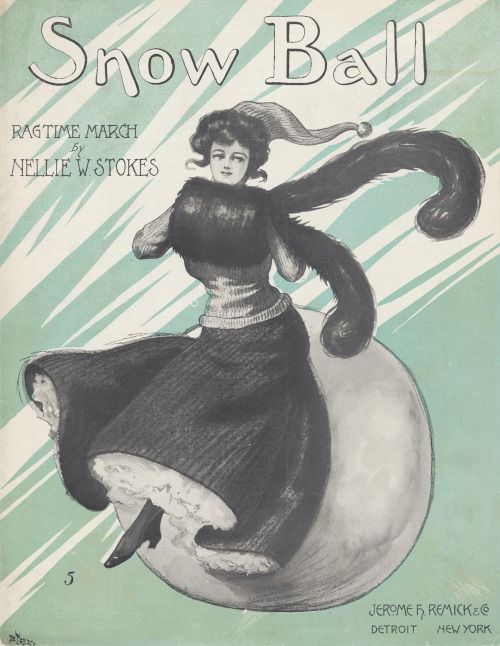
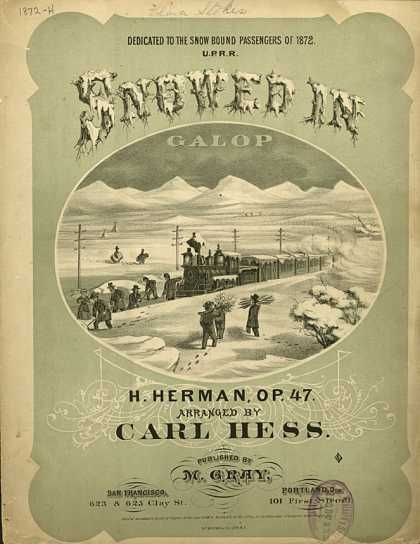
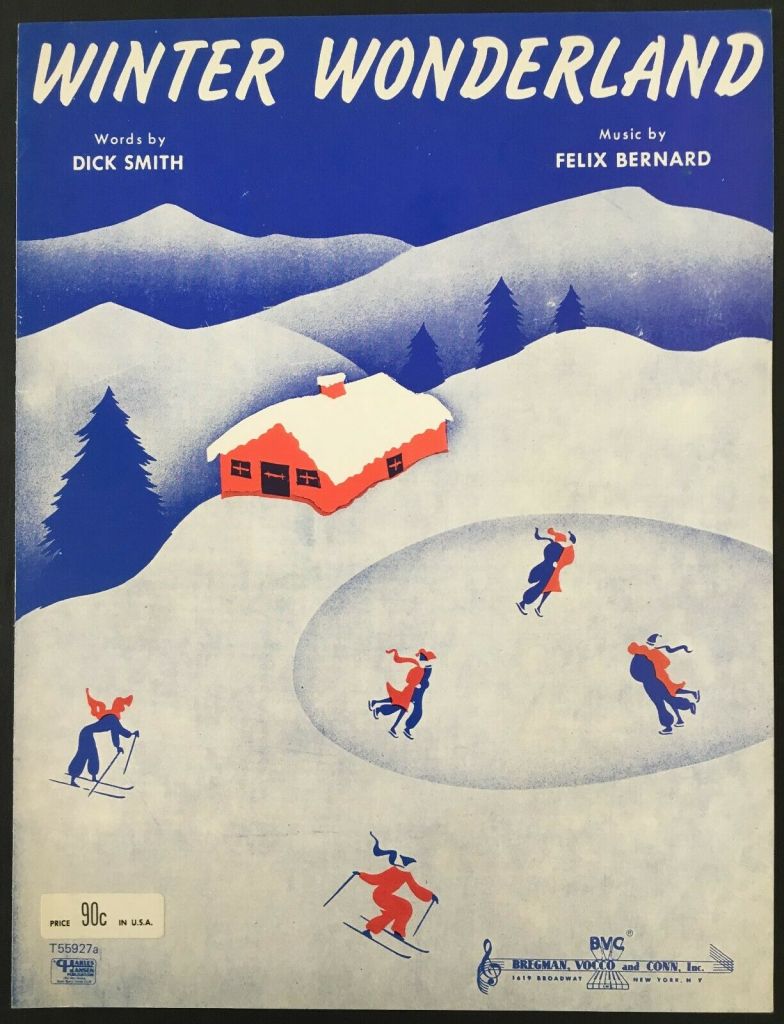
Let’s warm up, so to speak, with a lively bit of “Winter Ragtime.” Click or tap on the triangle in the next image or link for a listen to this oldie from 1906.

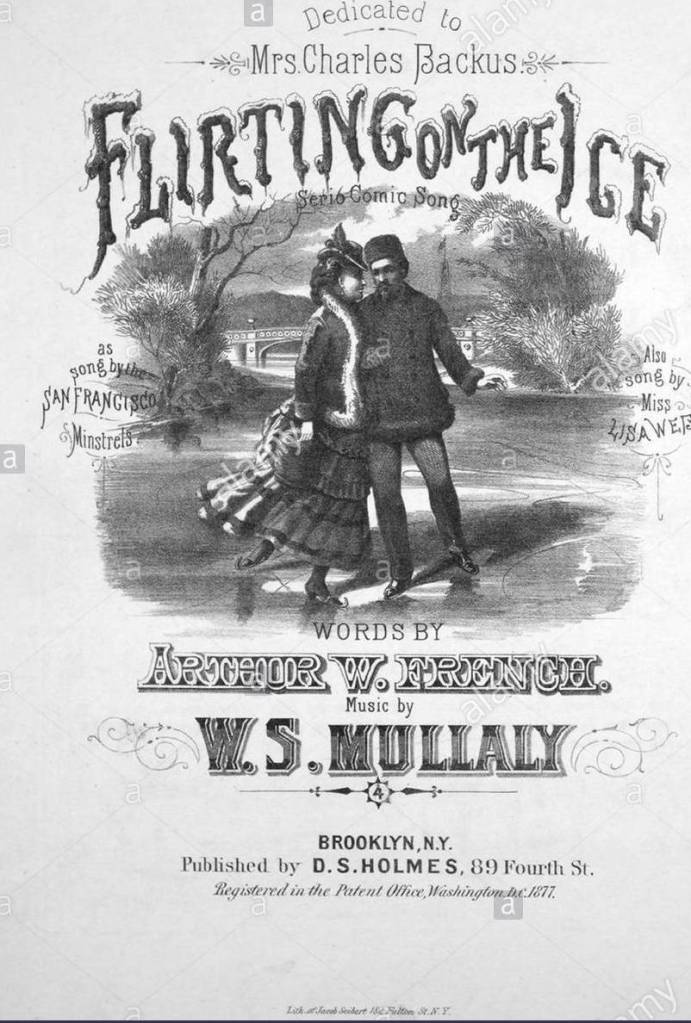
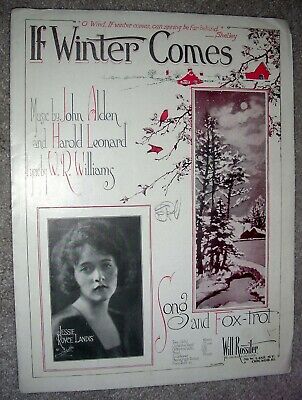
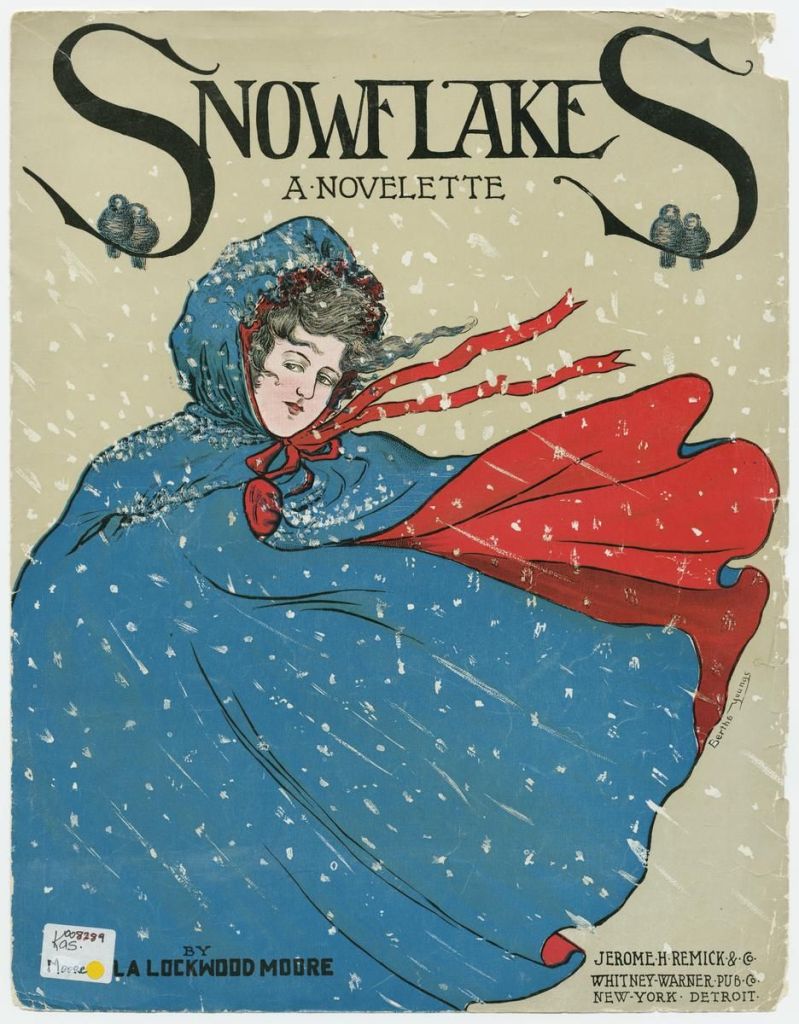
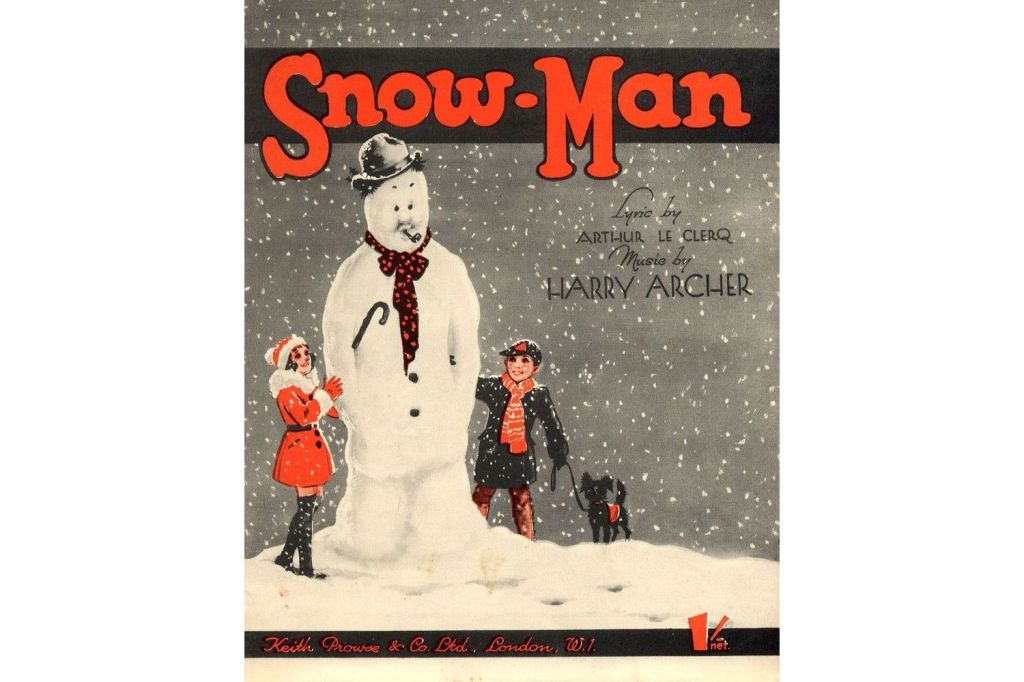
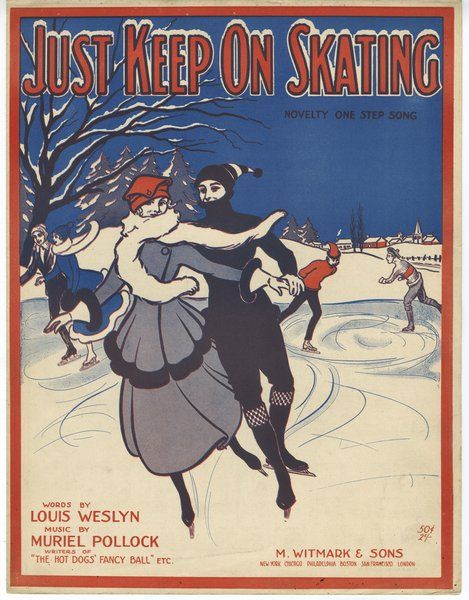
Looking back on other song sheets of long ago, it seems that winter and snow were common themes—particularly  touching on romance or recreation or both. 

None, however, touch on the non-romantic, non-beautiful aspects of a heavy snowfall and its effect on simply going about one’s business.  That is, no songs about shovels, black ice, or just plain COLD! Well, maybe a few . . .

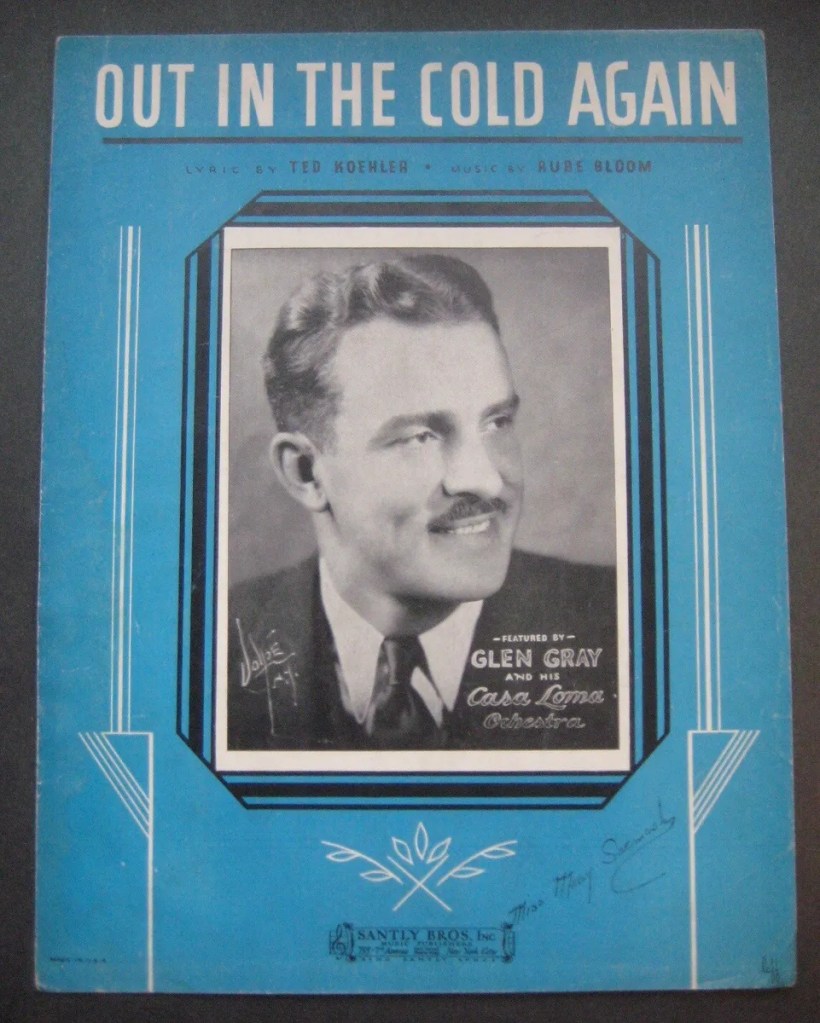
Click or tap on the triangle in the next image for listen to this chilly tune!

Bear with me now, gentle readers, as I pull from my memory one of the more obscure tunes that touches on today’s theme–“Twas a Cold Winter’s Evening” also known as “O’Leary’s Bar.” Click or tap on the next image or link to hear a collegiate acapella version of this college-days favorite.

If you–and who wouldn’t!–like the chords to this one, here they are. So, grab a pint and a favorite singalong instrument and off you go!

[G7]Twas a [C]cold winters evening, the [F]guests were all leaving,
O'[C]Leary was [F]closing [G]bar. When he [C]turned and he said
To the [F]lady in red: “Get [C]out you can’t [F]stay where you [C]are.” [G7]
She-e-e -e. . . [C]shed a sad tear in her [F]bucket of beer,
As she [C]thought of the [F]cold night a-[C]head.
[G7] When a [C]gentleman handsome stepped [F]over the transom,
and [C]these are the [F]words that he [C]said:

[G7] “Her [C]mother [F]never told [C]her the [F]things a young girl should [C]know. [C]About the [F]ways of college [C]boys
and [D7]how they come and [G]go . . . (mostly [G7]go).
Now [C]age has [F]taken her [C]beauty, and [F]sin has left it’s sad [E7]scar.
So-o-o-o Re-[F]member your mothers and [C]sisters [F]boys,
And [D7]let her sleep [G]under the [C]bar. — ([G]Next [Am7]to [G]the [C7] gin).

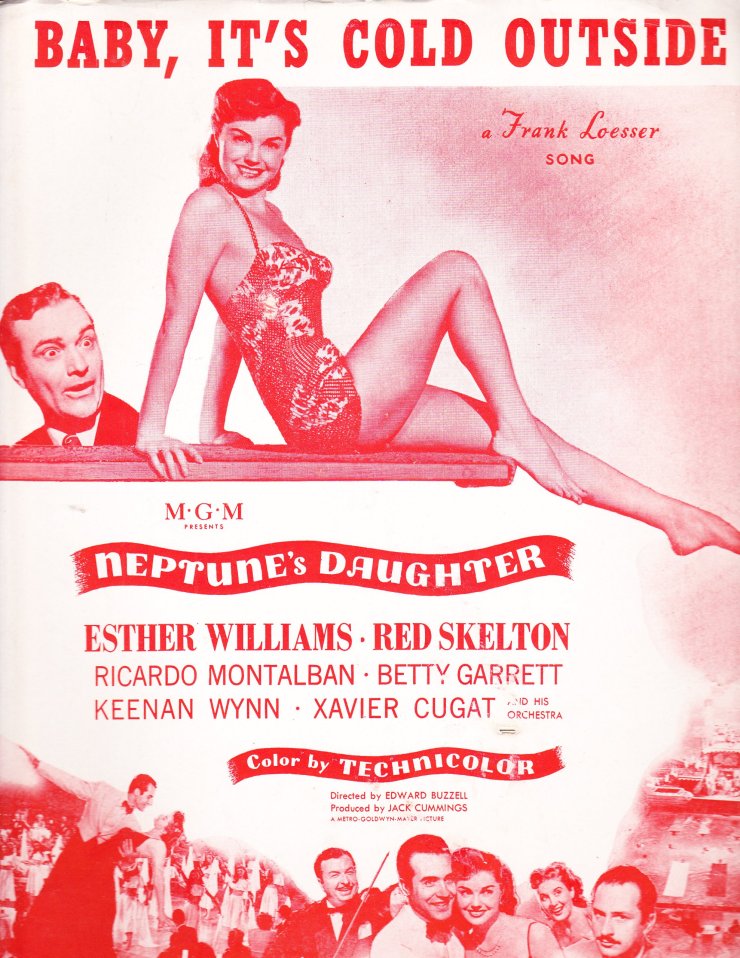
But, moving on, there is some romance (or romantic intentions) to be found in the notion of “Cold.” Brrrrrr. Probably on the edge of PC these days of #METOO, but a good tune nonetheless.

Here’s the song in its film version from 1949. Click or tap on the triangle in the next image or link for a listen to this beautifully performed counter-duet. Who knew that Ricardo Montalban could sing?That naughty boy!

Cold, snowy weather can bring about forced sequestration with which, sadly, we have been way too pandemically familiar.  But, let’s move on with a look at a few more of those early wintry music sheets.   

Alas, I couldn’t find a YouTube of this rather odd but snow-related song. Anyway, click or tap on the triangle in the next image or link for a great rendition of a 1970s song by the same name as sung and played by the late Doc Watson.

And, alas, there is the notion of “snow” as metaphor for life . . .

Moving on, we mustn’t forget those snowy winter sports and ways to play with or in the snow!

And, of course, an old favorite that could be a motto for we hardy New Englanders! 

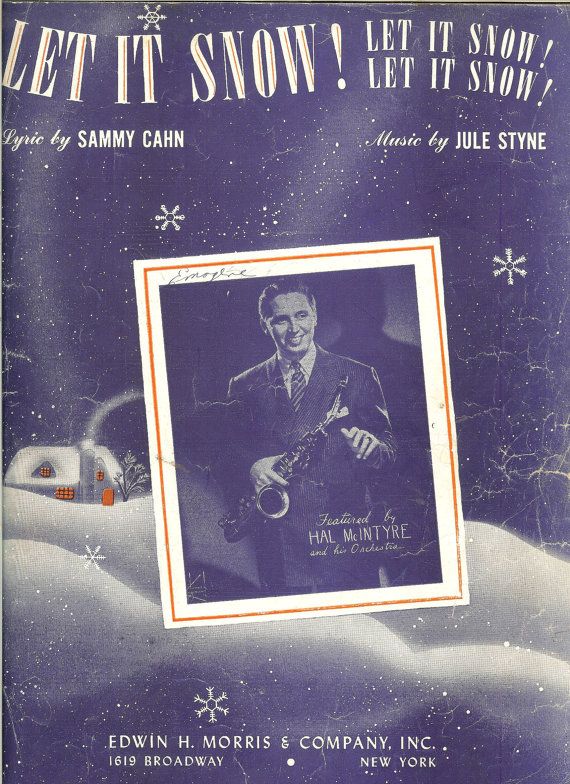
Let It Snow! Let It Snow! Let It Snow!” was written by lyricist Sammy Cahn and composer Jule Styne in 1945. Not really coping with the reality of winter, it was written in sunny, snowless Hollywood back in 1945 during a heat wave. Ah, musical imagination!

Here is one of the earlier recordings of this wintry roasted chestnut. Click or tap on the triangle in the next image for a listen to Rosemary Clooney on this one.

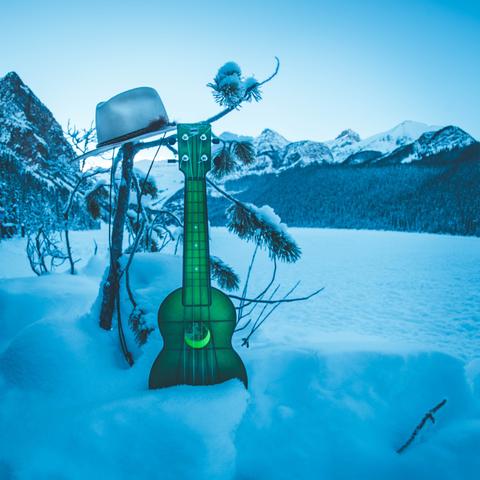
Now, what about wintry, snowy ukuleles–plenty out there to peek at through our snowglasses!

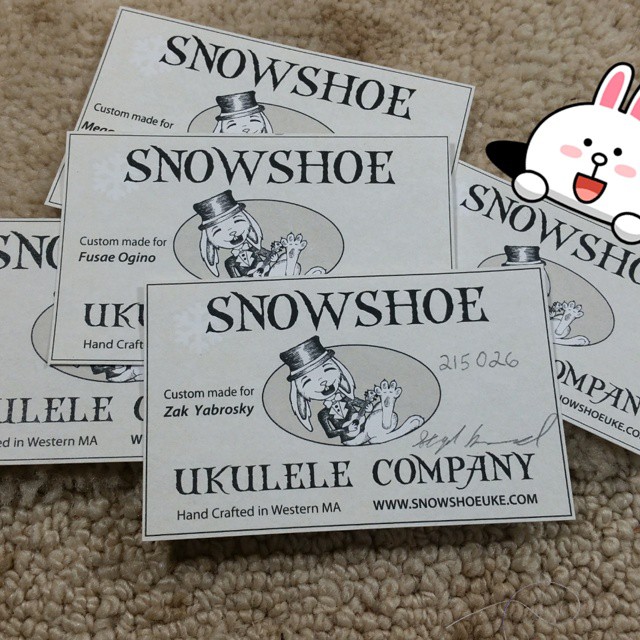
And, of course, our favorite wintry ukulele made right here in our Happy Valley.

And, delightedly, here is my “Snowshoe” uke. Note the mother-of-pearl snowflake on the pegboard.

So stay safe, stay away from ice (except in your martini shaker!) . .

. . . and, even if snowbound, STAY TUNED!

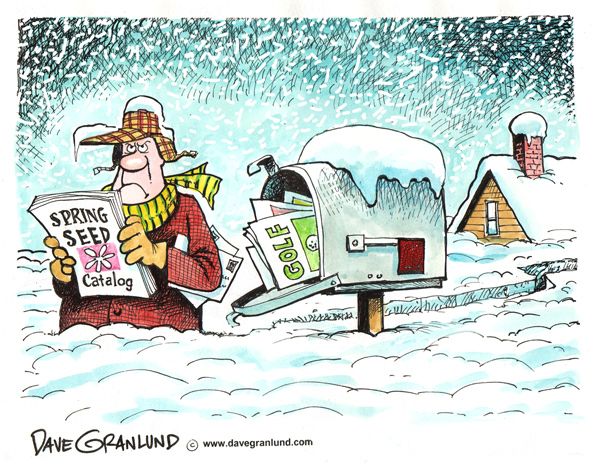
And think SPRING!

ANOTHER MUSICAL MUSING, 5 January 2024–“AS TIME GOES BY”: A Song Older Than Me From a Movie Not Quite As

In this day and age, we are all conscious of the passage of time. And, here we are with another–hopefully of many more–New Years. Take the time, despite what we keep read in the newspapers, to enjoy!

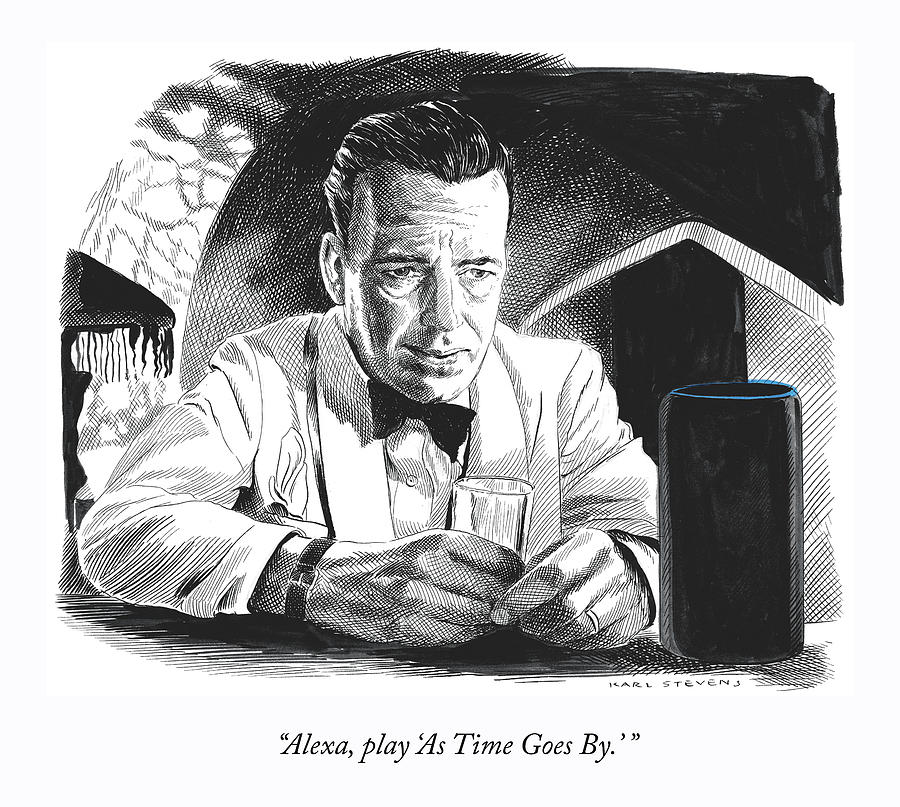
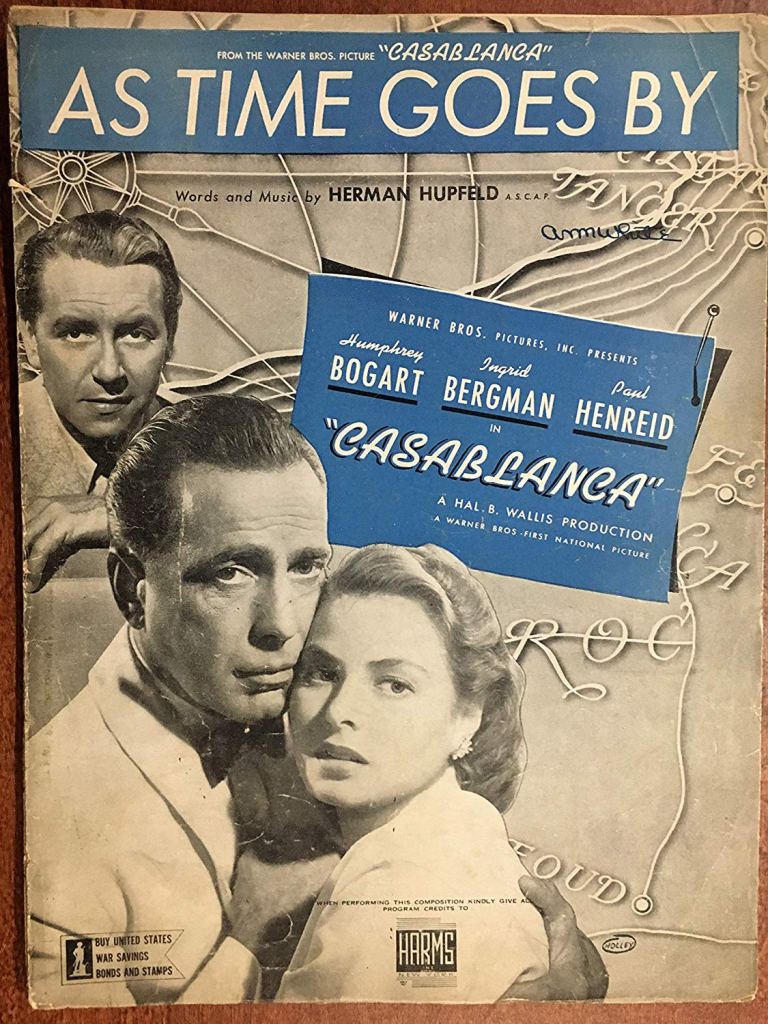
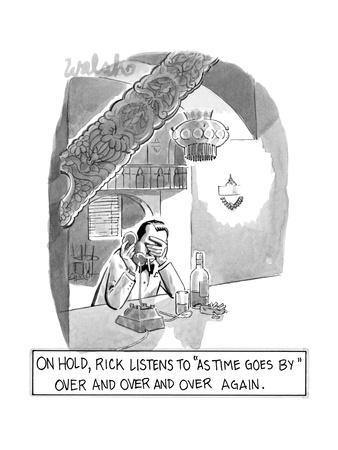
Moving on . . . Let’s roast one more musical “chestnut” as we start up these “Musical Musings” in the year of ’24. So, why not begin with a “timely” film favorite “As Time Goes By.” Today we remember it mostly as an earworm from the movie “Casablanca” that premiered exactly eighty years ago–1942.  It still resonates for the tech-savvy of us in the 2020s!As a plus, it gives us an opportunity to explore the musical oeuvre of, alas, one of many now obscure and forgotten songwriters of Tin Pan Alley.

While most of us know this song from its truncated version in the movie, ...

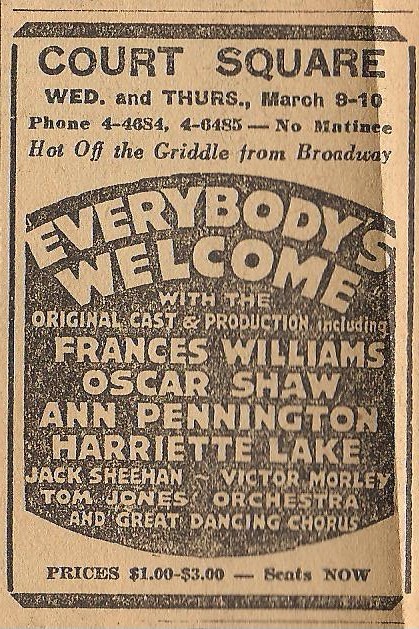
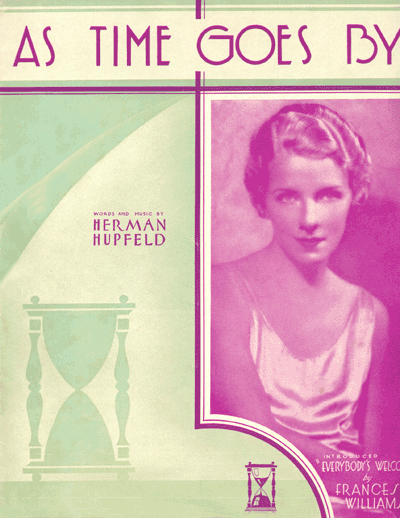
. . . it did have a much earlier life.  It was written by New Jersey’s own Herman Hupfeld (1894-1951) in 1931 for the Broadway musical “Everybody’s Welcome.” 

While this song was ranked at Number Two on the American Film Institute’s best songs of all time, after “Over the Rainbow,” it seems to be the only song by Hupfeld that anyone today remembers and plays.  He did, however, write songs like “When Yuba Plays The Rhumba On The Tuba“, “I’ve Got To Get Up And Go To Work”, “Are You Making Any Money?,” “A Hut in Hoboken”, and, of course, “Let’s Put Out the Lights and Go to Sleep.”  Such is the cachet of the movies! 

Oh, why not? Click or tap on the triangle in the next image for somewhat of a musical diversion if not a treat.

But I digress . . .

As Time Goes By” was sung in the 1931 musical by Frances Williams . . .

. . . but was first recorded by the crooner and bandleader Rudy Vallee and his “Connecticut Yankees.”  This was a hit record in 1931. Click or tap on the triangle in the next image to listen to this version.

By far, however, the best-known take on our song is the one from “Casablanca” as sung by the character “Sam,” played by Dooley Wilson, at the request of “Ilse,” played by Ingrid Bergman. 

Wilson was a drummer and actor—alas, not a piano player.  So, in the movie the piano music was dubbed.  Such is the magic of film! Click or tap on the triangle in the next image for a look and listen.

If you are interested in the history of collectible musical instruments and don’t mind another digression, the piano that Wilson “played” in the movie—built with a shortened keyboard, 58 instead of 88 keys, and decorated in a “Moroccan” motif—was recently restored and sold at a Bonham’s auction for $3.4 million! 

For you buffs of old-school jazz/popular songs, such as “As Time Goes By,” here are the words for the first verse.  The chorus and bridge are, of course, what we are most familiar with. The rhymes are, to my eldie ears, much more listenable–and witty– than today’s rap! Just sayin’ . . .

VERSE:  This day and age we’re living in, Gives cause
for apprehension,

With speed and new invention, And things like third dimension.

Yet we get a trifle weary, With Mister Einstein’s theory.

So we must get down to earth, At times relax, relieve the tension.


No matter what the progress, Or what may yet be proved.

The simple facts of life are such, They cannot be removed.


CHORUS:  You must remember this, A kiss
is still a kiss.

.   .  .

Of course, there are hundreds of covers of this favorite tune.  Here are a few just to illustrate the variety of interpretations! Click or tap on the triangle in any of the images to give a listen.

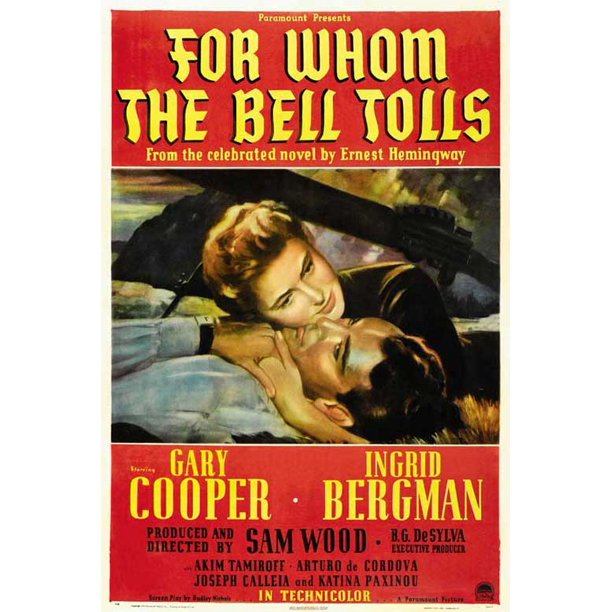
As an aside, the producers of the movie “Casablanca” wanted to cut the “As Time Goes By” scene from the movie fearing that it was a bit too long and really didn’t “push” the plot.  Ingrid Bergman, however, had moved on to another film (“For Whom the Bell Tolls”) and had cut her hair for that role.  It was deemed impossible in that day and age to reshoot so, against their better judgement, the producers left the song in.  How musical history is made!

So, here’s an after-Christmas earworm to kick in the new year!  You’re welcome!

Just so we don’t spend the rest of the week humming or whistling “As Time Goes By,” over and over again, let’s bring back out our forgotten songwriter, Herman Hupfeld, for one more fling. This time with the ultimate crooner, Bing Crosby, and “Let’s Put Out the Lights and Go to Sleep.”

So, as time goes by, have a good night, have a good year, have a good sleep, appreciate good but forgotten songwriters, remember to turn off the lights, and STAY TUNED!

MUSICAL MUSINGS, 29 December 2023: A Noisy, Nostalgic Tune for A Not-So-Snowy New England Winter: “JINGLE BELLS!”

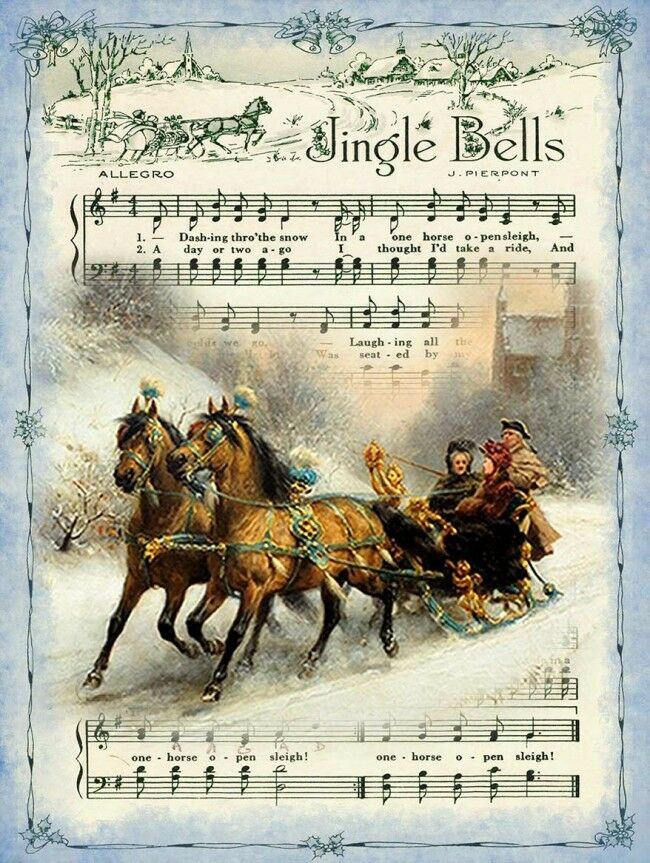
Not needing to navigate through a lot of snow so far in this quasi-winter of few flakes and fewer sleigh rides, I find myself still motivated to end this rather complicated year with just one more of my seasonal musical musings.  So, gentle readers, bear with me as I retreat from my favored songs of relative obscurity to one of the best-known and most commonly sung American songs in the world—“Jingle Bells.” 

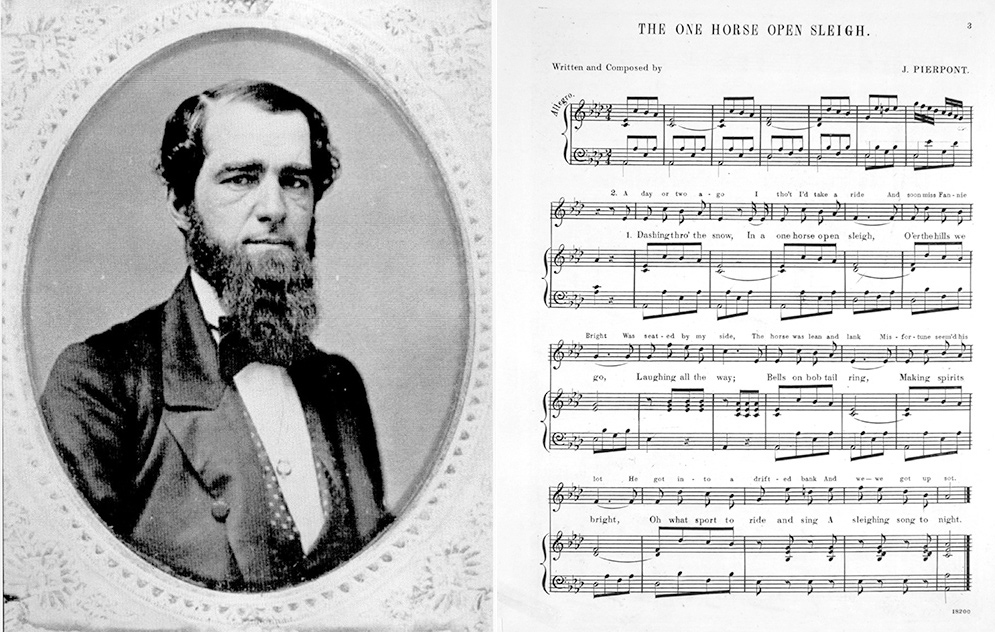
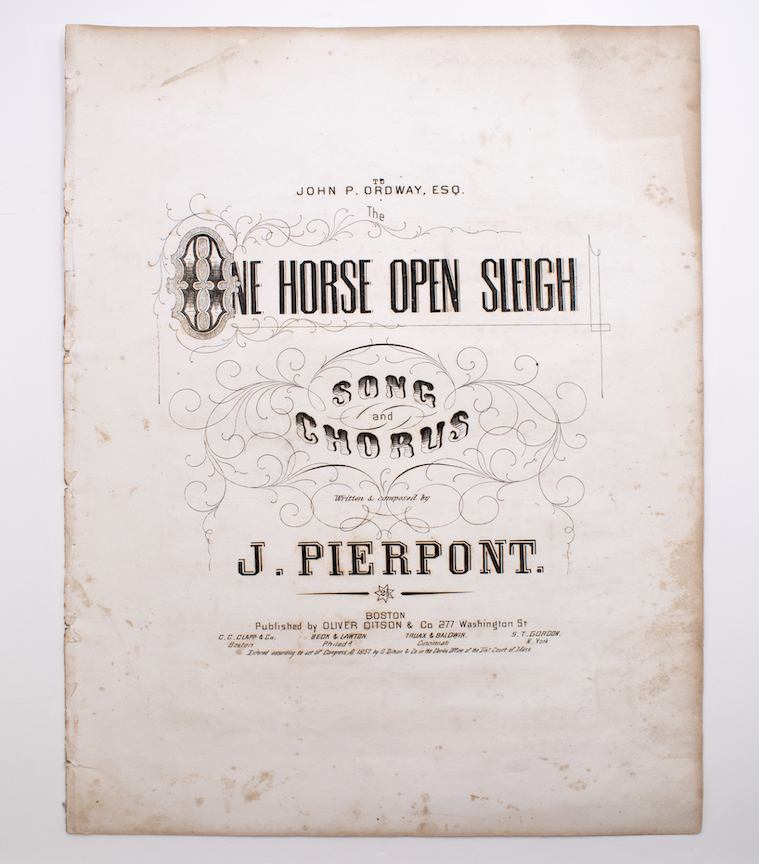
Our song was written by one James Lord Pierpont—an impecunious son of a fiery abolitionist preacher from Medford, Massachusetts. Written a couple of years earlier, it was officially published in 1857 with the title “One Horse Open Sleigh.” This was after Pierpont had moved from relatively snowy Massachusetts to seek his fortune in relatively snowless Georgia.  

Alas, Pierpont has been tarred by some historians as a drifter and ne’er-do-well husband, gold rush con man, anti-abolitionist, Confederate soldier, and otherwise nasty guy. But, he does have Massachusetts connections and he did write our song. After a hundred years or so, that’s probably all that really matters!

Musical historians have noted that the song was probably cobbled together from a variety of sources and that it was originally intended to be sung by Pierpont’s father’s Sunday School choir for Thanksgiving.  Or, as a more likely story, it was written as a slightly ribald drinking song and sung by drunkards who would clink their glasses like bells when the word was mentioned.It all depends on which historian or folklorist is telling the story.  So what else is new in history?But, Medford has the plaque! 

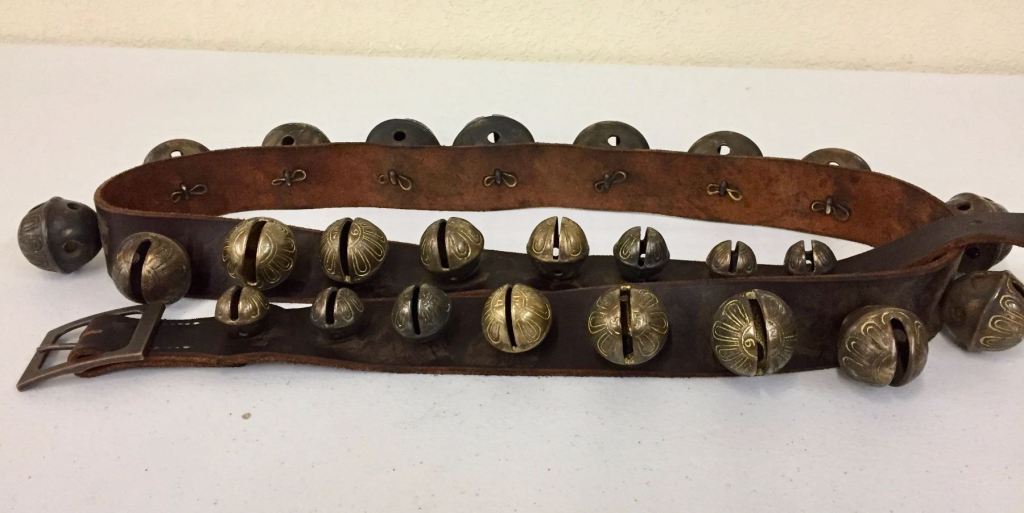
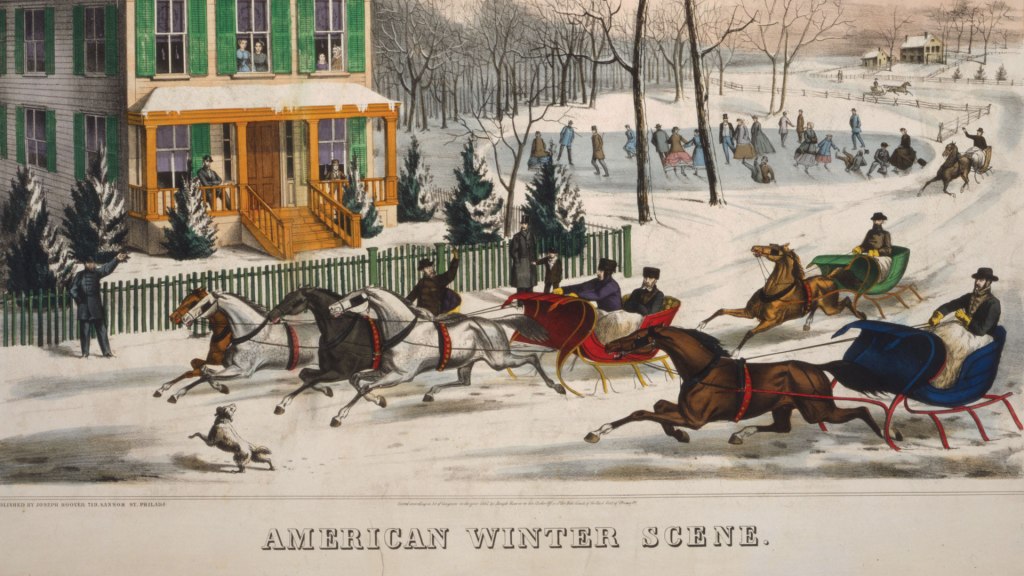
Like many traditional Christmas songs, “Jingle Bells” has a strange and fascinating history. Even the first arrangement, which was less upbeat, is  different than the one we hear today.Anyway, the song is said to have been inspired by popular 19th century sleigh races in Medford where, in those days, long strands of small brass or iron bells were strapped to horses as a public safety measure. 

A horse pulling a sleigh was almost noiseless and the jingle-jangle sound of the bells gave fair warning to those who might be in the way—a quaint safety measure of the day. 

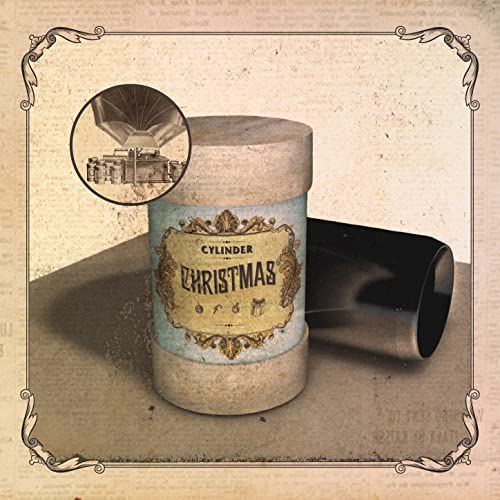
By the late 1800s, the song “Jingle Bells” had become an integral part of the Christmas musical genre. It was first recorded in 1889 on an Edison cylinder as part of a Christmas medley titled “Sleigh Ride Party,” considered to be Americas first “Christmas album!”  Needless to say, it was a trend setter of sorts, both dubious and not.

Now here’s where musical history takes a bit of a jog as well as a jingle.  In 1857, well after the Sunday School performance, the ever cash-strapped Pierpont, then living in Georgia, copyrighted “One Horse Open Sleigh” and sent it to print.Hence the counterclaim to the song’s origin by the folks in Savannah.Nya, nya, nya.  

So, for a retreat from modern times, click or tap on the triangle in the next image or link to listen to a modern (not a scratchy 19th century cylinder) rendition of Pierpont’s original lyrics and melody of “The One-Horse Open Sleigh.” Don’t forget to tap a spoon on your glass at the appropriate moments!

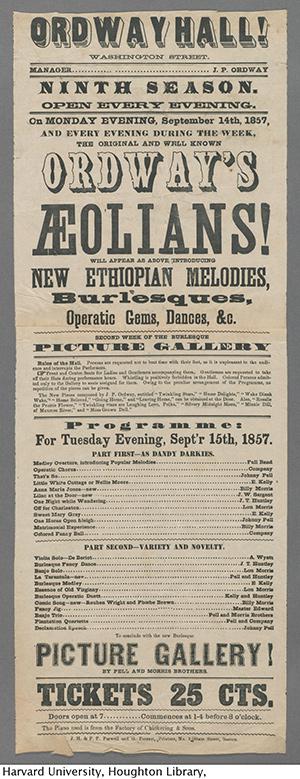
However, well before copyrighting and publication, it was Pierpont’s intention to generate some much-needed cash royalties from stage performances, particularly in cities with more lively musical reputations than sleepy Medford. Accordingly, he showed the tune to a few performer pals and it was quickly taken up and first performed on the stage in nearby Boston by a popular white blackface-minstrel performer, one Johnny Pell. 

It soon became a popular, money-making standard for Pierpont on the minstrel circuit and he wrote and published several more polkas and songs that became standards on the minstrel circuit of the day–and relatively forgotten today. A Southern sympathizer, he also wrote several patriotic songs while serving as a Confederate soldier from Georgia–needless to say quite sleigh- and snow-less!

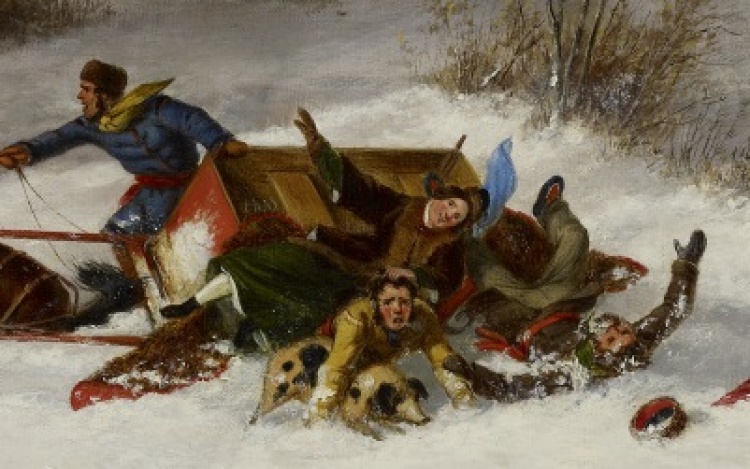
As a so-called story song, “Jingle Bells” tells of a dashing young man-about-town who took his sweetheart sleighing and, in what must have been a moment of inattention to horse and road (wink-wink!), upset them both into the snow—a somewhat disguised but rather suggestive narrative at the time.

The theme was thought humorous as it was well understood that an evening sleigh ride just might give an unescorted couple a rare opportunity to be together—unchaperoned (oh my!) in distant woods or fields and far from prying eyes.  Is our tune tainted because of its brush with blackface minstrelsy, or 19th century lovers’ shenanigans?  I can’t think so—certainly not by today’s pop music standards!

Moving on . . . Over the past hundred and seventy-plus years, “Jingle Bells” has been performed by everyone from that original Sunday School group to the Mormon Tabernacle Choir.  It’s also been recorded by every big and not so big name in the music business from country to classical.  But, it’s just too good and sing-able a song not to live on, even if it jingle-jangles on a bit too often in too many shopping venues at this time of year.

Next, even though we ukulele strummers are known to say that “more than four strings is just showing off,” I am compelled to include one of my favorite multi-multi-string versions of “Jingle Bells.”  Click or tap on the triangle in the next image or link to hear the late Earl Scruggs and friends attack our song in bluegrass style!

And, where would we be without a ukulele version?  Click or tap on the next image or link to hear The Ukulele Orchestra of Great Britain have a rather bizarre go at this one!

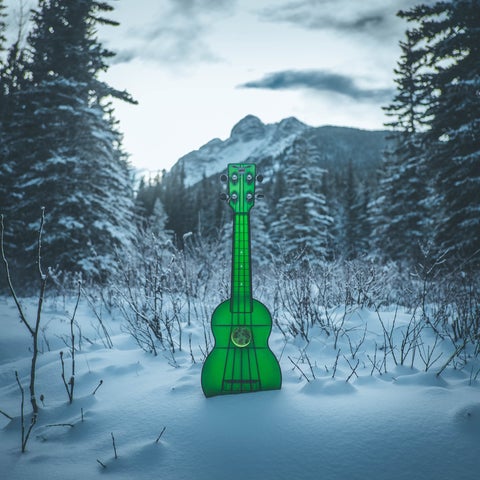
So, keep your non-plastic ukuleles out of the snow (if and when)  .  .  . 

and STAY TUNED as we sleigh away from a less than perfect 2023 and dance into a more than perfect (please, no “upsots!”) 2024!

MUSICAL MUSING, 22 December 2023: A Melancholy “White Christmas,” From a Snowless New England

Here we are just a few days from Christmas with pictures of flooding rather than flakes filling our local papers. Alas,”Nor’ Easters” seem to be more the Winter norm here in the North East this year.Weatherwise, we’ll see.Tap or click on the triangle in the next image for a “country” weather prediction.

Anyway, I am of an age and circumstances that memories of seasonal snowfalls of the past recall more worries about the punctuality and skill of our “plow guy” than the transformative beauty—and holiday spirit—of the winter landscape. Thank goodness for living in our well cared for little retirement community–when and if it snows!     

Alas, not this year but, gentle readers, I digress  .  .  . So, back to the theme of my musing!  

During the early and middle years of the last century, music of the holiday season was in the form of traditional Christmas carols or what could best be called secular “jolly Santa or St. Nick” tunes. 

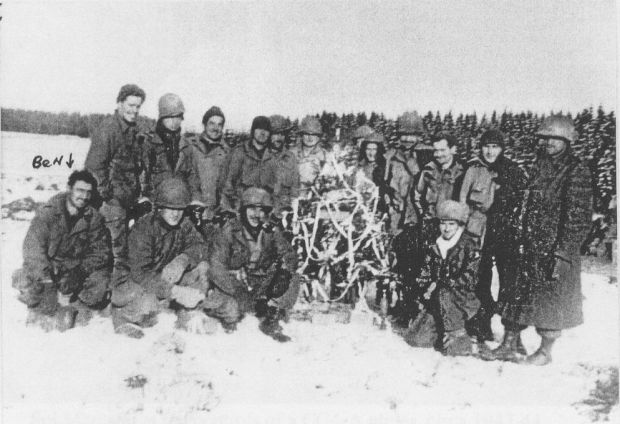
But, during the early days of World War II–with so many families with members in the military–a sense of longing for being “home for the holidays” took hold. 

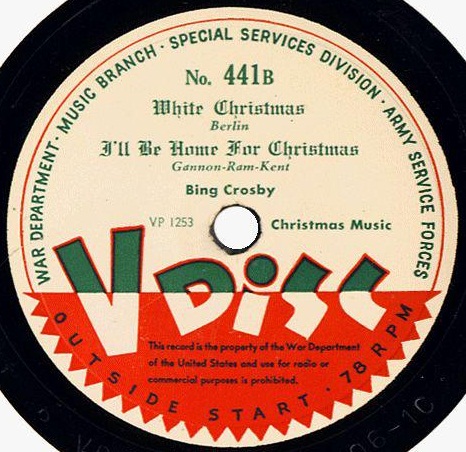
As would be expected, one of the most popular songs of those days was, “I’ll Be Home for Christmas.”   But that was only the B-side of the recording that became the granddaddy of all holiday songs—“White Christmas.”

White Christmas” is an Irving Berlin song with lyrics reminiscing about the memories of an old-fashioned, traditional Christmas setting. 

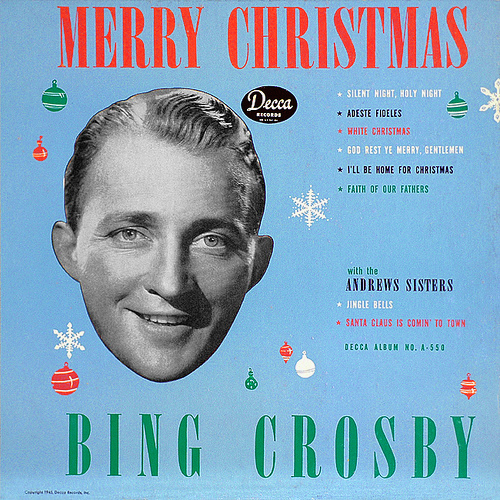
The first recording was by Bing Crosby and released early in the war years—1942.  According to the Guinness Book of World Records, it was, and still is, the world’s best-selling song with estimated sales of over 50 million records worldwide!   Tap or click on the triangle in the next image or link to hear Crosby’s original, unvarnished version of the song.

It was only when Armed Forces Radio began to play the song that American troops, in their first winter overseas, found its images of Christmas on the home front so appealing.   

White Christmas” spoke to the longing, nostalgia, and homesickness of the troops for home and for the sweethearts and wives and mothers and fathers they’d left behind.

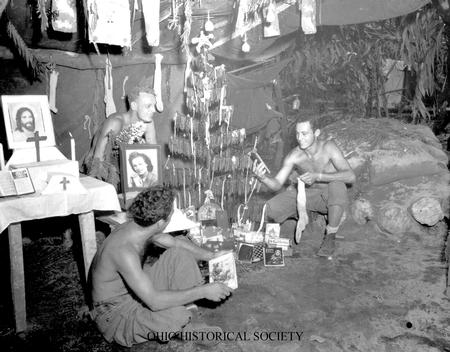
 It was the enthusiasm and dreams of these GIs who were actually deployed at sea or on snowless islands that propelled the song and made it a hit.

Accounts vary as to when and where Berlin wrote the song.   In fact, a lot of folks at the time believed that he was back in the Army  .  .  .

.  .  .  and himself deployed on some tropical battlefront longing to be back home in the relative comfort and safety of New York’s Tin Pan Alley. 

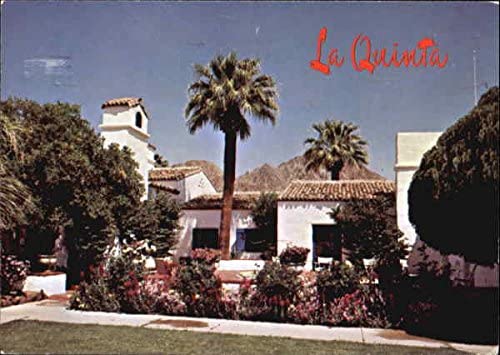
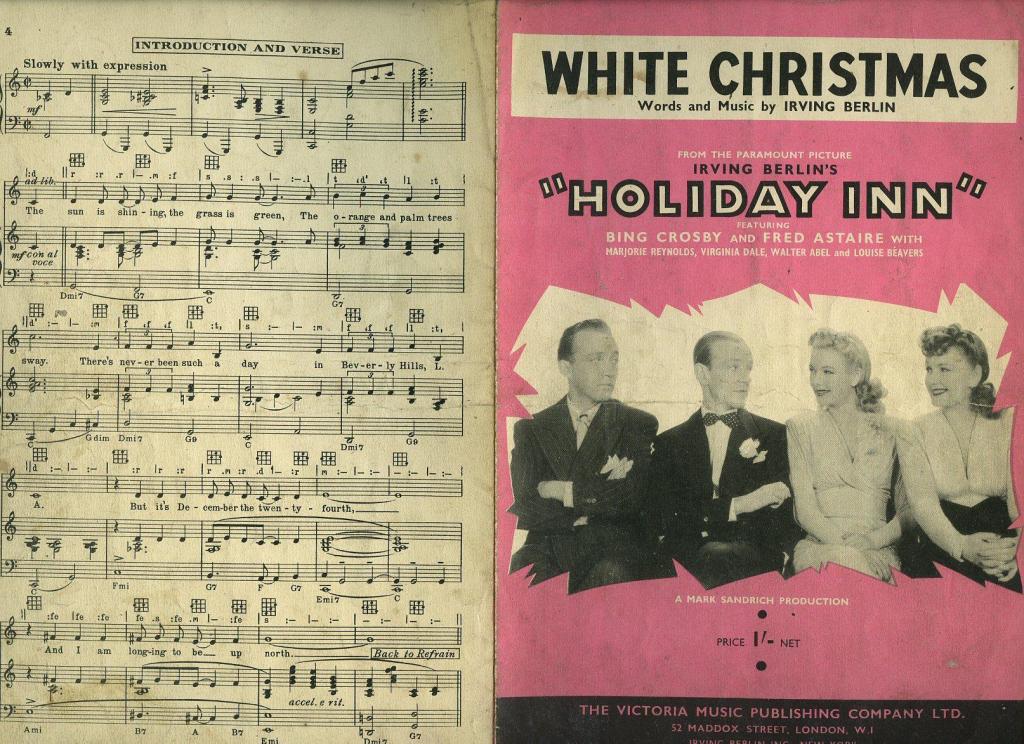
In fact, most song historians tell us that he wrote it (actually polished up an old tune from his vast file) in 1940, in warm La Quinta, California, while staying in one of those posh, palm treed hotels fancied by the Hollywood elite. The seldom sung intro to the song reflects this.

At least it shows up in the sheet music.

And, here is at least one YouTube that picks up on the verse, and on a tenor banjo no less! Click or tap on the next image for a look and listen.

The story goes that, after staying up all night composing, Berlin sensed that he had a good thing going and told his secretary, “I want you to take down a song I wrote over the weekend. Not only is it the best song I ever wrote, it’s the best song anybody ever wrote!” Who can argue with that?   

It has often been noted that the mix of Christmas melancholy—”just like the ones I used to know”—with comforting images of home—”where the treetops glisten”—resonated especially strongly with listeners during World War II. 

The song established that there could be commercially successful secular Christmas songs—in this case, written by a Jewish-American songwriter who, not so incidentally, was the composer of “Easter Parade” and “God Bless America.”  

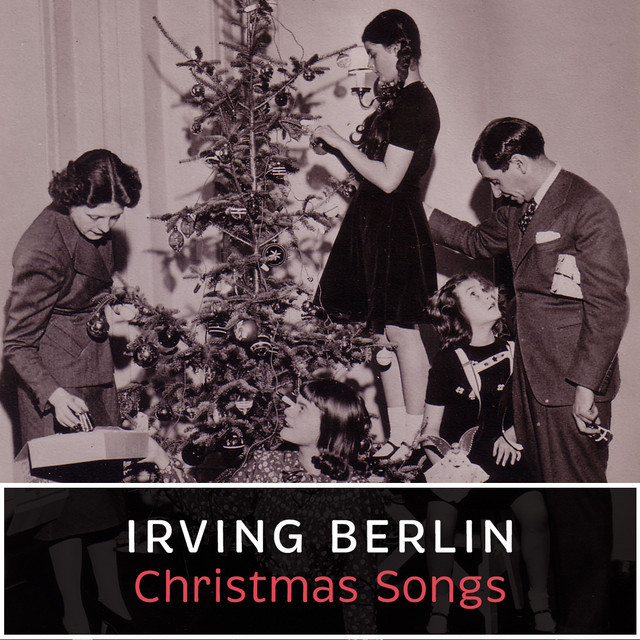
It turns out, the song has a sad back story too.  Berlin’s three-week-old son had died on Christmas day in 1928, so every year on December 25, he and his wife visited their baby’s grave.   However, Berlin thought of Christmas as more of an American holiday than a religious celebration and is known for having a family Christmas tree and gift giving in his home. And, we have the gift of his song.       

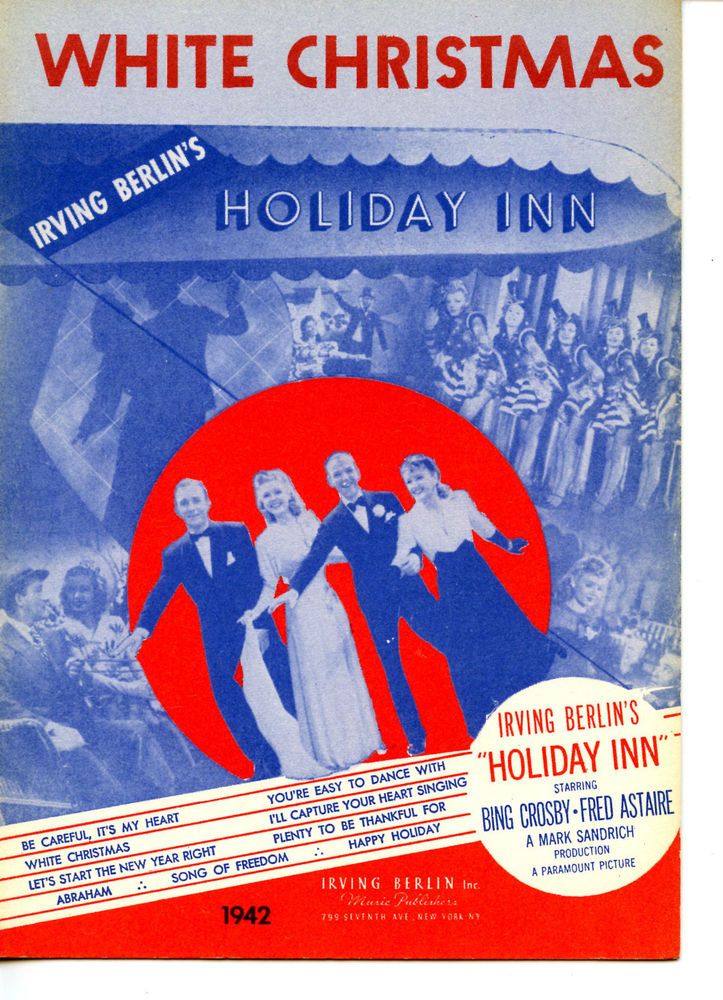
In 1942, our song was featured in the film called “Holiday Inn” and cemented its popularity here in the US.

The movie brought together Crosby and Fred Astaire along with Marjorie Reynolds and Virginia Dale.  The song “White Christmas” won the Academy Award for best original song that year. Click or tap on the triangle in the next image or link to see the film version of our song, alas, without the opening verse. 

Our song was was reprised in the 1954 film, also starring Crosby, unsurprisingly titled “White Christmas.”

Now, if you don’t have an earworm already, click or tap on the triangle in the next image or link to see the costumed and choreographed (a bit over the top?) 1950s version.

Although Crosby dismissed his role in the song’s success, bantering later that “a jackdaw with a cleft palate could have sung it successfully,” he was associated with it for the rest of his career.  Just go to any shopping mall this season and I’m sure you’ll hear his crooning once or twice or, probably, more!

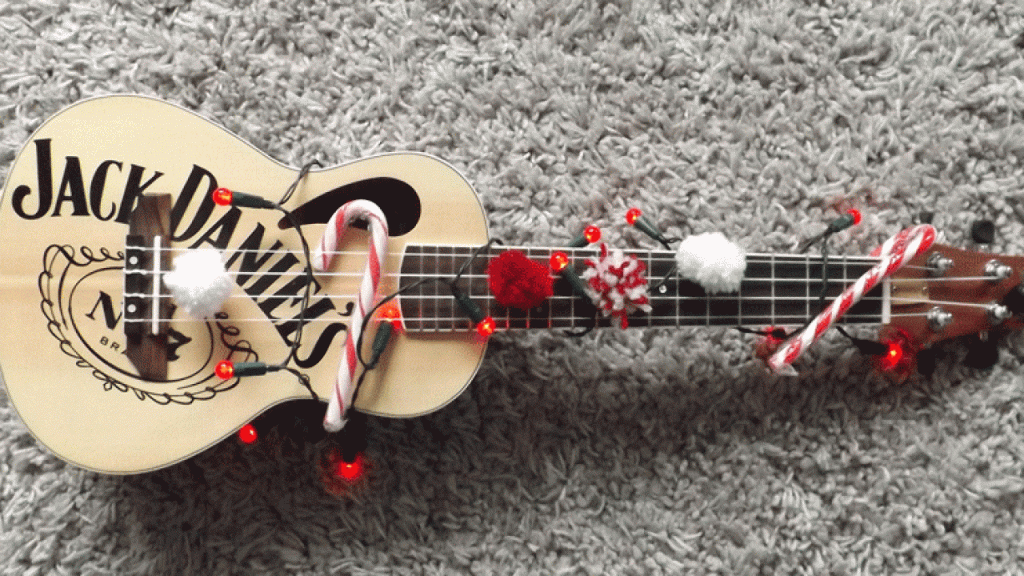
Needless to say, there are dozens and Dozens and DOZENS of takes on our song on YouTube. Also, there are a few ukuleles that reflect the mood of a white Christmas even though we would need to dig out our fingerless gloves, and have a sip or two of “Black Jack,” to get into the strum of things!

So, as we move through the Winter Solstice, be on the lookout for the inevitable white stuff, remember the old days with your plow guy, stay warm, stay safe, and stay away from any nasty family discussions about the coming year!Oh, yes. Forget red versus blue for a bit and think white, white snow.

Now, we can’t let this posting simply end without some other covers of our song, in decidedly different styles! Click or tap on the triangles in the next couple of images for our Christmassy earworm to “dance in our heads” for the rest of the holiday season. 

So, Happy Christmas, Kwanza, Hanukkah, Whatever to all! And to all a Good Night!And, of course, STAY TUNED!

ANOTHER MUSICAL MUSING–Musing–17 November 2023,”Second Hand Rose,” From Follies to Film

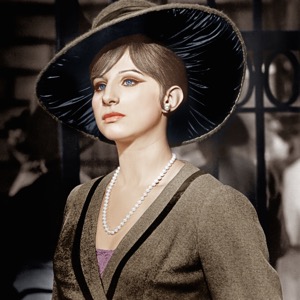
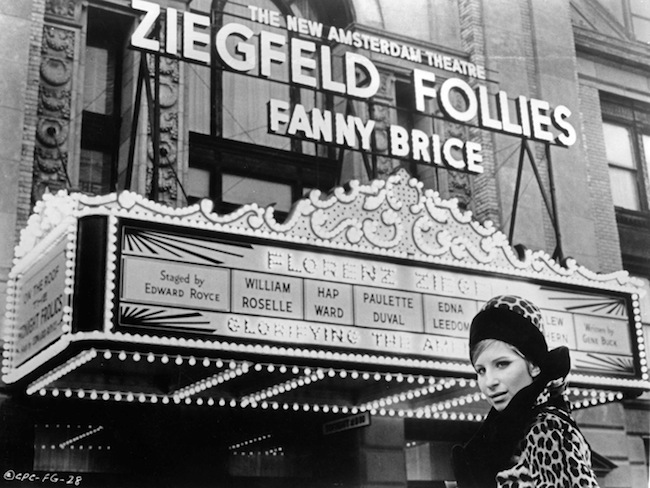
Most of us who have heard the song “Second Hand Rose” over the years probably associate it with Barbra Streisand in the 1968 film “Funny Girl.” Interestingly, the song was not part of the original 1964 Broadway musical by the same name but was added for the film.  Go figure. 

FUNNY GIRL, Barbra Streisand, 1968

The song bemoans (with tongue in cheek) the sad-to-her life of the daughter of a second-hand dealer—her home, her clothes, and even her boyfriend.  Ah, woe is she!

Click or tap on the triangle in the next image for a look at the film version and listen to the great Barbra!

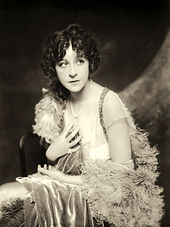
Those of us with a grey hair or two might recall, however, the performer who originated the song and on whose story the musical and film was based, Fanny Brice. 

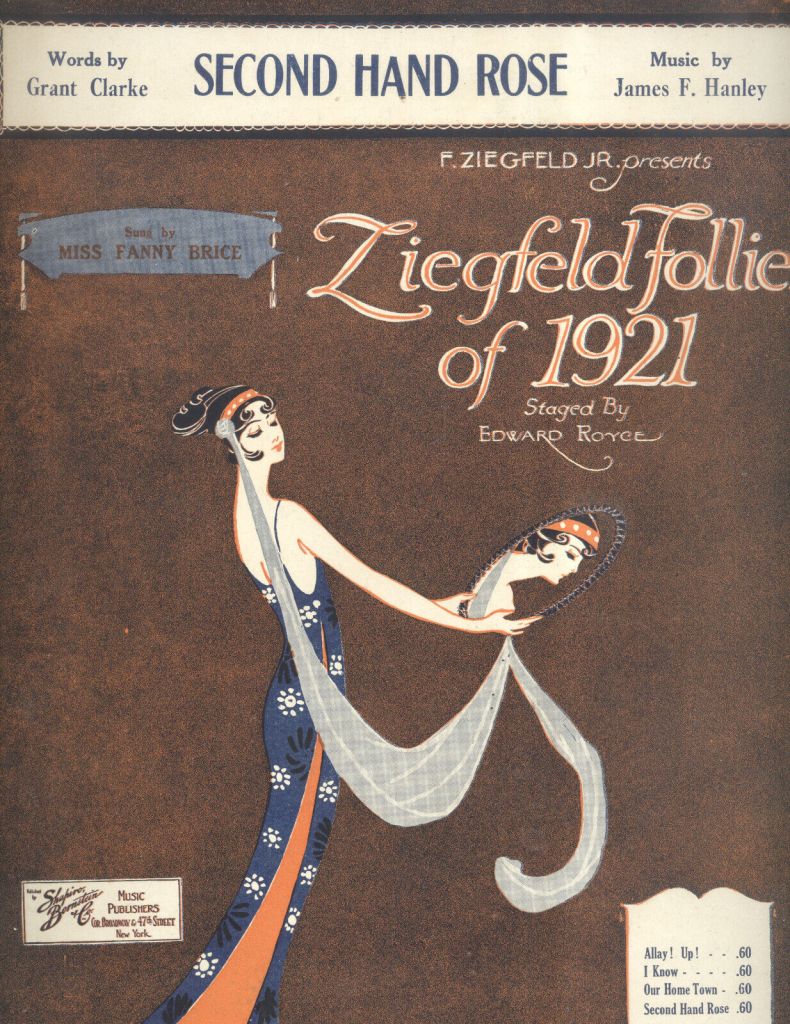
The song was written by Grant Clarke and James F. Hanley, Tin Pan Alley and Broadway songwriters, specifically for Brice’s appearance in the “Ziegfeld Follies” of 1921. 

A critic at the time describing Brice wrote: “This inimitable artist chalked up one of the few high marks of the evening with this song. For clarity of utterance, economy of means and a highly developed comic sense, Miss Brice has no peer on our stage.”  A pretty good review!

Here she is in costume and makeup for the role. Not much like Barbra!

Click or tap on the triangle in the next image to hear the way SHE sang it.

Brice (nee Fiania Borach, 1891- 1951) was born into a Hungarian-Jewish family in Manhattan.  Her father ran a saloon and she became an entertainer first in Burlesque and then in the Follies. In all, she was a model, comedienne, singer, recording artist, and stage as well as film actress.

She became the star of many Broadway musicals and shows during her career and her good looks, comedic personality, and brassy but beautiful Broadway voice made her a popular headliner of the ever-renewing Follies in the teens, 20s, and 30s. 

Here’s another from the Follies of 1921.

Click or tap on the triangle in the next image for Brice’s original take on what has become a jazz standard of today.

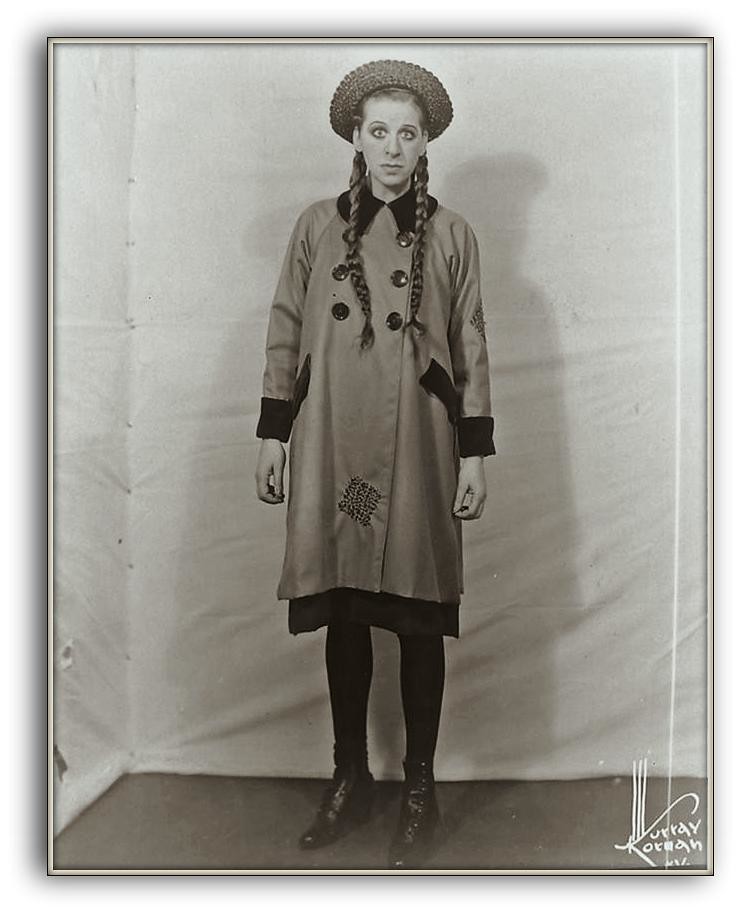
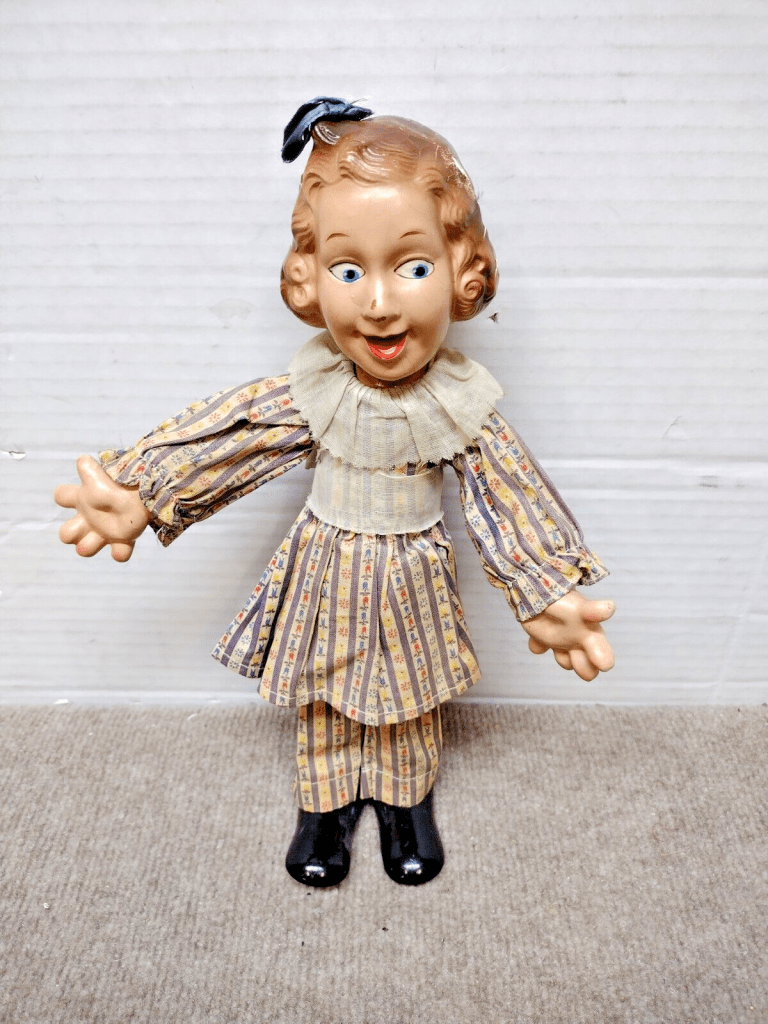
Through the 1950s, Brice’s persona and rubber-faced looks became cemented in comedy. The medium of radio gave her another broad audience with her most memorable role as the creator and star of the top-rated radio series “The Baby Snooks Show.” 

Needless to say, a rather broad range of talent—from burlesque girl to bratty toddler! Click or tap on the triangle in the next image to see two “child stars” play with each other!

Interestingly, Bruce always performed as Baby Snooks in costume even though it was a radio show with no studio audience!  Go figure.

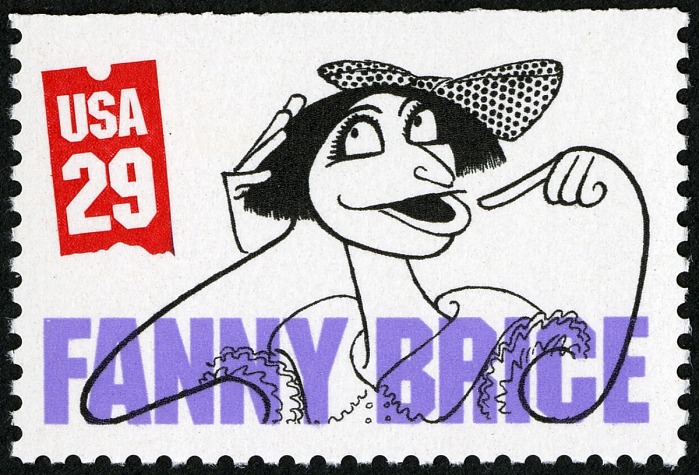
For her contributions to the film and radio industries, Brice was posthumously inducted into the Hollywood Walk of Fame with two stars, one for radio and one for film.

And, of course, the ultimate American honor!

As to our songwriters, Grant Clarke (1891-1931) was a prolific contributor to Tin Pan Alley and Broadway of the era and wrote hits like “Ragtime Cowboy Joe” and “Oogie, Oogie, Wa Wa.” 

Albeit a bit off theme, this song is too much fun to leave out of our story! Click or tap on the triangle in the next image for a laugh and listen. But, you really don’t have to!

James F. Hanley (1892-1942), also of Tin Pan Alley and Broadway, wrote such standards as “Back Home Again in Indiana” and “Zing Went the Stings of My Heart.” 

Those were the days! Click or tap on the triangle in the next image for a look and listen to this pop oldie.

So, we have another song—“Second Hand Rose”—of more than one generation, the Streisand latter paying homage to the Brice former.  Both renditions live on.

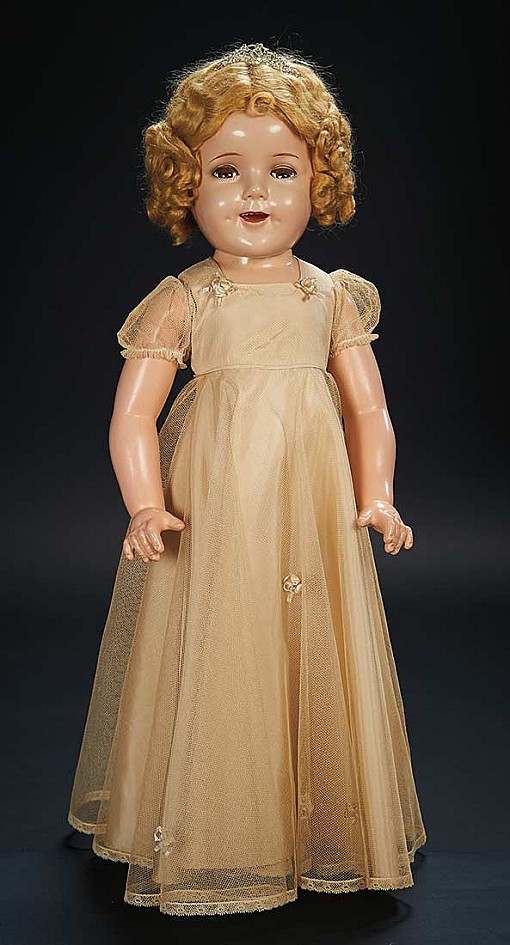
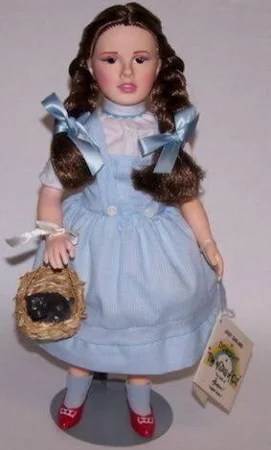
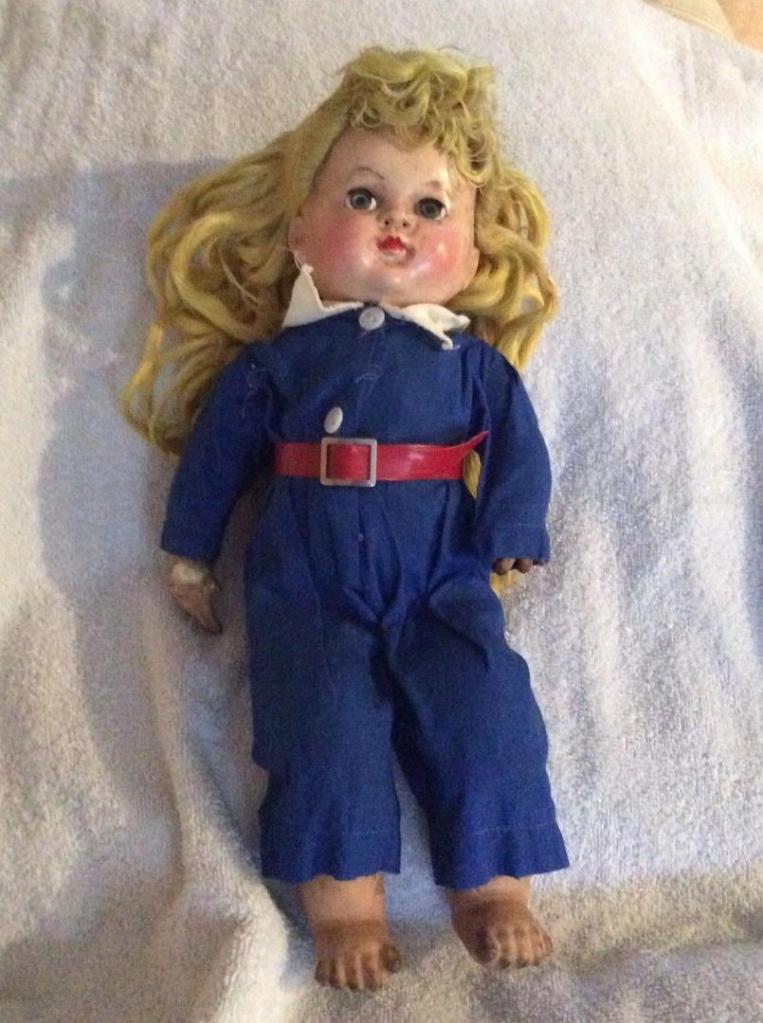
So, gentle readers, let’s end with a quiz! Can you name the four most popular character dolls of the early 1940s?

Good job! Stumped? STAY TUNED!

MUSICAL MUSING: 11 November 2023: A Musical Salute to Veterans–Toot, Toot, Tah!

I’ve been doing these “Musical Musings” for a bit over a year now. Since many are based on recurring holidays or other events, it’s not improbable that a few past but still timely muses of mine might live to see another day. Here’s one of my favorites from a year ago–a “veteran,” you might say!

Here we go again!

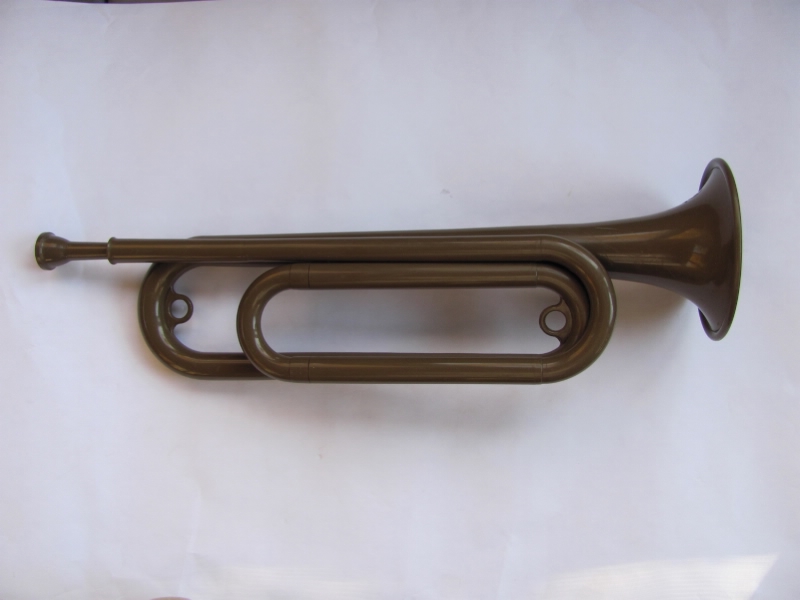
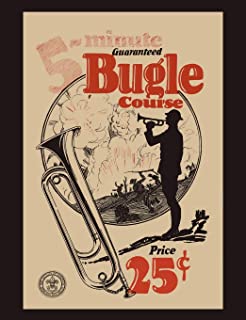
When I was in high school, way back in the middle of the last century, I bought two musical instruments at a local secondhand store.  For a total of seventy-five cents I got a ukulele and—of all things—a bugle, both made of “genuine” plastic.  The uke was a cheap “Carnival” brand but the bugle was sturdy Army surplus. Sadly, both are long gone from my various collections. 

I strummed at the uke, learned the three or four chords that are all that are really necessary, had some fun, and set it aside until college.  In those early days, however, I was in the high school band (trombone) and knew enough about tooting a horn to be able to play the bugle.  Sorta  .  .  .

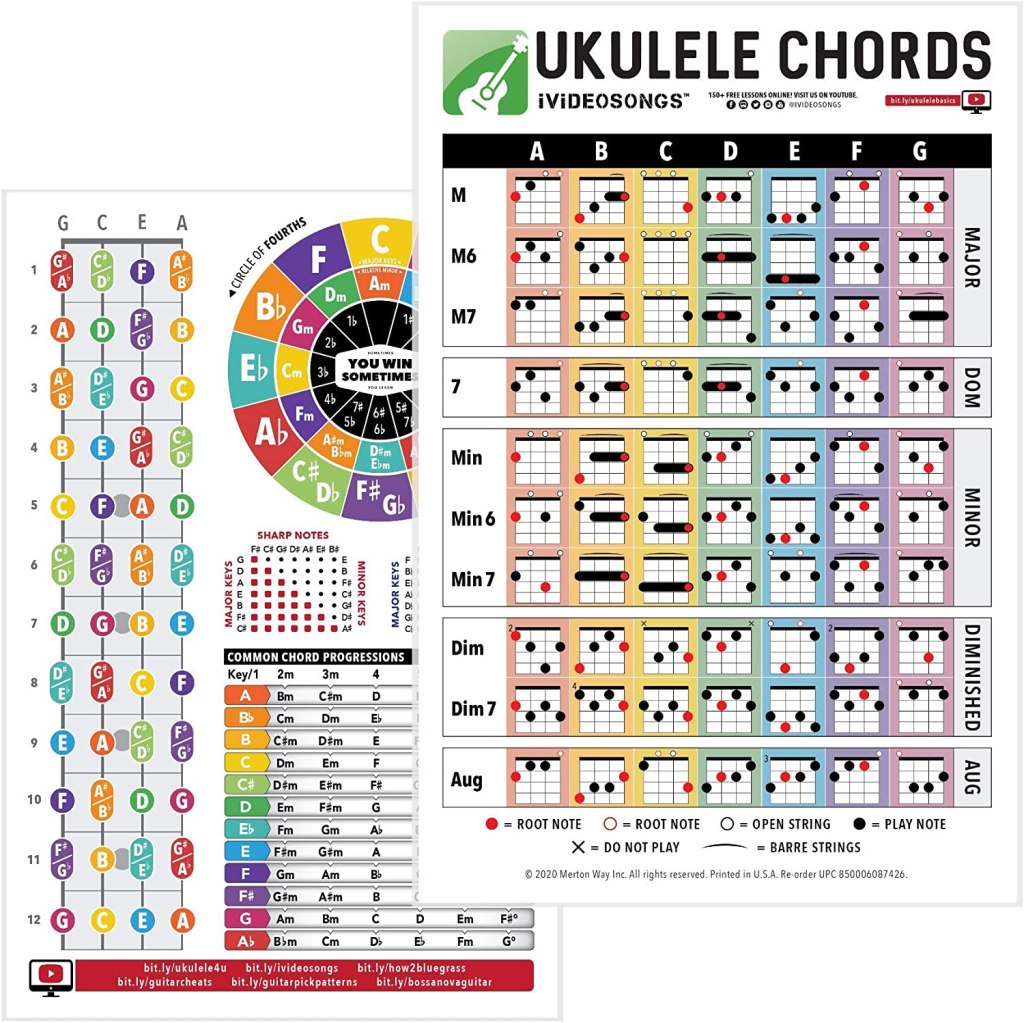
We all know that with a ukulele and its four strings and dozen or so frets, one can play over fifty distinct notes and innumerable chords.  The bugle, on the other hand, is one of the simplest of musical instruments. 

It has no valves and pitch changes are achieved by “embrouchure,” that is to say, lip control. Consequently, the bugle is limited to only five notes, middle-C, G, C, E, and G—the basis for the entire repertoire of standard bugle calls!

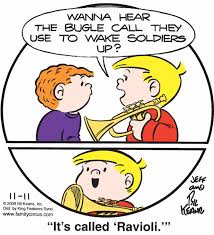
While the musical range of the bugle is limited, the music surrounding the bugle and those who play it—buglers—can be quite a rhythmically and melodically complex. Take the famous”wake up call” . . .

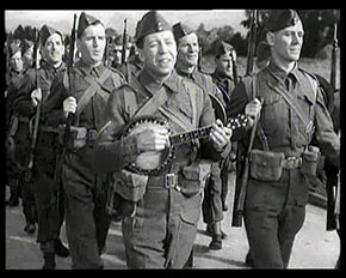
The bugle, along with an array of drums, has long been a favorite marching group genre. 

Alas, not so with the ukulele, even a nice loud banjolele!

And that, gentle readers, is what we are going to explore in this week’s musing.

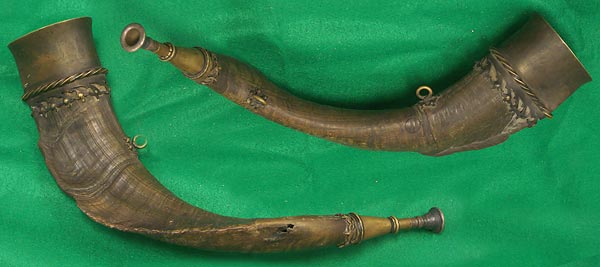
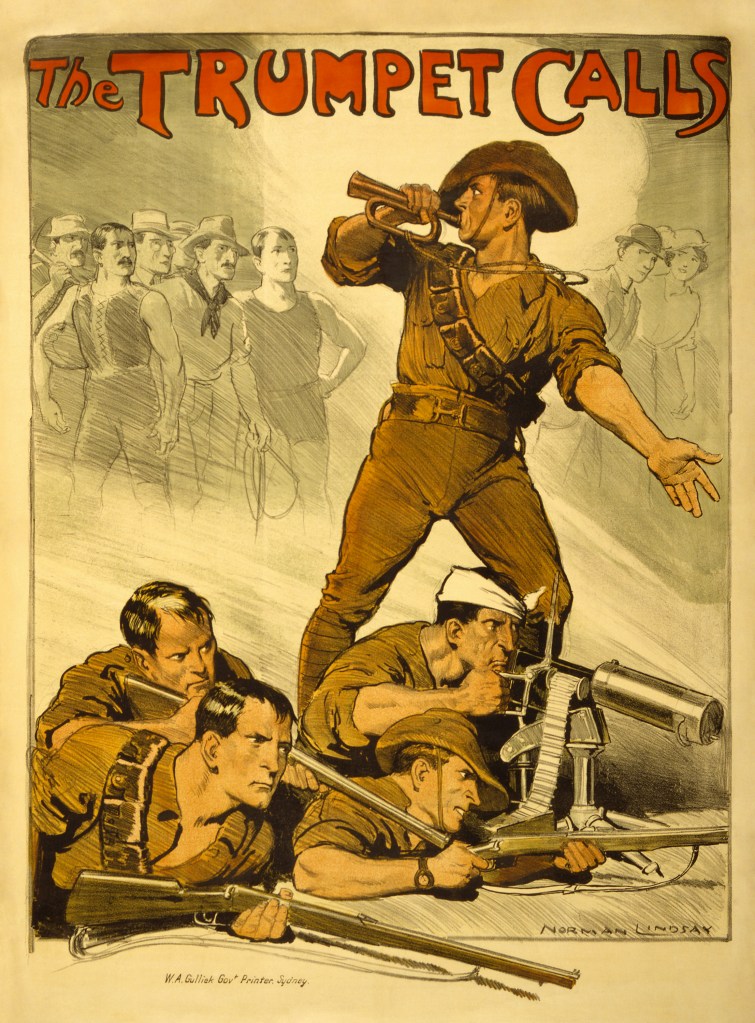
Ancestors of the modern bugle were made of animal horns and have been used for communication and signaling since ancient times. 

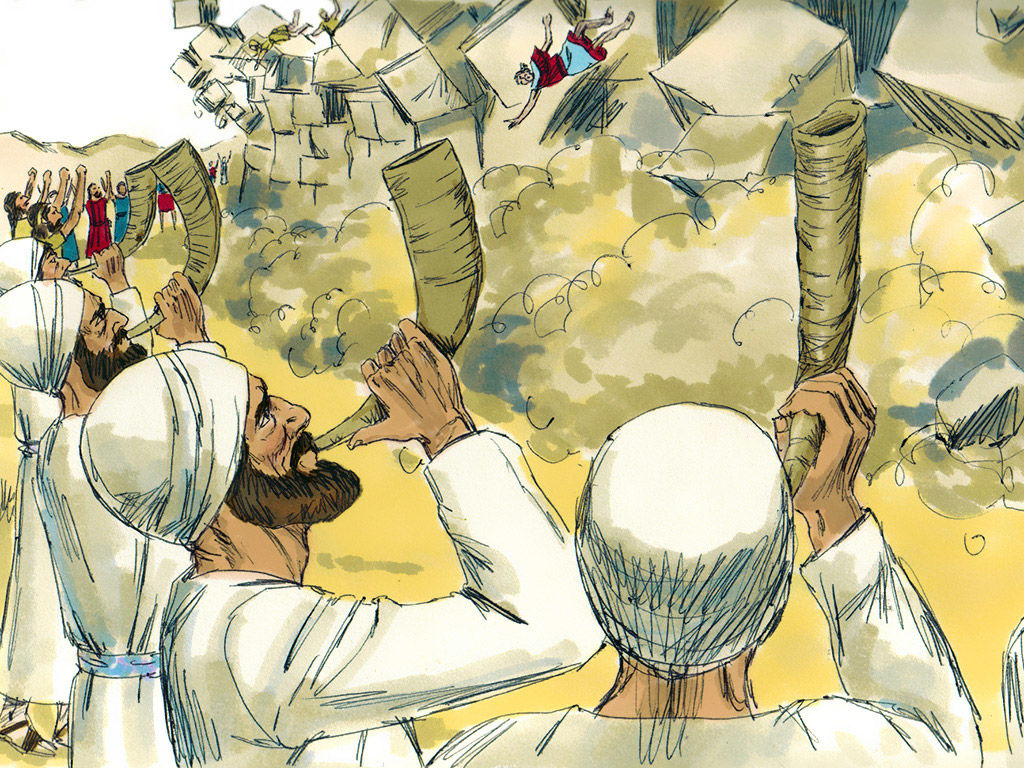
And, remember what the biblical Joshua did to the walls of Jericho with those animal horns!

Here is Mahalia Jackson’s interpretation of this well-known spiritual. Click or tap on triangle in the next image for a look and listen!

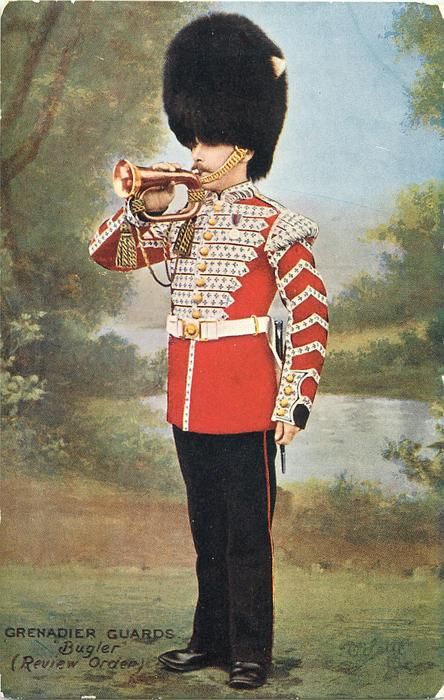
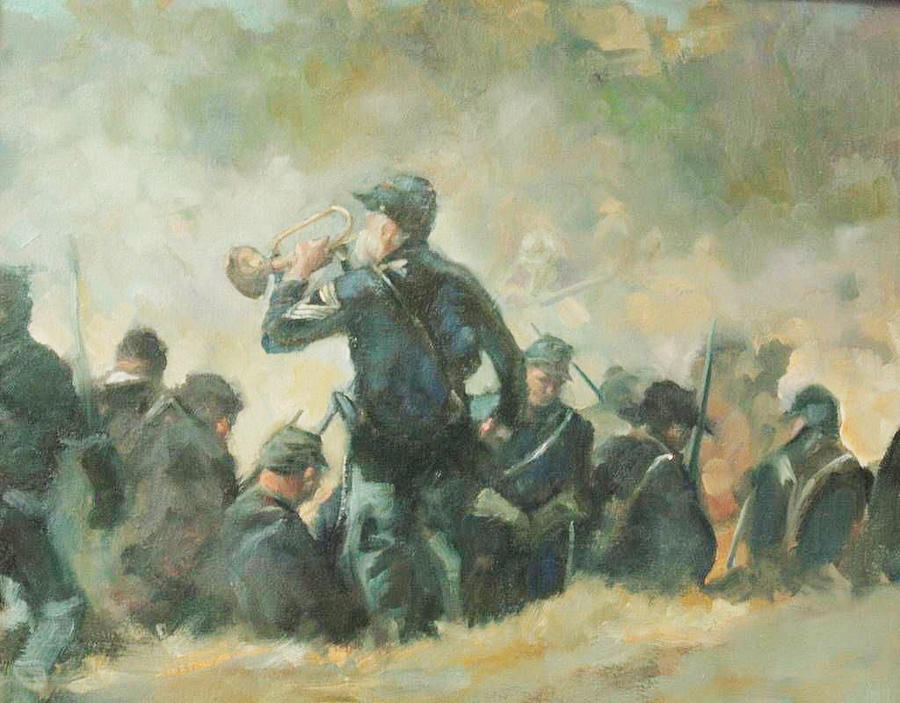
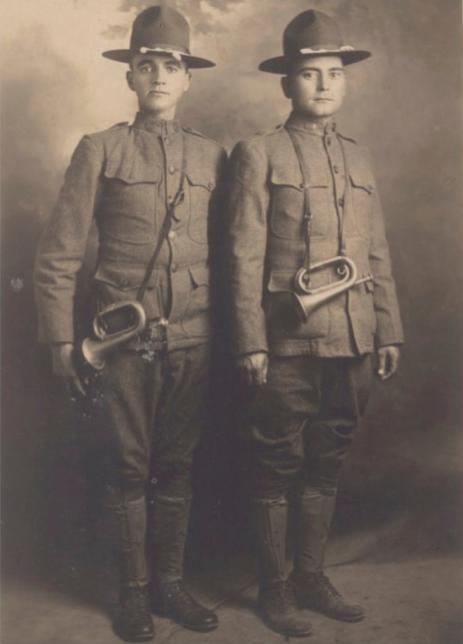
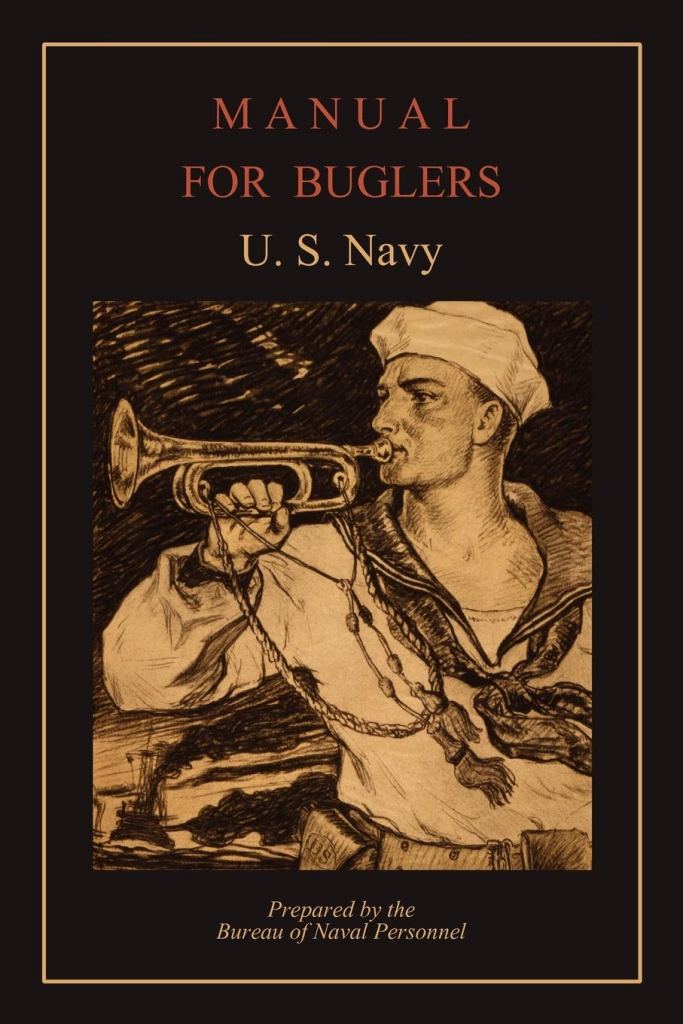
Needless to say, a more modern brass bugle has been used by military forces since the 17th century and most countries developed a series of standard bugle “calls” that could direct and regulate military life and actions. 

After World War I . . .

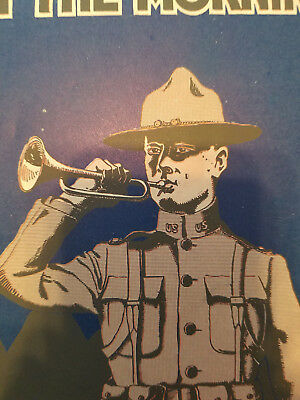
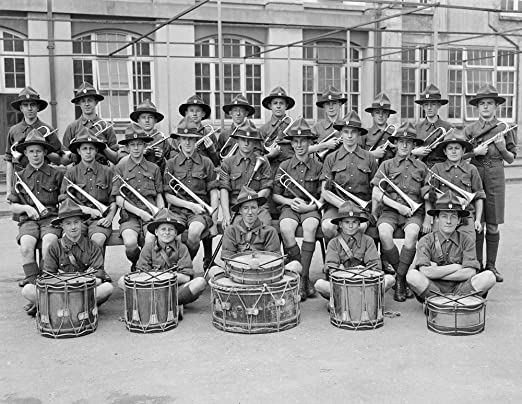
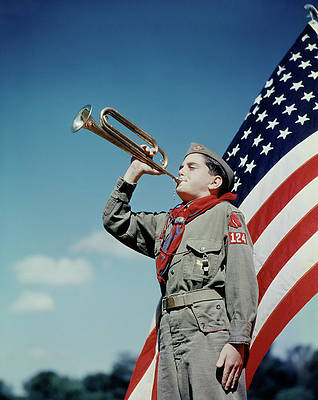
. . . the bugle also became a standard part of the camp routine of the Boy Scouts of America.  In fact, I even earned a merit badge for it!  “Toot, toot, tah!” 

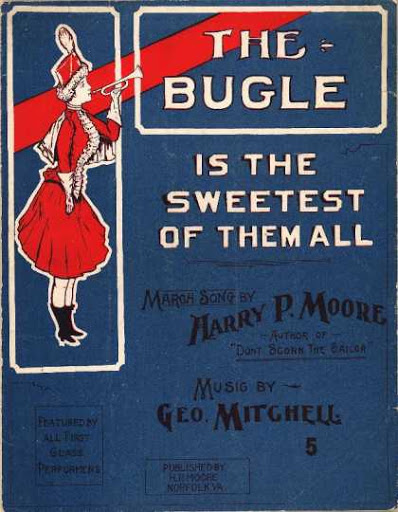
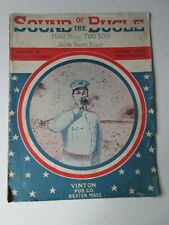
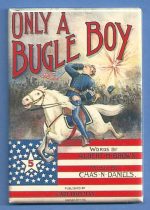
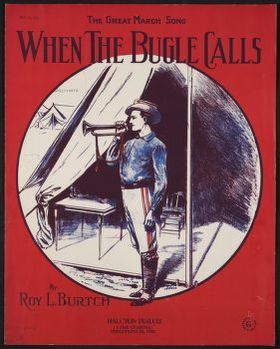
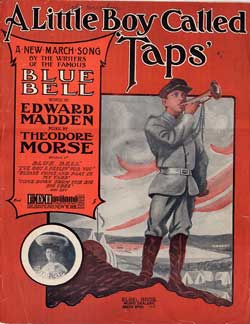
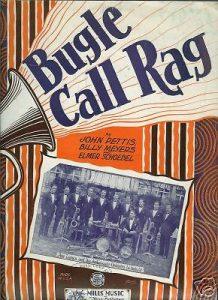
American and British music publishers touched on bugle themes in the 19th century and early 1900s.

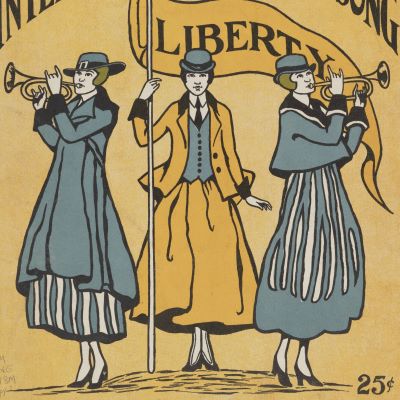
Even the suffragettes joined in!

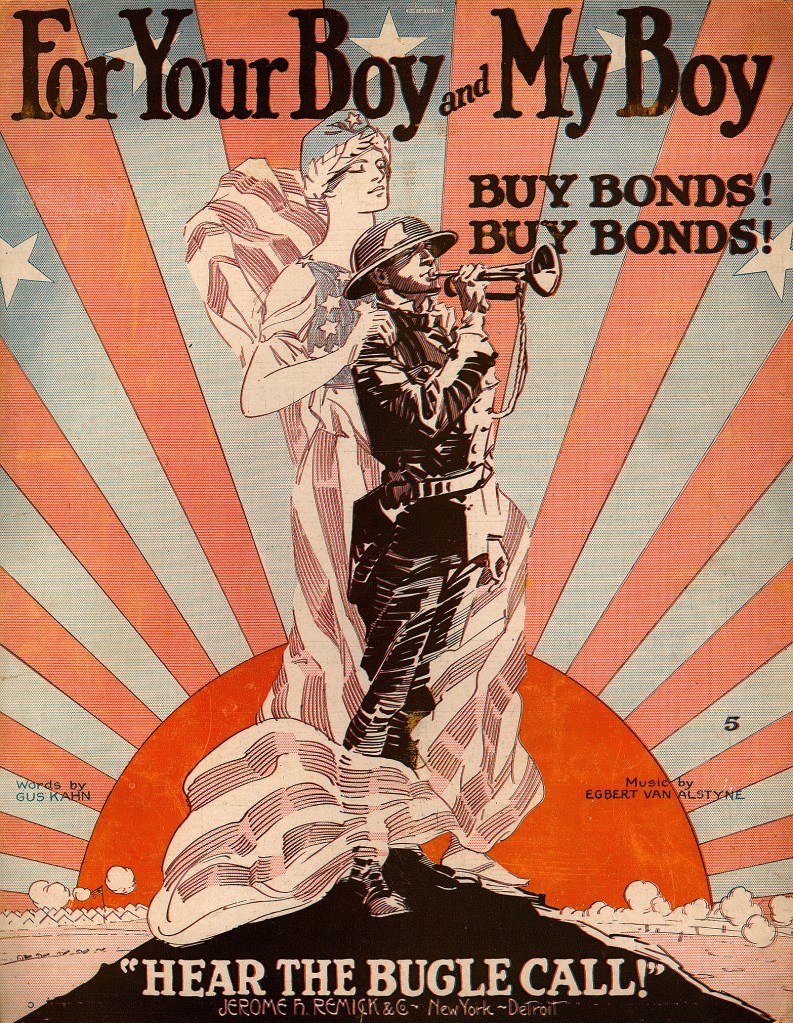
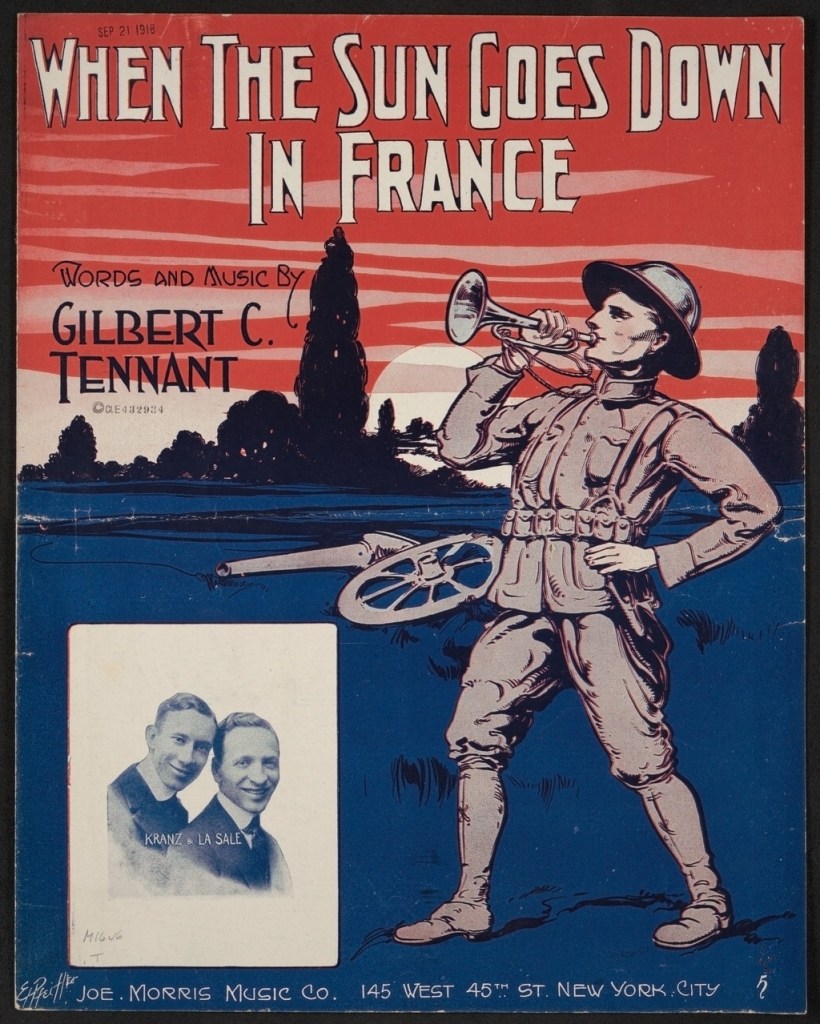
But, particularly during World War I, the bugle became a rallying trope! 

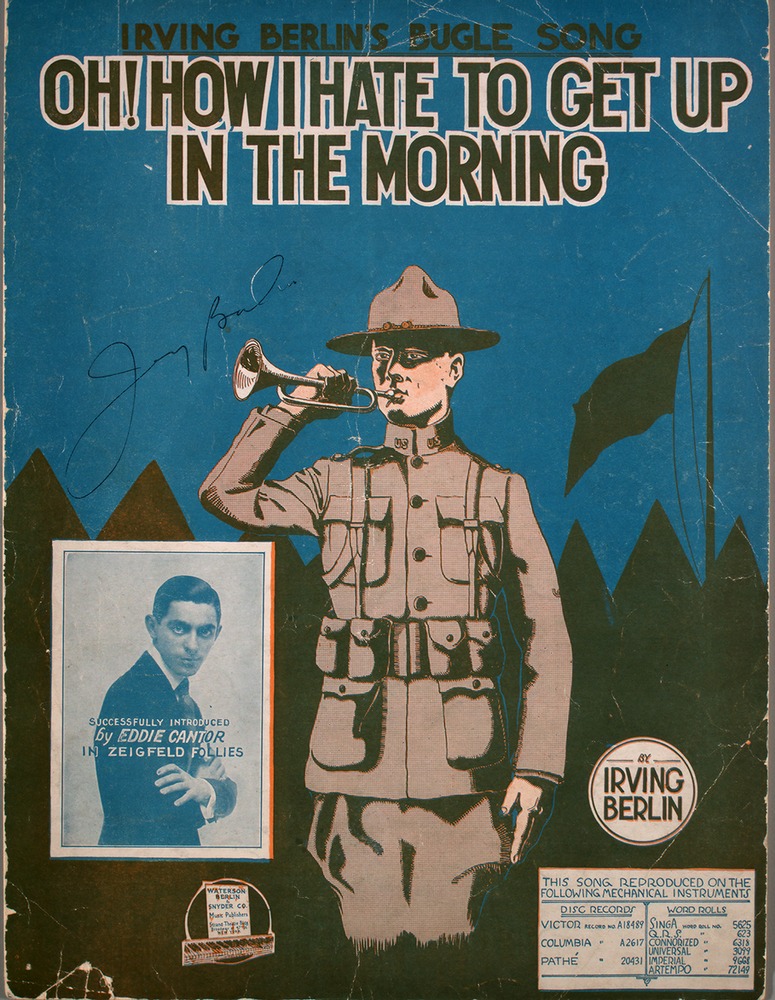
This one was written by Irving Berlin as part of a World War I era musical review for troops returning from France. Tap or click on the triangle in the next image or link to rise up with this one.

One of the more musically intriguing versions of this song is by the Mills Brothers. All of the “instruments”–including the bugle and other horns being “played” are actually vocal sound effects. What fun! Tap or click on the triangle in the next image or link for this really different sound.

Or, how about a five-string banjo version? Click or tap on the triangle in the next image to hear the next generation of picking fingers at work!

The popularity–and utility–of the bugle lasted through the World War II era . . .

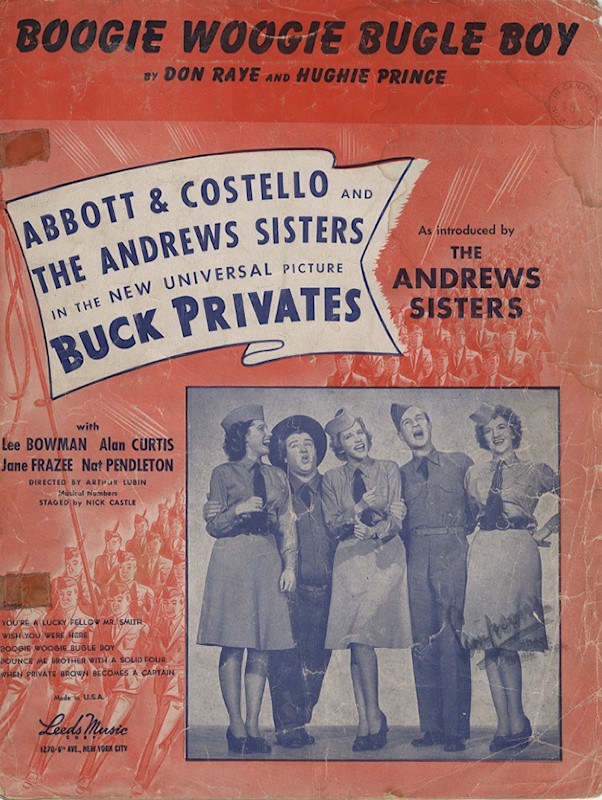
with, probably, the most well-known “bugle song” ever! 

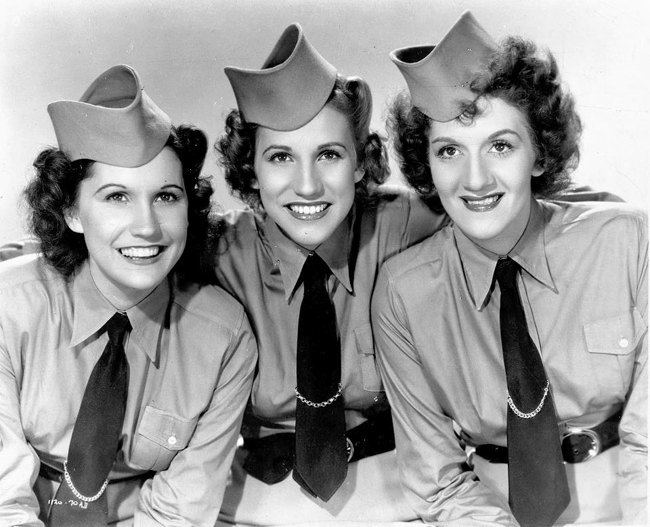
Here we have the Andrews sisters with this one. Tap or click on the triangle in the next image or link to hear their lively version!

There were other songs, a tad more sophisticated of course.

Here’s an orchestral version of this classic along with some really nice graphics! Click or tap on the triangle in the next image or link to watch and listen.

Back to basics!  The three or four best known bugle calls that most of us know and relate to today seem to be:

First, the good old “wake up” call of “Reveille.” So as to not jar you awake with this one, here it is on a ukulele! Click or tap on the triangle in the next image or link to see the simplicity of fingering for this one.

Then there is the “Call to Post” that brings horses and riders to the gate in the Kentucky Derby. Tap or click on the triangle in the next image or link to thrill to this one!

Omnipresent at any sporting event where the stadium organist has the stage is the good old cavalry bugle call “Charge. Here’s a musically augmented take on this simplest of bugle calls. Click or tap on the triangle in the next image or link to be taken out to the ball park. How many times have you heard this one?

And, probably, the most moving five note melody ever composed—“Taps,” as played at the end of the camp day or at military funerals. Click or tap on the next image to hear this tearjerker clip from the movie “From Here to Eternity.”

The British Commonwealth’s equivalent to “Taps” is “Last Post.” Tap or click on the next image or link to listen to this poignant call of remembrance.

So, give a toot and a salute to all those veterans out there and remember: There’s no substitute for the real thing!

And, of course, STAY TUNED!

ANOTHER MUSICAL MUSING, 3 November 2023, “A Prohibitively Divisive Time in America–Them vs. Us, Then and Now”

Reading today’s newspapers or watching today’s TV news, most of us note an aura of divisiveness and discomfort that pervades our country—Urban vs. Rural, City vs. Suburb, Haves vs. Haven’ts, Immigrant vs. Native, Old vs. Young, and, simply, Us vs. Them. Whew!  Game on, heavy duty stuff! 

Time to DUEL!

To start thing off, click or tap on the triangle in the next image to see and hear what is probably the most famous musical “duel” ever.

(Note: As a bit of musicological trivia, the little guy in the clip had never held a banjo before. His left hand and his “playing” were dubbed in by the late session player and arranger, Eric Weisberg, the first person to audition for the Julliard School with a banjo. The kid got the gig because of his face.)

Moving on . . . Once upon a time in America the country was similarly divided and those divisions warped it in ways unforeseen.   There was, however, a prevailing presence–a saving grace, as it were–of music in the parlor, on the stage, on the radio, in the streets, and in the pubs and clubs of the day.  

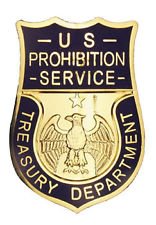
But, there’s way too musically much out there to muse upon, so I’m going to dwell on just one era of the American past. It’s one that is rich with musical lore–the once-upon-us, now-long-gone, divisive era of “PROHIBITION.” 

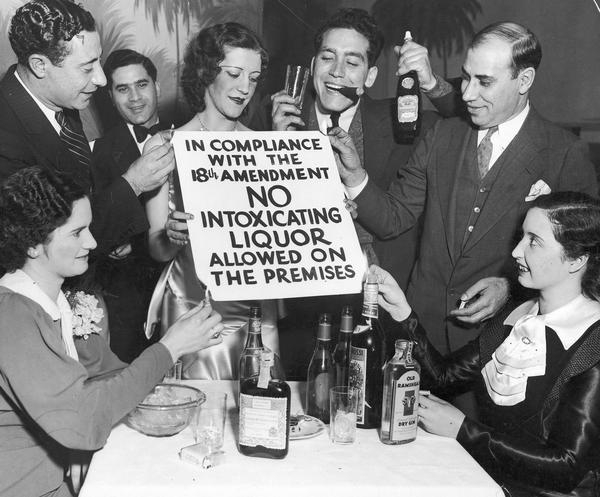
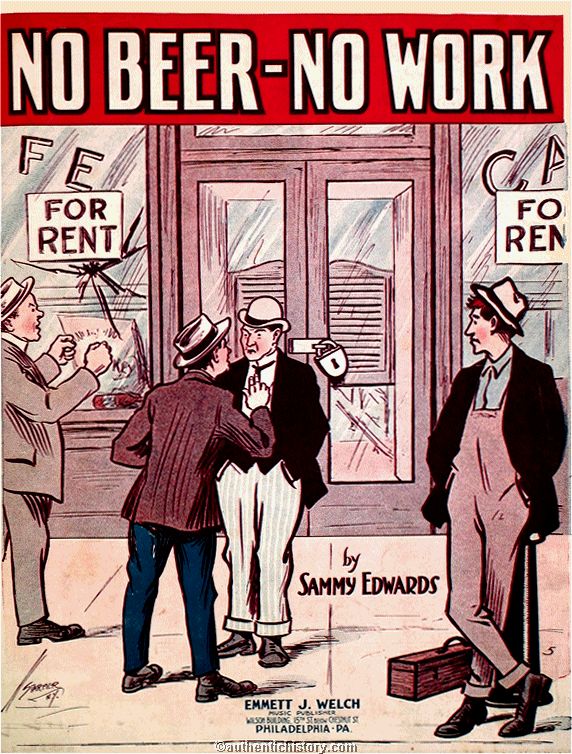
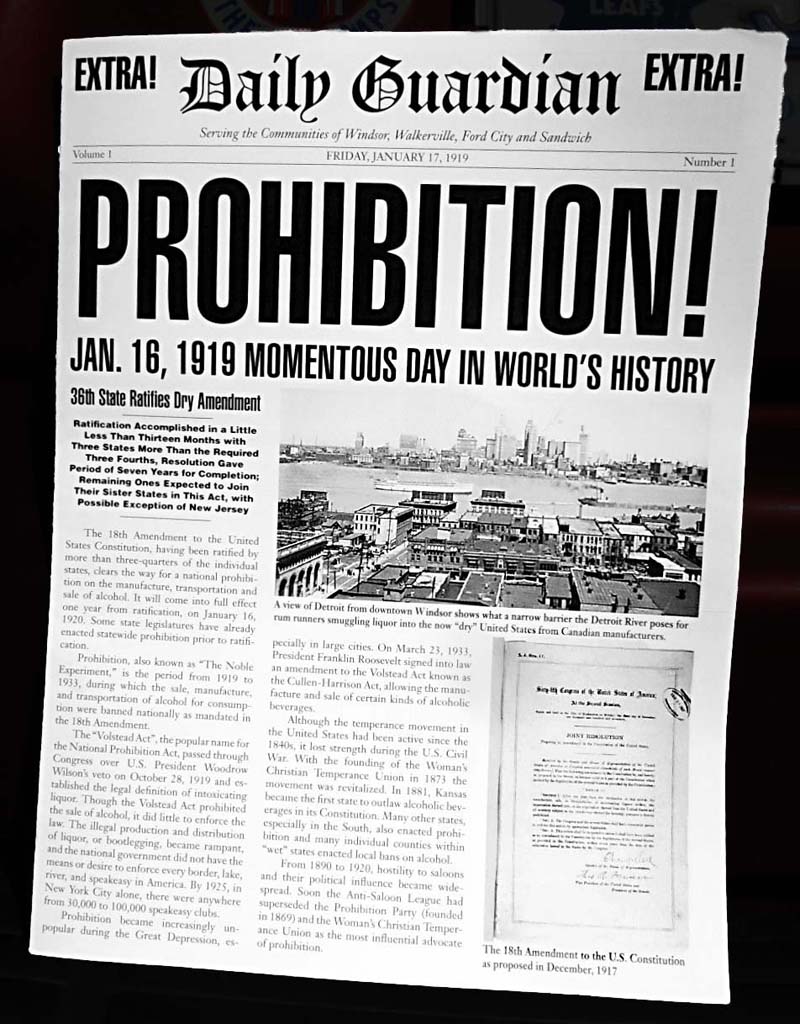
As a bit of background for those of you not as long in the tooth as I, Prohibition in the United States was a nationwide constitutional ban on the production, importation, transportation, and sale of alcoholic beverages. Interesting, though, it was not a ban on consumption. Go figure! It lasted from 1920 to 1933 and, in the dialect of the day, it was  “No booze fer youse.”    

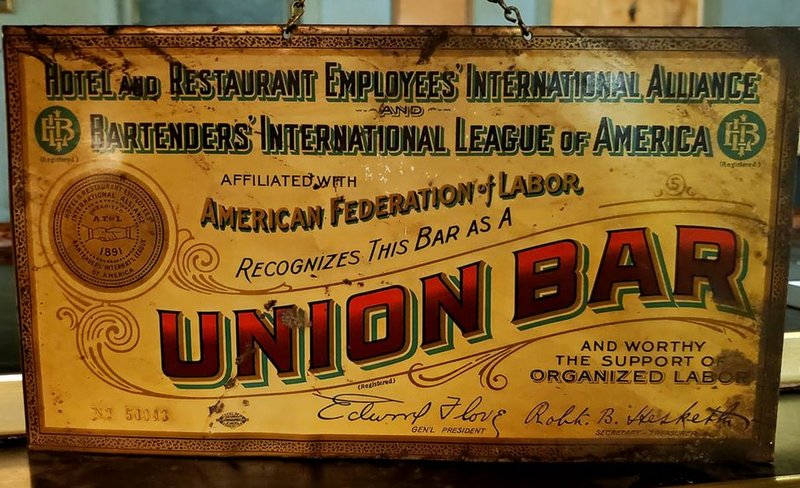
(Note: I was born a few years after Prohibition ended but one of my grandfathers was a union bartender, the other carried a beer bucket with him into the coal mines every day–give’s me some cred here!)

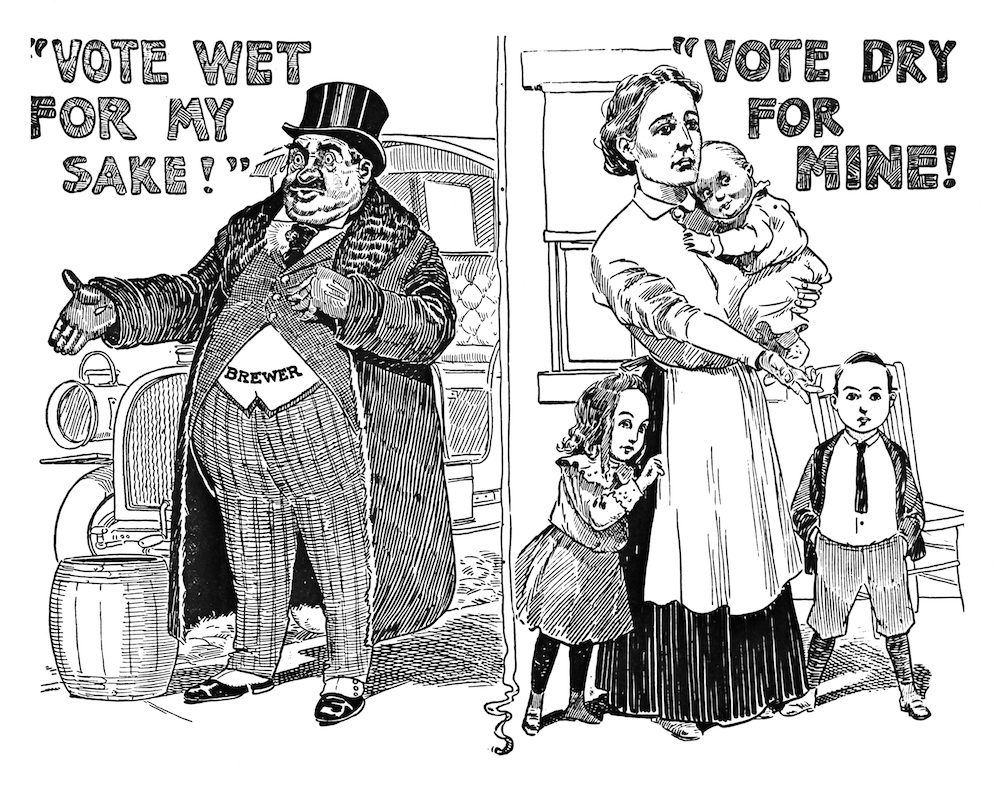
Needless to say the whole notion of Prohibition was divisive and the duelists’ wet or dry lines were marked in the sand.

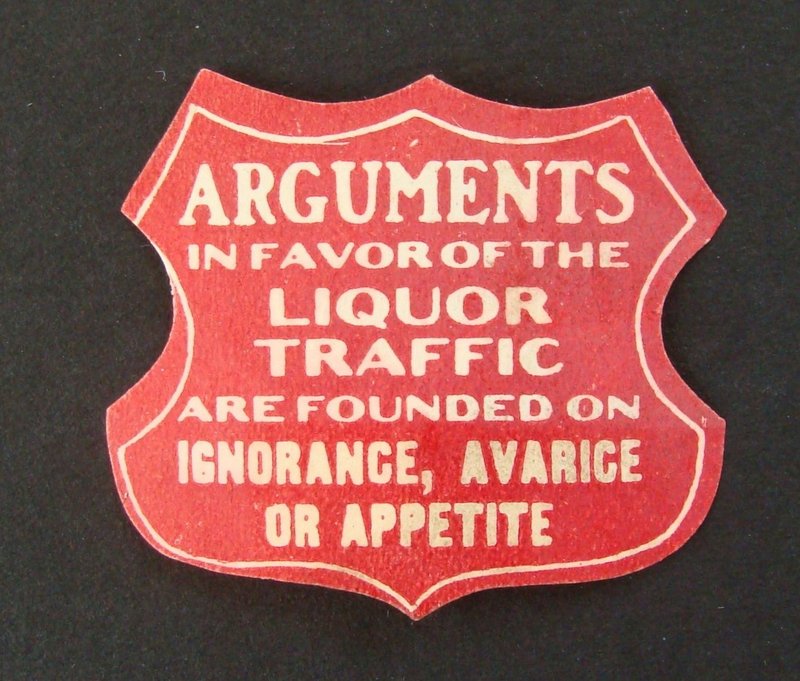
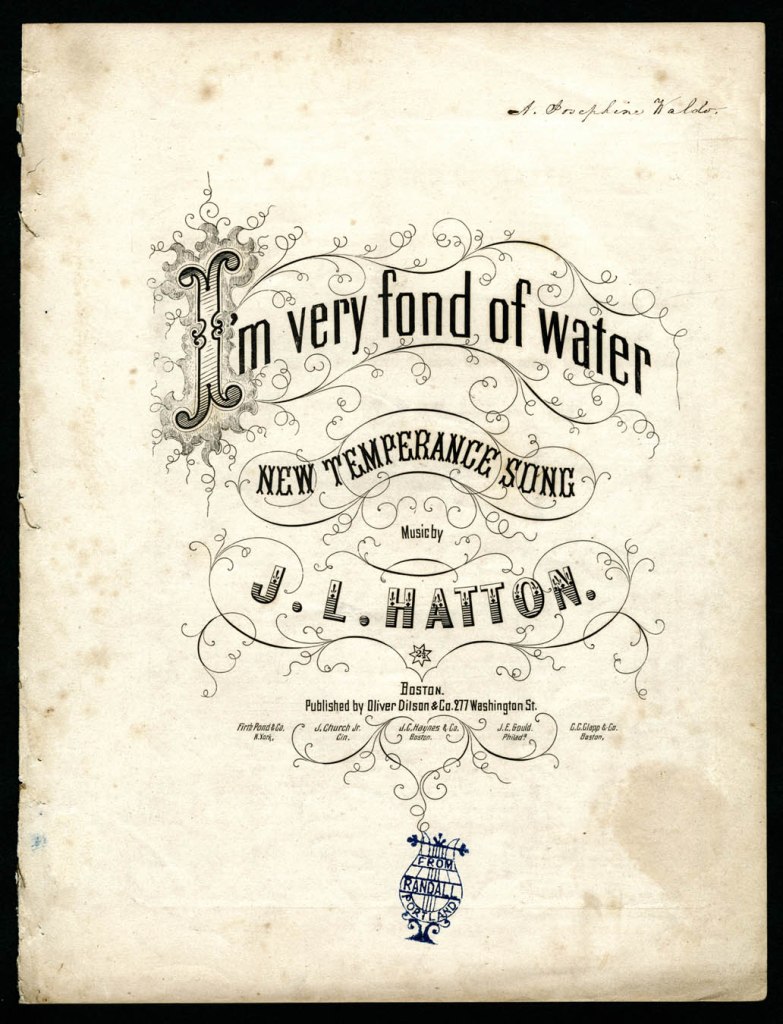
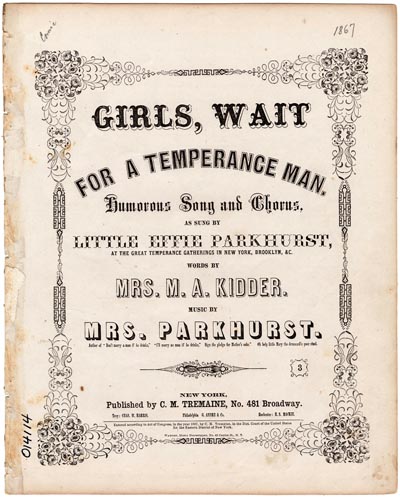
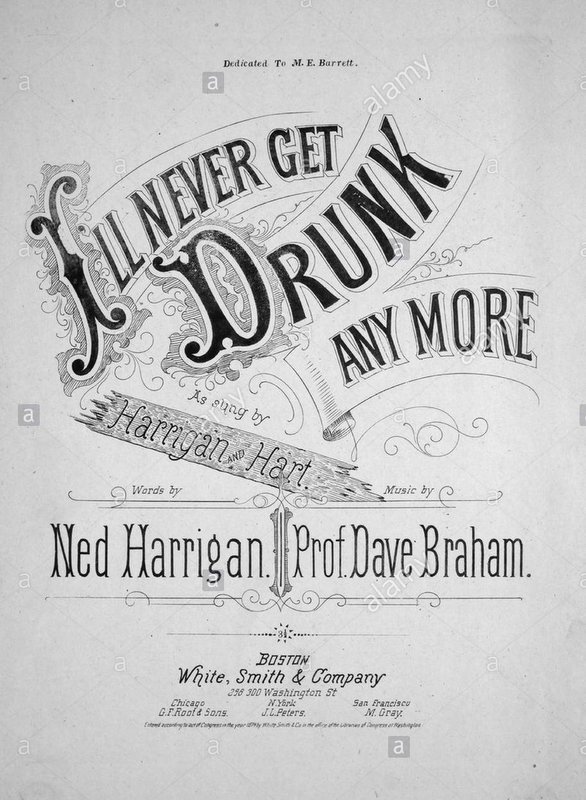
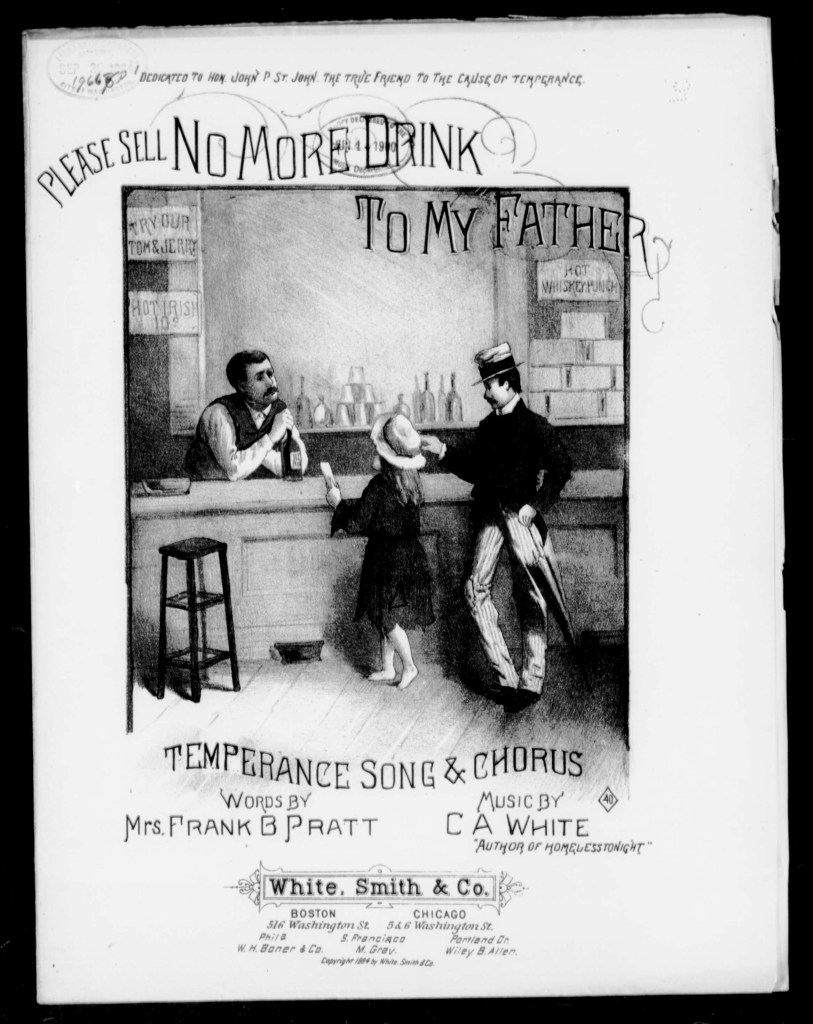
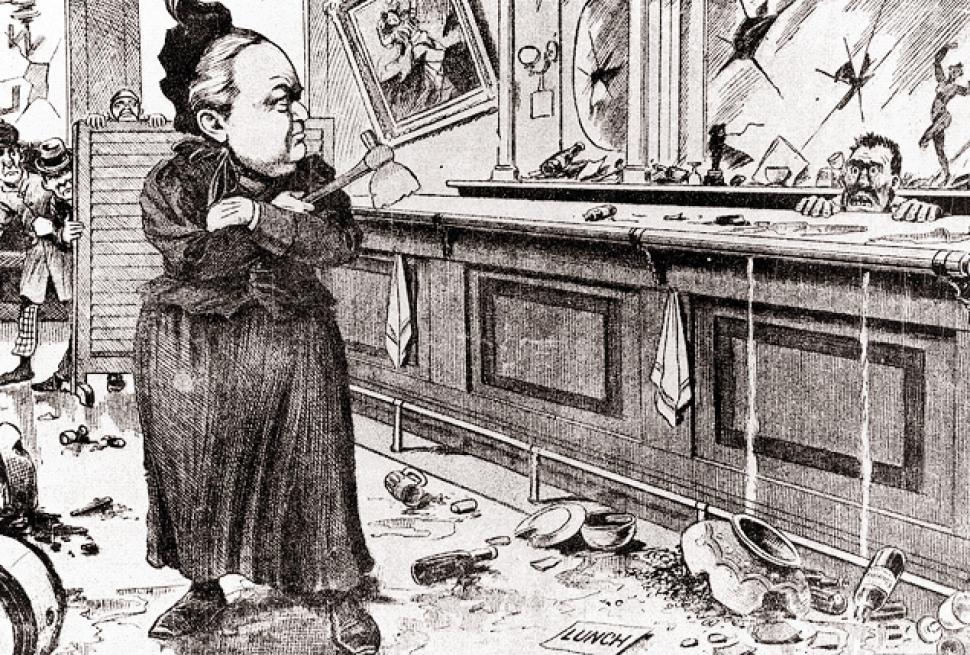
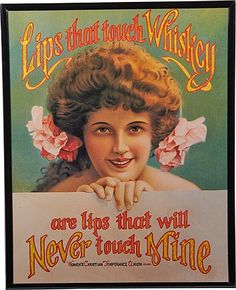
Well-meaning Prohibitionists of the time—so-called “Drys”—first attempted to end the trade in alcoholic beverages during the late 1800s. Those who espoused this “temperance” movement aimed to heal what they saw as an ill society beset by alcohol-related problems such as alcoholism, family neglect, paychecks “thrown away,” self-inflicted bodily harm, and saloon-based political corruption. 


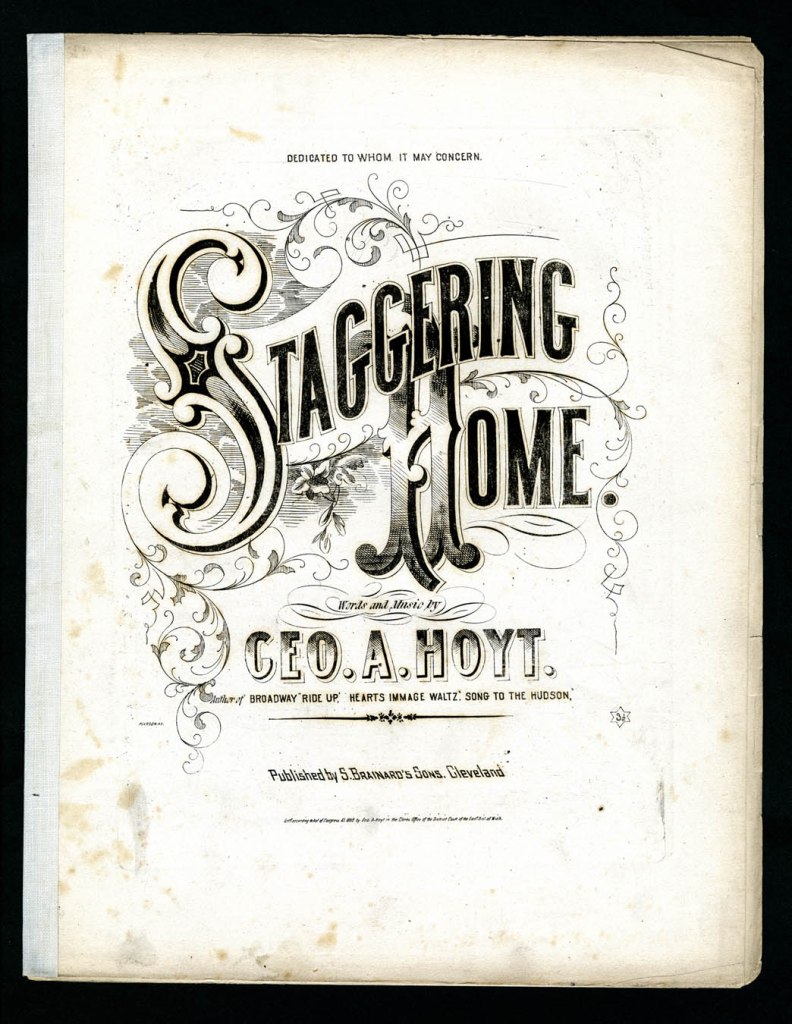
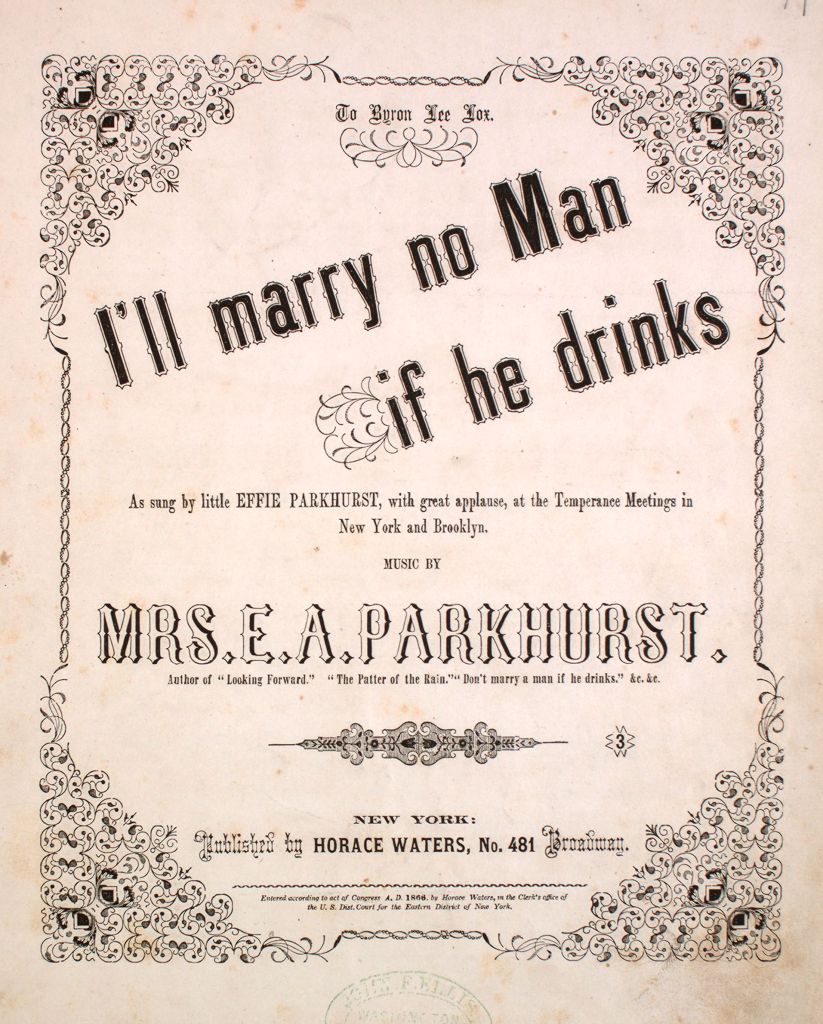
As would be expected, in both Britain and America a lot of the early popular music of the era reflected this.

Here’s a version of this one from 1925. Click or tap on the Triangle in the next image to listen to this poignant tale of woe.

And then, a real topper from a child’s point of view.

Click or tap on the next triangle in the next image to hear a British (no Prohibition over there, however) version.

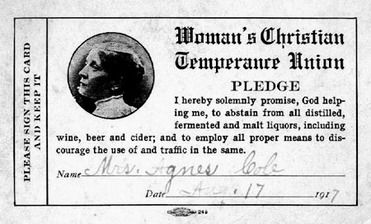
The movement was taken up by social progressives and gained a noisy, active grassroots base through the Women’s Christian Temperance Union, the “WCTU.” To their credit, these women also played a major role in the Women’s Suffrage movement. But, that’s a musical tale for another time. 

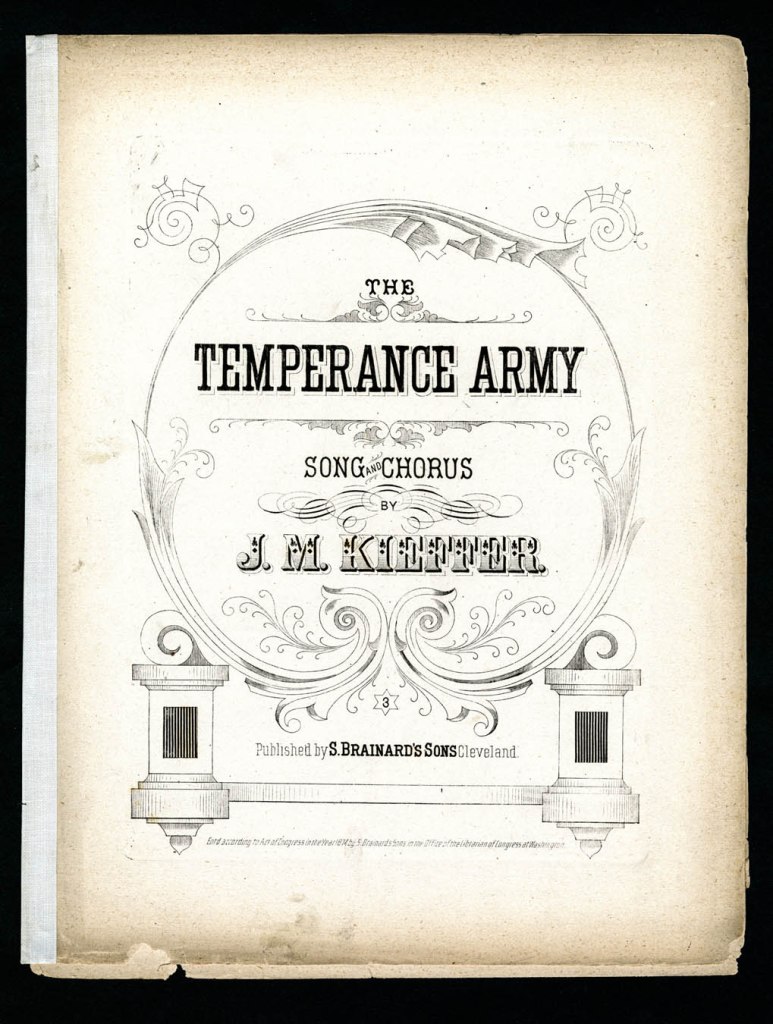
They, needless to say, had their share of music too.

How about a medley of good old temperance songs! Click or tap on the triangle in the next image for a dry, dry treat.

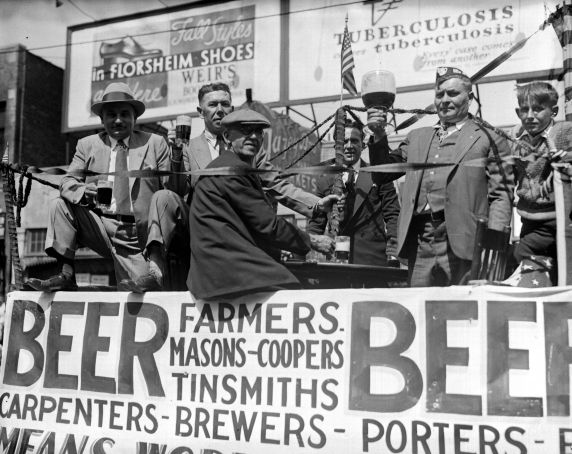
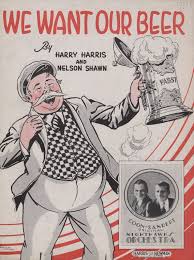
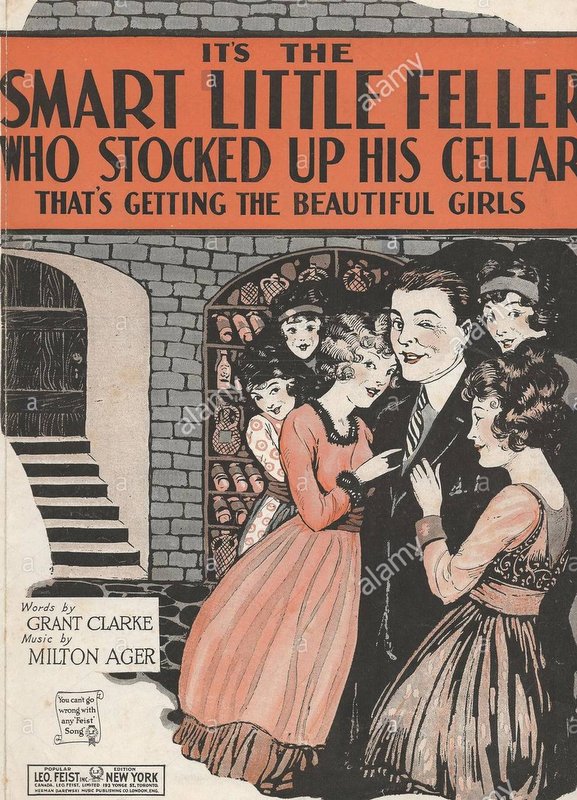
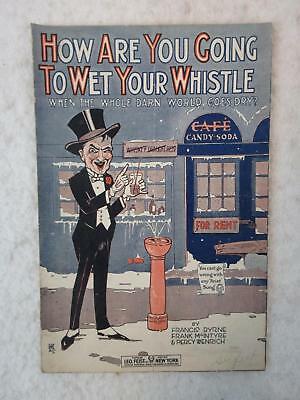
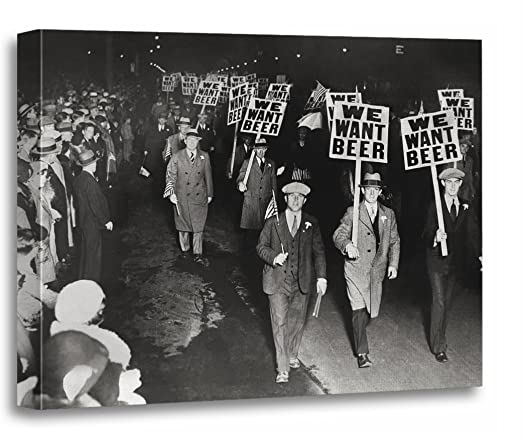
As might be expected, opposition to the erstwhile efforts of the “Drys” mushroomed as “Wets” mobilized. These were supporters ranging from those Martini-sipping, cosmopolitan city dwellers to the Irish, German, Italian, and other not-so-posh ethnic communities whose life styles and livelihoods were grounded in alcohol production, distribution, and–of course– consumption.  

Songs of the day reflected this bleak (to many) situation.

Click or tap on the triangle in the next image for a look at the words and music for this one.

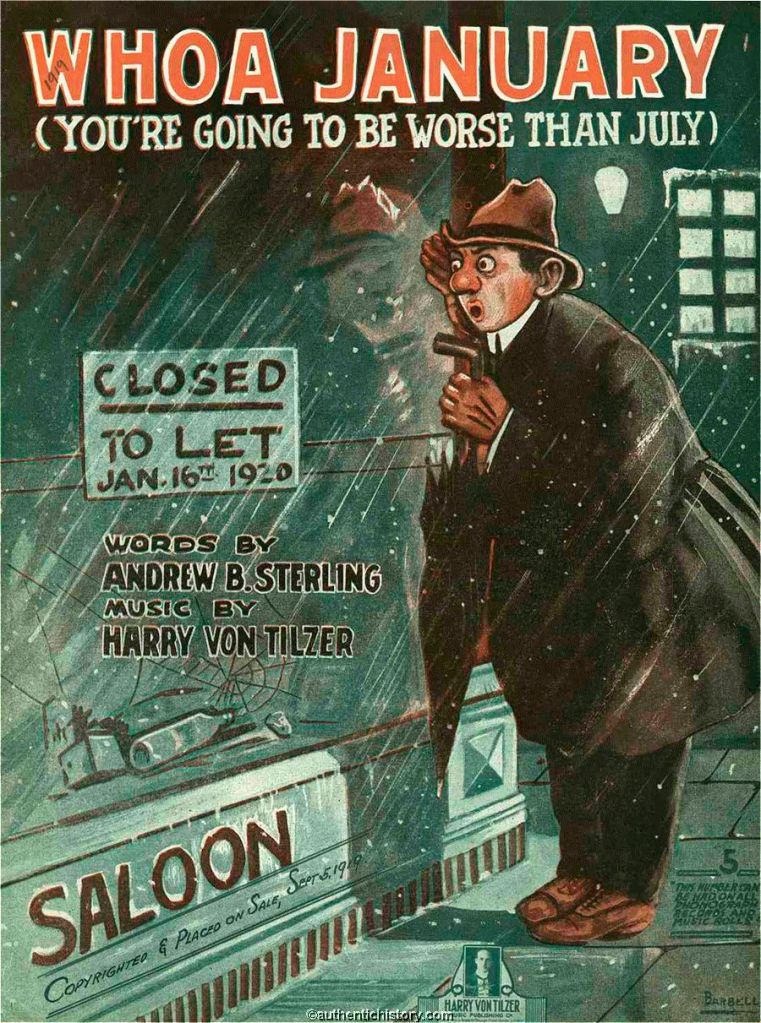
Still, the brewing, wine making, and distilling industries were nailed shut by a succession of conservative state legislatures, and Prohibition became the law of the land. Alcohol consumption ended (Ha!) nationwide under the Eighteenth Amendment to the U.S. Constitution, ratified by 46 of 48 states—all but our next door neighbors Connecticut and Rhode Island! 
Enabling legislation, known as the Volstead Act, set down the rules for enforcing the federal ban

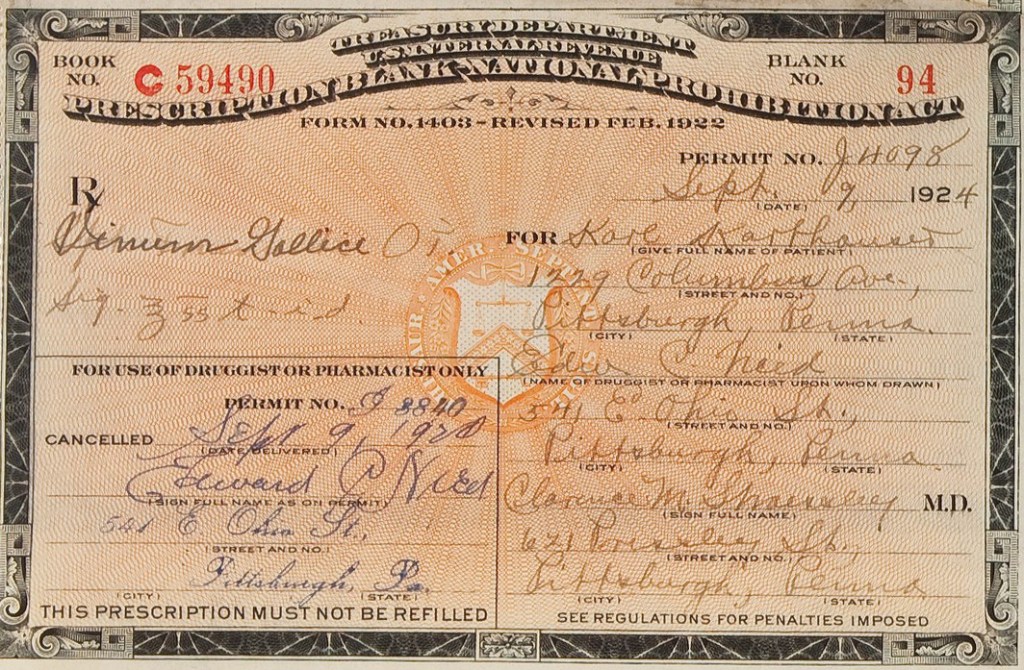
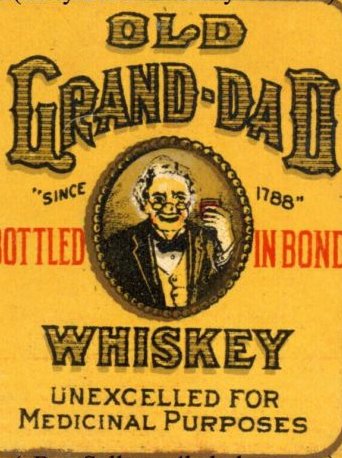
and defined the types of intoxicating or “adult” beverages that were prohibited—except of course for medicinal purposes, only by a doctor’s prescription.   

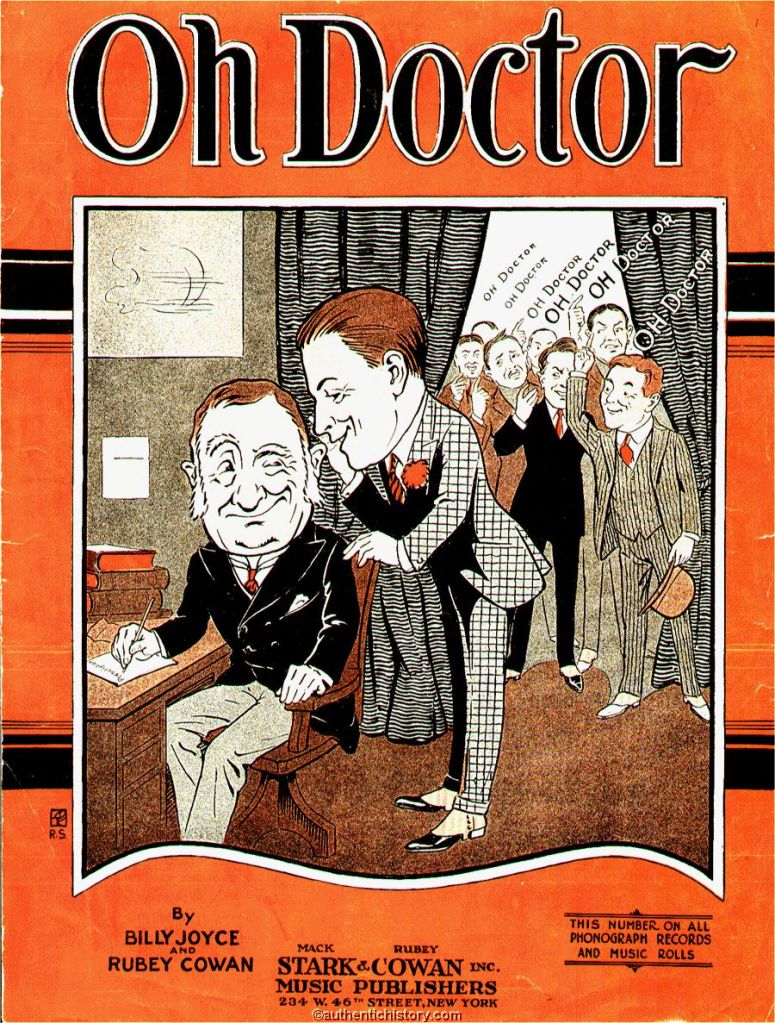
Of course, a song came out of this as folks flocked to their physicians with ailments only alleviated by, so they said, alcohol. And, many docs winked and complied. Alas, no YouTube but the cover says it all!
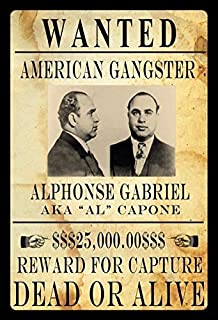
As hoarded supplies ran out, however, criminal gangs and syndicates quickly gained control of the illicit beer and liquor supply and distribution networks in many cities—“bootlegging,” and “speakeasies” were born and the 1920s began their roar.

Rumrunners went into business.

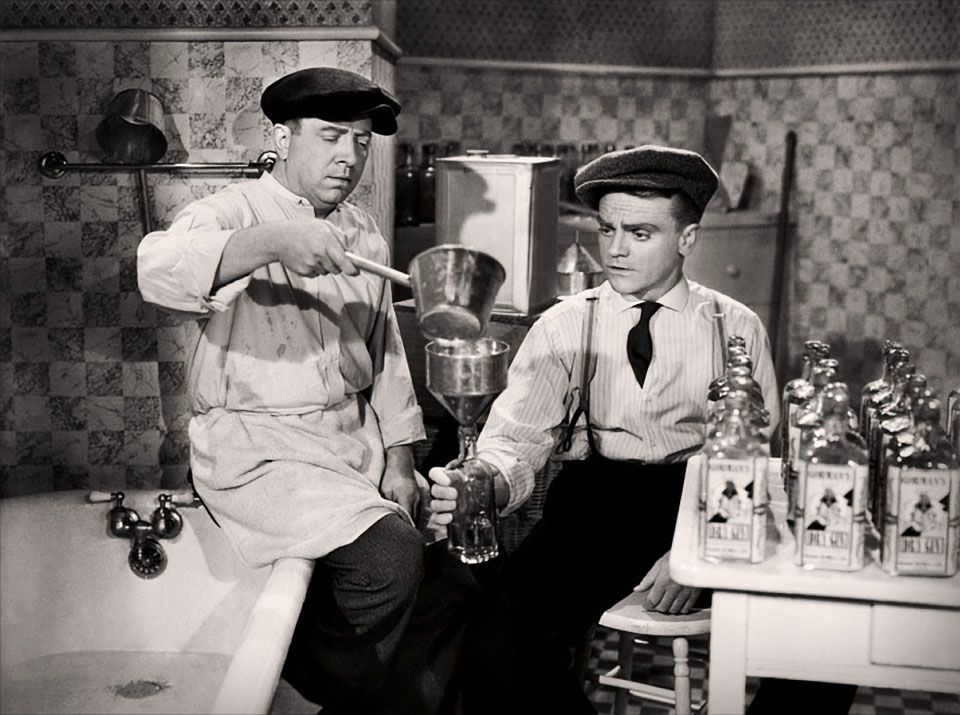
Folks made their own “bathtub gin” with grain alcohol and who knows whatever flavorings. Speakeasy patrons loved it, or at least tolerated it–no matter what it tasted like. It was booze!
And, needless to say, folks were sad, Sad, SAD!

Here’s a country version of what has become a jazz standard. Tap or click on the next image for a Jimmie Roger’s style interpretation.

Here’s a song from the pulpit, no less.

This is a novelty tune that is a bit of a different take on Prohibition. Tap or click on the triangle in the next image to listen and learn. Amen!

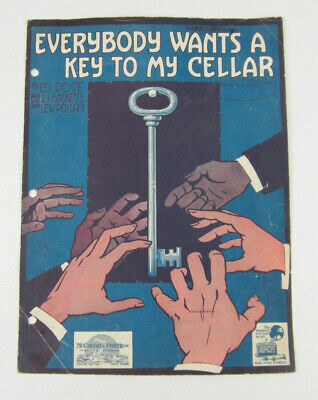
Other tunes, and laments, followed.

But, by the late 1920s, a new opposition to Prohibition had mobilized nationwide. Critics attacked the prohibition policy as causing crime, lowering local revenues, and imposing “rural” religious values on “urban” America.

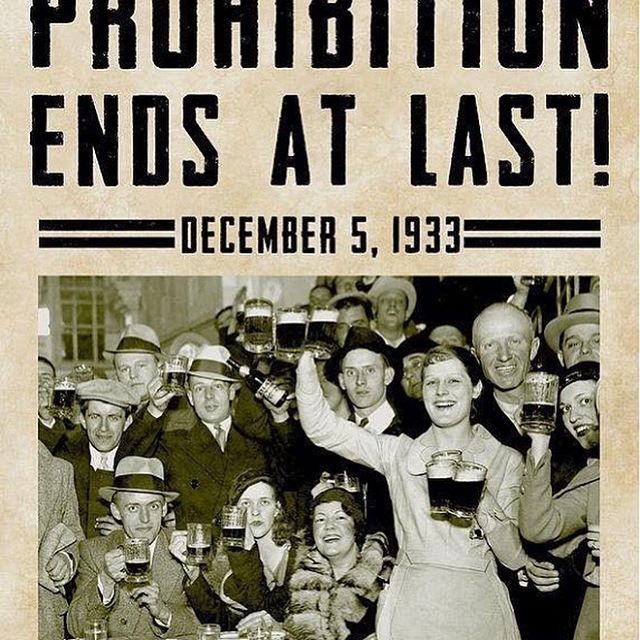
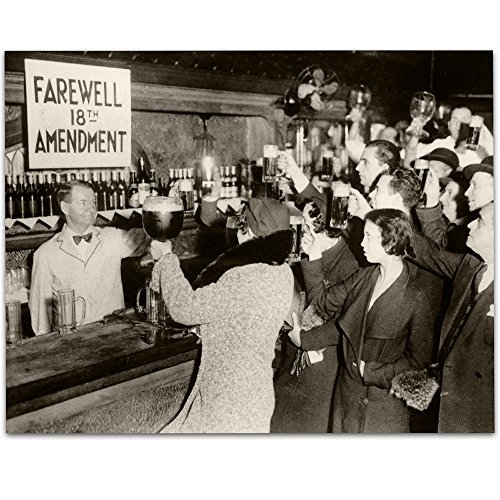
And so, gentle readers, Prohibition ended with the ratification of the Twenty-First Amendment which repealed the Eighteenth Amendment in 1933. To date, this is the only time in American history in which a constitutional amendment was passed for the purpose of repealing another.

The Prohibition Era paralleled the jazz and ragtime ages of the “Roaring Twenties.” The music embraced by the flappers and their sheiks and their wide-open consumption of those illegal products of grape and grain. 

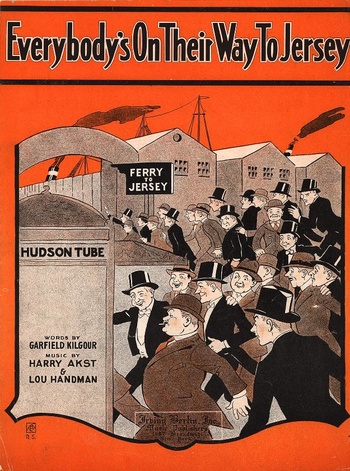
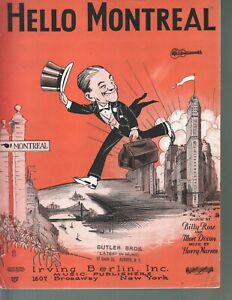
And, of course, there were a lot of thirsty folks who looked across borders to Canada or even New Jersey (they sold so-called “near-beer” there) for refreshment.

Here’s a lively foxtrot version of this one. Click or tap on the triangle in the next image to take a ride on this train.

Needless to say, the songwriters of Tin Pan Alley had a way of distilling (ahem) all of this into the music of the day.

Here’s a contemporary take on this old chestnut. Click or tap on the triangle in the next image for a look and listen.

Here’s an up-to-date version of this ragtime tune. Click or tap to join in.

Most of these tunes fell into the comic or novelty category as folks around the country—and a lot of law enforcement types–winked at the law as they blew the foam off their beer or sipped their bootleg booze out of teacups. 

Needless to say, trouble was fermenting (ahem, again), but America survived as the country transitioned through Wilson, Harding, Coolidge, and Hoover on to Roosevelt—sad days then to happy days again! 

Well, I could go on and on with tunes from the Prohibition era as there seems to be a lot of them out there–way too many, probably. Anyway, here’s one to end on–a great pub version of this one!

Click or tap on the next image to help me down the road a bit!

But, I can’t leave without a nostalgic reminder of those divisive good old days, . . .

Oh yes. I think I’ll finish the day not with whiskey but with a Martini. Dry, not Wet.

STAY TUNED!