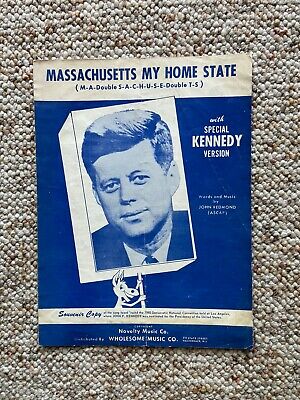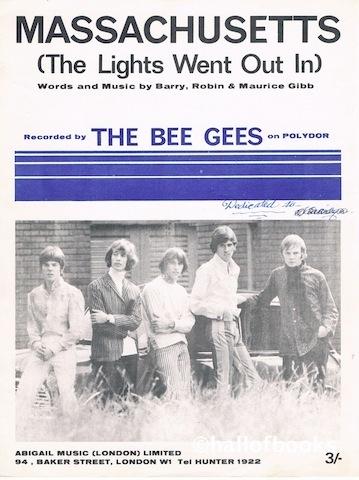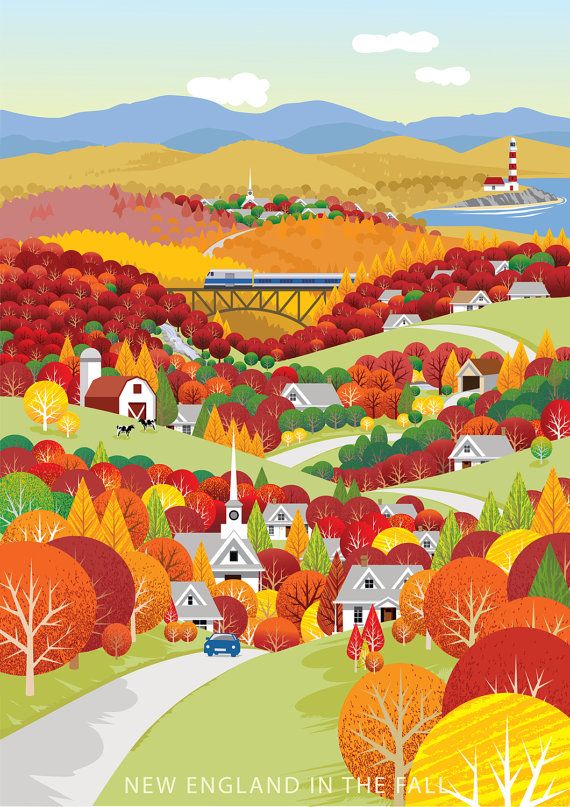
AN ENCORE MUSICAL MUSING FOR AUTUMN: 22 September 2024: Colorful Days and Songs in New and Old New England

Those of us who live in New England—whether or not we grew up here or chose to live here—recognize it as a special place in American culture as well as history. It wasn’t just the Mayflower of 1620. Remember the Winthrop Fleet of 1630 as well as those who were here well before and who arrived well after! 
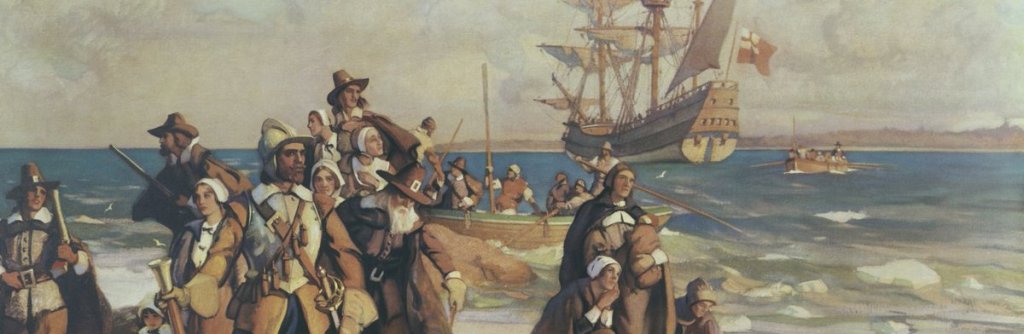
We can take pride in the fact that many of our towns date back to the 1600s and that New England has long been a leader in manufacturing, commerce, and education.  All this with a colorful, rolling landscape from the hills and valleys to the shore. 

Needless to say, a lot of musical pride has been exhibited over the years giving us a nice segue into this seasonal musing.
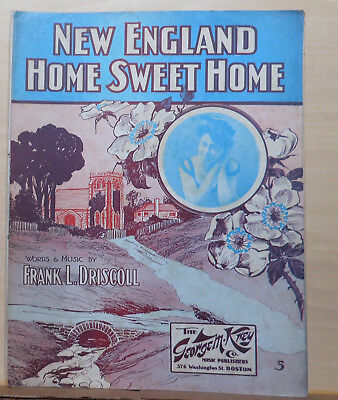
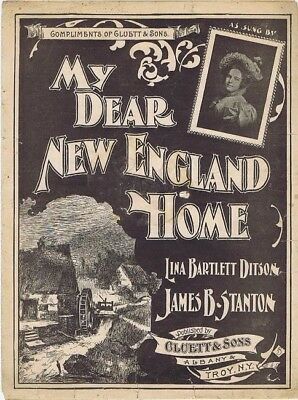
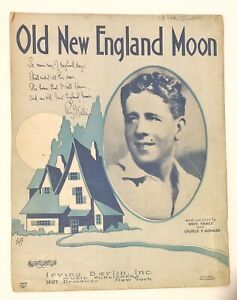
Here’s an early take on romantic New England from one of the original “crooners” of the 1930s. Click or tap on the triangle in the next image or link to listen and look at the full moon!

Alas, we don’t have a period sheet music cover for this next one, probably because it dates from about 1630! In fact, it’s considered by some historians and scholars as “America’s first folk song.” It doesn’t paint that pretty a picture of New England but here it is! Click or tap on the triangle in the next image or link to be taken way, way back in time to learn about “New England’s Annoyances.” Have things changed that much?

Make’s you want to ask: “Tell me again why we chose to live in New England.” Just kidding, of course . . .

Let’s just move on to other New England states and their contribution to musical lore. There are so many tunes to choose from so I’m going to cull down to just a few. That gives me more to post at a later date!
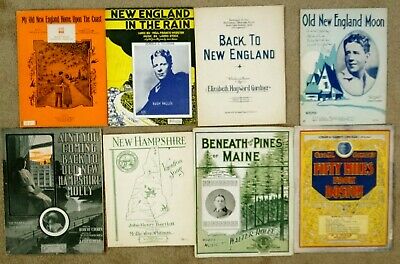
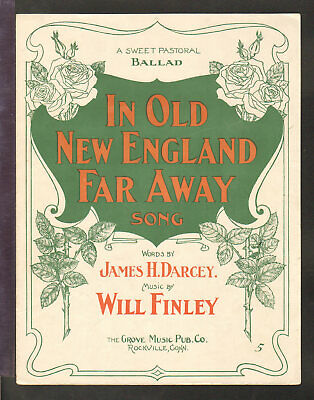
Let’s start a counterclockwise musical “bus tour” through New England pivoting around our home state of Massachusetts. As we make those twists and turns–no Midwestern grid system here in New England–so don’t forget to “USE YA BLINKAH!”

Heading due south . . .
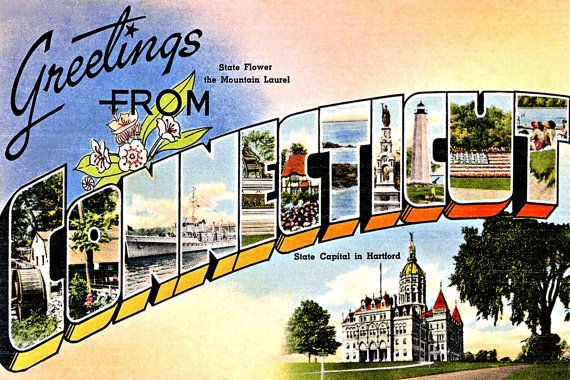
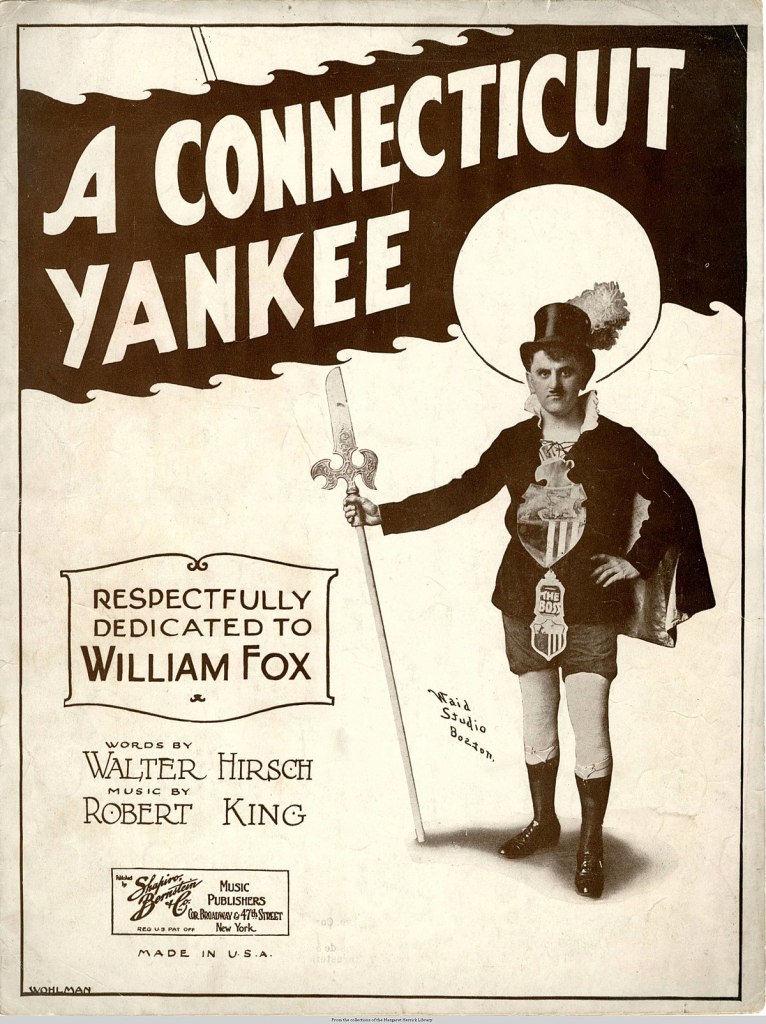
This song doesn’t have much to do with the State of Connecticut but it is a fun reminder of the Bing Crosby film of the 1950s based ever so loosely on Hartford dweller Mark Twain’s opus. Click or tap on the next image or link to make yourself “busy doing nothing.” I guess that musing is a form of not doing much of nothing.
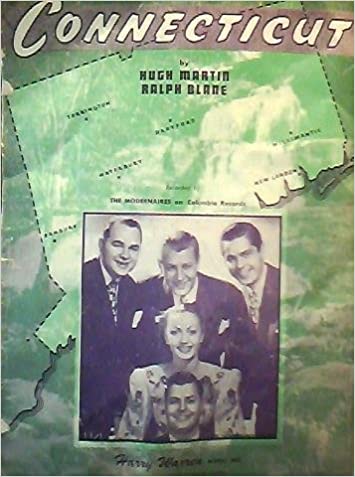
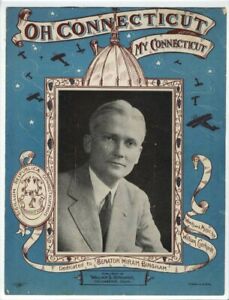
And, of course, the Connecticut state song–a ukulele version, no less. Click or tap on the triangle in the next image or link to strum along. It’s pretty much an all-New England tune but Connecticut claims it as their own. I guess they get the “macaroni.” Go figure.

Continuing our tour east along the coast . . .
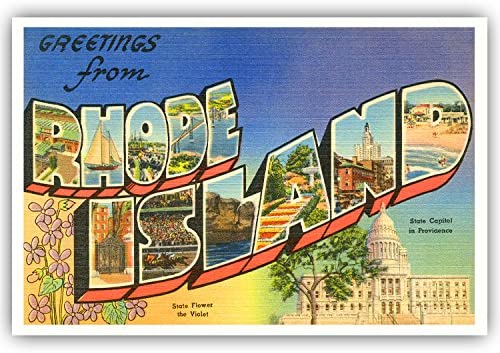
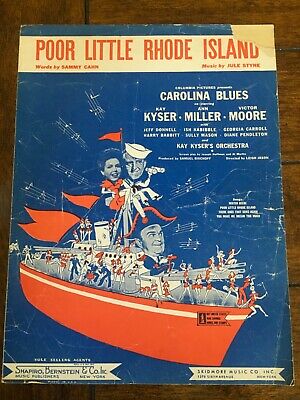
Here’s the Guy Lombardo version from 1945 of this most well known of all Rhode Island songs. Click or tap on the triangle in the next image or link to hear it on an early 78.

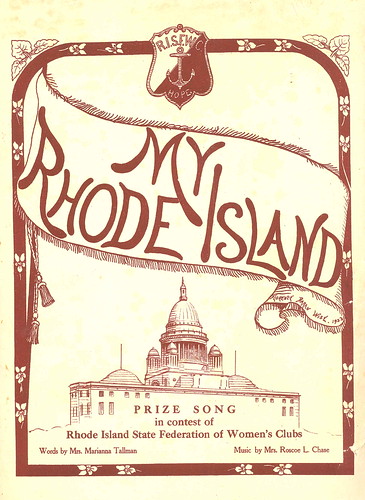
Alas, nothing about Rhode Island from the state’s most famous musical son–George M. Cohan. Go figure. Moving on . . .
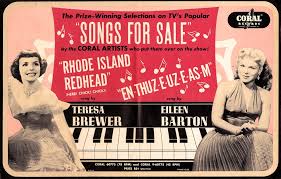
But, don’t chicken out. Just click or tap on the next image or link to hear a rather silly song of the 1950s but, it’s about Rhode Island, of sorts.

Moving a bit farther north around Cape Cod, Boston, and the North Shore of our home state on our musical trek . . .
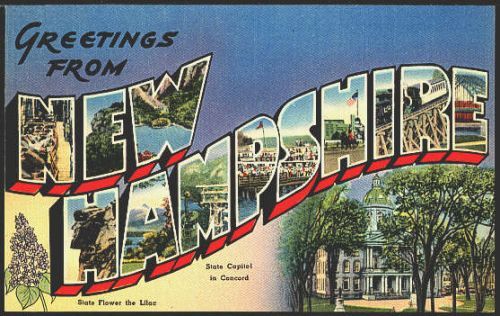
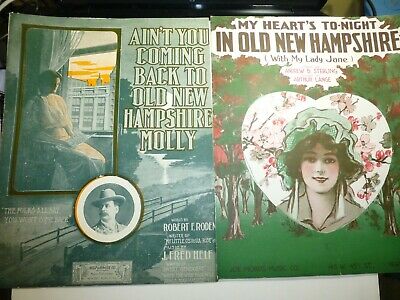
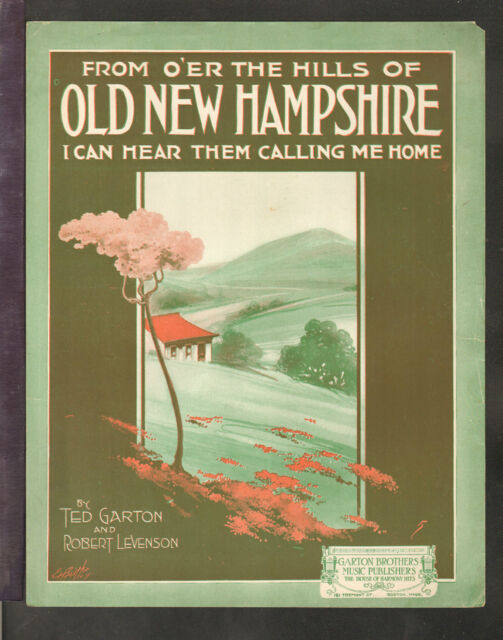
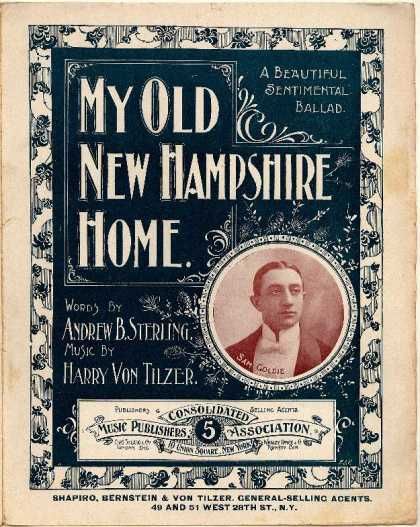
Alas, pretty fuzzy photos with this one but the early wax recording doesn’t sound that bad. To be transported back to the 19th century, click or tap on the triangle in the next image or link.

Now, I’m going to break my musing rules a bit and add a new New Hampshire song that’s too good not to include. Click or tap on the triangle in the next image or link to see what this state is all about!

Moving way up north now, even if it is known as “down east” . . . Again. Go figure!
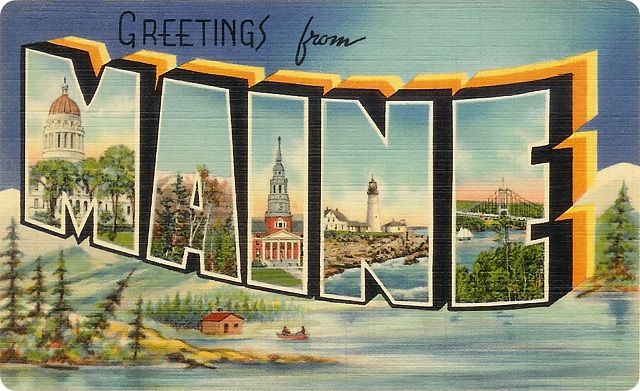
Here’s a jazzy version of this 1920s musical Maine treat. Click or tap on the triangle in the next image or link for the music, lyrics, and visuals!
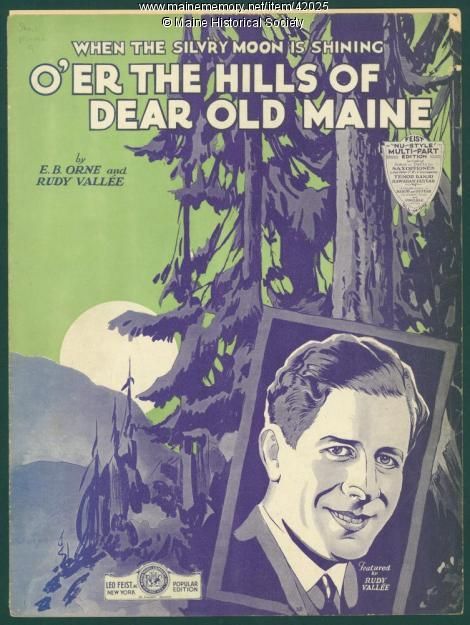
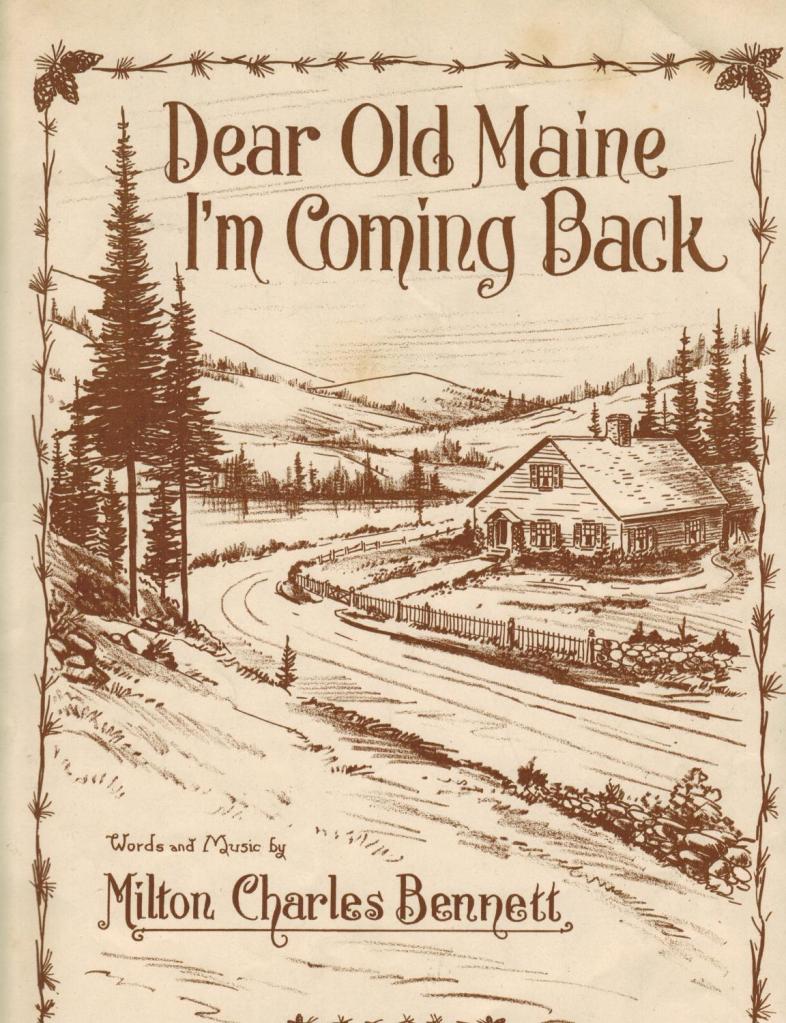
Sometimes a “State” song has more to do with something other than nostalgia and more with real history. Folks probably “Remember the Maine!” more than they think about the State of Maine. Such is the power of song, history, and a famous American rallying cry.
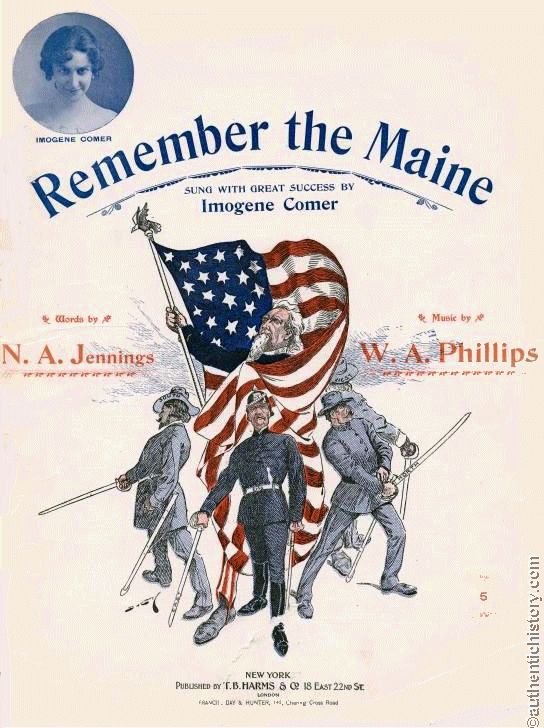
This isn’t a recording of the above song but it is one of the more famous old-time folk songs and, after all, it does have something to do with the sinking of the battleship Maine! Click or tap on the triangle in the next image or link for a nice version of this one.
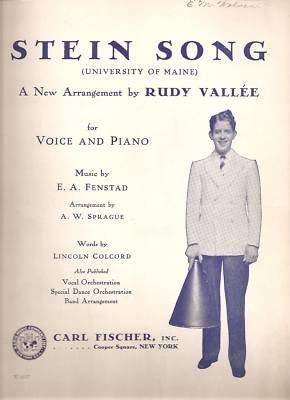
And, of course, we need the quintessential Maine song from the 1930s. Here it is performed by a bunch of “Mainiacs” (I guess they prefer “Mainers”)! Click or tap on the triangle in the next image or link, grab a stein of Harpoon or Alagash, and join in on this campus rouser!

Time to sober up (buuurrrp,) and head southwest . . .
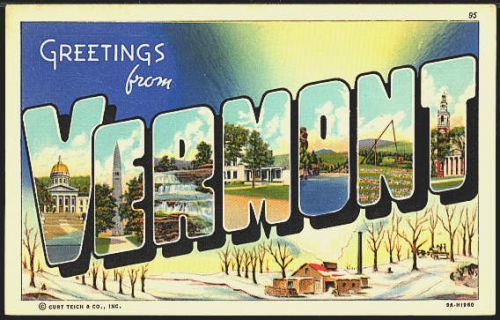
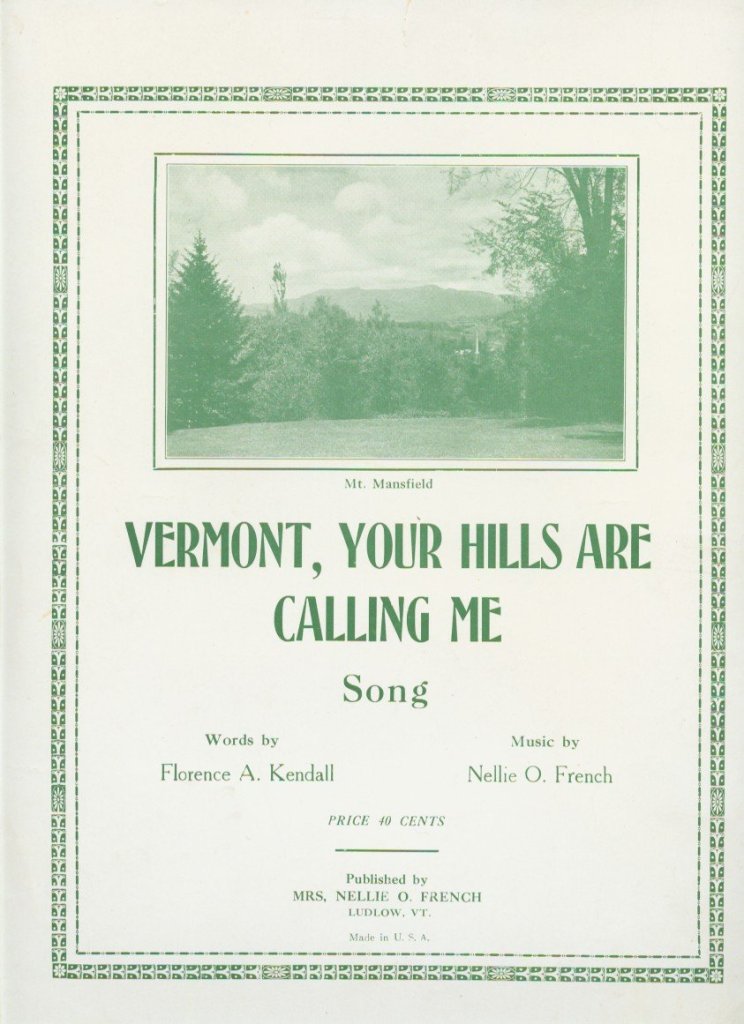
Now here’s another song from a few hundred years ago, again without a period sheet music cover. But, click or tap on the triangle in the next image or link for a ballad of Vermont’s own “Green Mountain Boys.

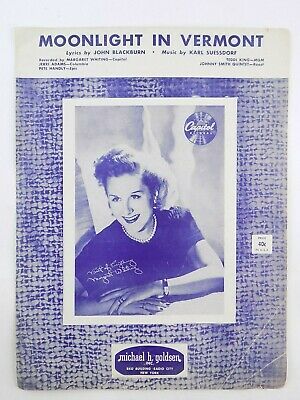
Here is what has become a jazz standard in daylight as well as moonlight, played on the ukulele, no less! Click or tap on the triangle in the next image or link to float away on a moonbeam of sorts.

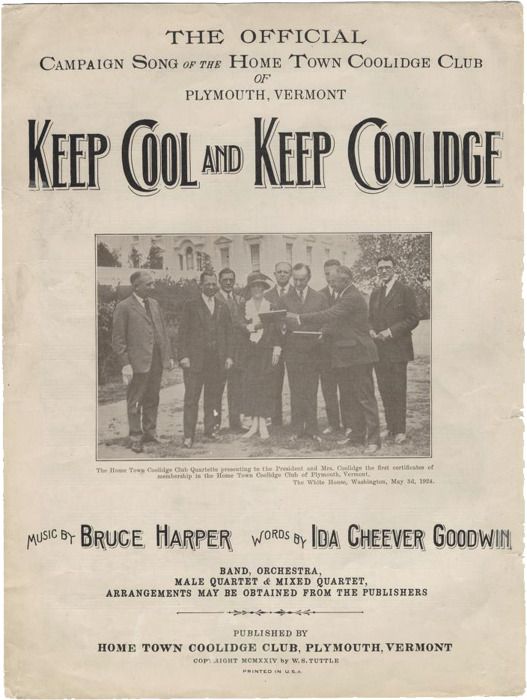
As a bit of a digression, we folks from around Northampton, Massachusetts, can proudly claim President Calvin Coolidge as one of our own, but the folks in Vermont do hang on to the mere fact that he was born and grew up there. We have the Massasoit Street home and the Presidential Library; they can have the birthplace. Credit goes where credit is due! Besides, Massachusetts has better Maple Syrup! Nya, nya, nya . . .
And now, let’s “flip the blinkah” and head back home to Massachusetts!  
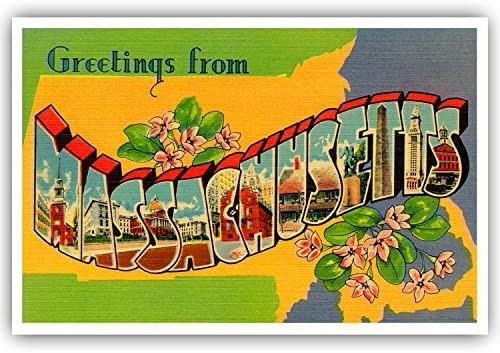
There are a few relatively new songs that are decidedly Massachusetts in origin and lore if not in title. Suffice it to say that if you want to dig into these on your own, head over to our friends at YouTube and there will be all sorts of fun waiting for you!
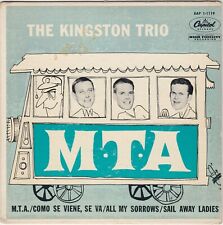
But, back to our favorite little musical instrument and musing.
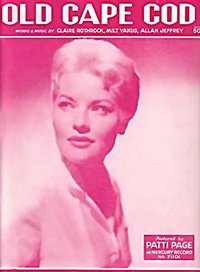
Here’s a nice ukulele version of this Massachusetts tune played on an eight-string baritone uke. Nice sound! Click or tap on the triangle in the next image for a listen.

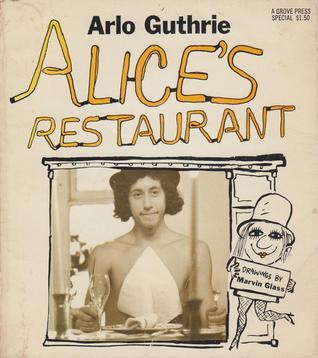
While “Alice’s Restaurant” is probably Arlo Guthrie’s most well known song about Massachusetts, did you know that he wrote the official state FOLK song? Click or tap on the triangle in the next image for his rendition of “Massachusetts.”

Now, to put the cherry on top of the Massachusetts part of our musical tour, here is one of the strangest musical performances you’ll ever see. Click or tap on the triangle in the next image or link to take the statewide tour!

So, as the sun sinks slowly in the west (that is, non-New Englandy New York), we end our musical bus tour.

And, even if we remain sequestered and safe, we can look out the windows of our bus (or home) and take in New England in all its Autumnal glory.

So, STAY TUNED! And, remember, in New England we welcome folks of all proclivities and persuasions!


AN ENCORE MUSICAL MUSING, 1 September 2024: There’s a “Greyhair” Song About This Month!

Having “retired” from posting my weekly “Musical Musings,” I plan on continuing, but in a less complicated and time consuming manner. Some may call this a “lazy man’s way of working.” I’ll just call it “recycling.” So, here is a timely musing from last year. Enjoy and STAY TUNED!

Rarely in my weekly musings do I focus on a single song, but the beginning of a new month gives this old “greyhair” of a music and musical theater buff an opportunity too good to let pass by. Oh yes, I know that Monday is Labor Day and I have to put my white shoes and straw hats on the shelf. But, let’s take a look at something else a bit more calendric. 

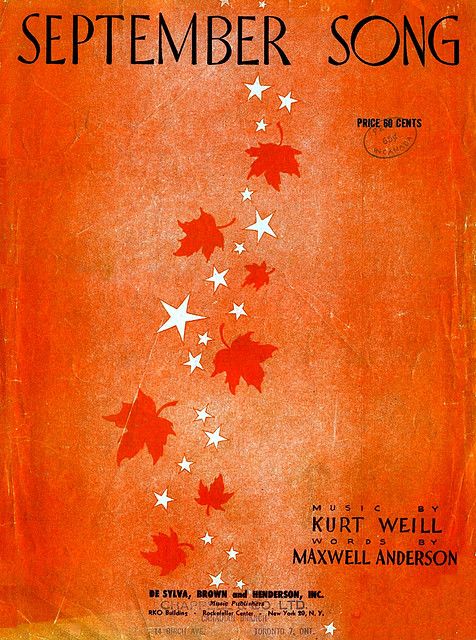
It’s a melancholy song, rather than sad, and it sort of suits my mood these days as we head into the last few months of this bewildering year of 2024.  So, let’s glance back eighty or so years and take an over-the-shoulder look and listen to what has become an American musical standard appropriate for this month: “September Song.

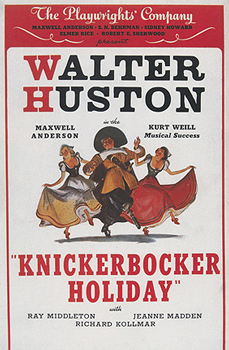
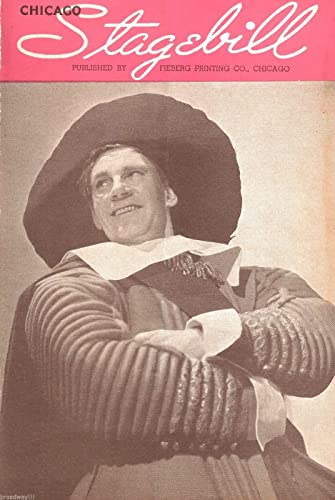
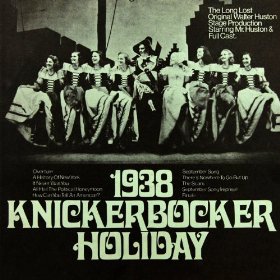
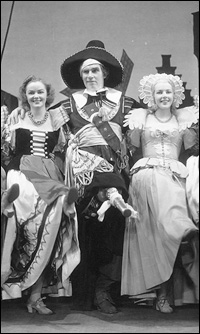
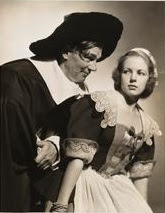
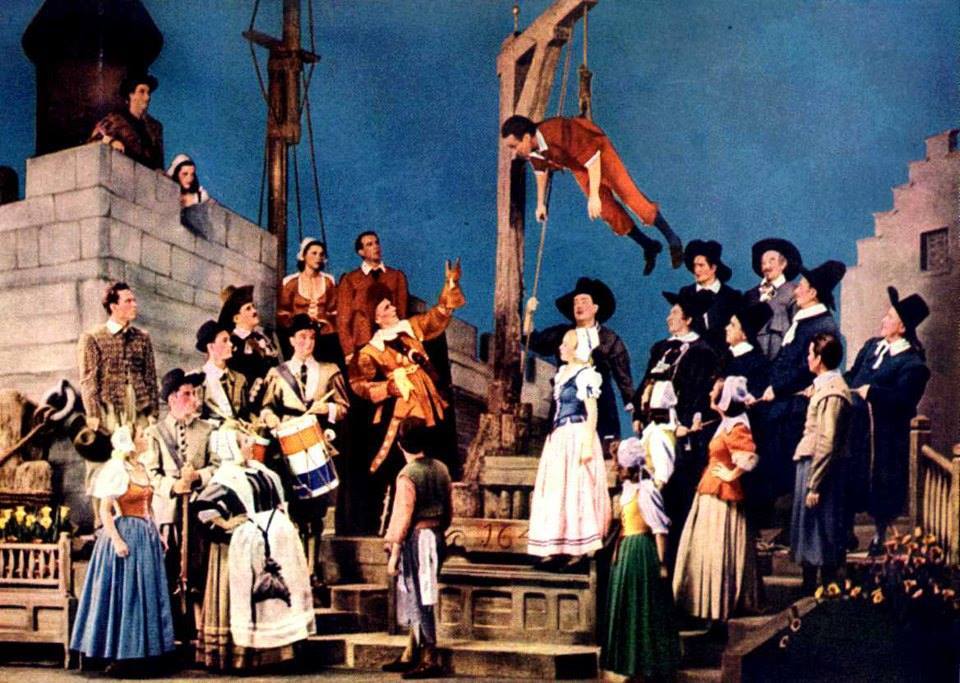
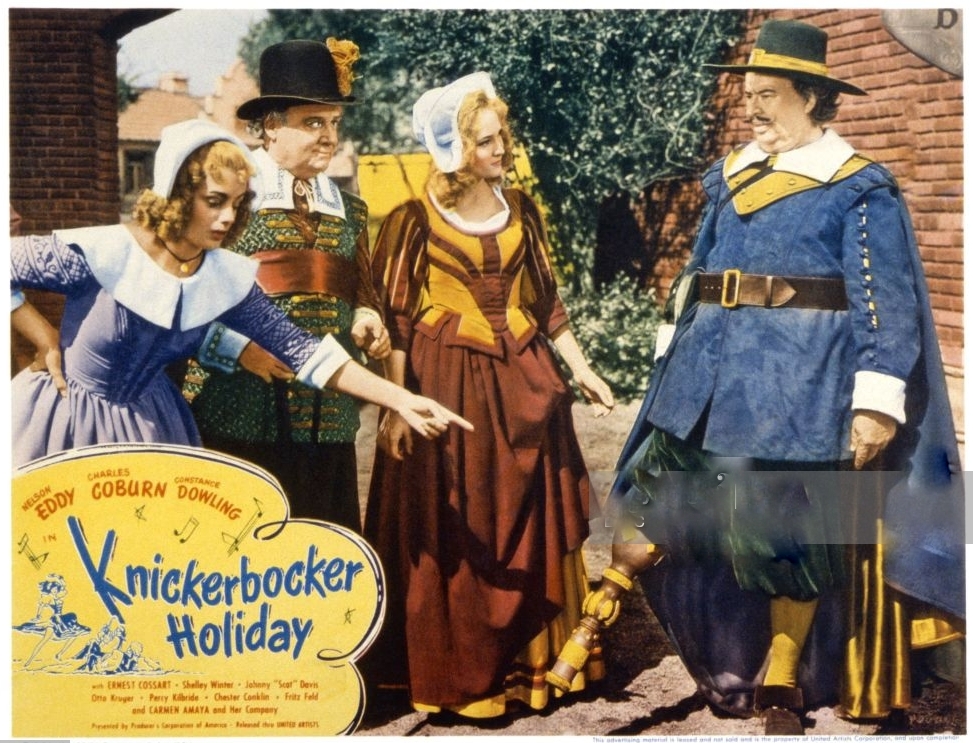
Our song was written for the now almost forgotten Broadway musical “Knickerbocker Holiday,” starring Walter Huston (1883-1950), that premiered in 1938. 

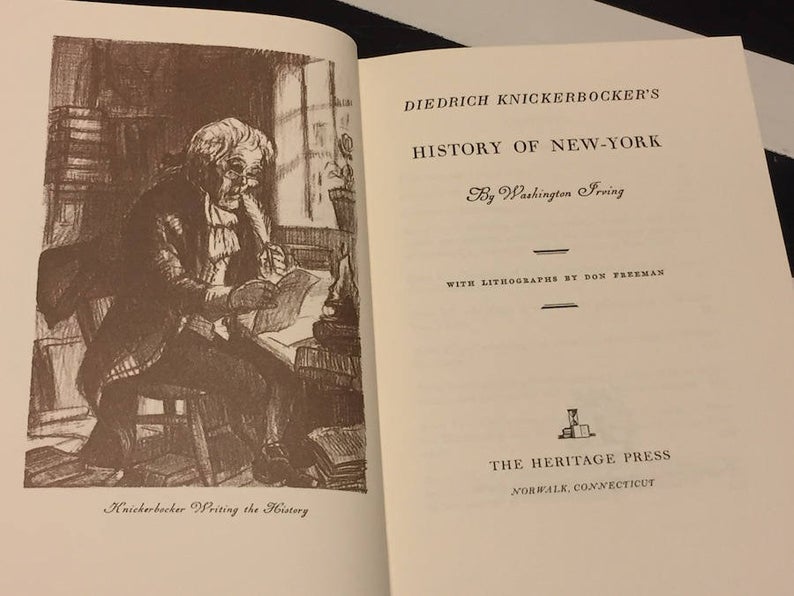
The book and lyrics were written by Maxwell Anderson and the music composed by Kurt Weill.  The story is loosely based on Washington Irving’s “Father Knickerbocker Stories” about life in the 17th century Dutch “New Netherland” colony in America—old New York. 

The musical is a romantic comedy with a thinly disguised ribbing of Roosevelt’s “New Deal” and of authoritarian governments in general. After all, it was the late 1930s.  Sadly, the book didn’t sit well with either critics or audiences and the show didn’t last too long. “September Song“, however, lives on and on. Be that as it may, gentle readers, we’ll just leave the vagaries of political/theater history to be explored by others. We’ll simply muse along with the music.   

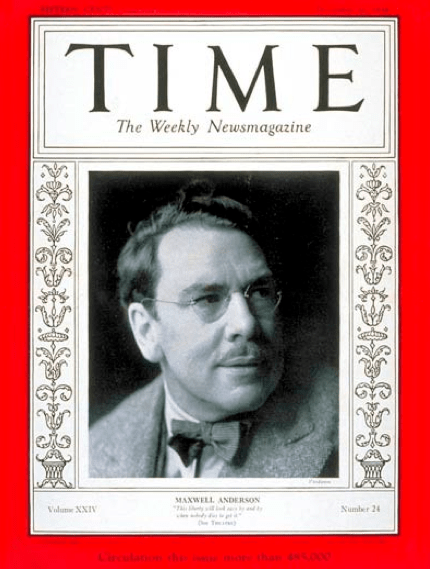
Maxwell Anderson (1888-1959) was a prolific American playwright, author, poet, journalist, and lyricist.  But, by the 1920s, his progressive take on politics pushed him away from journalism. He soon found his true calling in more creative forms of writing . . . 

. . . and became one of the most prolific writers of historical plays and films of his day. He was particularly noted for adapting novels and other literary works for both Broadway and Hollywood.

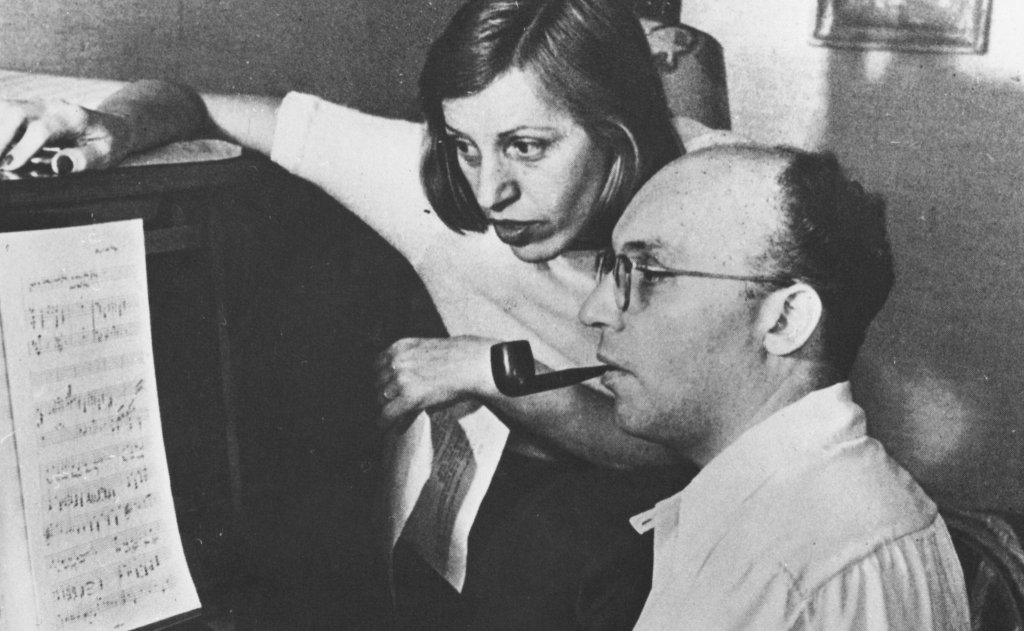
Kurt Weill (1900-1950) was a German composer actively working, with his wife the singer and actress Lotte Lenye, from the 1920s in his native Berlin and in their later years as American citizens. 

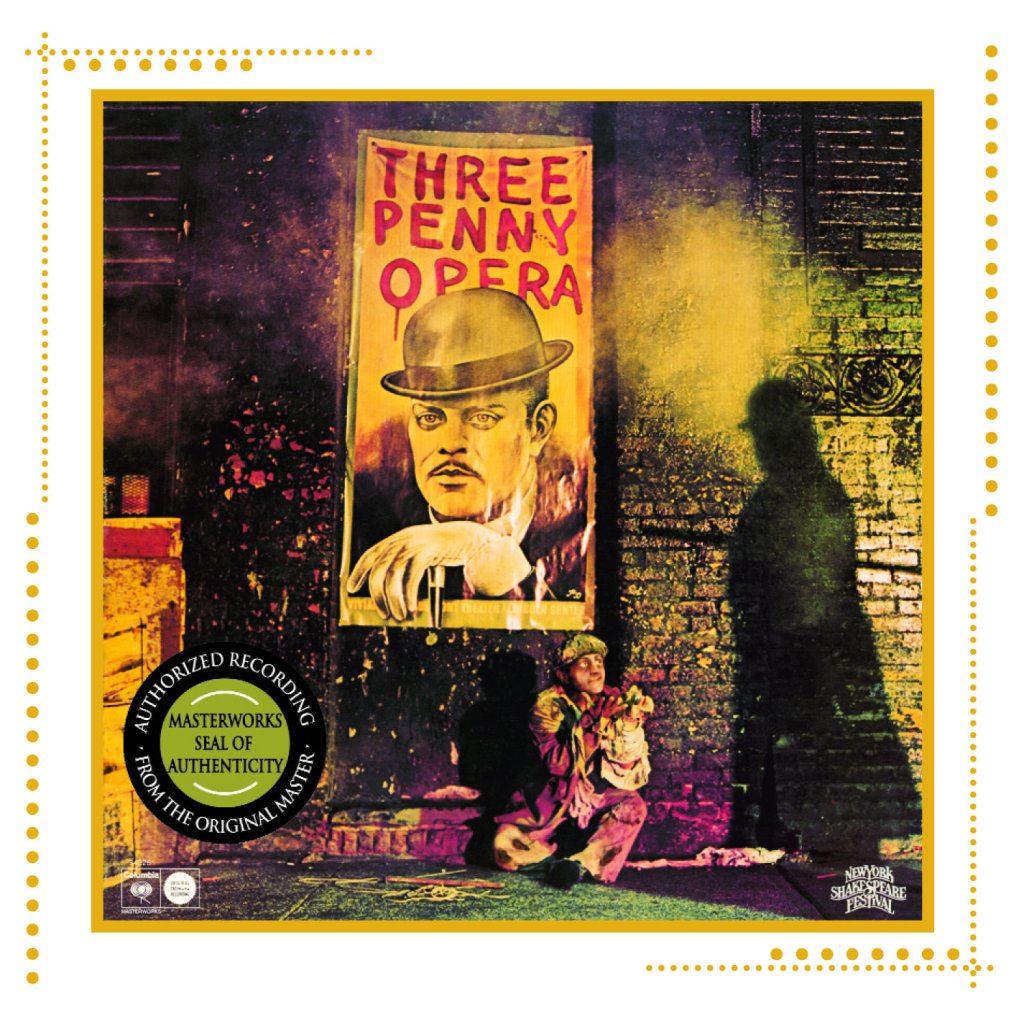
 He was a leading composer for the stage and was best known for his fruitful collaborations with playwrite Bertolt Brecht, including their best-known and still performed work “The Threepenny Opera.” 

The plot of “Knickerbocker Holiday” is a bit convoluted but basically it’s the tale of Peter Stuyvesant, a Dutchman both arrogant and a bit long in the tooth , who was sent to America in the 1600s by the government of Holland to serve as the governor of the “New Netherland” colony.

The musical dwells on the comi-tragic interactions between the colonial governor and the stubborn, independent-minded colonials. Needless to say, that was a typical political reality in America in those colonial days! All this was done with plenty of singing and dancing, no less.
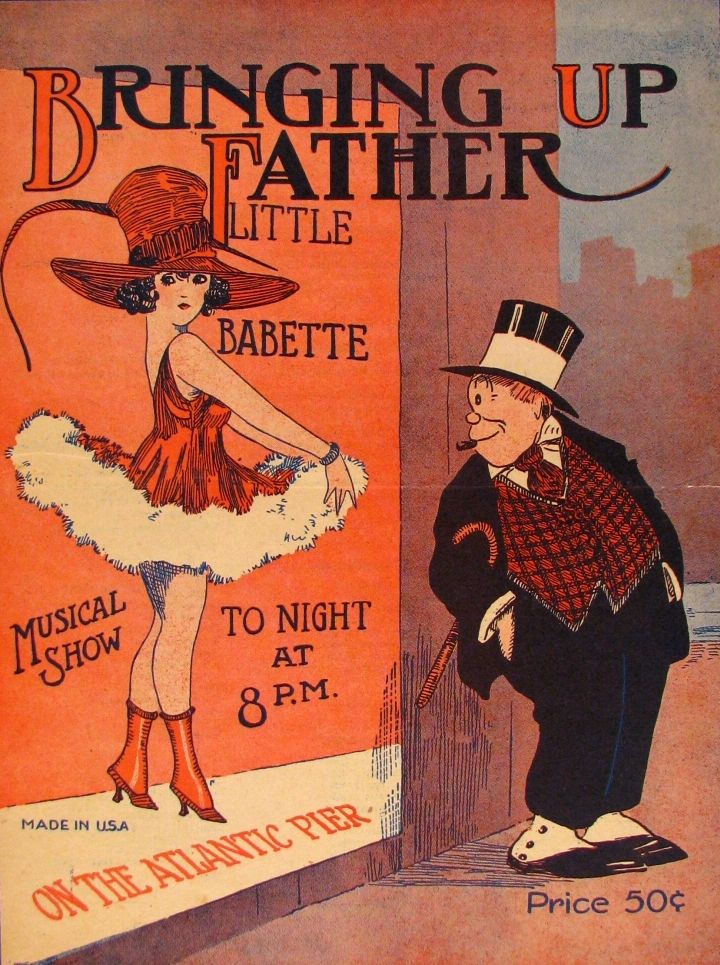
In the context of the musical, “September Song” is a lyrical metaphor comparing a single year to a person’s entire life span from birth to death.  Here, the song is sung by Huston, a Broadway idol in his day (but, alas, not the best of vocalists) in the starring role of the curmudgeonly, peg-legged Stuyvesant.

The song is a smitten but older man’s wooing song (lament, really) addressed to a colonial maiden that has caught his roving eye. She is, of course, desirable but, alas, much younger and, ultimately, disinterested. The premise of the song is that, in the eyes of the elderly Stuyvesant, the courting activities of young folks and the objects of their desire are, at best, transient and time-wasting. So, why not choose him now, he sings, while there is still time! As an older suitor, Stuyvesant pleads that he hasn’t “got time for the waiting game.” 
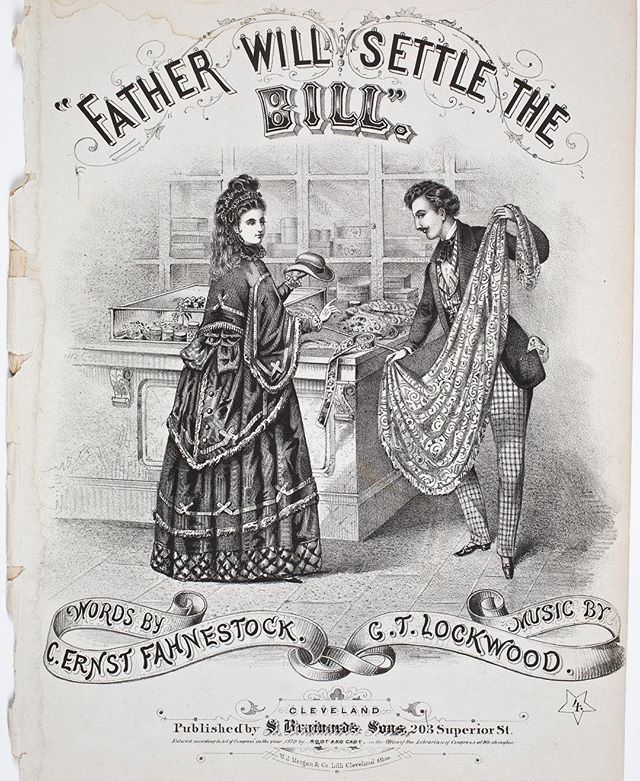
Our plucky heroine, of course, brushes aside his advances and runs to the waiting arms (albeit locked in the punishment stocks) of a young and handsome colonial rabblerouser who (I said the plot was convoluted!) was about to be hanged for “disobedience” to colonial rule or some such thing. To our young hero’s delight and relief, the specifics of the hanging sentence were, to the least, unclear. And the play goes on . . .

Today some folks would probably chant “#MeToo” as Huston sang away but, that was eighty innocent years ago before such things as hashtags.  Anyway, we “greyhairs” who may also be a bit long in the tooth can relate to the song’s metaphorical image of the passage of time.  You youngsters—just you wait a few decades!

Moving on, here are the original lyrics–verses as well as chorus–as sung in the musical by Huston. This puts the whole song into context.  Click or tap on the triangle in the next image for this.  

You might not recognize Huston in his early Knickerbocker role.” Here he is a few decades later as one of Hollywood’s great character actors. Who would have thought?

Here he is in the film “The Treasure of Sierra Madre” For which he won an Oscar. An interesting bit of family history is that his son John and grandaughter Angelica have also won Acadamy Awards!

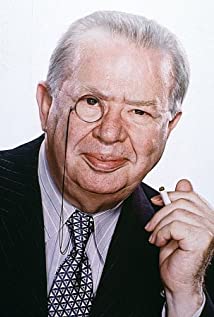
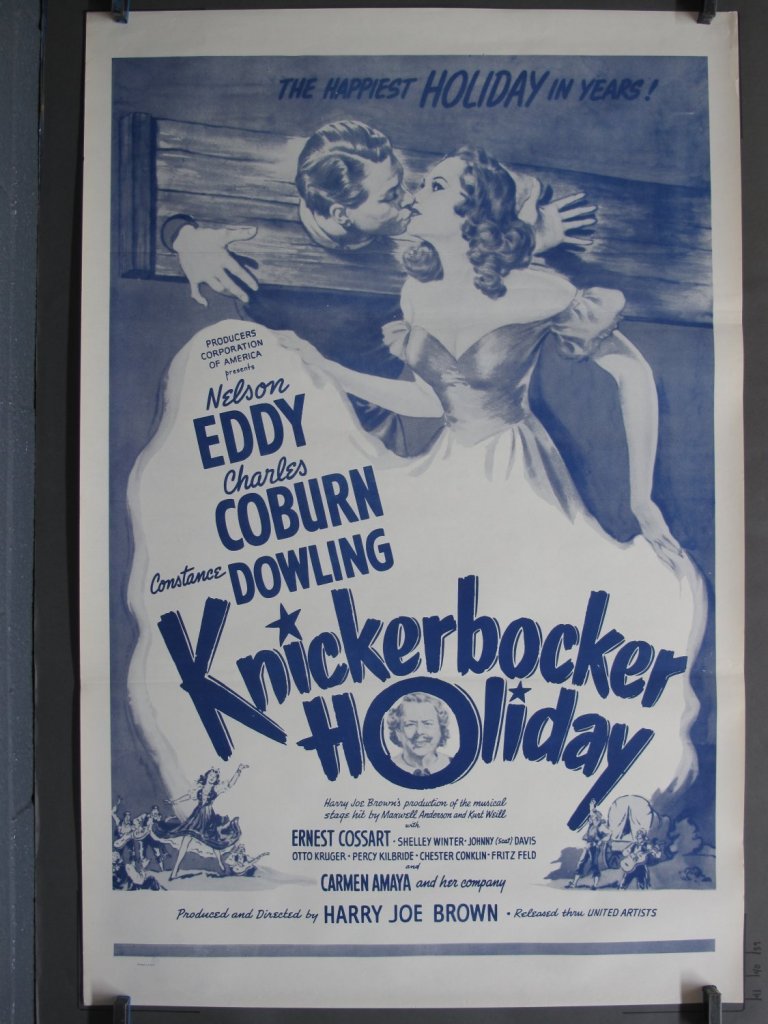
Over the decades, “September Song” has evolved into a minor-key jazz and pop standard performed by many singers over the years–young, old, male, female –and it’s worth listening to a few other interpretations.  It was featured in the 1944 movie version, also called “Knickerbocker Holiday,” and sung by character actor Charles Coburn who played Stuyvesant as even more comic and buffoonish than Huston. 

Alas, there seems to be no YouTube of Coburn’s rendition of our song. But the whole movie is there if you have the hour or so, and the inclination, these “precious days.”

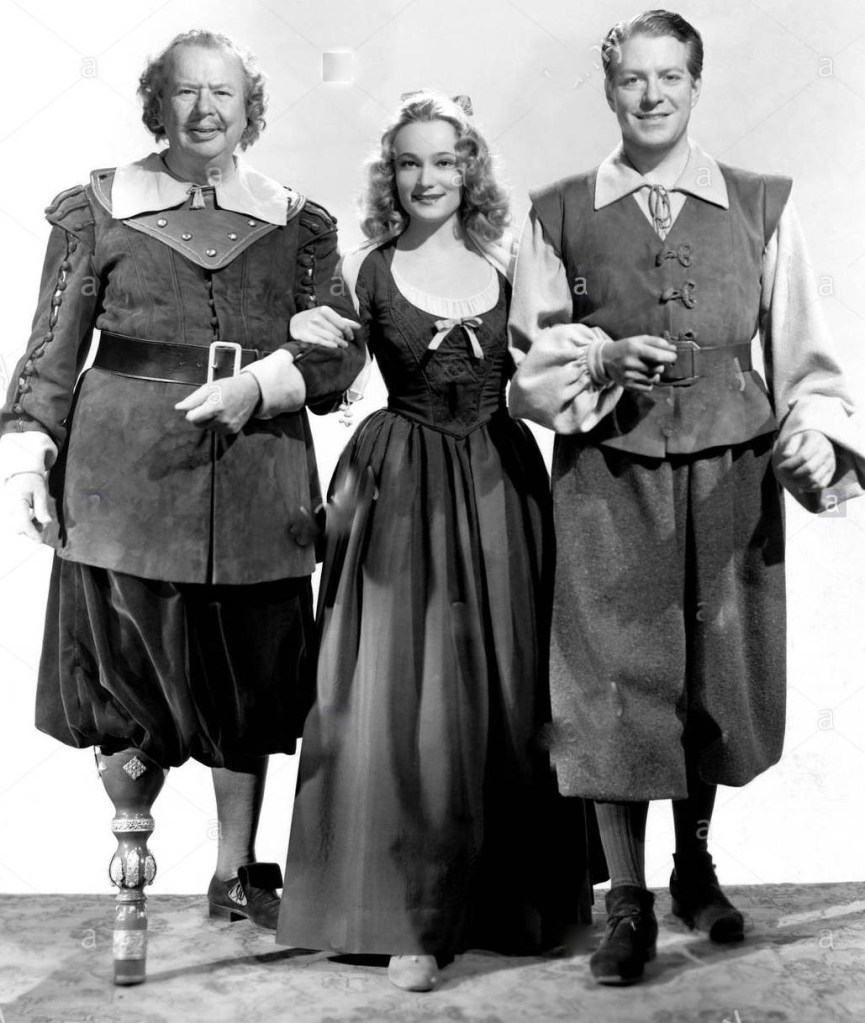
Here is Coburn, to the left, with a “baroque” wooden leg. The young hearthrob is the really good singer Nelson Eddy and the comely conquest is Constance Dowling. Needless to say, the movie suffered through a MAJOR rewrite to switch the lead to the young and handsome Eddy. At least Stuyvesant’s song remained.

The recording of our song that reached the top of the charts, however, was made in 1946, by a much younger and better singer than either Huston or Coburn, Frank Sinatra.  He leaves out the verses that provide the song’s context, however, and really only does the chorus. Musical license, I guess; but musical cheeseparing nonetheless.

Click or tap on the triangle in the next image to listen to what became one of Sinatra’s signature songs over the decades.

A more recent “greyhair” to tackle this tune was Willie Nelson in 1978.  Click or tap on the next image for his melancholy interpretation. Again, only the chorus without context.

Now–performing well out of his usual clownish character–is a surprisingly good take on “September Song” by, of all people, Jimmie Durante.  Tap or click on the next image for this. I think that this “greyhair” really captures the poignancy of the song. And, it includes the verses! Context makes a difference; you might want to grab a hankie! 

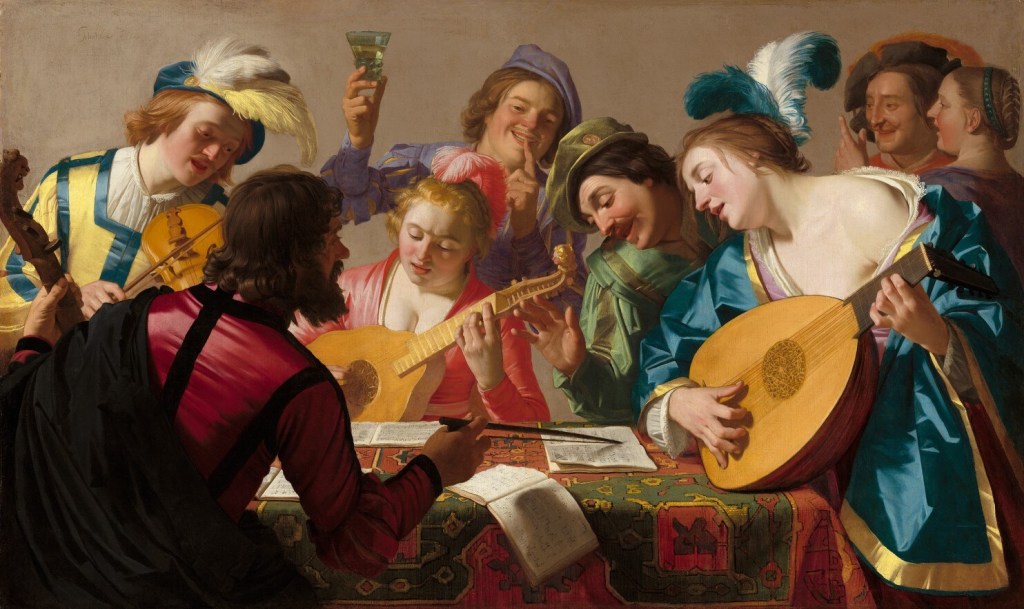
Since this musing is, lest we forget, about music and my favorite little musical instrument–the ukulele, I can’t resist digressing. The time setting of “Knickerbocker Holiday” coincides with the so-called Dutch “Golden Age” of commerce and art and, needless to say, a lot of art of the period touches on musical themes. I’m sure, of course, that these strummers and singers are using 17th century versions of our favorite three-chord song books!

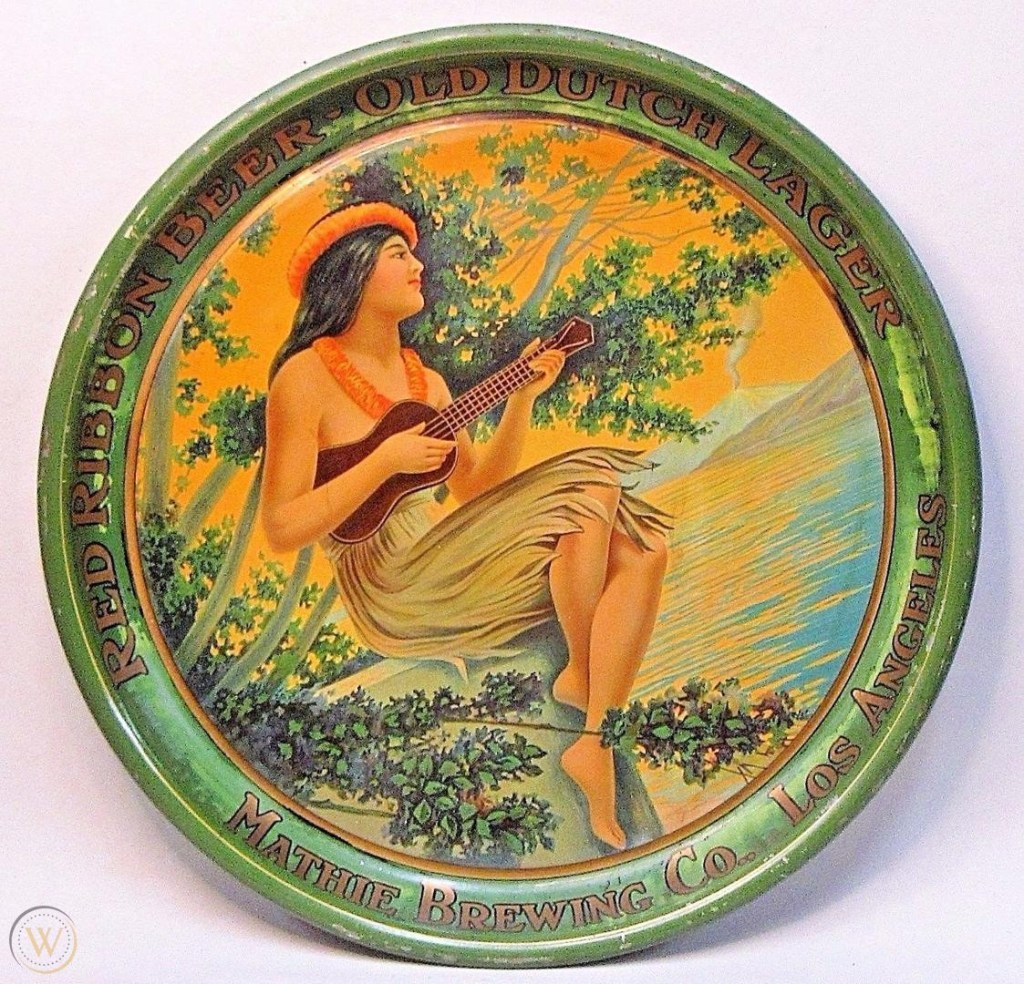
I’m sure that somewhere in the New Netherland colony of our musical there was a lute or two to be found. But the only apropos reference to a ukulele that I could find is, well, a bit more modern–but from the ancient New Netherland village of “Old Dutch” Los Angeles. Sorry.  “Greyhaired Grandpa Joke”  .  .  .

Now, back to the business at hand and with a real ukulele. The melancholy lyrics of “September Song” that touch on the aging process are one thing that has lasted, but more so has the melody.  This has been interpreted as a jazz standard by many musicians not the least of which is this intricate ukulele solo.  Click or tap on the next image to feel the musical thrill of a September chill, Gypsy jazz ukulele style, no less.

So, as “the days grow short,” we reach the calendric September of this year, as well as a pivotal month within a metaphorical lifetime. So, let’s remember both the verses and choruses of the songs we sing and live, and–whether “greyhaired” or not–STAY TUNED!


A BONUS MUSICAL MUSING, 16 June 2024–A Day to Remember Your Dear Old Dad, Father, Papa, Grandpa, or “Daddy”

Well, the calendar has rolled around to another Father’s Day as of this Sunday so here’s one of my musical musings that I dust off, tweak, and post just about every year. Enjoy!

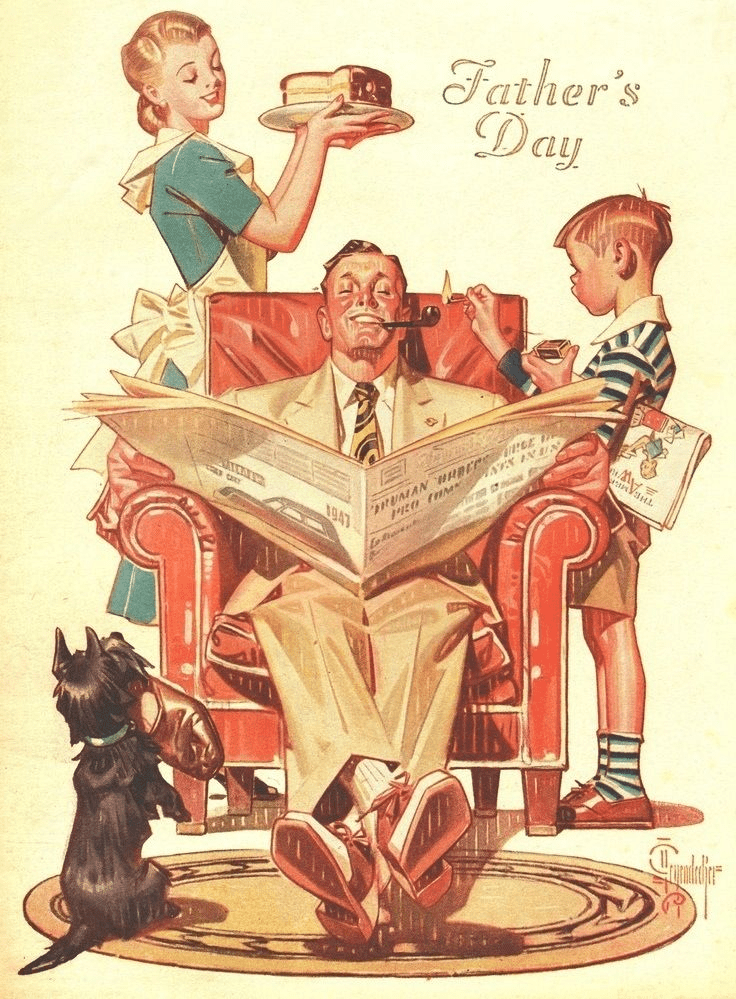
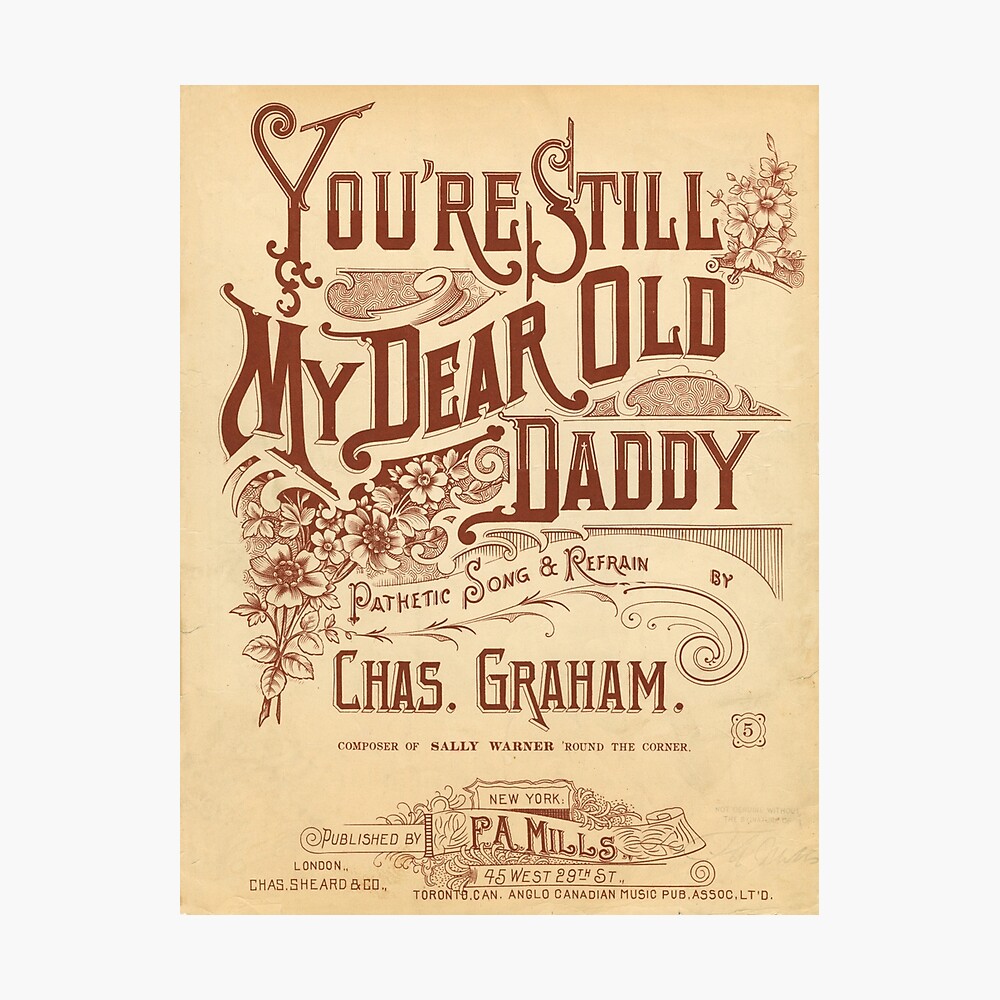
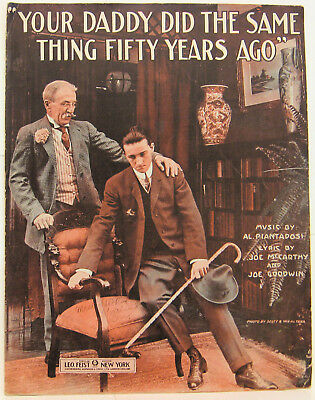
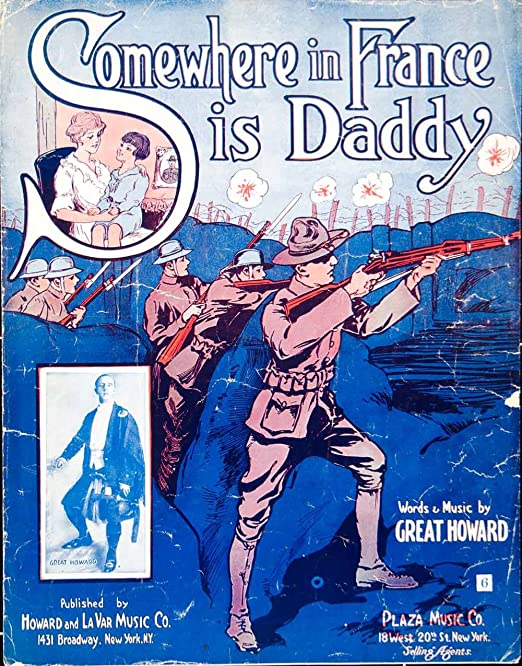
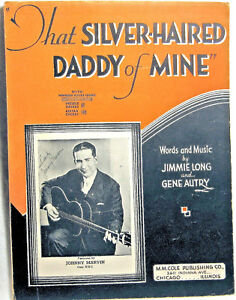
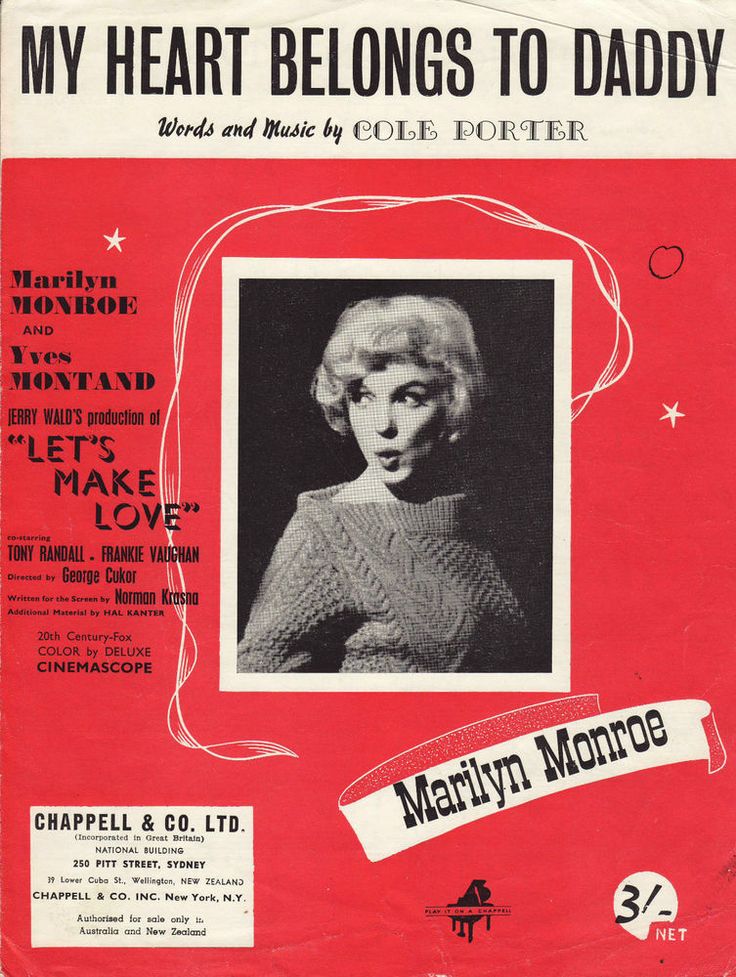
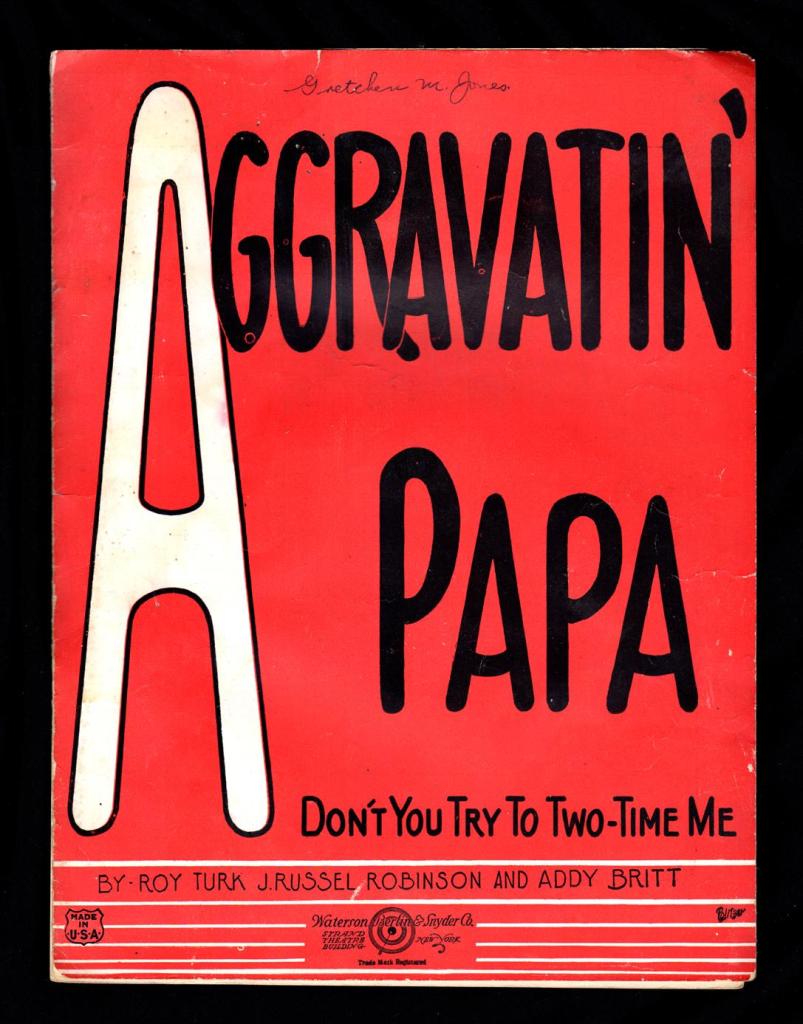
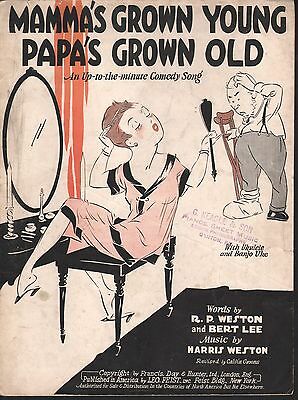
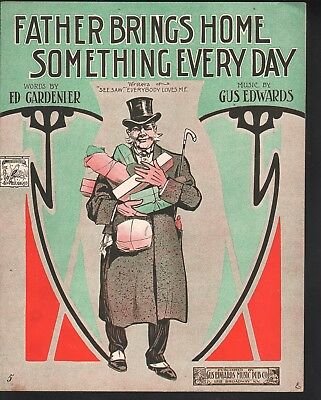
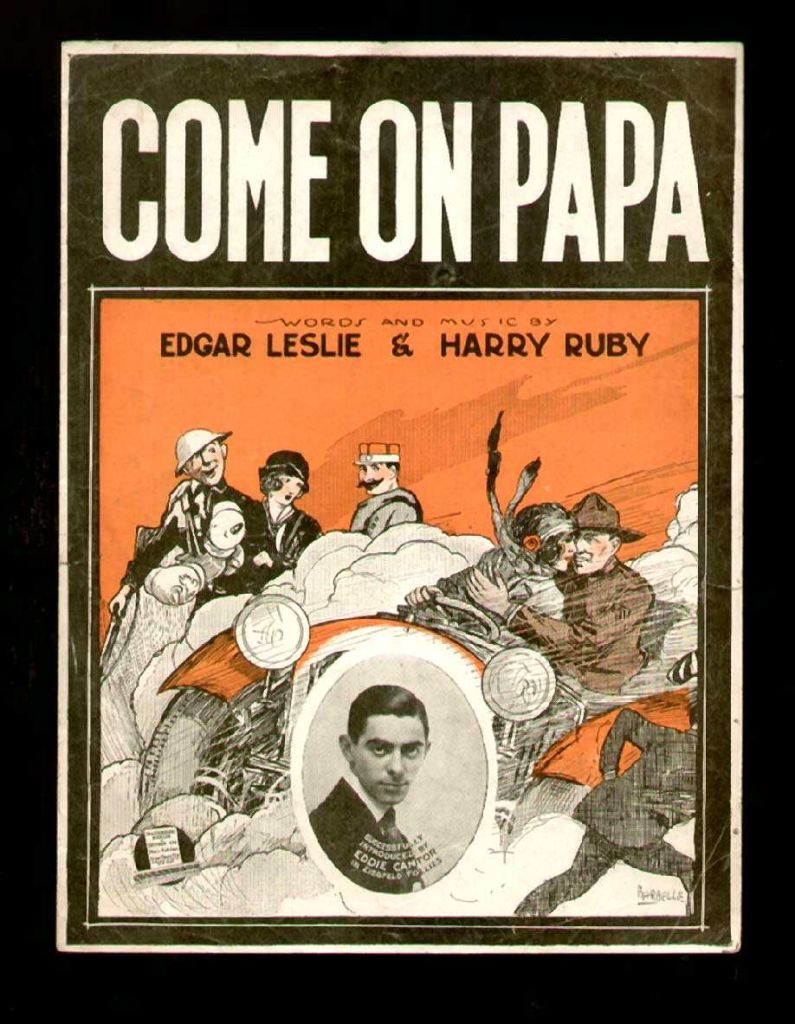
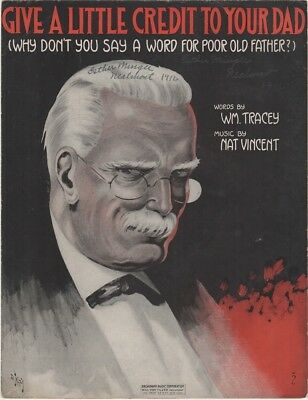
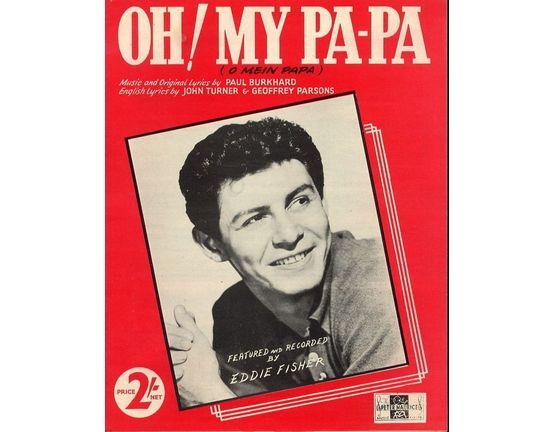
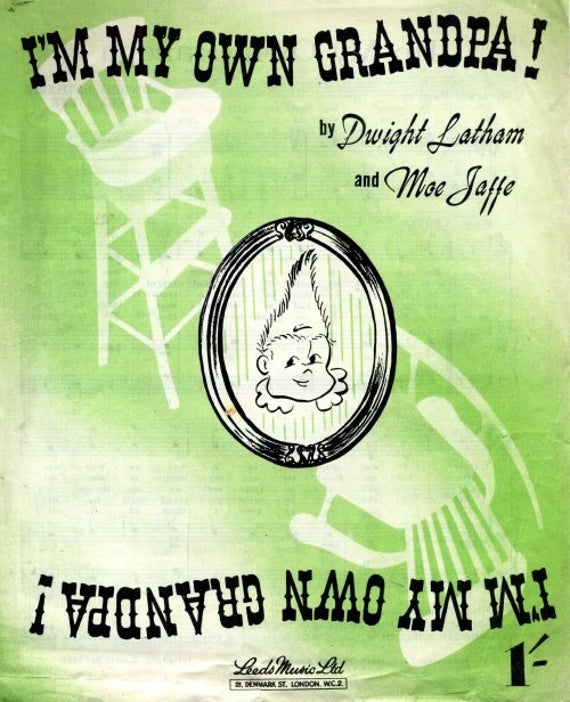
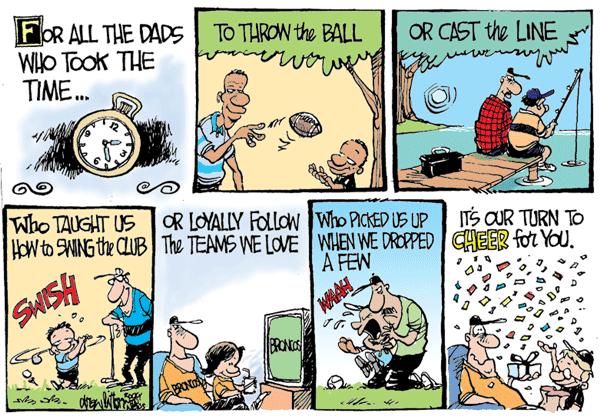
Now, all of us who have or have had fathers can muse on their influence on our lives, at least our musical lives. Needless to say there is a plethora of “daddy” music out there from the sweet to the maudlin . . . Here are some early sheet music covers to remind us.


Give a listen to this old tearjerker by that “singing cowboy” himself, Gene Autry. Click or tap on the triangle in the center of the next image for a treat.

And then there’s that perversion of the word “Daddy” into the torchy, tinted (but not quite off-color) slang of the day.

Here it is by Marilyn herself. Click or tap on the triangle in the next image to hear (and see) her in action!

Oh yes, we can’t forget the “Papa” songs either.

Here is this childish novelty tune of the 1920s. Click or tap on the triangle in the center of the next image to sing along.

Another Papa tune!

Here’s an early recording of this bluesy Papa song performed by Bessie Smith. Click or tap on the triangle in the next image to hear her voice.

And, of course, the novelty songs about fathers or even grandfathers.  Don’t we have fun!

Seek and ye shall find! Click or tap on the triangle in the next image for this one.

Here are a few more rather curious sheet music covers of the day. What were they thinking?

And, of course, here is probably the most played “Papa song” out there!

Click or tap on the triangle in the next image for a listen to this one–brings a tear to one’s eye!

Now for a bit of comedy!

Here’s a version of this country/western chestnut of a song for a final musical offering. Tap or click on the triangle in the center of the next image to listen in and try to follow the convoluted lyrics. (Not me playing the uke; his beard is longer than mine!)

So, to all you fathers out there–and to all of you who have or have had fathers, grandfathers, dads, papas, and (perhaps?) “daddies,” have a happy, safe, Fathers’ Day this year for you and yours!

So, remember dear old Dad and STAY TUNED!

And, for the electronic age . . .

ANOTHER MUSICAL MUSING, 14 June 2024: “Banjo Music/Styles. Are There Different Kinds? Really? I Didn’t Know!”

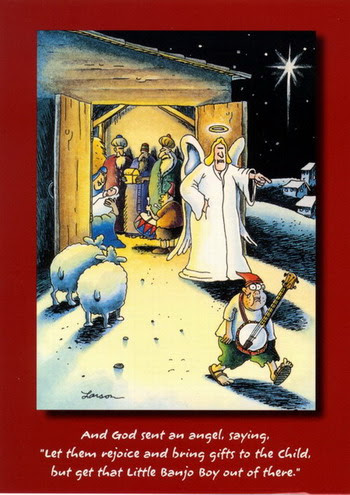
Over the years, many of you gentle readers have told me that you enjoy banjo music.  “Good for you,” I reply.  Then I ask, “What kind of banjo music?”  After a pause, most don’t offer an opinion other than asking, “Are there different kinds?”  Well, yes.  Hence this musical musing—in a few paragraphs, with a lot of tunes! Now, take those earplugs out! 

Let’s start with a bit of banjo history.

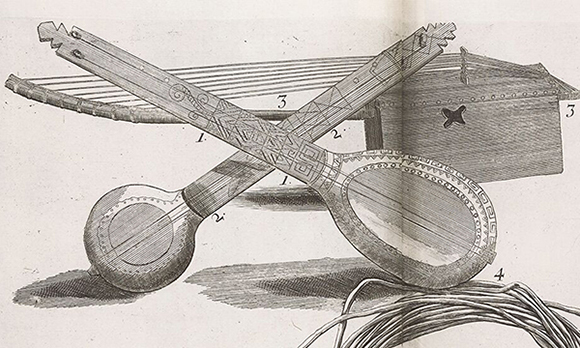
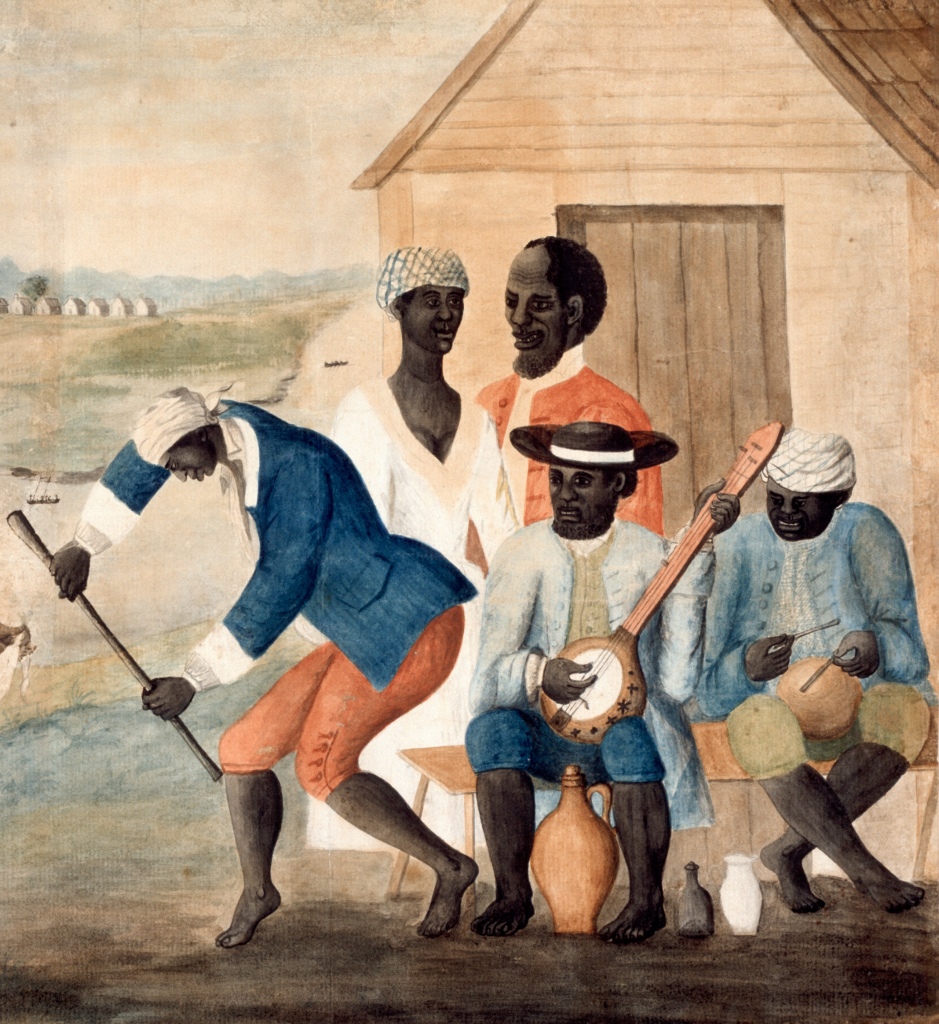
The musical instrument that today we call a “banjo” had its roots among the African peoples. Many brought their musical culture and traditions with them—if not their musical instruments themselves—when they were transported empty handed and against their will into slavery here in the so-called New World.

They soon found and fashioned shells or gourds, skins and strings, and sticks and wood into forms similar to those they remembered.  With these, and their hands and voices, music was made.

While the banjo emerged from the enslaved Black community, White America listened, liked, absorbed, and copied. And, the banjo and banjo music evolved into what we see, hear, and play today.   

Now, let’s jump from the past to the present.  As with any musical instrument or musical genre, each player focuses on their own musical directions and styles. 

Needless to say, this varies with different cultures over time. 

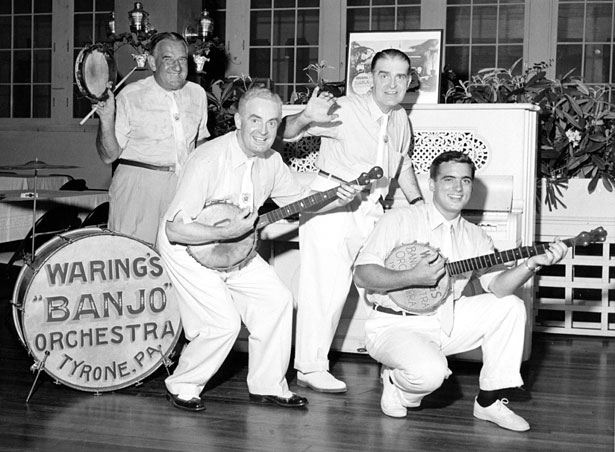
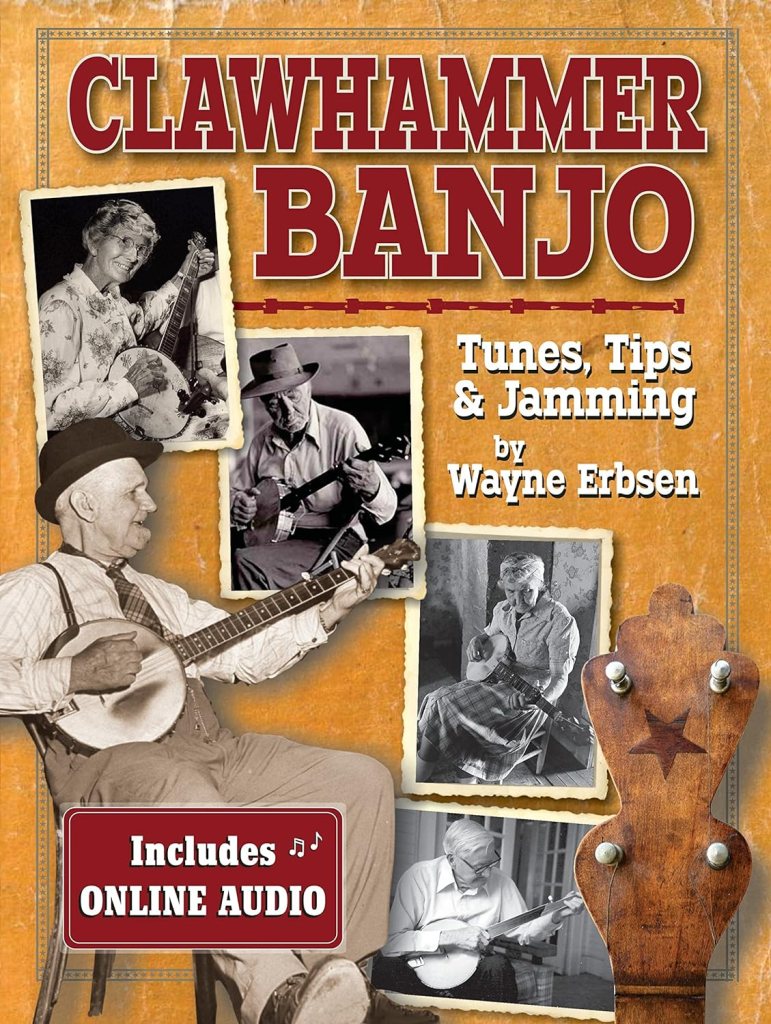
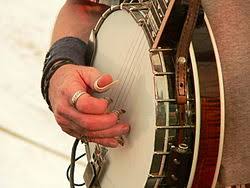
But, it’s worthwhile to take a moment to look at the three most dominant banjo playing styles commonly heard today.  Hopefully this simple musical musing will help your understanding and appreciation.  A careful look and listen should help to hear and understand the stylistic differences of 1) old-time “Clawhammer” playing,  

2) “Jazz” era tenor and plectrum playing,

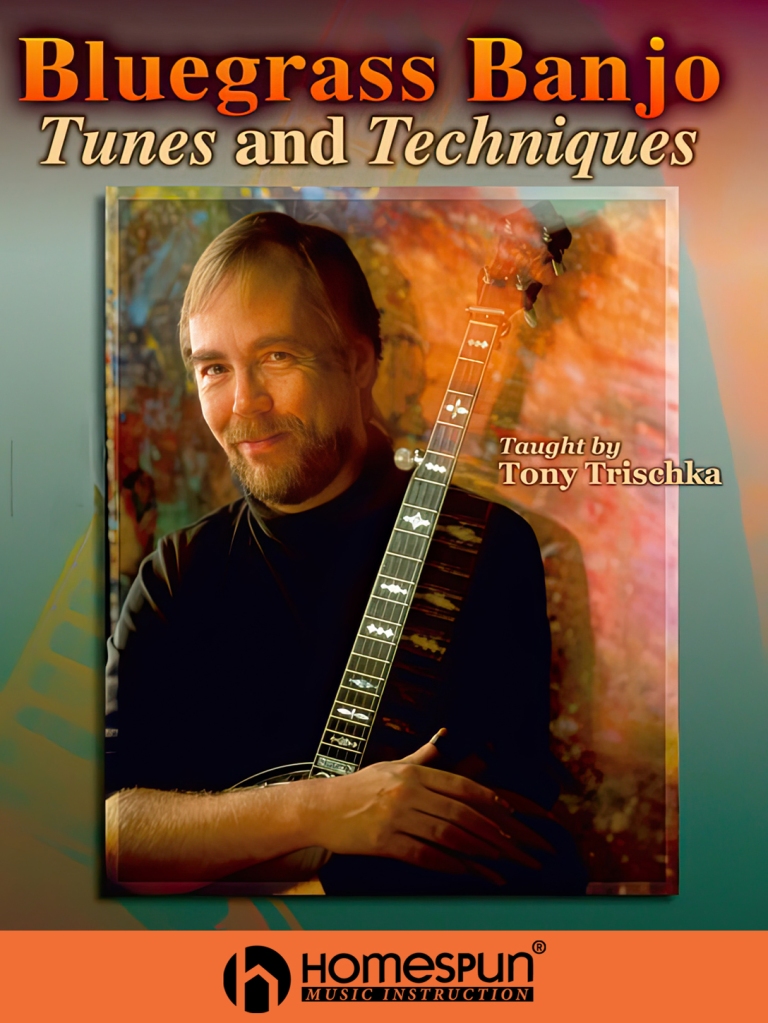
and 3) modern “Bluegrass playing.”

We’ll save an exploration of the bawdy “Minstrel” style,

and the genteel “Parlor” style of playing for another day. Whew! Who knew?

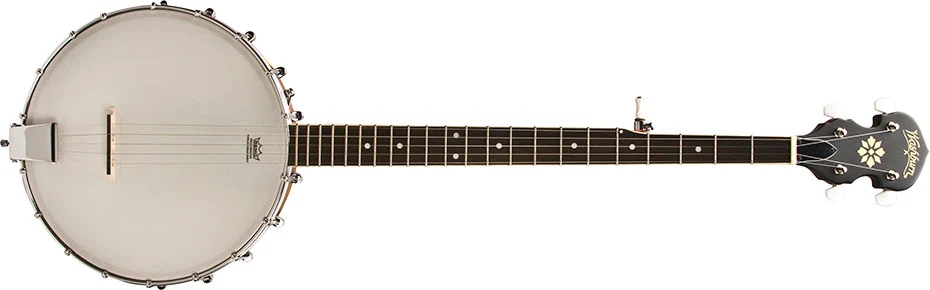
Let’s start with the style from the earliest days that is still popular with folk musicians today.  That’s what is known as the old-time “Clawhammer,” or, as some folks call it, “Frailing,” style.  The banjo used by most folk musicians has a skin-covered (mostly mylar today) “pot,” a 22-fret neck, and five steel strings. Four strings are full length and a fifth, called a “drone” because it is seldom fretted, is shorter than the others.  The short fifth string is played with the thumb while the other four strings are played downward with the fingers in a variety of single notes and chords.

Some even prefer to go “fretless.” Why not? That’s the way fiddle players do it.

It’s the right hand position that is said to resemble a carpenters clawhammer, hence the name.  Most players rely on strong fingernails rather than picks and the smoother sound produced with this style of play is particularly well suited to accompany singing and dancing. Now, click or tap on the triangles in the next couple of images for a look and listen to the great banjo artist, Steve Martin (Yes, THAT Steve Martin!), and some folks just having some musical fun, clawhammer style

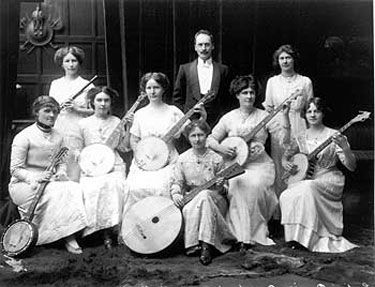
Moving along . . . During the jazz age, four-string (no short fifth string here) banjos played with a “plectrum” (flat pick) were used and the style of play featured rhythmic chording as well as melodies made up of single notes and chords played up and down the neck. A popular technique to look for is the fast up and down picking called “tremolo.” A so-called “tenor” banjo usually has 19 frets while a “plectrum” banjo has the standard 22. 

Many were ornately decorated to show up and show off on stage.

This style of play is well suited for dance bands or for a soloist playing in what is known as the  “chord melody” style.  This style has many followers today, particularly for Irish music and in amateur “banjo bands.” However, it fell out of favor with jazz and dance bands with the advent of the amplified electric guitar. Click or tap on the triangles in the next few images for a look and listen–a 1930s jazz band, an Irish player, and a couple of contemporary treatments.       

Now for Bluegrass music, players will use a fretted five-string banjo and metal or hard plastic thumb- and finger-picks used primarily to pluck the strings upward in syncopated patterns called “rolls.” These banjos, like the tenor and plectrum banjos, usually have a resonator mounted to the back of the pot to intensify and project the sound.  

This style of play is often called “three finger picking.”  The style is fast paced, and percussive with melodies emerging from the rolls.  You’ll hear this style played both as background and solo in today’s bluegrass bands. Tap or click on the triangles in the next images for a look and listen, first to the late Earl Scruggs–considered both master and inventor of the style– and to a tiny wannabe.

Are your eardrums still vibrating? Well, after this deluge of strumming, chording, and picking, you should be able to go to your favorite play lists or YouTube and search for examples of the various playing styles. And, if your eardrums have survived, you’ll know the background of all those earworms you now have. My gift to you!

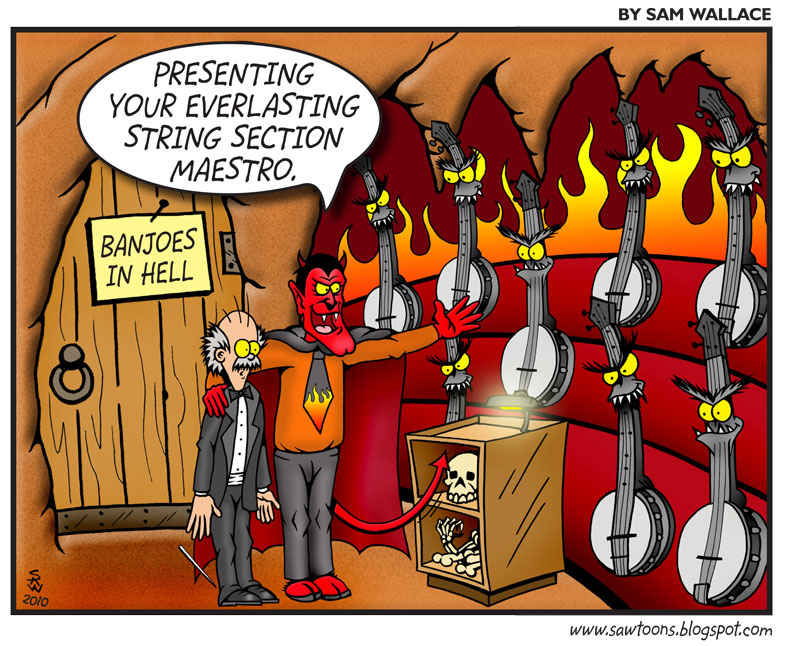
Wait! TMB? Too much banjo? Never! What? Ouch! Who threw that rotten tomato at me!

Just for that! Click or tap on the triangles in the next two images for my riposte! More, more, MORE! Heh, HEH, HEH!

Note: For those of the musically supercilious persuasion–not my enlightened gentle readers of course–these are the first two musicians to audition for and graduate from the Julliard School in New York on banjo. So, for those of you remain unconvinced and who might retain some lingering disdain for the banjo canon, here are the late Eric Weissberg, who wrote and performed the banjo music for the movie “Deliverance,” and the brilliant Bela Fleck. Nyaa, Nyaa Nyaa!

f

Alas, gentle readers, sad opinions still linger in the minds of the uninitiated and uninformed. Well. I tried!

Not those of you, of course, who have absorbed the message of this musical musing and will, of course, STAY TUNED!

ANOTHER MUSICAL MUSING, 6 June 2024–A Day to Remember with Songs Silly, Soothing, and Sad

During the so-called “War Years”—1939 to 1945 for the UK and Europe, 1941 to 1945 here in the US—the swing era was, well, in swing.  Songs were written, published, recorded, played on the radio, and performed on both sides of the Atlantic and, indeed, all over the world.  Nearly everyone in uniform and at home whistled or hummed or even sang these tunes during the day and danced to them at night.  There are hundreds of these songs out there and certainly worth a musical musing during this day when we commemorate the British Canadian, French, American and other Allied forces landing on the beaches of Normandy eighty years ago on D-Day, 6 June 1944. 

Where to start?

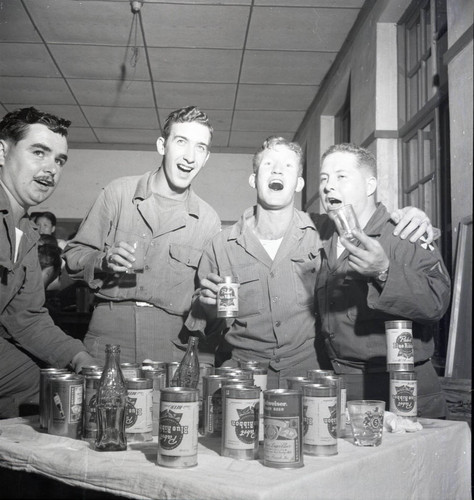
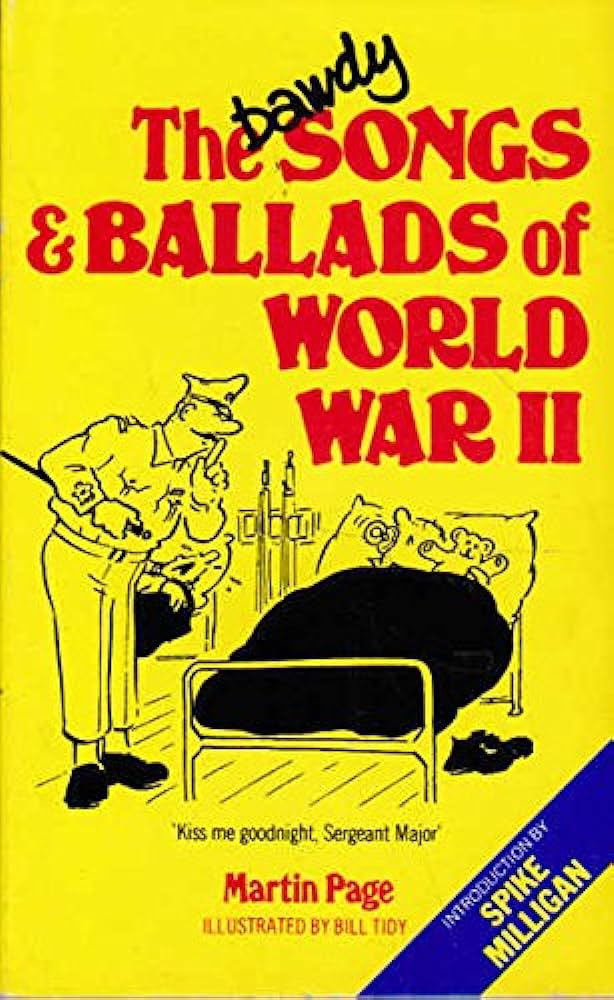
Soldiers and sailors in those days often enjoyed singalongs in mess halls and clubs and while working.  Men being men, however, they often laughed at and quickly discarded the official songbooks published for the morale of the troops.

They made up and preferred their own versions. But, needless to say, gentle readers, most of these are parodies of “official” songs and are much more silly, sexy, and scatological than those in the books–definitely NOT suitable for one of these simple musings of mine! 

But, here’s one of those silly songs that has a D-Day backstory.  As troops began to move from their transport ships into the landing craft that would take them ashore through the mine-filled and machine-gunned waters leading up to the Normandy beaches, some tried to ease their nerves by singing.  

Many veterans of the landings remember hearing—and singing along—the catchy chorus of one of the more popular songs of the day, “The Hut Sut Song.”

Click or tap on the triangle in the next image to listen to this silliness that, somehow, soothed.

These were also the days for dozens of popular songs played and danced to by soldiers and sailors and their girlfriends such as . . . 

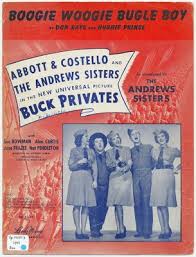
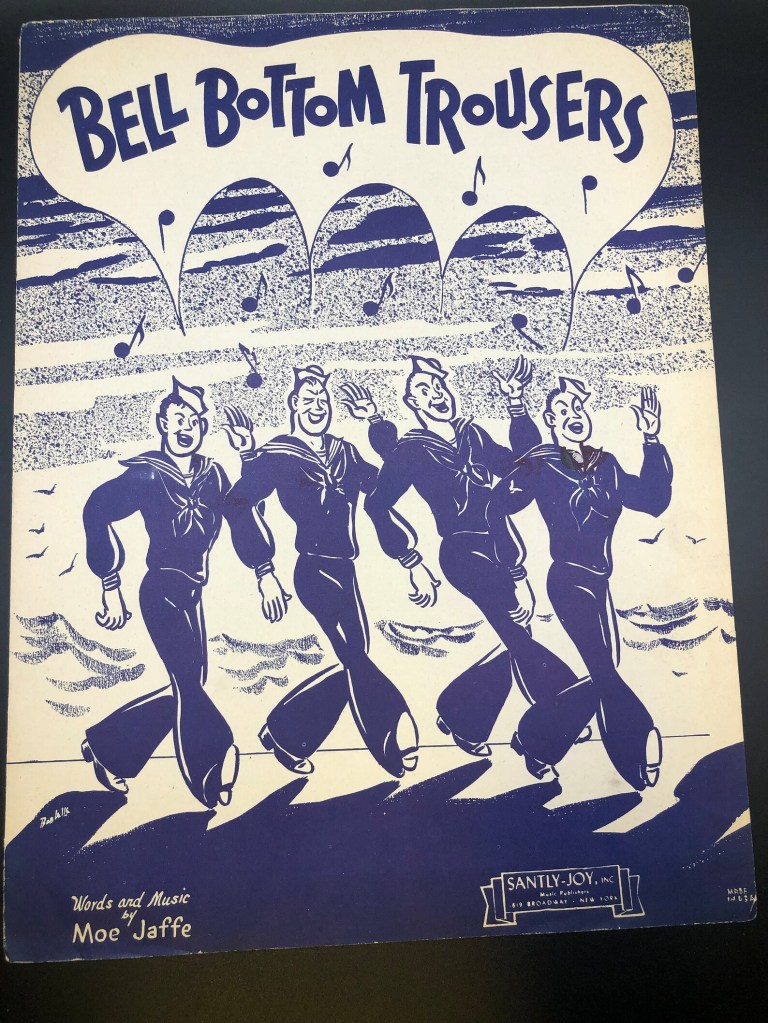
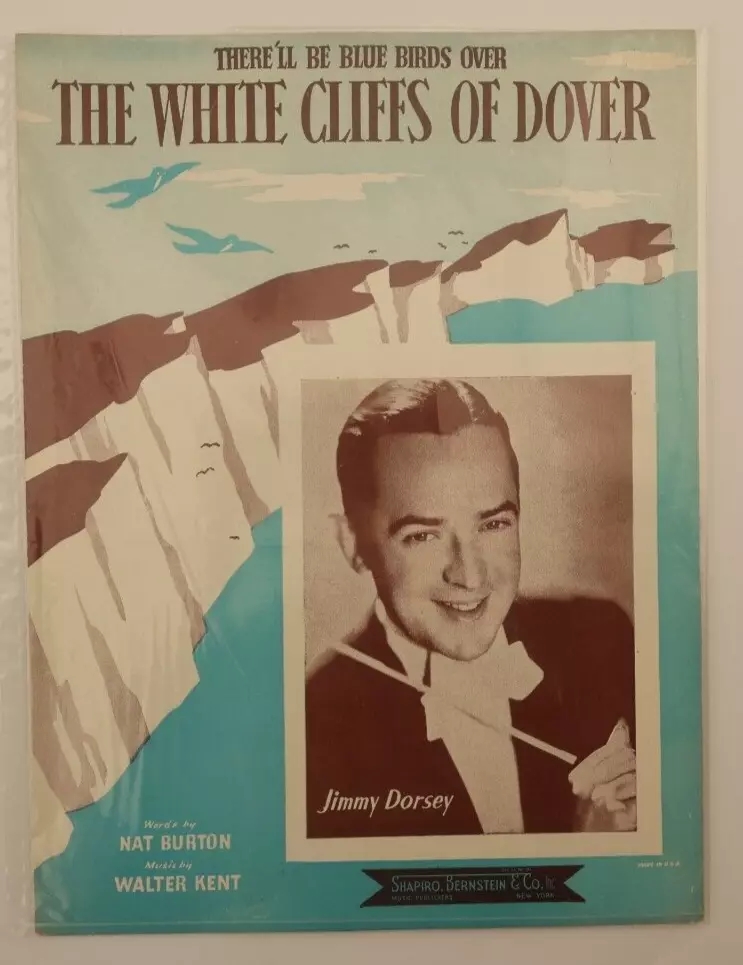
Click or tap on the triangles in the next three images for a look and listen.

The British contributed many of the more memorable songs of the day, many of which brought the weight of the war home. 

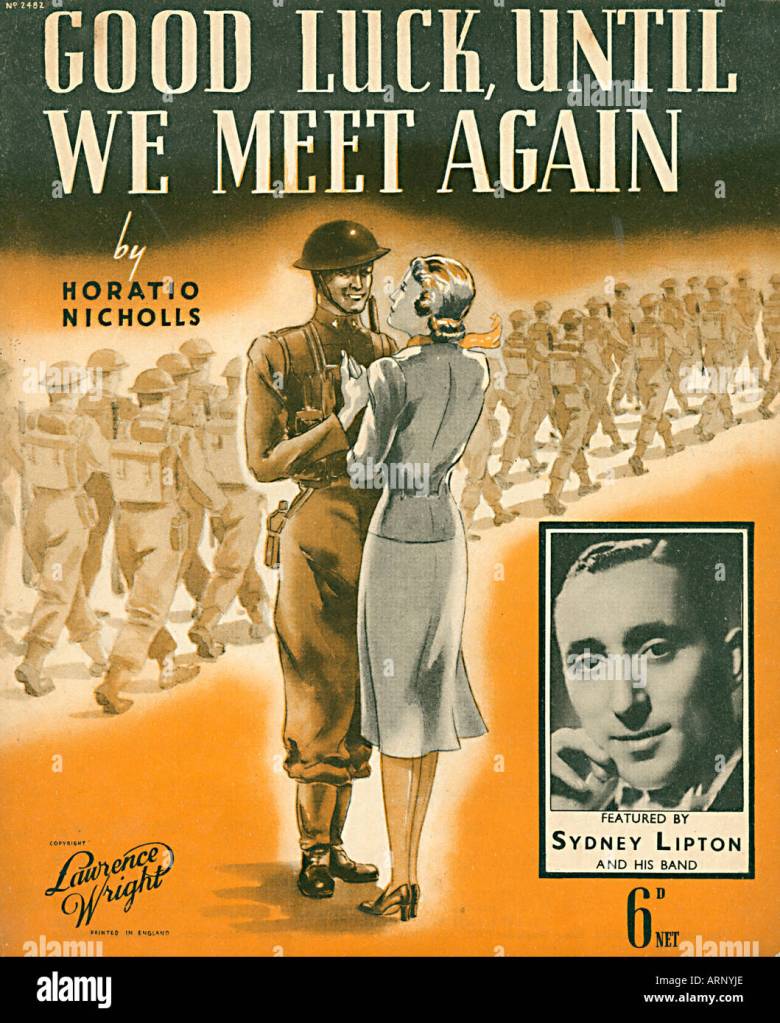
Click or tap on the triangles in the next couple of images for a look and listen.

And, of course, there were dozens of songs written about the uncertainties of those days, especially the partings.

Click or tap on the triangle in the next couple of images for a listen.

Silly songs soothed in those days but sober songs bring history home today. Click or tap on the triangle in the next image to hear a song written and performed by a British sailor who was THERE.

And, of course there is that great song that ended just about every movie, radio, USO show, or performance for most of the war years, “We’ll Met Again.

 Click or tap on the triangle in the next image to hear this song made famous by the beloved British “sweetheart of the services,” Vera Lynn.   

This is one musical musing that could go on and on. There are just too many songs that each tell a story in their own way, silly or soothing or sad. All contribute, however, just like those who waded ashore that day and those that remain there today.

It’s a history of sand and song. STAY TUNED.

AN ENCORE MUSICAL MUSING, 26 May 2025–A Sartorial Segue Into the Summer Season

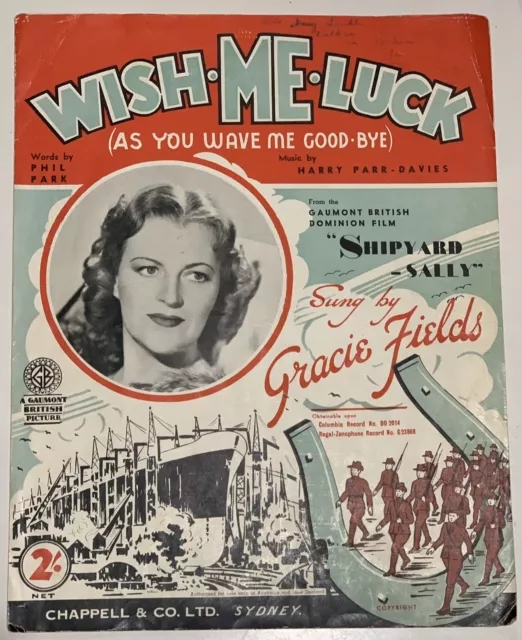
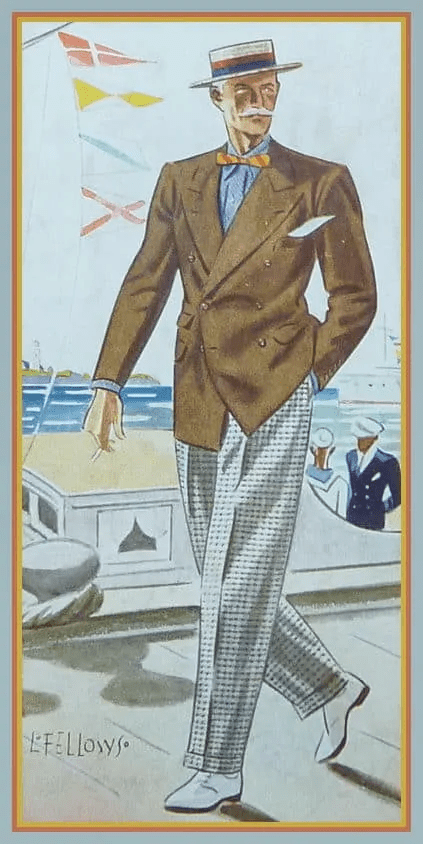
Well, here we go again. June is almost upon us, as is warmer (hot!) weather. It’s time think about wardrobe transitions. As a child, I remember my mother saying that her mother taught her that, after Memorial Day (Decoration Day to them), one may now wear white shoes and straw hats! I, of course, listened to my mother and–to this day–refrain from breaking the white/straw rule. Don’t you?

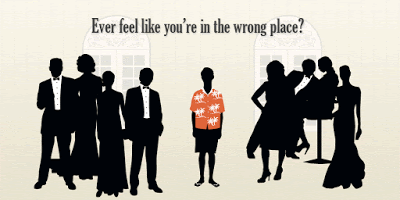
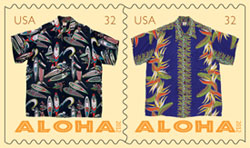
It’s also time for we Summer stylish gents (and ladies, of course!) to bring those Hawaiian shirts out of their winter storage bags and into our summer closets. Tis the season!

That being the case, I can’t pass up the chance to muse a bit on the history of this sartorial trend and to point to the protocols that “must” (well, “may”) be followed. And, there will be a tune or two. After all, gentle readers, this is a musical musing! And, ukuleles, salt water, warm weather, and Hawaiian shirts go together like “C,” “F,” “G7,” and back to “C.”

Click or tap on the triangle in the next image for a real Aloha!

 As with my previous postings, of course, all is not mere frivolity. So, I’ll start with some serious scholarship about these shirts, their history, and place in our popular culture.

To go back a couple of hundred years or so, the first shirts associated with the islands were not what we think of today as a “Hawaiian Shirt.”  Rather, these were simple, loose, long-sleeved work shirts, modeled after those worn by visiting British and American sailors.

They soon became the “uniform” for pineapple and cane field workers and island cowboys.

These came to be known as “palaka” shirts, from the Hawaiian word for “smock.” For the island trade, British cotton mills wove this denim-like fabric in a unique checked pattern which soon became known as “palaka plaid.” 

Still made and sold today, this has become an iconic garment embraced by many native Hawaiians.

Click or tap on the triangle in the next image for a bit of musical palaka lore.

Moving on . . . In the 1920s a Japanese tailor in Honolulu came up with the novel idea of making shirts from odd remnants of printed silk he had on hand after making traditional kimonos. 

These patterned, brightly colored shirts achieved almost instant popularity and soon became the standard for the local beach and surf crowd. And, of course, these became a must-have for the growing number of Mainland tourists.

Then, in the 1930s, a Chinese tailor in Honolulu made and marketed a variation on these originals and had the entrepreneurial wit to copyright the name “Aloha Shirt.”  The go-to garment that we know and love today was born!

Soldiers and Sailors stationed in Hawaii during World War II brought their colorful and casual silk and rayon shirts back home, as did more and more tourists in the ‘50s and ‘60s. 

What was a cheap souvenir in those days has spawned an industry and early, well designed shirts have become scarce collectors’ items today. 

Some sell for hundreds of dollars and even find themselves in museums and galleries.  

Today, the Aloha Shirt (now a generic name) has become standard business attire for many in the islands—replacing neckties and jackets for some— during nearly nine months of the year. 

As would be expected, the Aloha style even extends to those formal occasions where a tux would be called for in other climes.

For the women and girls, the cover-up of the “muumuu” (forced on bare-breasted native girls by those shocked nineteenth century missionary wives) moved from palaka plaid, to intricate patterns,

to the bright florals we see today in lovely dresses.

Click or tap on the triangle in the next image to hear the music and voice of one of the most popular muumuu wearing, singing “aunties” of Hawaii.

Click or tap on the triangle in the next image for a bit of muumuusical fun!

While Hawaiian flora and activities dominate fabric patterns, just about any theme can be found on a Hawaiian shirt these days.  Ukuleles, of course!

Adult beverages, naturally!

Other interests or proclivities, you name them!

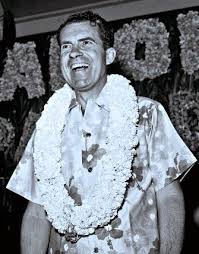
Presidents have worn them.

And even some police station mug shots show them!

And, movie stars and movies made them famous.

Click or tap on the triangle in the next image for a look and listen to an island icon!

And now, the BIG question!  Do you wear a Hawaiian shirt tucked in, or not tucked in? The answer is simple—as with all shirts with a straight hem and side slits, you wear them UN-TUCKED and flying in the breeze.

Except, maybe, with a blazer in the office.

Or on a fashion show runway,

 But is it acceptable to wear a shirt unbuttoned?  It all depends.  .  .

And, they even work for really BIG guys like me!

So, let’s dig out and don our Hawaiian shirts for another summer. Why not?

Speaking of shirt music, how about a rap version of an “Aloha Shirt Song?” Click or tap on the triangle in the next image and look and listen for as long as you can stand it! It’s not my favorite musical genre, but I understand that there are folks out there who like this kind of stuff. Just sayin . . .

So, back to our sartorial exploration . . .

Not if you observe the Hawaiian shirt rules, send us postcards from the islands, . . . and STAY TUNED!

ANOTHER MUSICAL MUSING, 5 May 2024,”It Takes Two Hands and Two Heads to Play a Banjo–Banjo Ukulele, That Is!”

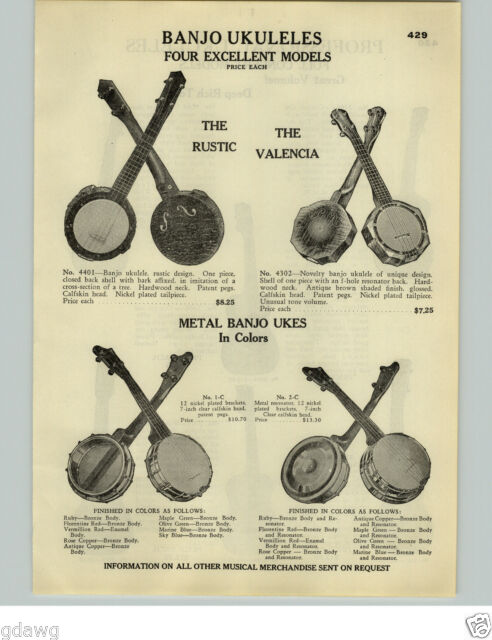
As many of you gentle readers are aware, I have been playing (alas, playing “at” rather than playing “well”) and collecting banjos and ukuleles since the 1950s. So, I thought it might be fun to muse a bit on my favorite type of ukulele marriage–the “banjo ukulele,” or as called by some, a “banjolele, or a just plain “banjo uke.” Please bear with me, gentle readers, but be prepared to be both entertained and enlightened. I hope!

Friends and colleagues have mentioned that, in these trying times, they have found my meant-to-be-merry musings on musical lore diverting if not soothing. Well, maybe not that soothing this time around! You might want to turn those hearing aids down a notch or two as we begin with–what else?--an overture! Click or tap on the triangle in the next image to see what can be done with a banjo uke. Get your earplugs on if you must because HERE WE GO!

This week’s musing on banjo ukuleles is a bit longer and a tad more rambling than usual. It focuses on an instrument and style of playing that some folks might find a bit off-putting but is, nonetheless, a part of our musical heritage. Many of us strummers think it’s the only way to go; others remain, shall we say, unenlightened and, in fact, disdainful!

Most of you gentle readers and fellow strummers know that my go-to instrument for those Tin Pan Alley, old-time, and country tunes we enjoy has long been a banjo ukulele. I have a newer “Gold Tone Deluxe” tenor banjo uke, tuned gCEA just like a standard ukulele, and a vintage 1920’s “Bruno” baritone banjo uke, tuned DGBE like the top four strings of a guitar. These are set up with nylon strings and the sound can be softened with a rubber violin mute, but only when absolutely necessary!

To a lot of folks the bright, percussive tone of a banjo ukulele is thrilling, to others an acquired taste, and to still others . . . well. But this variation of the traditional uke goes way back in musical history. This might be nothing more than a “drum with a stick attached to it,” but this little instrument is taking off and has found more than a few fans over the past hundred or so years.

In 1916, San Francisco resident John A. Bolander patented the first banjo ukulele. In 1922, Hawaiiian-born Californian Alvin Keech, a ukulele player and vaudevillian, found himself in post World War I Paris performing on stage and in cafes. He and his brother, Kelvin, also made and sold several variations of banjo ukuleles that would become known as “Keech Banjuleles.” (Note the spelling.) Because of their musical and manufacturing efforts, the instrument became very popular in Europe, specifically France and Britain, and later in the US.

Here is one of their simple banjo ukes from the 1920s.

Most “Uke-ologists” credit Keech as the performing perfector and earliest promoter of the banjo uke if not the inventor. He perfected a fast-fingered strumming style that set the stage for banjo uke players of the day and set a goal for many today. Despite the fact that this is a “silent movie,” check out his fingering skills in both regular and slow motion. Click or tap on the triangle in the next image for a look if not a listen.  

For some sound, here’s a look at a restored vintage Keech Banjulele in action today. Click or tap on the image to check it out.

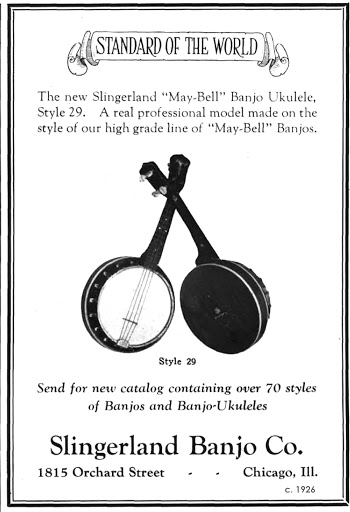
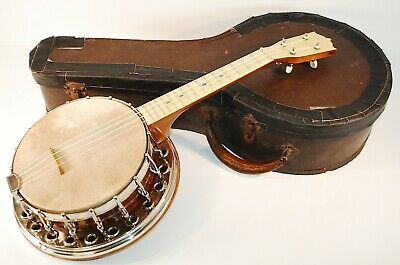
Examples of banjo ukes from both sides of the Atlantic show, basically, a four-string standard soprano ukulele neck mounted on a six- to eight-inch cylindrical pot, or “drum,” with a skin head. In fact, banjos and banjo ukes soon became a lucrative sideline of big name drum manufacturers such as Slingerland and Ludwig. 

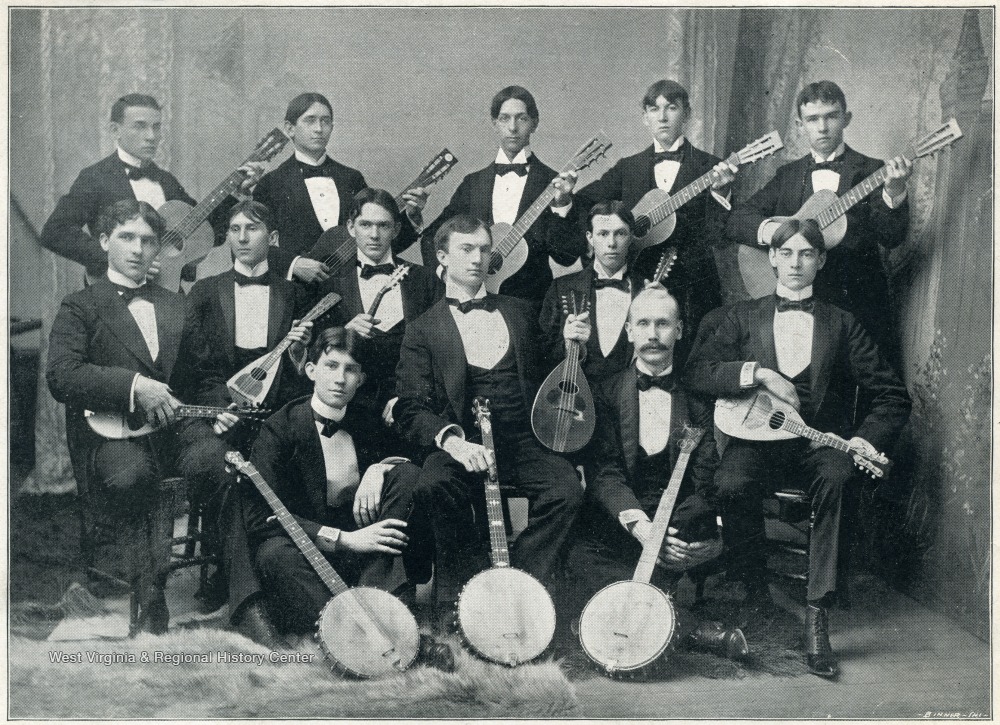
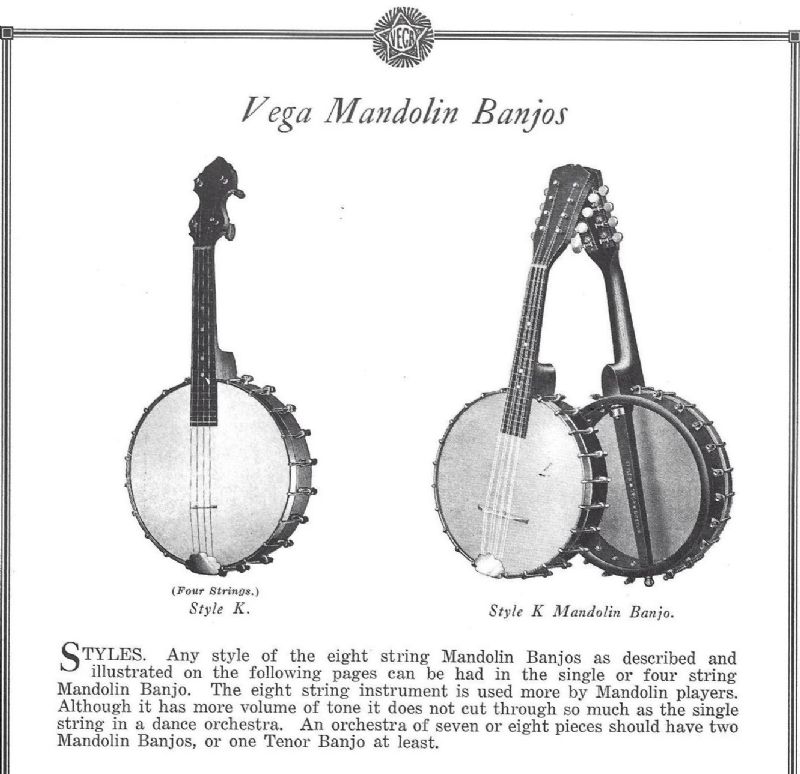
Before the advent of the banjo ukulele, however, short necked eight-string, four-course banjo mandolins or “banjolins” were available—usually with a ten-inch head. So were four-string versions called “melody banjos” and a five string version called a “piccolo” banjo. 

These were the “soprano voices” in the banjo bands or orchestras of the 1890s and early 1900s.

While banjo ukes are usually tuned in the standard gCEA, the melodies and banjolins were usually tuned in fifths like a mandolin or violin, GDAE.

The banjo uke became popular, particularly with vaudeville performers, because it was relatively simple to play, like a regular ukulele, and is, like a good “stage voice,” LOUD!  Tap or click on the following image for an example performed in the “Keech style,” later and especially today called the “Formby style,” about which more later.

And, of course, there were many, many vaudeville or stage performers.

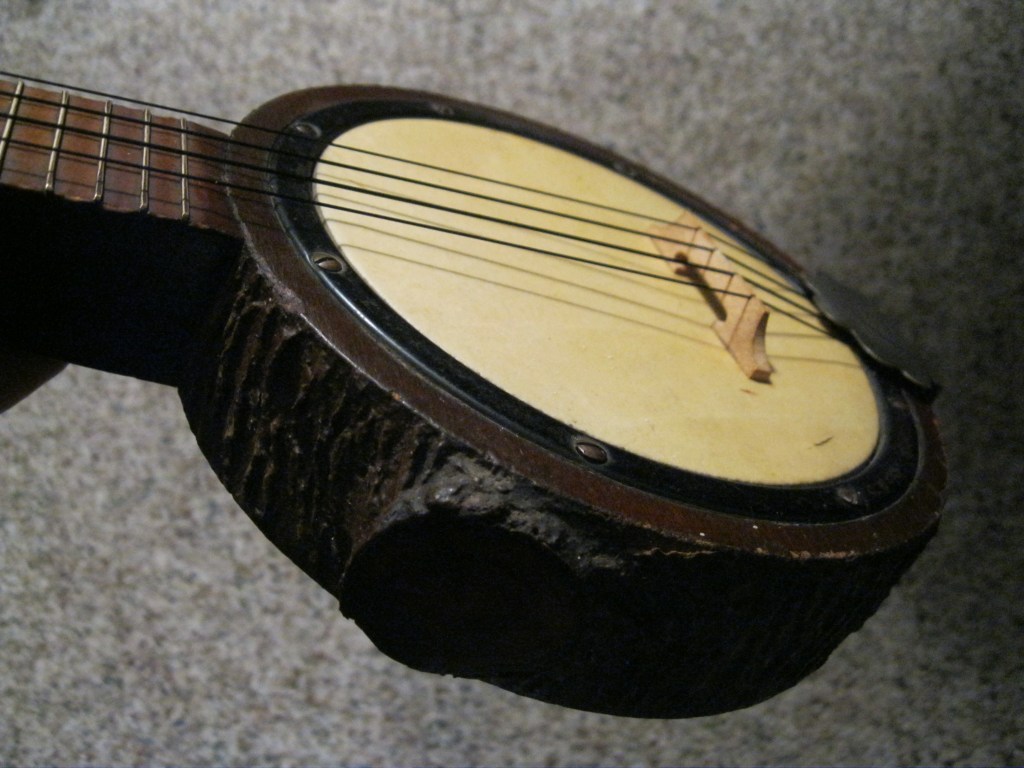
Some say that what drove the banjo uke into popularity, however, was that it was easier to build (read less expensive) than the more curvaceous, guitar-like standard ukulele. It was made up of a lot of interchangeable metal parts and the less expensive models required little fancy wood bending and finishing. You could even use a bit of an old log. 

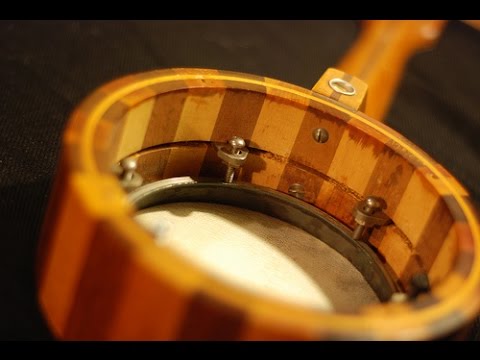
Or make big pieces out of little pieces.

This, coupled with the popularity of Tin Pan Alley ragtime tunes, made the brighter, jazzier tone of the banjo uke THE sound of the 1920s and put a banjo uke into the hands of thousands. It seems that everyone wanted to learn, and many folks made money from songbooks as well as instruments!

As with all musical instruments, there are low-end as well as high-end models. Here are a few top-of-the-liners. A Stromberg Voisenette . . .

A Gibson UB-2 with resonator . . .

A gold-plated Ludwig Professional . . .

Simple styles cost only a few of dollars in their day while fully decked out vintage models–when found– easily can cost thousands or more in today’s market. Alas, none of those are in my collection!

Anyway, banjo ukes are fun to look at, fun to play, fun to hear, and fun to collect. 

And they are easy to decorate. A blank “canvas” so to speak!

They were popular with buskers and strummers in the sweet old days as well as now.

Now, I would be remiss if I didn’t include samples of two of the great banjo ukulele players of the past who epitomized the fast-fingered Keech/Formby styles, both British. First, there’s Tessie O’Shea who headlined alongside the Beatles when they did their famous first appearance on the Ed Sullivan TV Show.

Their joint appearance drew what was then the largest audience in the history of American television.  Imagine that for a banjo uke player!  Click or tap on the triangle in the next image for this YouTube if you have a few minutes!

And then, on to the King of the fast-finger players and the performer who gave his name to the style as played today, George Formby. Just imagine the generosity, wit, musicality, and personality of Bob Hope, Danny Kaye, Steve Martin, and Jerry Lewis wrapped up in one British music hall and film star.

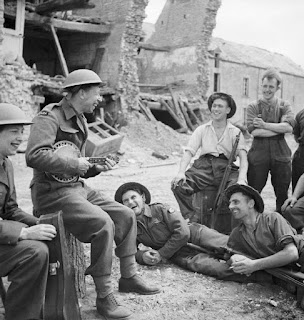
His toothy grin became known to a worldwide audience through his many films of the 1930s and 1940s and his entertainment of the troops during World War II. On stage, screen, and records he sang light, comical songs and became the UK’s highest-paid entertainer. Some say that he made the banjo ukulele famous and he certainly made his fast style of play the goal of many players.

You might wish for sub-titles with this one, but this is one of his signature tunes. Click or tap on the triangle in the next image to watch and listen.

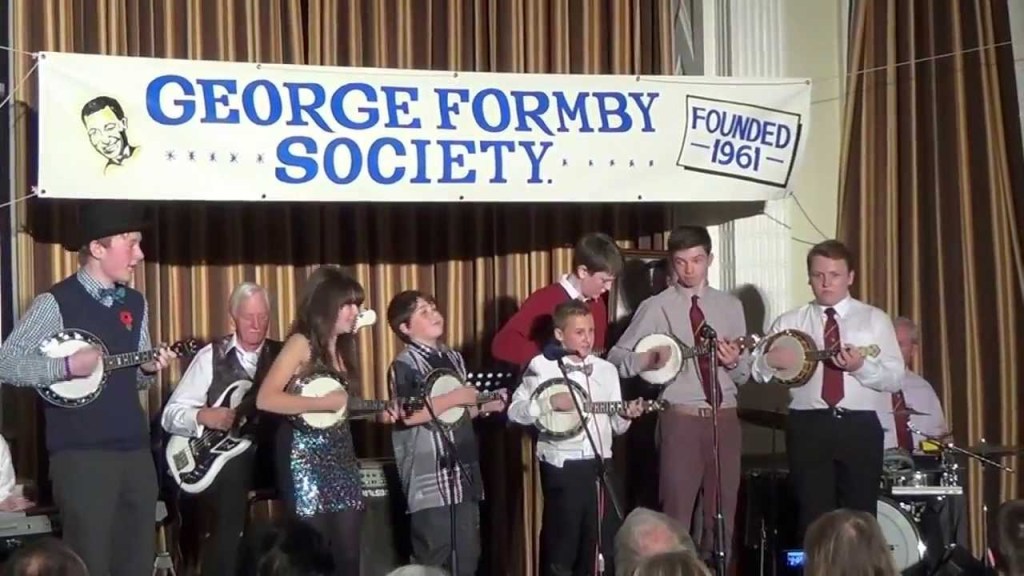
Playing in his fast-paced signature style is the goal of many of today’s banjo uke players and there are George Formby Society (GFS) clubs all over Britain. Needless to say, the banjo uke is HUGE in the UK!

Now, to wind things up, here is the quintessential George Formby song as performed by the United Kingdom Ukulele Orchestra. Click or tap for a treat!

Alas, there isn’t anyone playing a banjo uke in this performance. Those folks are virtuoso ukulele players but it’s the Formby signature song that’s important.

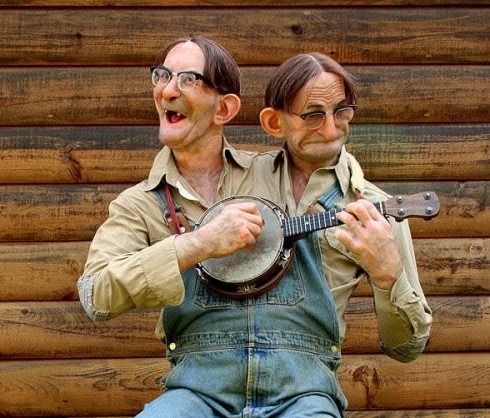
But, of course, no one should be without a handy banjo uke! It can certainly play an essential role when necessary, so to speak.

Warning, gentle readers! Don’t try the above pose with this one!

Anyway, stay well, remain modestly dressed, turn those hearing aids back on, learn to love the banjo uke–and STAY TUNED!

Oh, why not! A pic of the old geezer himself!

ANOTHER MUSICAL MUSING, 29 March 2024–An Old Melody All Dressed Up For The “Easter Parade”

Sorry, gentle readers, but calendric quirks force me to dig into my holiday file a bit early this year. Anyway, why not? Thanks to the folks who invented Leap Year, it’s been confirmed that Easter is about as early in the year as it can be. So, let’s jump ahead and take a look at that most non-bunny, non-religious of holiday songs–“Easter Parade.”

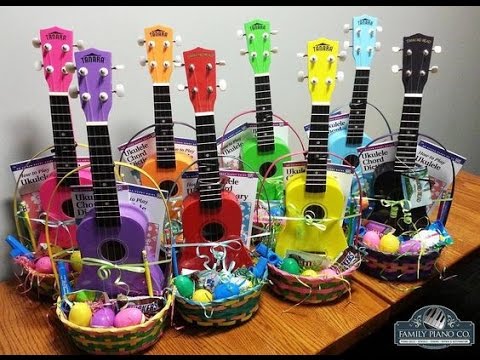
I’m sure that quite a few of you will be having some sort of Easter celebrations with family and friends–in person, on Zoom, even by old-fashioned telephone. By any means, I hope that your Easter baskets are as much musically fun as these!

8999ddeb2ff680bcbcaaeb6e03f7ef24.jpg

To crack this seasonal egg, let me delve into a bit of musical history and a little musical mind-candy. We all could use some of that before we suit up for the parade this Sunday. We ARE going to parade down the avenue, aren’t we?

wp-content%2Fuploads%2F2016%2F03%2Feasterparade-13.jpg%2Foriginal.jpg

That’s one way to suit up but, as an architect, I feel the need to expand on the dress code just a tad. But, I digress.

Moving on, “Easter Parade” is nothing more than a simple boy-girl romancing song written around that depression-era fashion parade on New York’s most fashionable street—5th Avenue.  It’s an event that lives on today albeit in a slightly less modest form.

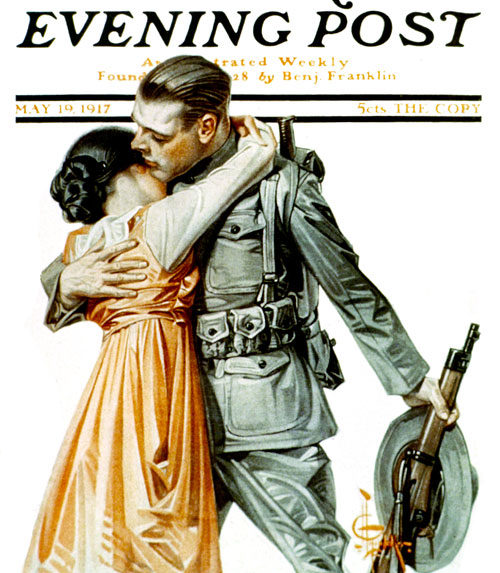
Our song was written in 1933 by Irving Berlin who, not being one to waste a good thing, had originally written the melody in 1917 for another song called “Smile and Show your Dimple . . .

Smile-And-Show-Your-Dimple-1917.jpg

. . . a “cheer-up” song for a girl whose guy had gone off to fight in World War I.

Tap or click on the triangle in the next image for a musical treat (of sorts).

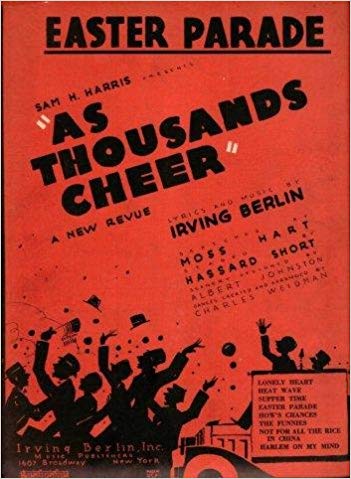
This tune achieved modest success during the war years, but was soon forgotten—by everyone except Berlin.  He resurrected it with a few modifications and new, quite secular “holiday” lyrics and title for the 1933 Broadway revue “As Thousands Cheer.” 

516baSpJkwL._SX349_BO1,204,203,200_.jpg

Tap or click on the triangle in the next image for a listen to “Easter Parade” as it was performed in the original musical review. Believe it or not, it’s the four-time academy award nominee actor Clifton Webb’s voice on the early recording! Nothing “cheaper by the dozen” here.

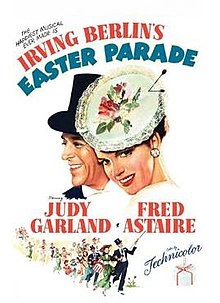
As with most of Berlin’s songs, it later appeared in several musical movies of which the 1948 “Easter Parade,” with Judy Garland and Fred Astaire, remains the quintessential, sweet (some might say “saccharine”) version. 

220px-Easter_Parade_poster.jpg

In fact, the whole film was written around the song. Click or tap on the triangle in the next image for what was, in its day, a cinematic Easter treat.   

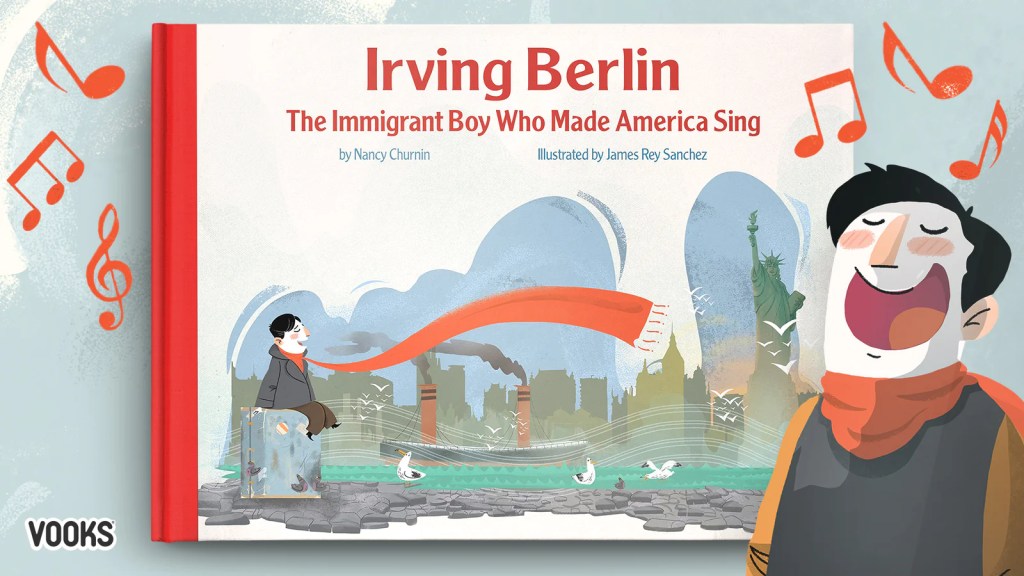
Irving Berlin (1888-1989) was widely considered one of the greatest songwriters in American history.  Born Israel Beilin in Imperial Russia, Berlin arrived in the United States at the age of five. He published his first song, “Marie from Sunny Italy” in 1907 and received 33 cents for the publishing rights.  That would pay for a spaghetti meal with a meatball, if not bread, in those days. I assume.

mariesunnyitalythumb.jpg

Click or tap on the triangle in the next image for a listen to this oldie by Irving.

The publisher misspelled his name on the sheet music and, ever after, “Beilin” became “Berlin.”

irving-berlin.jpg

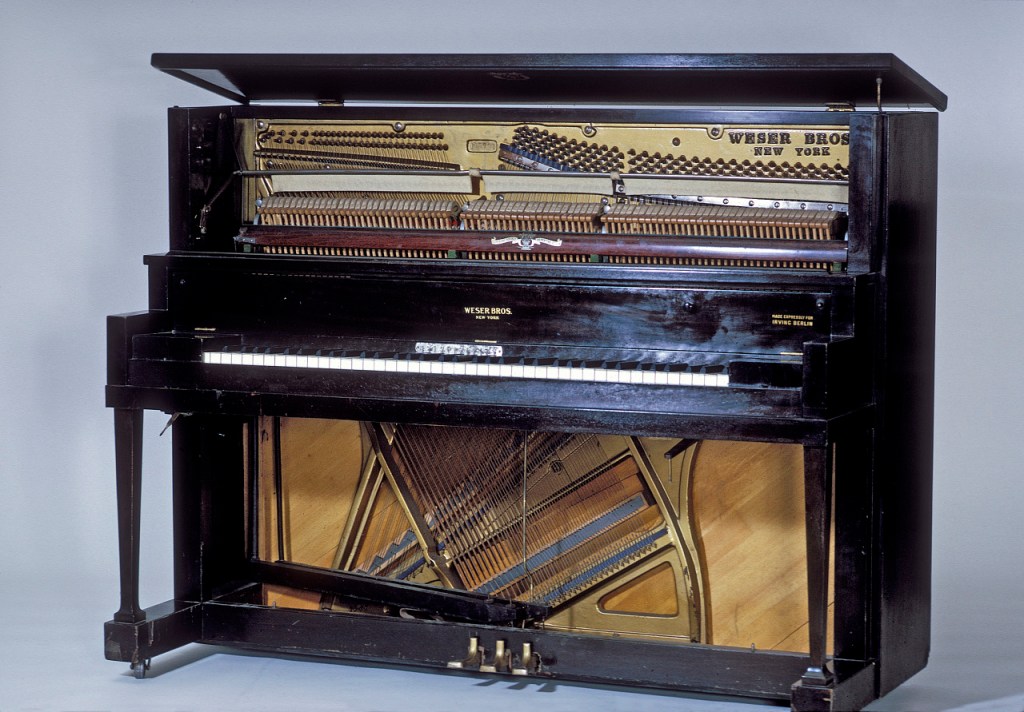
It is commonly believed that Berlin couldn’t read sheet music and was such a limited piano player that he could only play in the key of F-sharp. He “cheated” with a special piano he had made with levers that would allow him to change keys. It’s now in the Smithsonian Museum of American History!

So, as a kickoff to Easter Sunday, we have a Jewish songwriter, an immigrant born in Russia, who gave us this quintessential Easter song—only in America! He also wrote “White Christmas,” and of course, “God Bless America.”  

So, let’s wrap up our Easter musical musing with–what else?–street band treatment of “Easter Parade.” Click or tap on the triangle in the next image for a down home treat. What’s not to like?

And, of course, one of the earlier film versions. Click or tap on the triangle in the next image for a look and listen. Who knew that Don Ameche could sing?

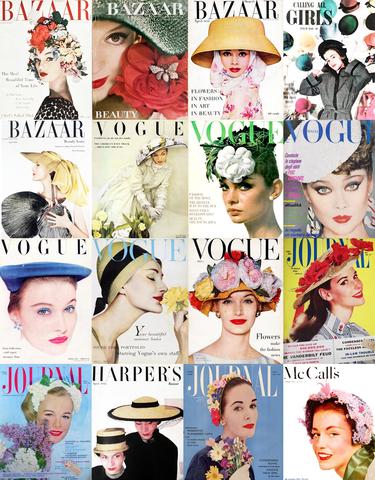
So, have your own kind of Easter fun this year, whether secular or sacred. Wear a beautiful bonnet . . .

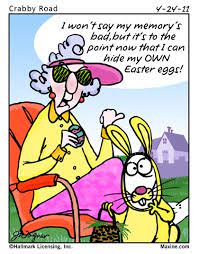
Try to hide those Easter eggs where only you can find them . . .

Be aware of what those eggs might turn into!

And STAY TUNED!

ANOTHER MUSICAL MUSINGS, 22 March 2024: Marching To The Polls Together; It’s About Time!

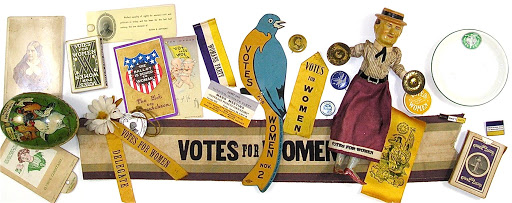
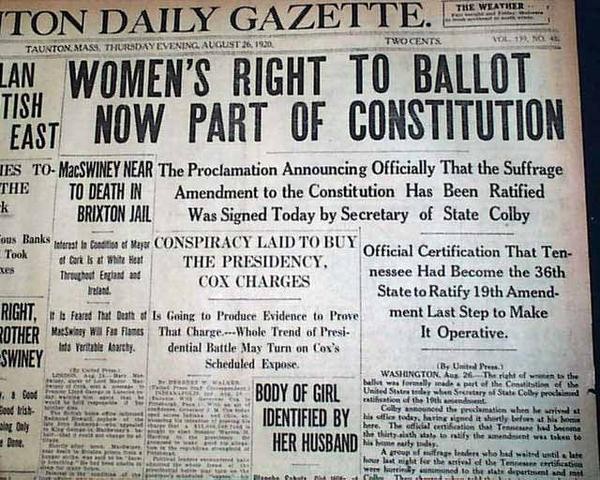
Well, I assume that most of us are now aware that there is an election headed our way in just a few more months.  I assume also that most of us will be able to vote one way or another and to have that vote counted one way or another.  And, to add a bit of a historical flourish to this election in 2024, most of us are aware that the 19th Amendment to the US Constitution, passed in 1920, finally allowed most of the other half of America to vote—Women!  So, vote for that hometown boy Calvin Coolidge! Ooops. That was 1924 not 2024. Oh, well . . .

The international “Women’s Suffrage” movement was born in Europe and the USA back in the mid-19th Century . . .

. . . but women’s right to vote didn’t get adopted by all forty-eight states until that constitutional amendment was adopted a hundred years ago. 

During the last few weeks, newspapers and television were full of stories about this bit of American history, particularly during Women’s History Month.  But, gentle readers, just what does this have to do with my weekly musings about music? Well, you need to start early with music and, of course, with the thought of voting!  

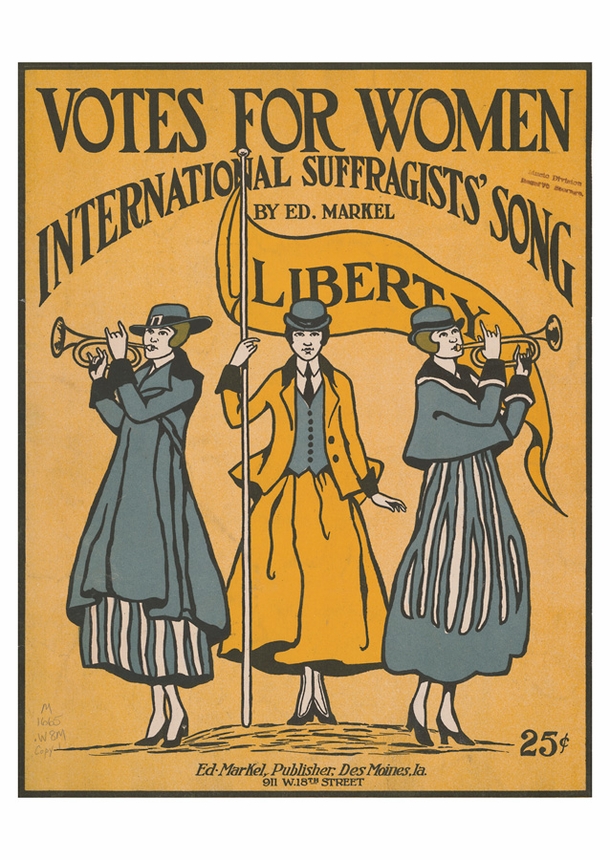
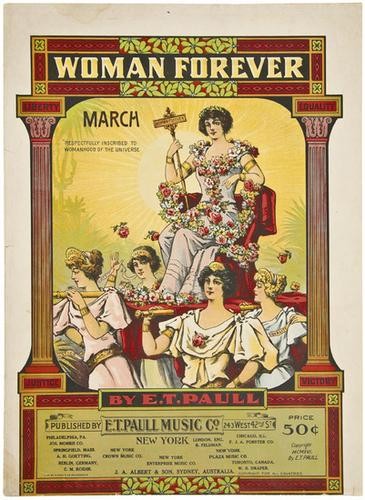
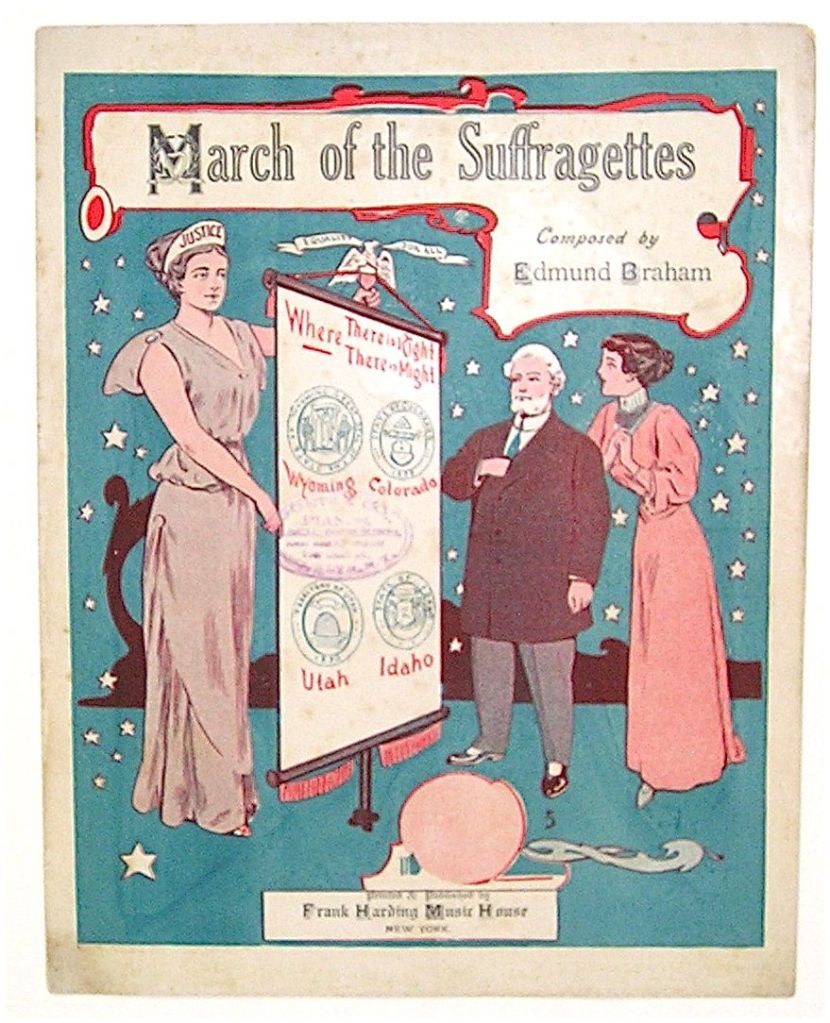
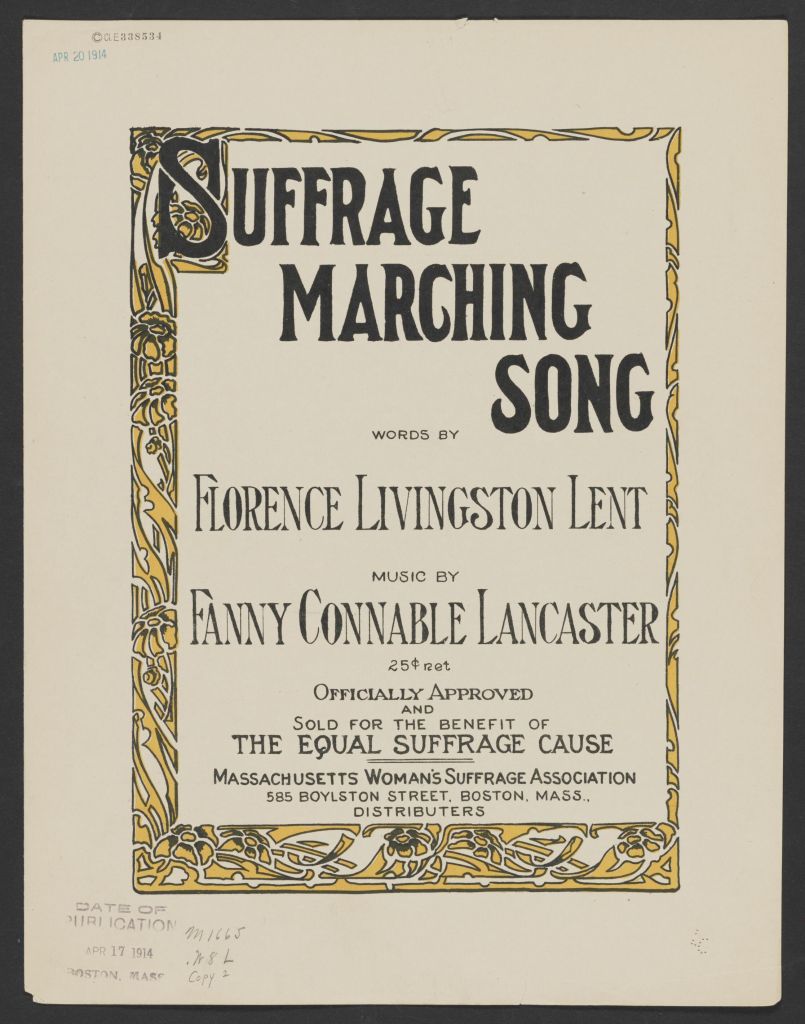
Moving on, demonstrations and marching were big parts of the Women’s Suffrage movement . . .

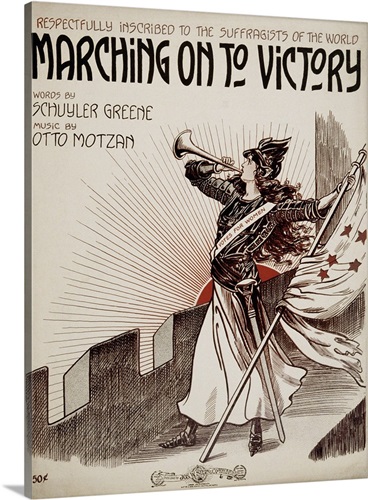
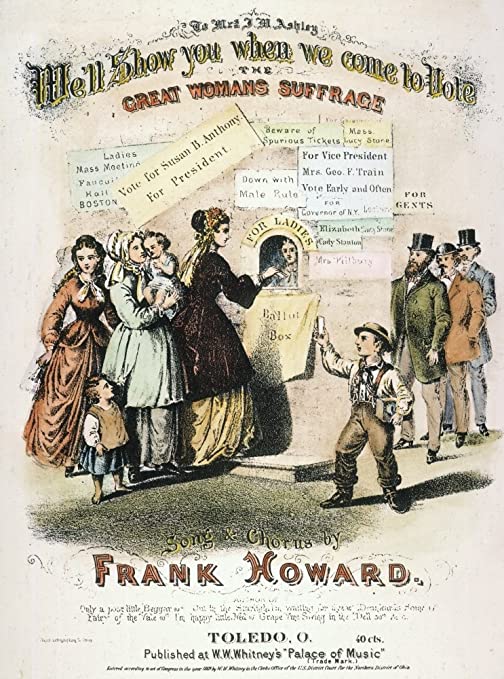
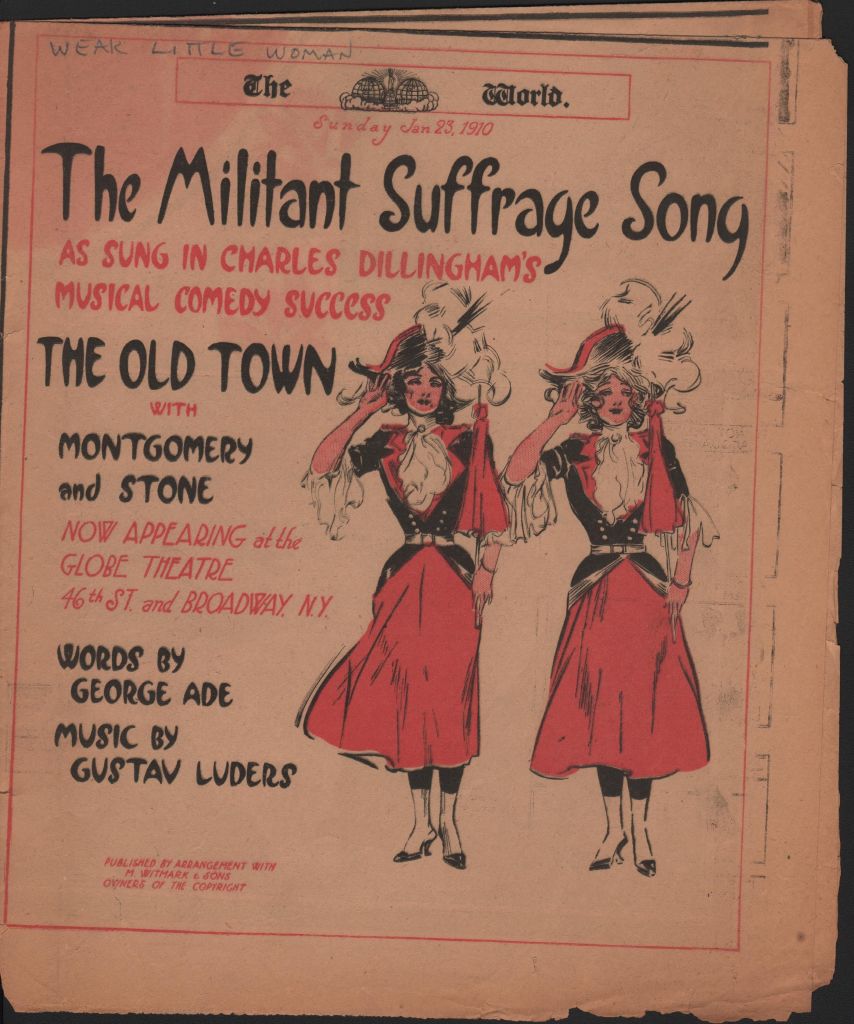
. . . and so-called “Suffragettes” (the feminized form of Suffragist, for you grammarians out there) were energized by many marching songs.

Alas, there seems to be a dearth of recordings or YouTubes of any of these marches. They are probably seen as a bit too maudlin or “dirge-like” for modern ears, but here is one just to give a taste. The pictures are pretty good however. Tap or click on the triangle in the next image for a look and listen.

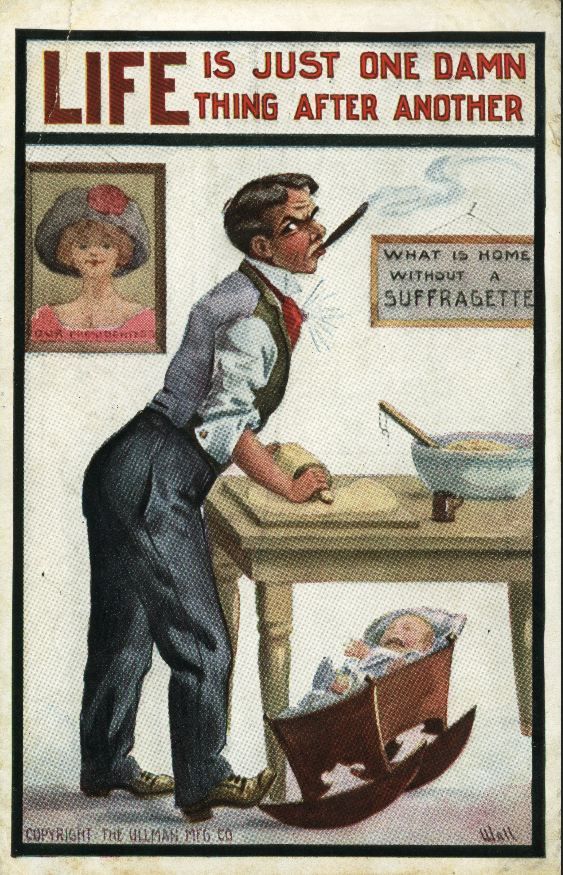
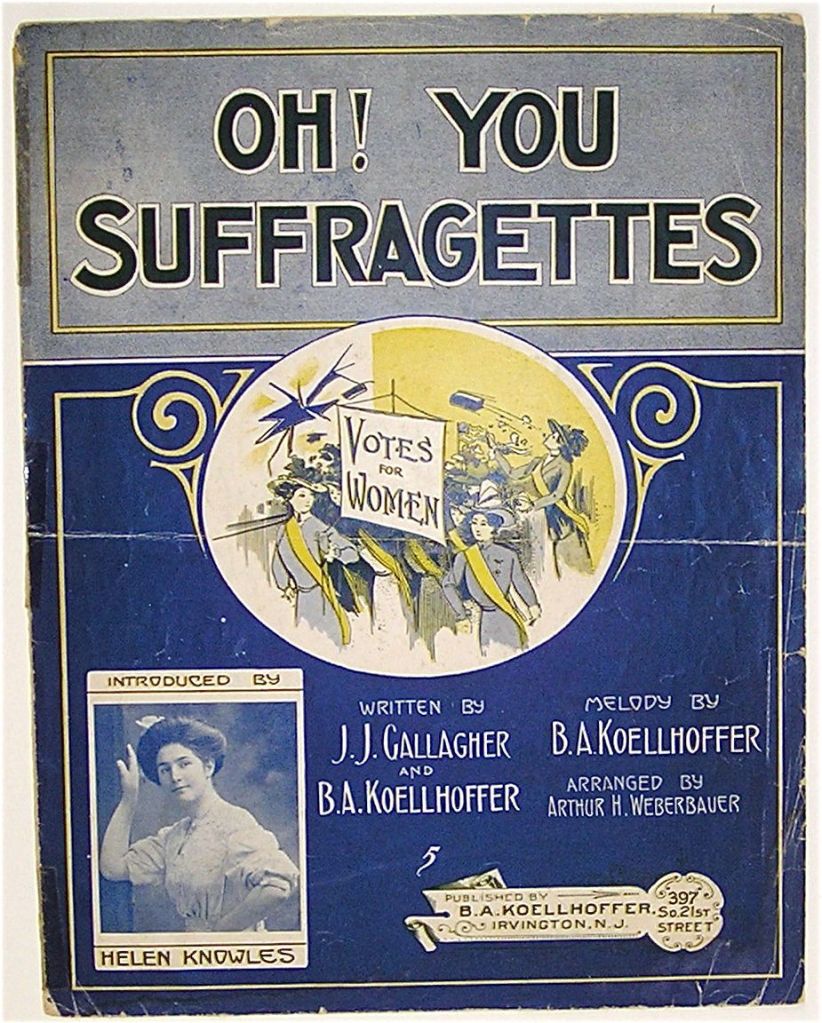
In those days, there were the Suffragette songs done in the more popular manner that became best selling products of Tin Pan Alley, or its British equivalent, and the nascent recording industry. Many parlor piano playing women loved to turn the musical tables on the men of the family!

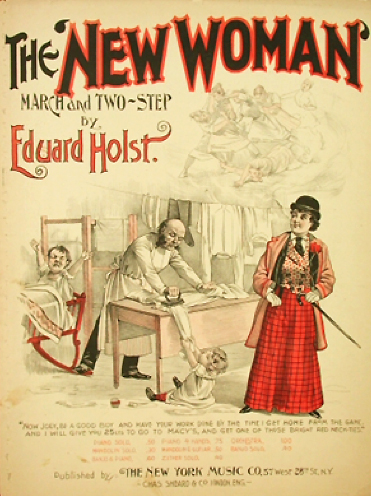
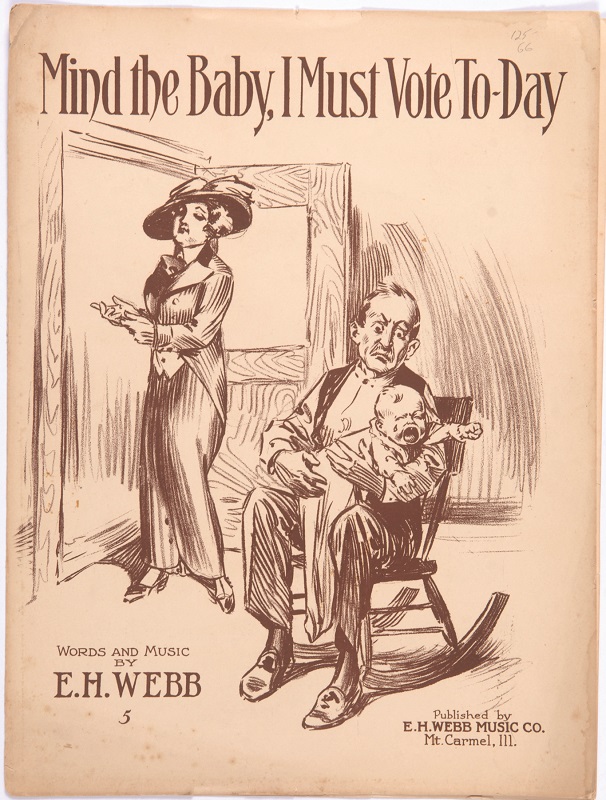
Most men who were not suffragists simply pouted, sipped their beer, and made a grudging attempt to do unfamiliar household chores.

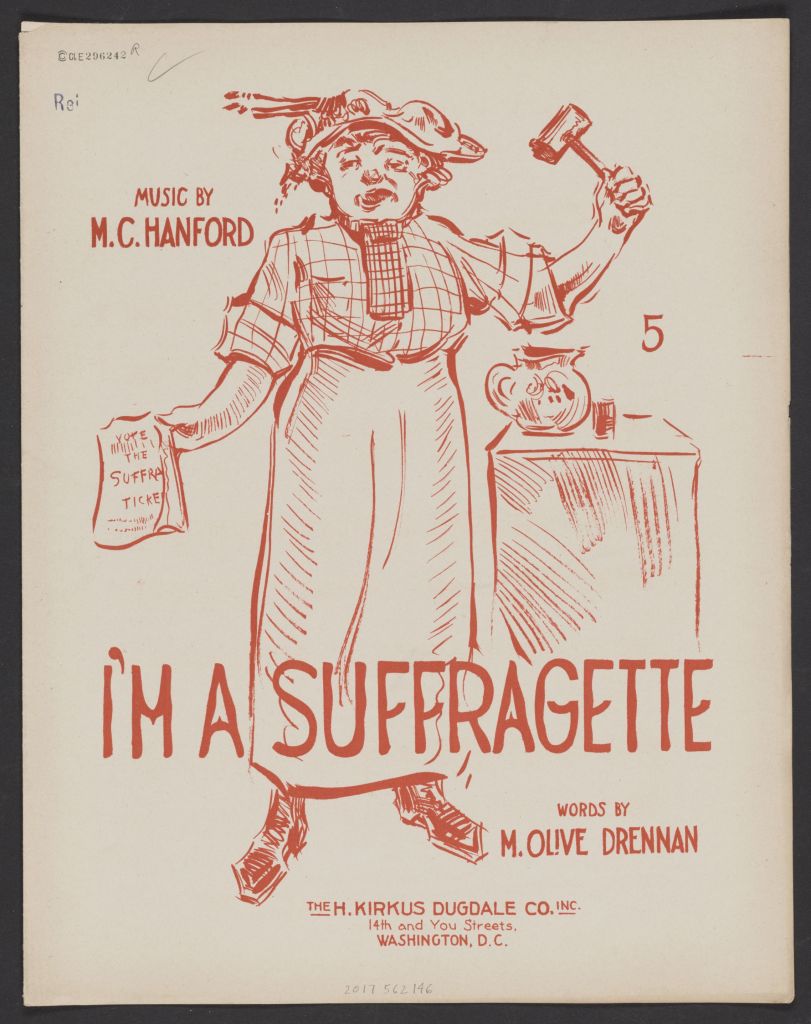
Needless to say, many popular songs reflected this!

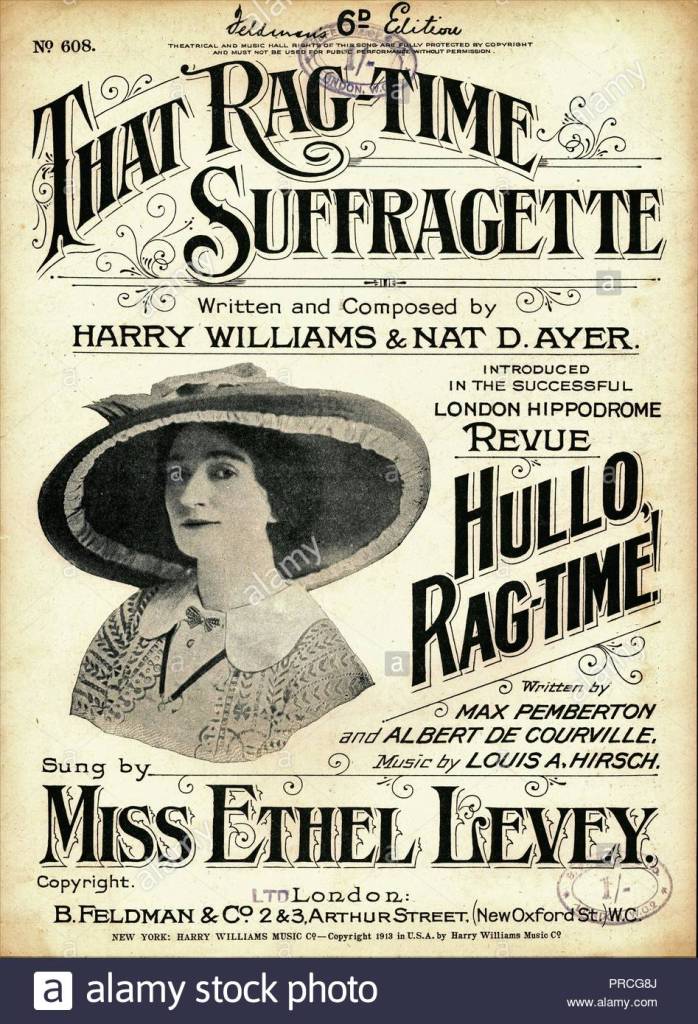
Here’s a take on this ragtime tune. Click or tap on the triangle in the next image for a listen and look.

Here’s a more modern take on some of these tunes. Give a click or tap on the triangle in the next image for some fun.

I was able to find a newer version of this British music hall tune! Click or tap on the triangle in the next next image for a listen. The lyrics are pretty timeless.

There were, as would be expected, many popular songs that reflected the rather confused and confusing thoughts on both sides of the issue.

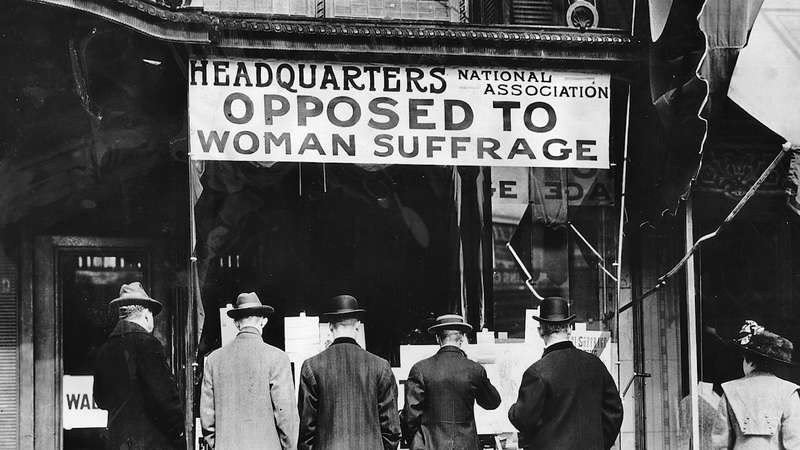
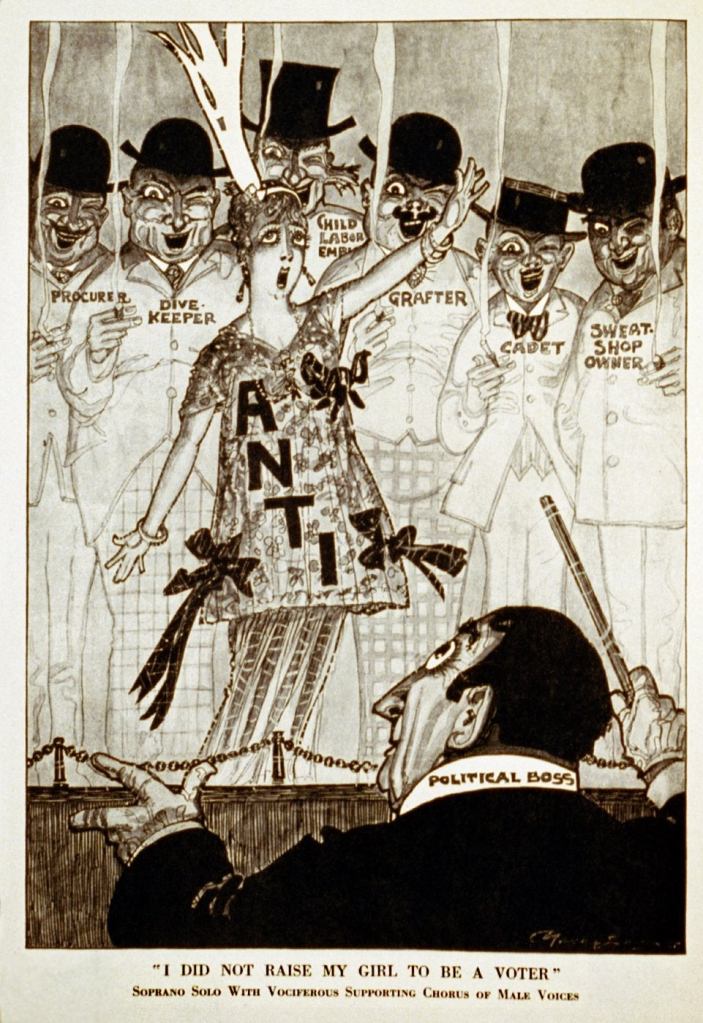
And, then, there were the songs of the so-called “Antis,” those men and (yes) women who opposed giving the right to vote to women.

Well, just to give equal time, here’s a tune of the ANTI-suffragette movement. Its a bit cringeworthy, but at least its short! Click or tap on the triangle in the next image if you must!

So, whether you are a Suffragist or a Suffragette, vote proudly and thoughtfully for the candidate of your—not necessarily your partner’s or spouse’s—choice! 

I am sure, in Easthampton too! STAY TUNED!

ANOTHER MUSICAL MUSING, 2 February 2024: A Portentous Day, both Musically and Climatically!

Here’s a musing from a few of years back that I keep polishing, updating, and reposting. I do this because of the confluence of two of the most portentous days of the year! Some say . . .

Anyway, enjoy–and for many of you gentle readers who have let me onto your screens over the past few years–re-enjoy!

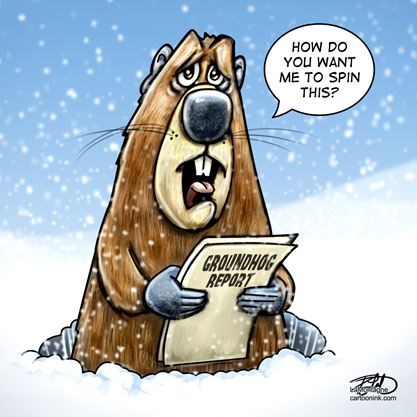
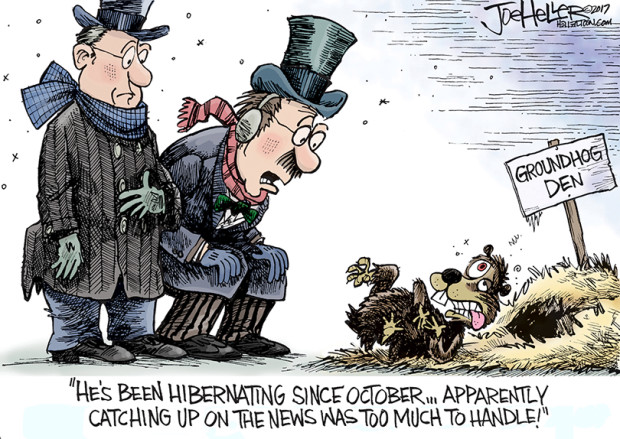
Admittedly, Groundhog Day is more of an annual “event” rather than a “holiday.”  Nonetheless, it takes on importance in that is it also “World Play Your Ukulele Day.” 

Who knew? 

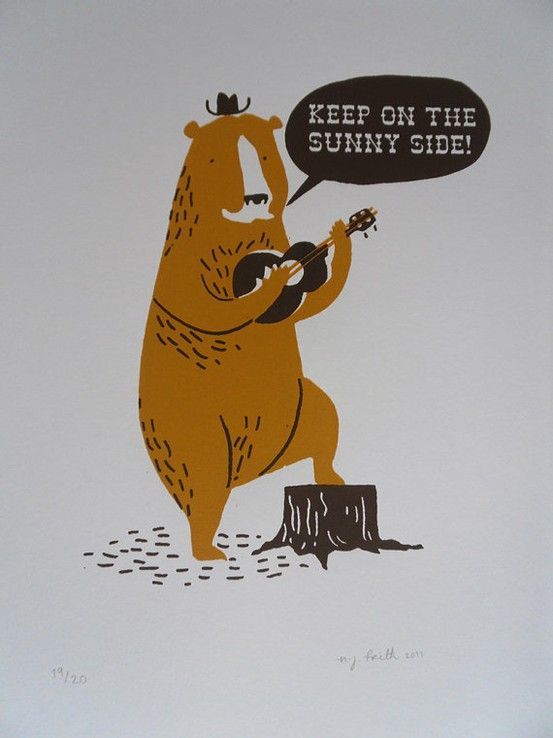
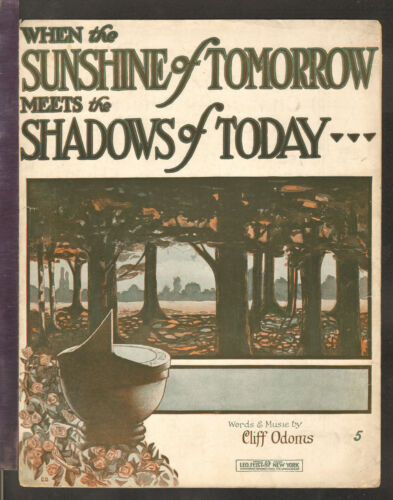
Always a bit of a contrarian, let me add here a song for those of you who yearn for sunshine in these dreary winterish days.But beware!Keep your wishes hidden from those groundhog “weather guessers” out there.Don’t let them listen. Click or tap on the triangle in the following image for a bit of bad advice for our furry friends. Again, don’t let them listen!

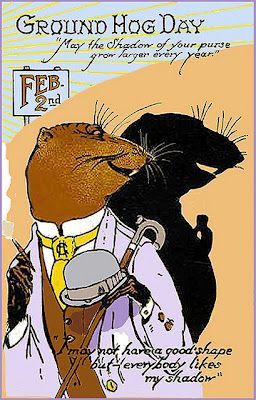
It is also a day that we New Englanders strive to sense the beginning of the end of Winter and the beginning of Spring—at least those New England natives of the groundhog persuasion.  Pray for a cloudy day!  Avoid shadows except in song!

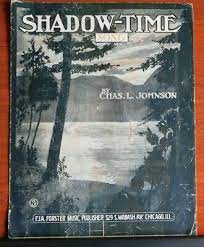
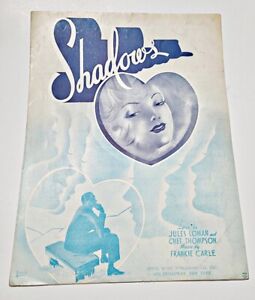
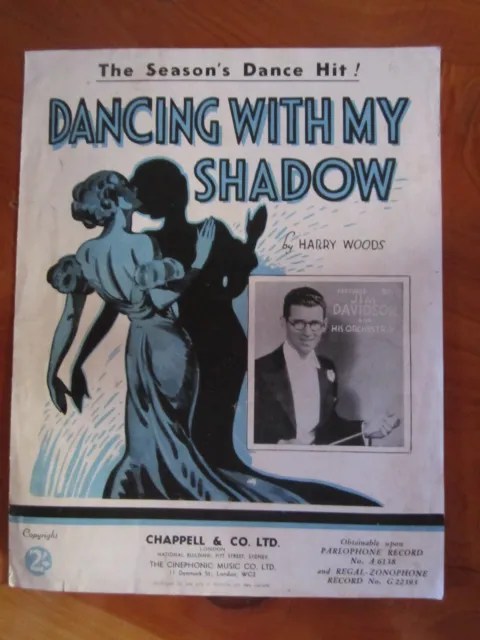
And, “shadowy” songs are out there!

Here’s another that we can take a listen to. Shadow Walz was featured in the “Gold Diggers of 1933,” one of the great musical review movies of the depression era.

Click or tap on the triangle in the next image for a Busby Berkeley, Ruby Keeler, Dick Powell over-the-top take on this shadow tune!

Here’s a more modern take on the shadow theme.

Click or tap on the triangle in the next image for the inimitable Ella!

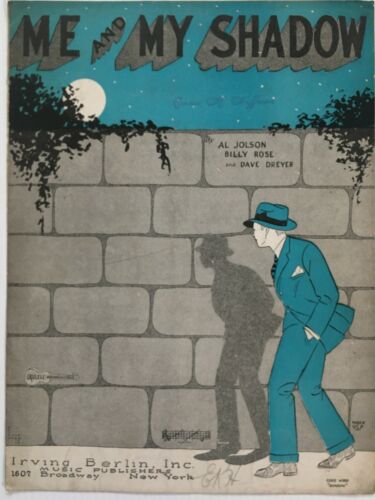
This next one is one of my favorite shadow songs of the era.

Me and My Shadow” was published in 1927. Officially the credits show it as written by Al Jolson, Billie Rose, and Dave Dreyer. Alas, Jolson was often given credits on sheet music so he could earn more money by popularizing them, but he played no actual part in writing this song and never recorded it! Those were the shady song-plugging days of Tin Pan Alley. But, dozens of others did making it one of the jazz standards of the day!

Click or tap on the triangle in the next image to listen to one of the earlier recordings and one of the few that includes the verse.

Now if you want to take the time and have a bit of fun, here’s an example of what became a favorite vaudeville routine based on our song–the “shadow dance.” It starts a bit slowly but the hammed up performance by Zero Mostel and Tommy Tune is worth the wait! So, click or tap on the triangle in the next image for the intro by Dean Martin and the “schticky” performance of the dancers!

Now, back to our furry friend of the day. I couldn’t find many ukuleles directly associated with a groundhog.  But, our animal friend has a long and historic association with that older cousin of the ukulele, the banjo.  It seems that it wasn’t uncommon back in 19th century Appalachia to use a groundhog skin to make a primitive banjo. 

There is also a great old-time tune called “Groundhog.”  Here it is played on a fretless banjo just like an old Appalachian mountain one!

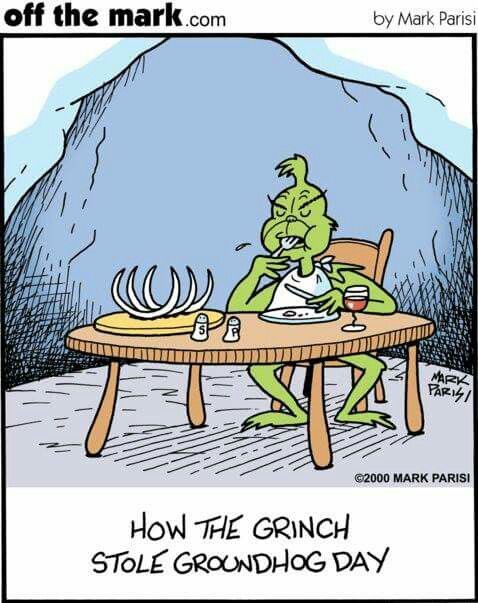
At the risk of all my vegan and vegetarian friends—to say nothing of those simply of the squeamish persuasion—I must add a good ole recipe for groundhog stew.  Well, why not?

Or, take the easy way out.

Oooops!

Now go seek out a groundhog, before he sees his shadow, and chase him back into his hole with a tune on “World Play Your Ukulele Day!”      

Let’s wind up this merry stroll into the wildness of wintry Februarymythology with a groundhog song based on–of all things–a sea shanty! Click or tap on the triangle in the next image for listen and a look.

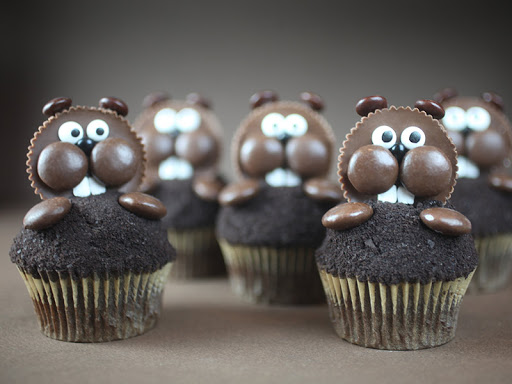
And now, some groundhog cupcakes and milk while we wait for the shadowy forecast! 

It might be a strange weather prediction for us in these days of division and we could all use a little sweetness!

Keep those critters in the shade and STAY TUNED!