ANOTHER MUSICAL MUSING, 20 May 2023: “A Musical, Historical, and Ukulele Trifecta”

Well, it’s not too often that my musing stars align with a trifecta–the anniversary of a feat by a young American hero, a link to neighbor Northampton’s Smith College, and vintage ukuleles in my collection!  Wow.  It’s fun to muse these days about something that has nothing to do with contemporary politics and international conflicts.  So, who is our hero?  None other than “Lindy” himself, Charles Lindbergh, with a bit of a tarnished reputation today but definitely not on this date back in 1927!

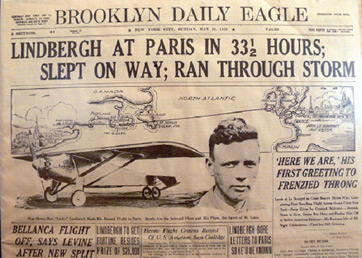
His solo flight from New York to Paris, on May 20-21 of that year, was a thrill for Americans living in the Roaring Twenties and adulation on both sides of the Atlantic poured out.  Men cheered and ladies swooned as Lindbergh’s picture was in every newspaper, magazine, and movie newsreel for months.
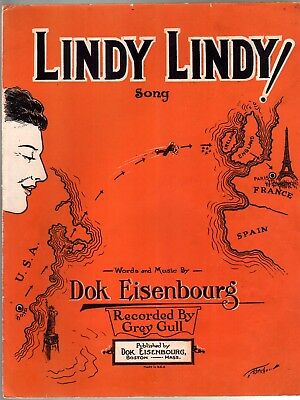
Needless to say, music publishers jumped all over this and a score of sheet music offerings—some joyful, some banal, mostly forgotten today—were on music store shelves all over America. 
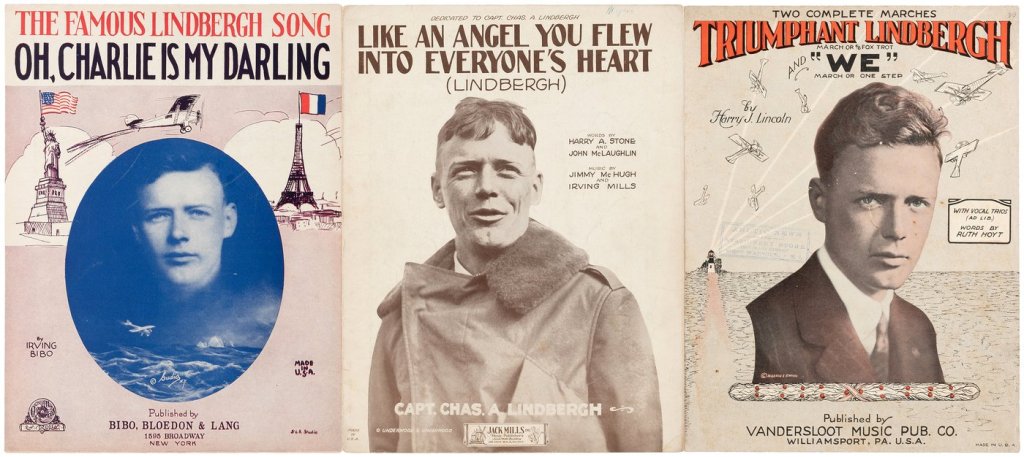
Here’s a contemporary recording of the “angel” tune with some great graphics. Click or tap on the triangle in the next image for a look and listen.

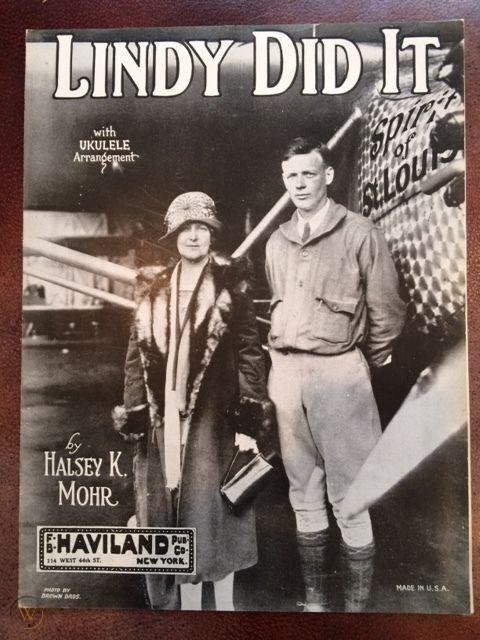
There are more! The next one shows Lindy and his mother. By the way, his father was a US Congressman from Minnesota. Who knew?
Here’s a bouncy version of this George M. Cohan tune. Click or tap on the triangle in the next image for a listen.

Here are a few more of the dozens of songs that were out there in the sweet old days.

Tap or click on the triangle in the next image to hear this hearty, fox trot salute to the hero.

Here’s a more modern version of a “Lindy” tune but well worth a listen and a look. Tap or click on the triangle in the next image for a historical treat.

Now for the second part of the trifecta–Ukuleles, no less ! As would be expected, most sheet music published in those days had uke chords printed right above the score. Here it is in the popular “D” tuning of the day.

Everyone seemed to be playing and singing the tunes and, of course, there were ukuleles to be had! Here are three in my collection.
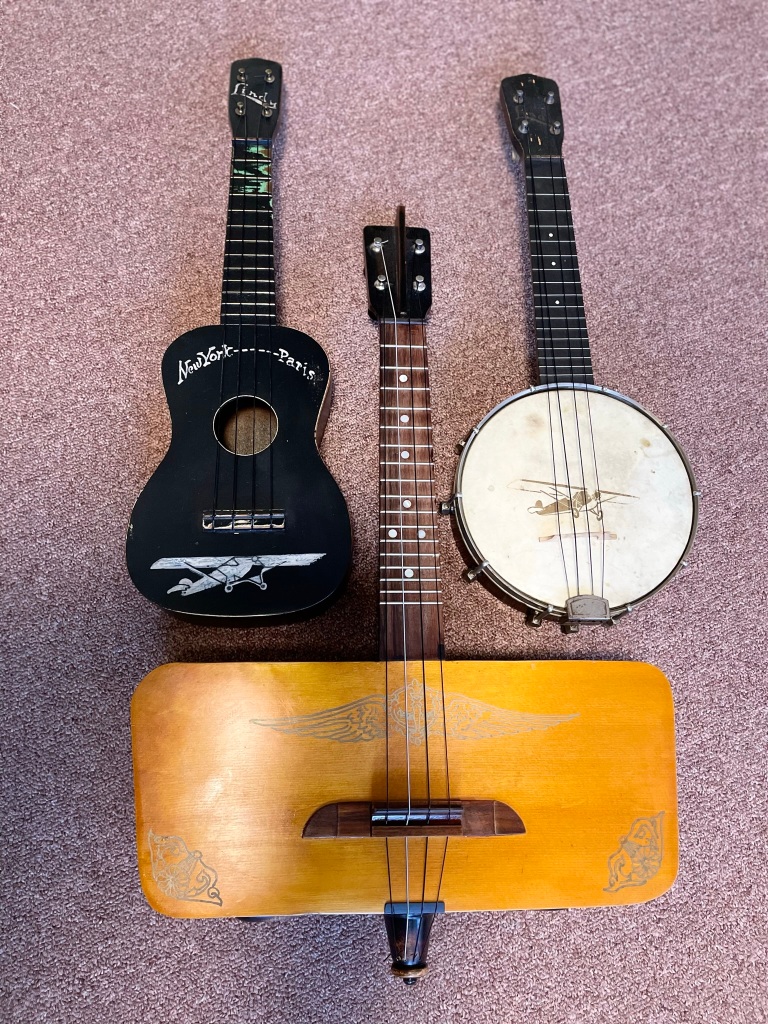
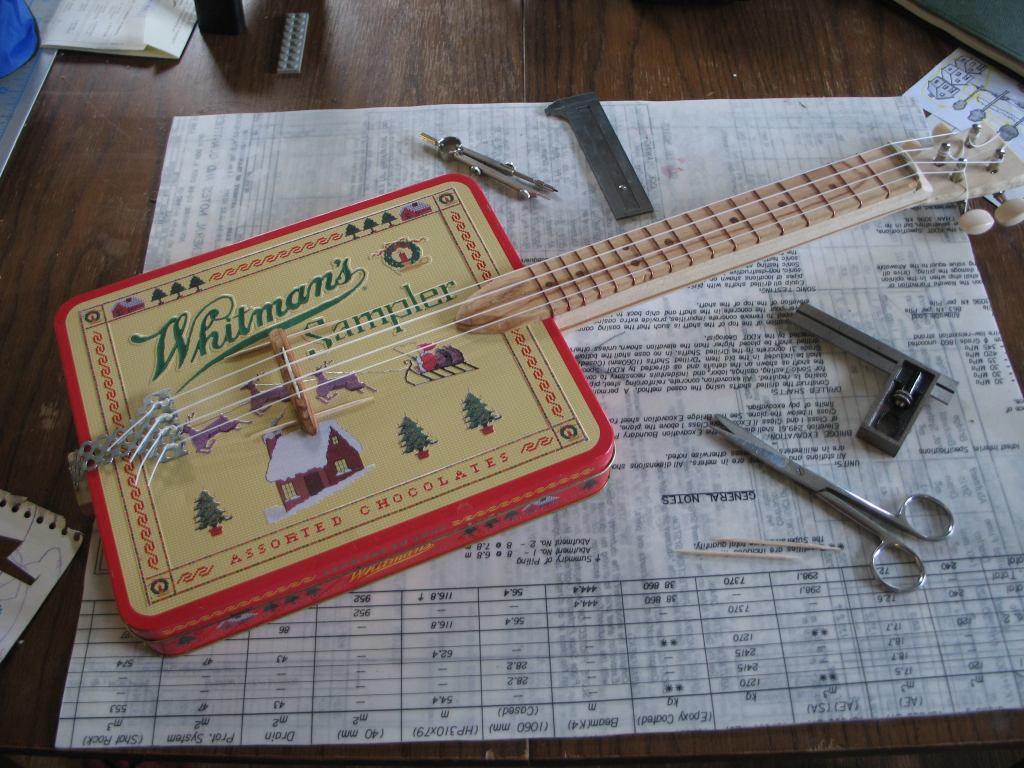
The larger one is a Stromberg Voisinet “Aero Uke,” probably the rarest of the lot today–at auction about $2K! Here’s a reproduction I made to fill a hole in my collection. It sounds pretty good!

Here’s a banjo uke version, an original in my collection.
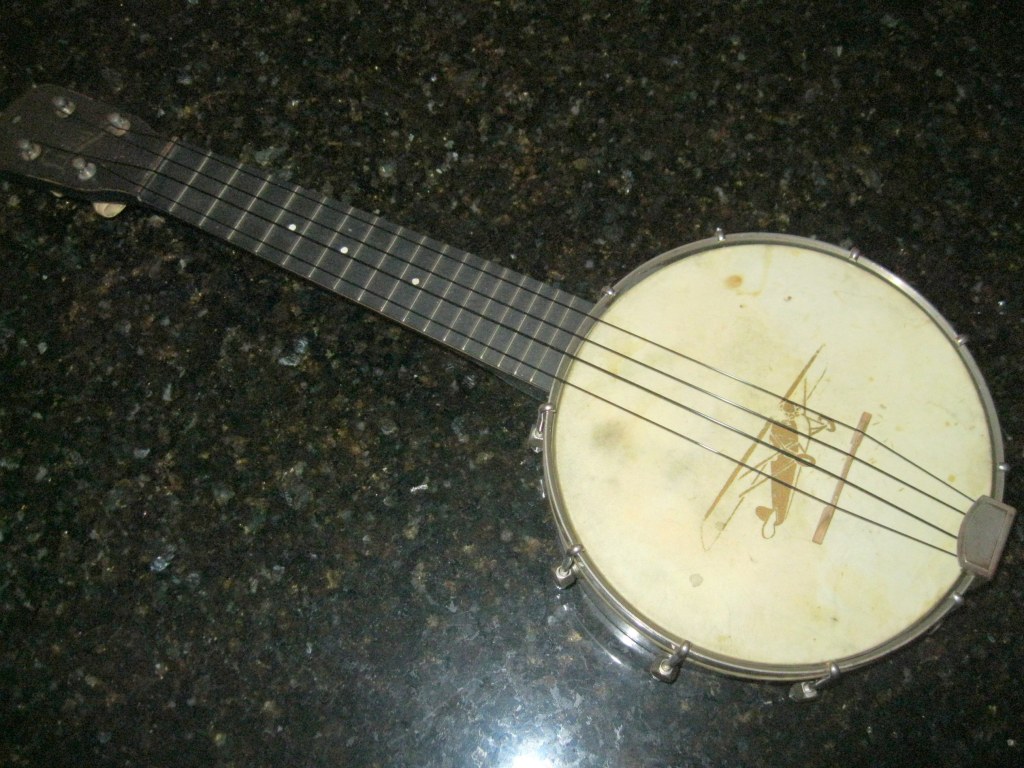
And, the latest addition–a trifecta within a trifecta!

Now for the third part of the trifecta, the Northampton connection.  According to our favorite local newspaper, The Daily Hampshire Gazette, Lindbergh flew into the local airFIELD (it became a commercial airPORT in 1929) multiple times in order to visit his then girlfriend, Anne Morrow, a student at Smith College, class of 1928.   They were married in 1929.

That year, Anne–a budding aviatrix herself– flew solo for the first time.

Needless to say, aviation was in the couples blood and, in the 1930s, they explored and charted air routes all over the world. There was even a song about them!
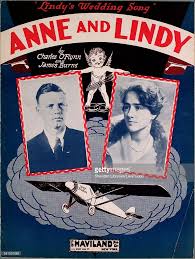
Whether or not he courted her by taking her up in his airplane over our Happy Valley and Smith College has, alas, always been a matter of conjecture.  Let us simply note the fact that he was a frequent visitor. 

Anne went on to literary fame with her most popular book being Gift from the Sea. In 1955, she was described as “one of the leading advocates of the nascent environmental movement” and the book became a national bestseller.

There are, of course, autobiographies, biographies, articles, and all sorts of scholarship on the Lindberghs.  And, their life story is way, WAY beyond the scope of this simple musical muse.  Suffice it to say that the charmed life of Charles and Anne was shattered by the kidnapping and subsequent death of their infant son in the 1930s. 

The Lindbergh name was again plastered over newspapers and newsreels all over the country. Alas, in sadness this time. 

Alas again, Charles, a highly visible public advocate for keeping America out of Europe’s troubles in the years leading up to World War Two, had his reputation tarred by many (including Franklin Roosevelt in the White House and Woody Guthrie in song) as being a German sympathizer as well as an isolationist.  Whereas Anne became renowned for her writing, Charles faded from public esteem during the war years although he did join the American forces once the war started. He flew on fifty missions in the Pacific Theater, albeit as a civilian consultant rather than in the military.

Click or tap on the triangle in the next image to listen to Woody Guthrie’s musical diatribe on Lindberg. Sounds a bit like what we are hearing today. SAD.

But, at least, Lindberg’s early heroics were re-appreciated thanks to James Stewart in the way only movie magic can do.

 But we still have the stories, the songs, and the ukuleles! So, gentle readers, we wind up this musical trifecta with a peek at a dance that reached a peak of popularity in the late 1920s. Some say it got its name from the popularity of Charles Lindberg at the time; Some say something else. But, it’s too good not to include–“The Lindy Hop.” Click or tap on the next image to be flown away, musically speaking.  

Stay safe, keep strumming, work on that footwork, understand world history, study up on local lore, stay grounded, and STAY TUNED!

(As an aside, Alison’s mother was a Smithie, class of 1930, and remembered sharing a few classes with the then Anne Morrow. Small world . . .)   

ANOTHER MUSICAL MUSING, 28 April 2023 “Music In A Mug, Light or Dark”

During these steaming hot times, as described in the several newspapers I read most mornings, I find a semblance of finely ground tranquility when I put the I-Pad down and brew up a wide range of musical thoughts. Well, gentle readers, with my second large mug in hand and my thoughts percolating from thought to theme, there poured out the answer! 

Coffee, Coffee, COFFEE!

So, pour another splash of something into whatever mug you have on hand, filled with coffee or whatever passes for coffee these days . . .

. . . and perk your mind between sips and listen to the “ghosts of songs gone by.But, first . . .

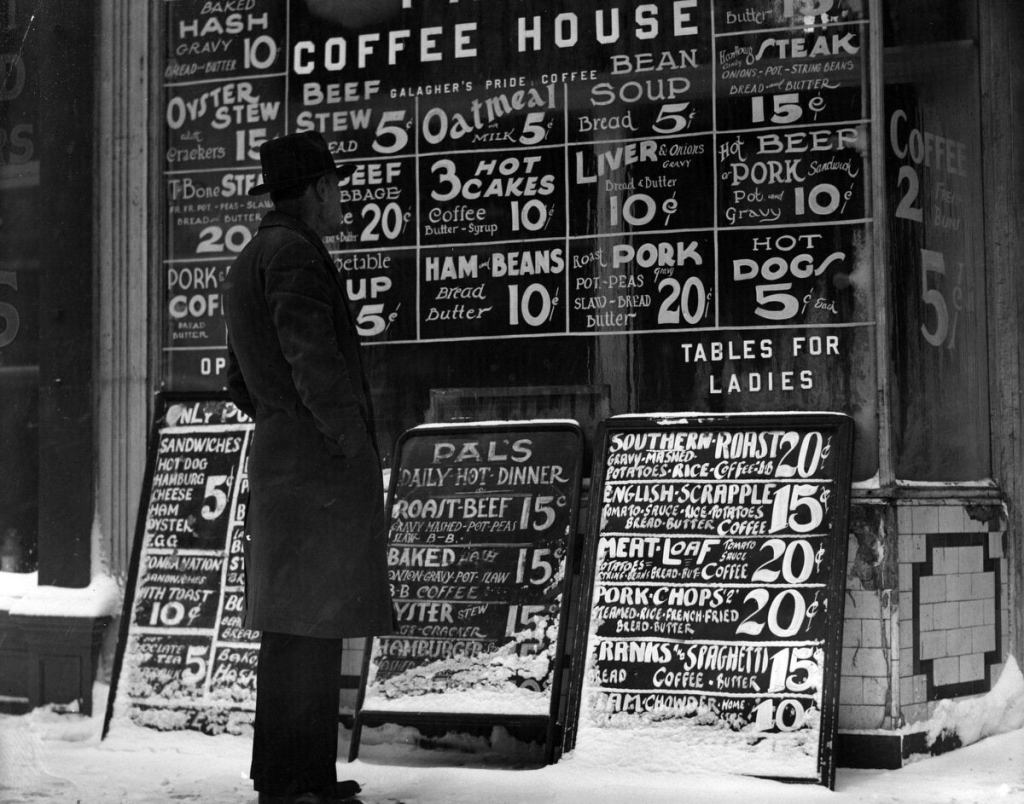
I grew up listening to my folks and their friends reminisce about when hamburgers were five for a quarter, with a free cup of coffee.  And, often I heard the oft-spoken opinion: “That and a nickel will buy you a cup of coffee.”  Those were the days, at least for coffee.  Can you get anything for a nickel at Starbucks today?

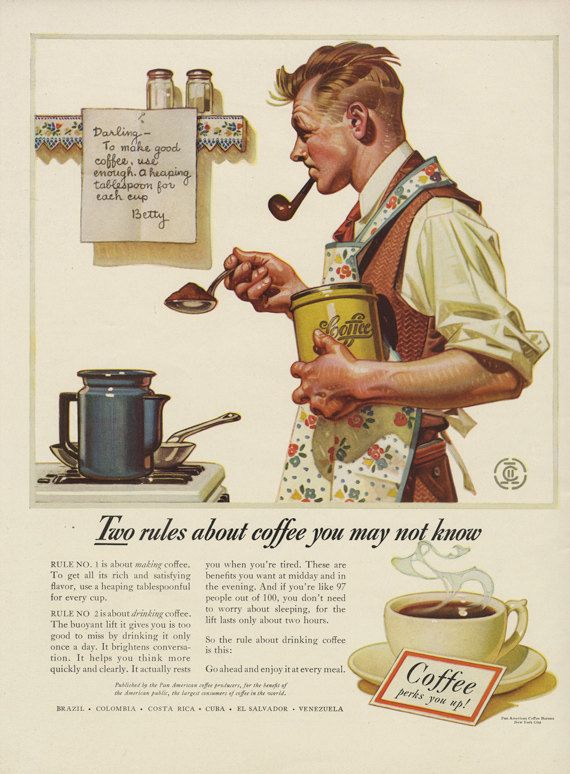
To get in the grind, how about a peek at a couple of so-called “teaching moments” from those creamy old days.

And another, for the guys too.

Well, gentle readers, time grab whatever perky musical instrument comes to hand and pour out the tunes!

Many coffee songs from those days were pretty simple and spoke of the good things in life.

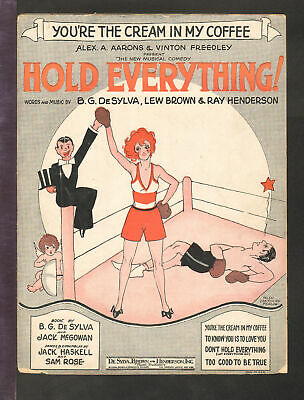
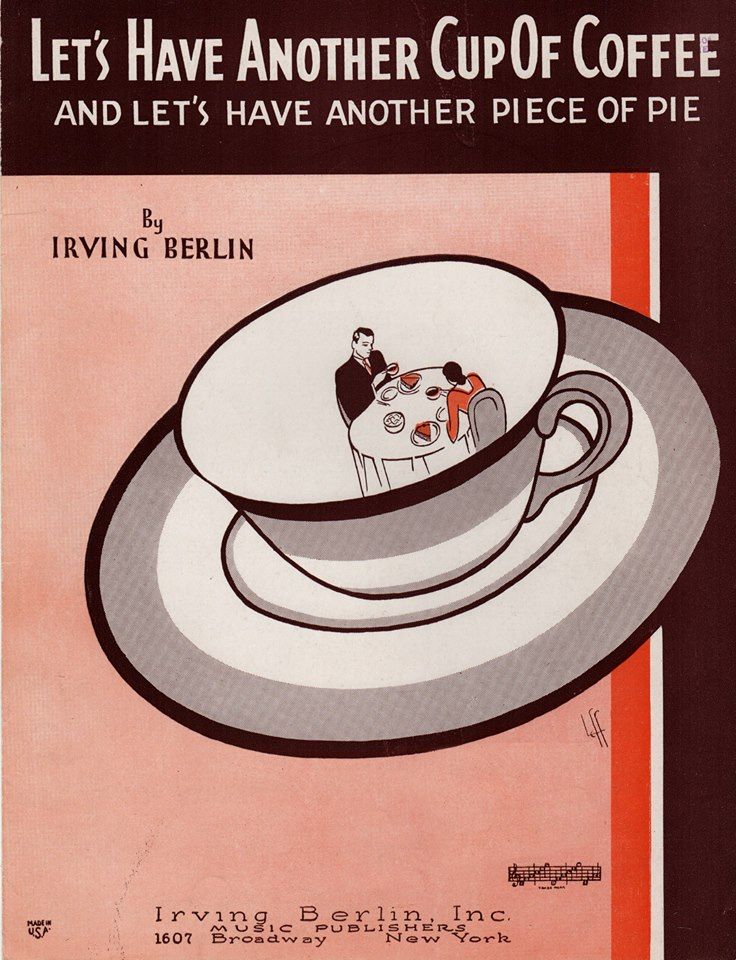
Here’s a lively rendition of this tune with some great Art Deco graphics. Mmmm good! Tap or click on the triangle in the next image to give it a sip.

A more lively one . . .

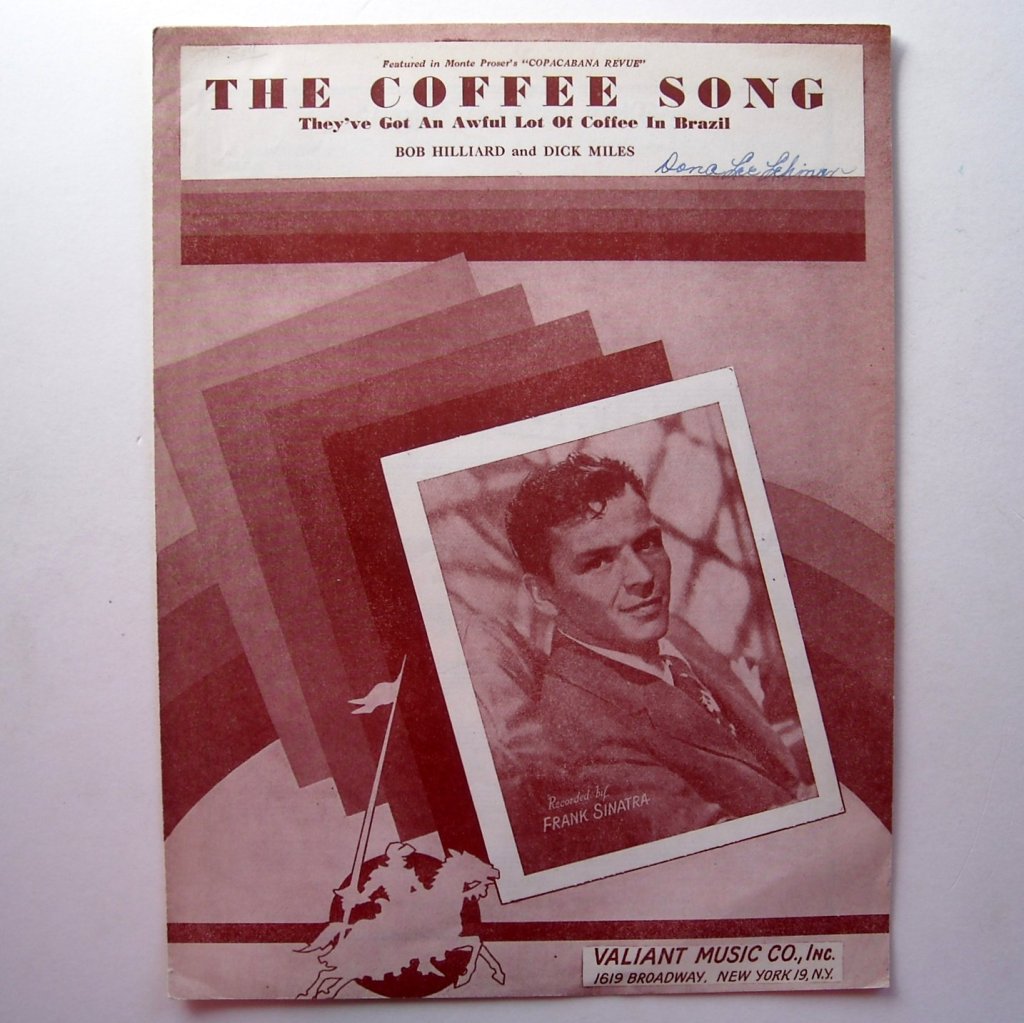
Here’s the quintessential version of this one by Frankie himself. Click or tap on the triangle in the next image for a “cuppa from Brazilla.”

Or, how about this oldie from the forties?

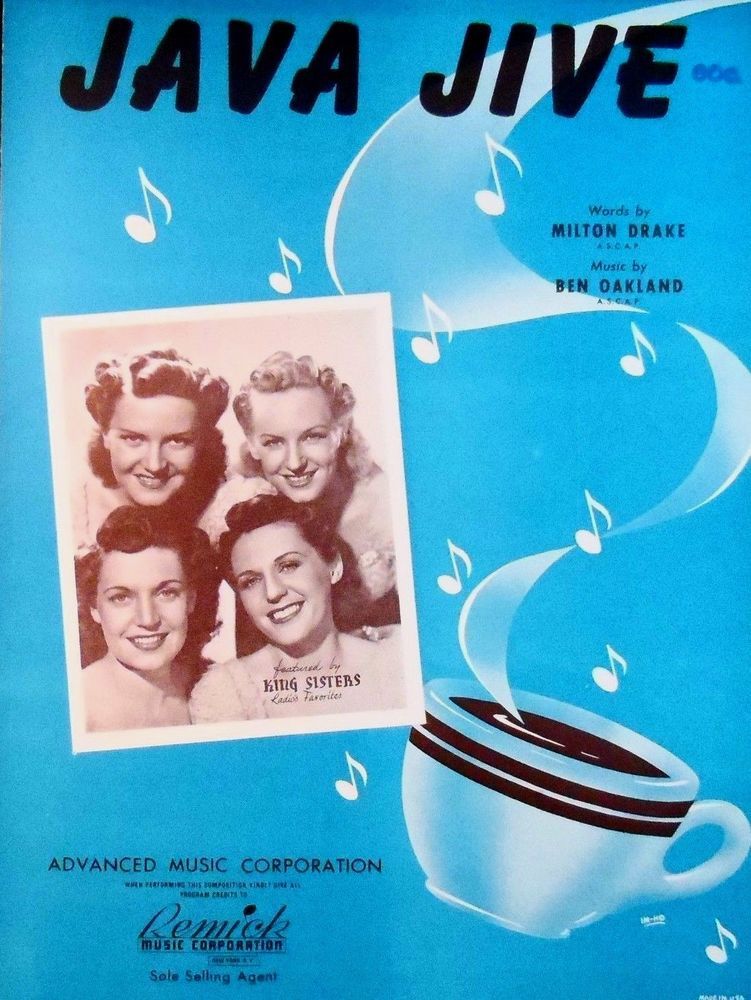
Tap or click on the triangle in the next image to add a little sugar and hear the original version of this song by the King Sisters themselves–one of the original “Beautyshop Quartettes.”.

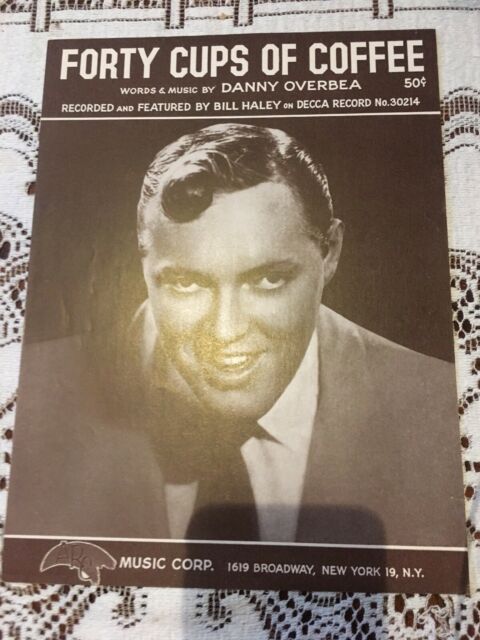
Or, a tune from the fifties.

Here you go with Bill Haley and His Comets. If you don’t mind a little rock and roll to stir things up, click or tap on the triangle in the next image.

Back thirty or so years for this more tranquil taste.

So, grab your mug, a plate, and a napkin and click or tap on the triangle in the next image for a steamy hot listen.

If you add a little “tot of something” to your coffee, things could even get a bit more risque!

Here’s a torchy rendition of this jazzy old tune. Tap or click on the triangle in the next image to peek and listen in.

And, of course, you can sip slowly on the dark side.

Tap or click on the triangle in the next image for a song as dark as the coffee, made creamy by the voice of Ella.

But, enough of the dark side. To reach the end (dregs?) of this musing, here’s one of the best Depression Era “try-to-make-the-best-of-it” songs ever.

Click or tap on the triangle in the next image to hear some nice strumming and singing. I had to get a ukulele player in here somewhere!

So, stay wide awake, stay well brewed, listen (0r not!) to your percolator,

enjoy your coffee with whatever, and STAY TUNED!


ANOTHER MUSICAL MUSING–21 April 2023,”Guess Who’s Back in Town!”

Every once in a while, I have an earworm about an old favorite that we don’t hear played too often these days —probably because the theme might be thought by some to be a wee tad non-PC.   But, it is 2023, and, after all, it even has been performed (sort of) by The Muppets! Anyway, gentle readers, why not? So, here goes another musical musing!

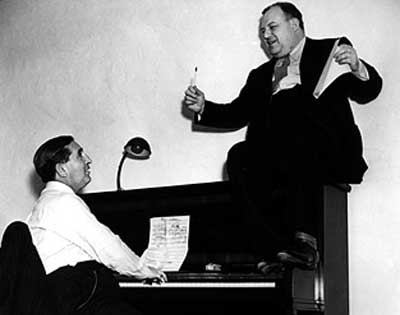
Our song is “Lulu’s Back in Town” written in 1935 by lyricist Alexander Dubin (1891-1945) and composer Harry Warren (1893-1981). 

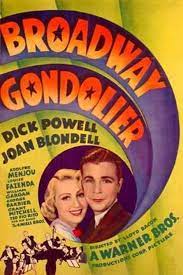
The song was written for a movie musical “Broadway Gondolier” (slang for a Manhattan taxi driver) and sung by then heart-throb Dick Powell.  In simple phrases he sings about getting ready for a rendezvous with “Lulu,” focusing all his attention on this awesome-in-his-eyes woman who periodically revisits his home town.  We don’t know exactly who this Lulu is that has captured the gentleman’s ardor—an old flame, a vaudeville queen, a burlesque star, a lady of sterling (or easy) virtue, a you-name-it?  We don’t know, but our man is smitten.

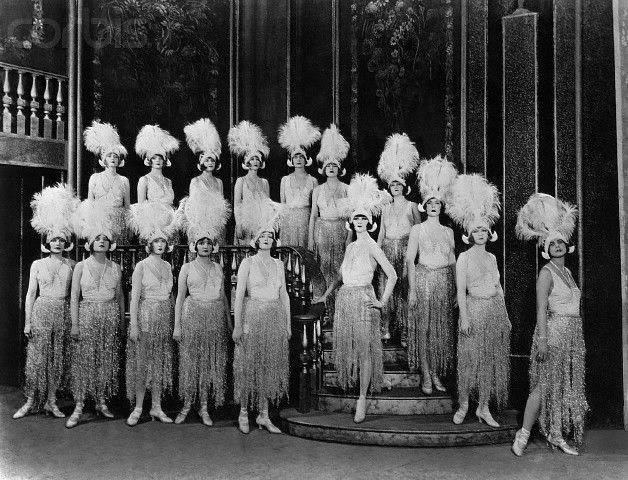
Is she one of these?

Or is this her?

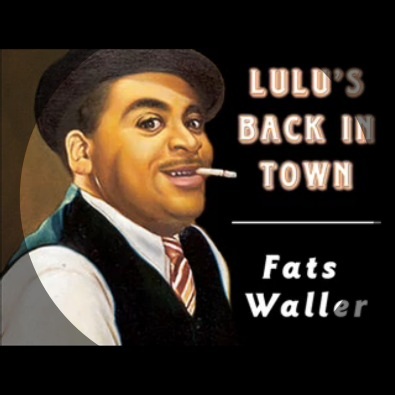
Who knows? Click or tap on the triangle in the next image to listen to the gondolier himself!

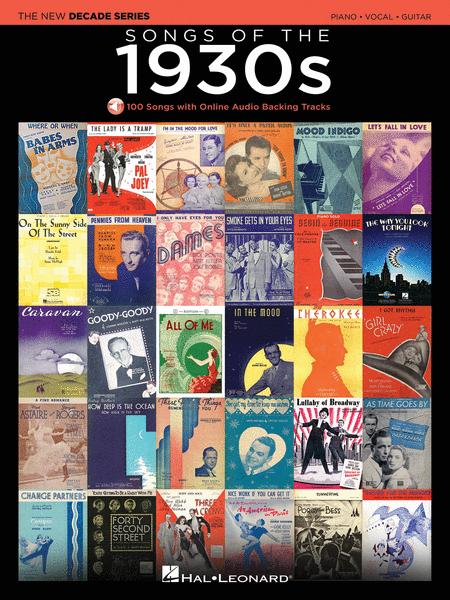
Alas, the film was not that great, but our song was popularized by Harlem’s own “Fats” Waller who’s 1935 upbeat (and a bit more risque) recording topped the charts. It’s a pop/jazz standard today, and—like so many catchy tunes of the age—has been recorded by dozens of performers in dozens of genres and interpretations with lyrical moderations suitable for different times and places. 

It’s become a true classic often performed in what some critics and reviewers in its day called a “rooster strut.”  (Your guess is as good as mine.) Anyway, click or tap on the triangle in the next image to pass judgement.

How about an instrumental jazz version with some real “Lulus” of the day! Click or tap on the triangle in the next image for a look and listen.

And, as promised, here is the Muppet’s take on this. Click or tap on the triangle in the next image for a PG treat!

Dubin and Warren collaborated with many other composers on many, many songs—particularly in Hollywood. 

They went on to win an Academy Award for their song “Lullaby of Broadway;” Warren also won an Academy Award for “Chattanooga Choo Choo”—the first “gold record” in history!  A bit off our theme this week, but–What the heck!–click or tap on the triangle in the next image for something not to miss.

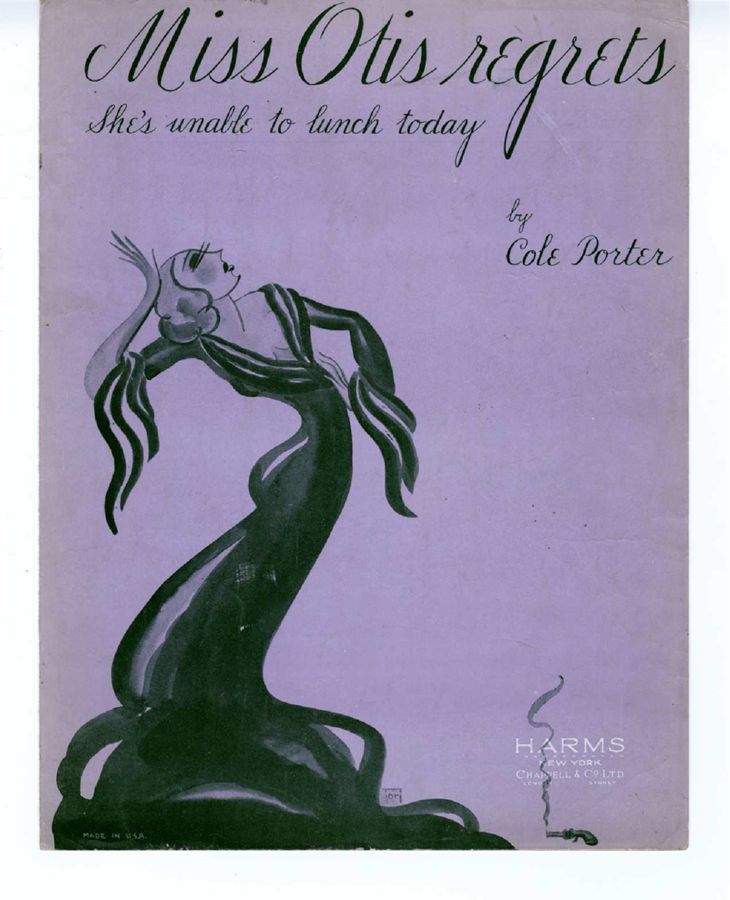
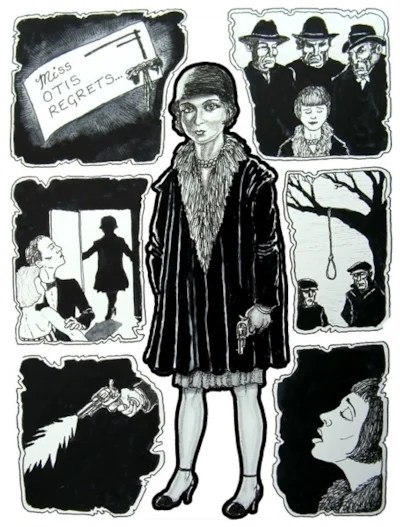
As a further bit of a digression, there is an interesting musical quotation in the chorus of our “Lulu . . .”: “You can tell all my pets, all my Harlem coquettes; Mister Otis regrets, that he won’t be around.”  It borrows a phrase coined by another songwriter, Cole Porter, taken from his 1934 song “Miss Otis Regrets.” 

Late one night in a bar with a few of his cocktail party pals, Porter overheard a bartender’s frequent use of the word “regrets.” Porter, on a bet with his buddies , was inspired and improvised a bluesy, Manhattany, musical parody. He wrote about a butler who, politely, explains why his employer, a “Miss Otis,” can’t keep her regular ladies’ lunch appointment that day.  In Porter’s boozy ballad, she had been compromised and abandoned by a lover/seducer but had tracked down, confronted, and shot the cad in cold blood! She quite soon faced the consequences!

Click or tap on the triangle in the next image to hear the Cole Porter bio-movie rendition of “Miss Otis… ” sung by none other than the famously bearded Monte Woolley! Oh yes, that’s Cary Grant at the piano in the Cole role.

Her butler’s understated but polite apology–“Miss Otis regrets she’s unable to lunch today”–soon entered entered the lexicon of American pop culture and became a punchline for sophisticates throughout the 1930s. Just about any “regret” or “unable” phrase had a “Miss (or Mister) Otis” tag, even in ads for gasoline! 

This song, needless to say, became a blues/jazz standard when sung by the likes of Ella Fitzgerald and was even parodied by Fred Astaire himself. Click or tap on the triangles in the next two images for a look and listen.

So, whenever we have a chance to listen to someone sing (or strut) about “Lulu . . .,” it’s fun to take a look at those songs enjoyed, enhanced, and embraced by folks–in a variety of ways–over the past eighty or so years. 

So, gentle readers, what will folks think of 2023’s popular music eighty years from now?  We’ll just have to wait and see. I’m looking forward!

Let’s wind this musing up with–what else–a rather bizarre ukulele version of “Lulu . . .

So, find your razor and perfume, get your old tuxedo pressed, and STAY TUNED! Because . . .

ANOTHER MUSICAL MUSING, 14 April 2023–“Smoke Used to Get Into Our Eyes”

After writing and posting my so-called “musical musings” for the past six or so years, I find myself searching my bookcases and trolling the internet in search of topics I haven’t touched on before.  I do revamp some of my earlier postings by adding new YouTubes and images as well as commentary on life in our trying times; but, every once in a while, I stumble across something a tad different that might be fun to share—sometimes questionable, sometimes off limits (to only a few, I hope), and, suffice it to say, sometimes just plain tacky.

So, friends and neighbors, be forewarned! 

Times being what they are, however, a bit of tacky might be just what we need.

So, gentle readers, here is a take on that once glamorous, now ugly habit of smoking and how tobacco seems to have permeated life and music over the decades. 

This is certainly not an endorsement of a nasty, unhealthy habit for the youth of America But, bear with me as I light up.  Tacky-tak-tak, here goes!

Needless to say, there are many, many songs about smoke and smoking. To make things simpler, however, I’m just going to focus on the most ubiquitous–cigarettes. And I’ll touch as little as possible on what might–by a few of you gentle readers out there–be considered as “recreational” puffing. Alas, increasingly prevalent in these modern times and in our Happy Valley!

So, click or tap on the triangle in the next image for our first musical puff!

Now let’s move on to something a bit more musically sophisticated, to say the least.

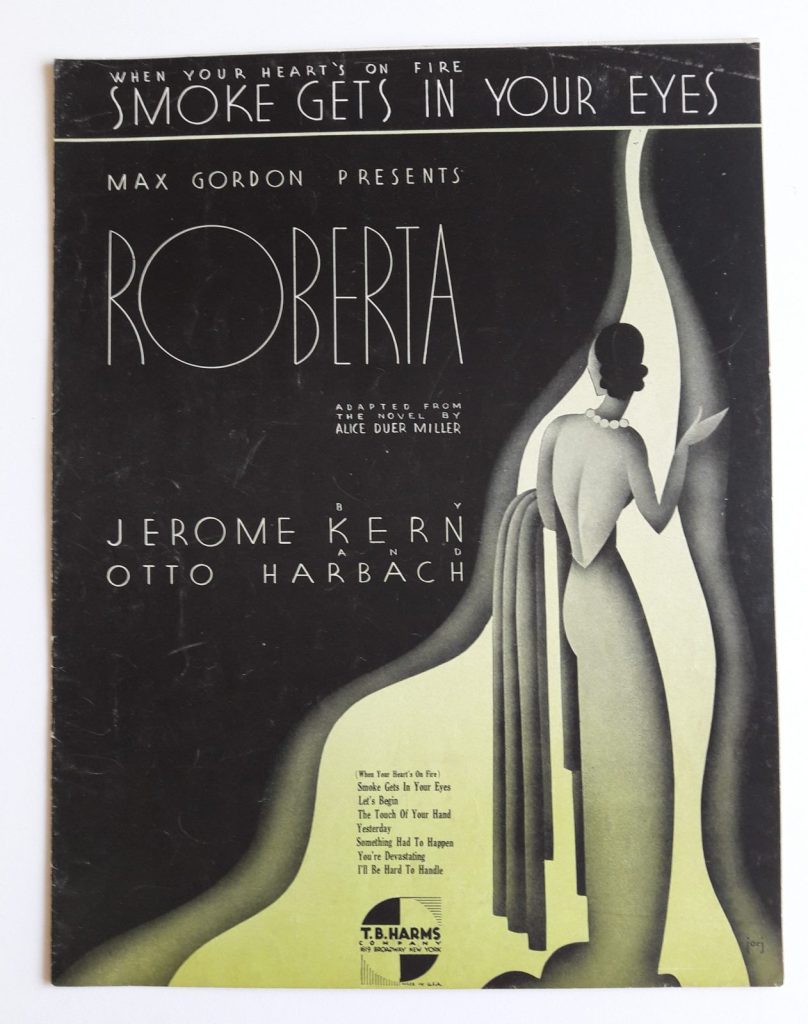
Tap or click on the triangle in the next image for this one. Not really about cigarettes but the quintessential “smoke” song. Who else but Fred, Ginger, and Jerome.

And there are a few dozen others out there. I don’t know about the music but the images are fun!

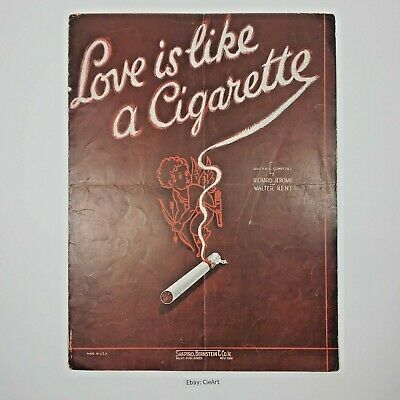
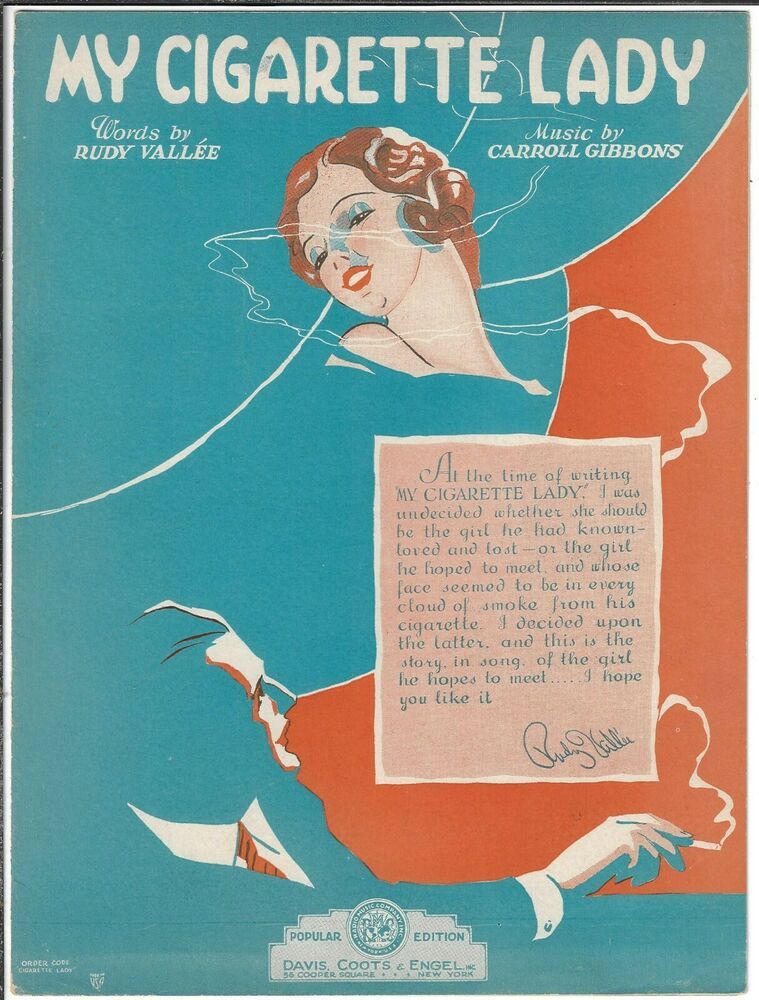
And then there are songs specifically about cigarettes,

Tap or click on the triangle in the next image to join in.

Here’s another.

Click or tap on the triangle in the next image to light this one up.

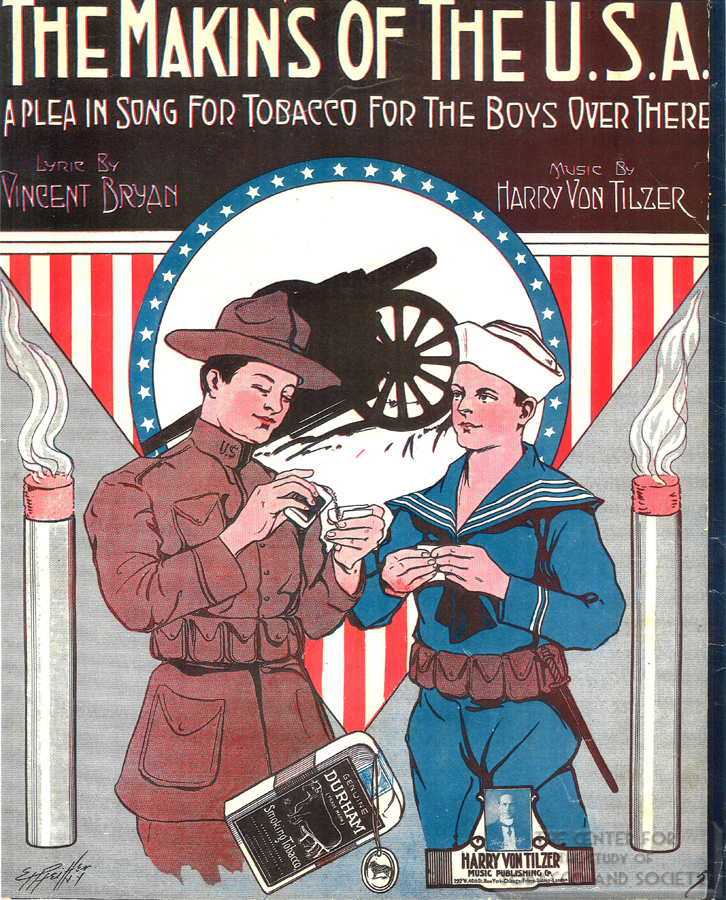
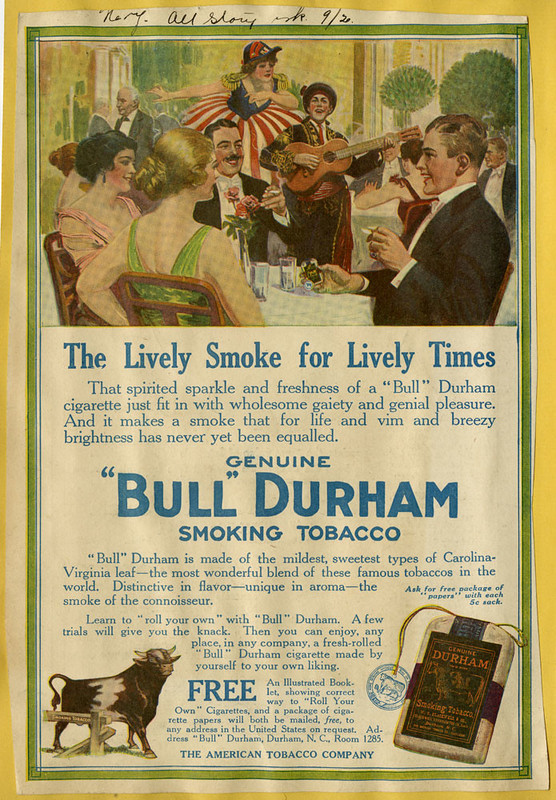
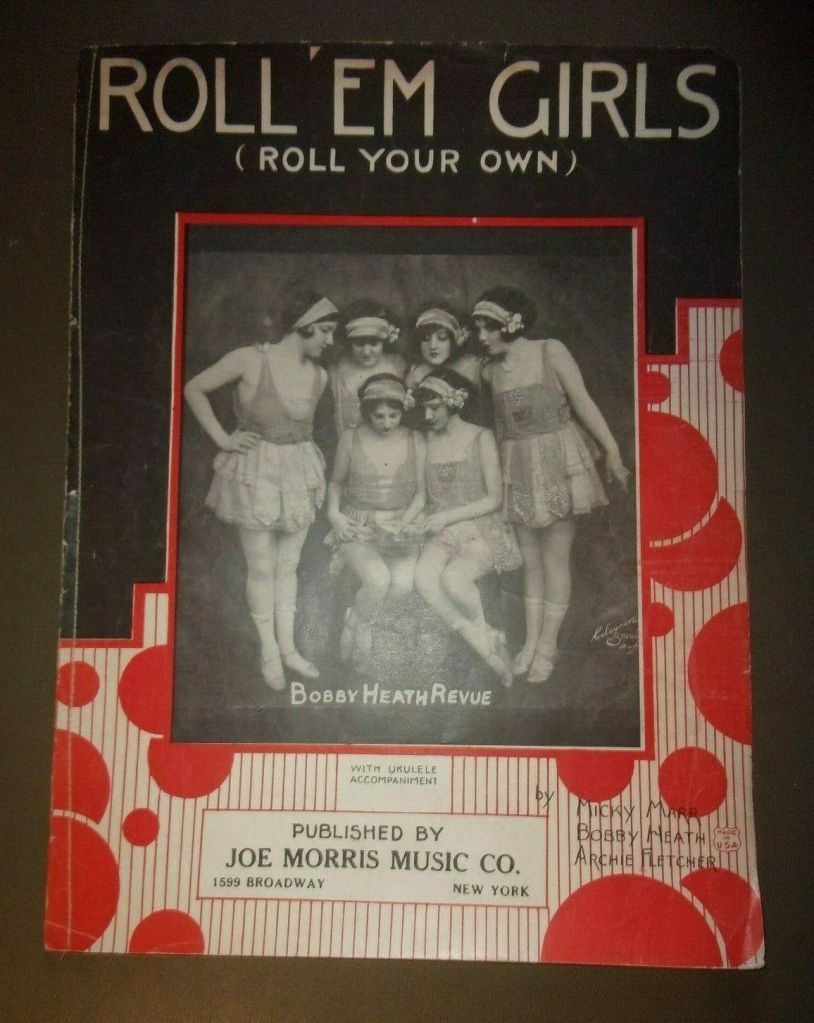
Or how about cigarettes the old fashioned way, the way my grandfathers did it. With “makins,” you can roll your own!

Image

About a bit more than rolling cigarettes, but a good commentary on the fashions of the day. Click or tap on the triangle in the next image for a prurient peek-a-boo.

And, where would we be without John Wayne? I tread a bit close to the boundaries on this but, what would Willie Nelson say? Click or tap on the triangle in the next image anyway.

And then, there is the moralistic take on smoking, and a couple of other related things of which I–and I assume more than a few of us–have little or no objection.

This song is pure country but here it is by–of all folks–The Muppets. Click or tap on the triangle in the next image for a bit of puppety fun!

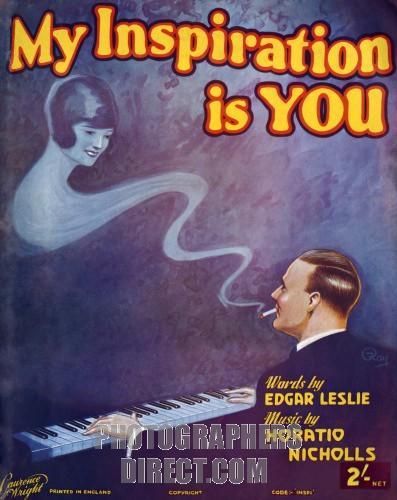
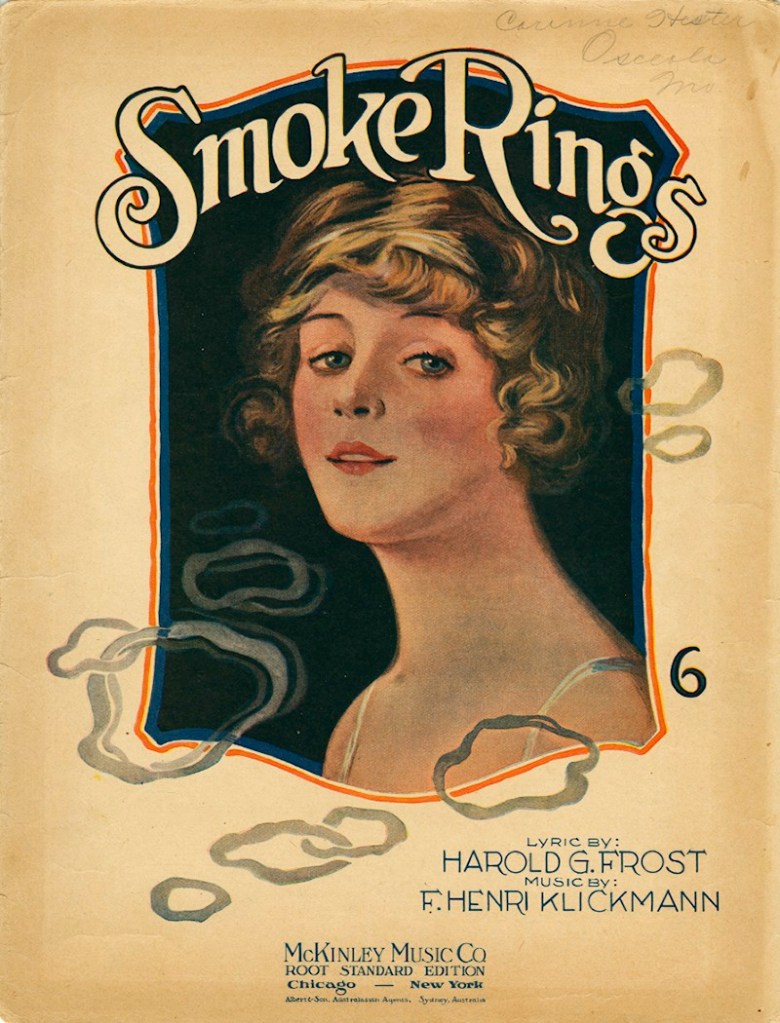
And, course, there are a few sheet music images of ladies puffing away and obviously not singing.

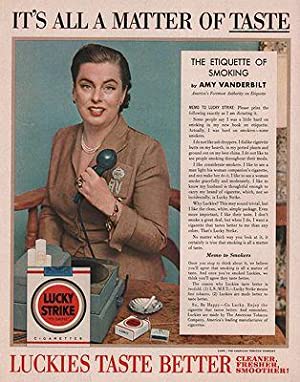
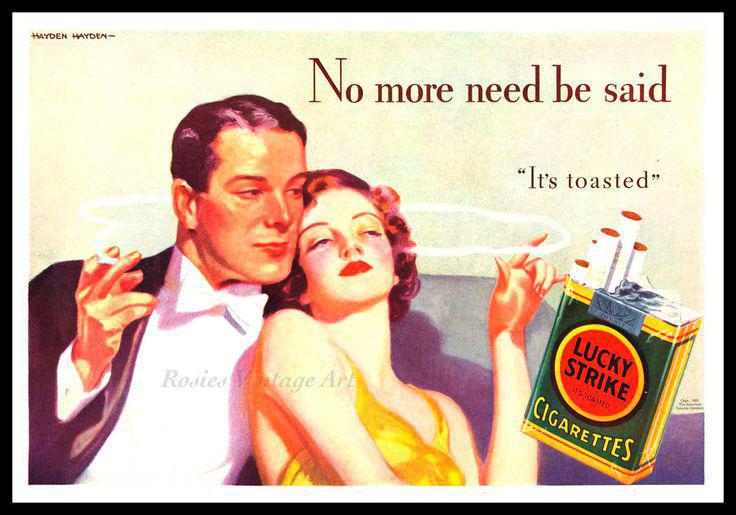
And, how about a musical cigarette pack! Probably sold for about 25 cents in those days.

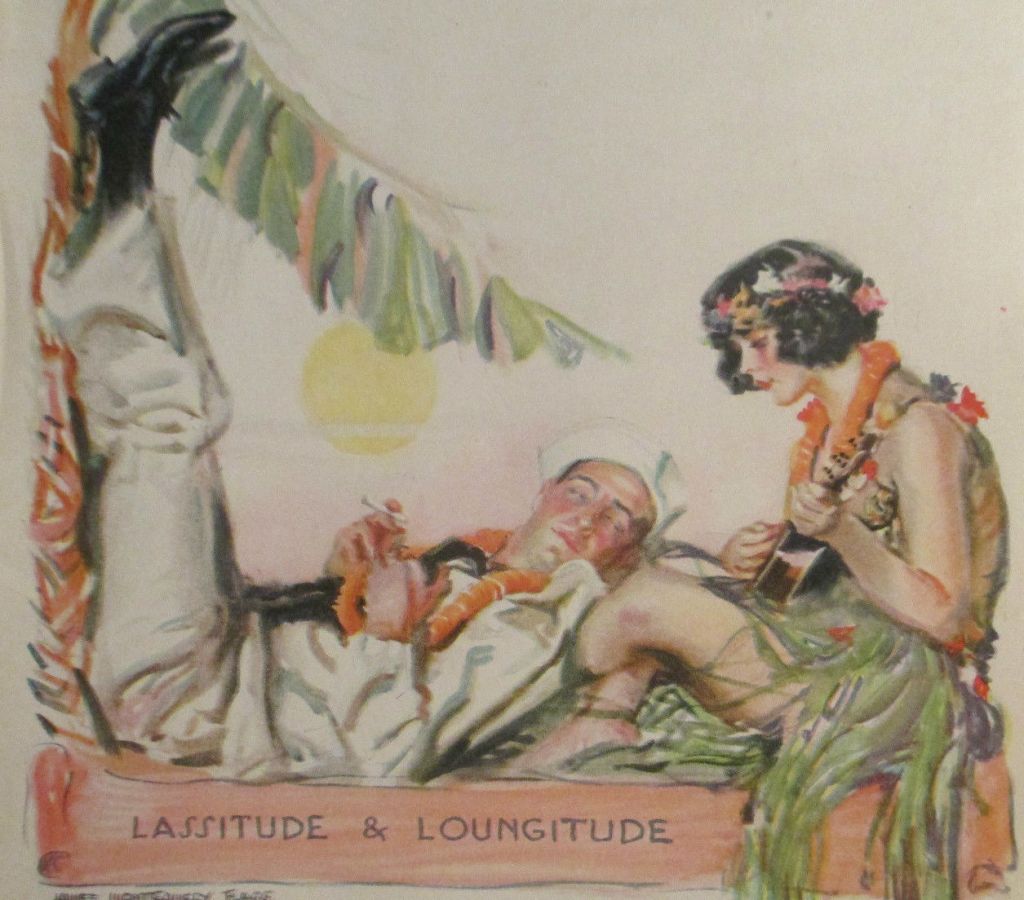
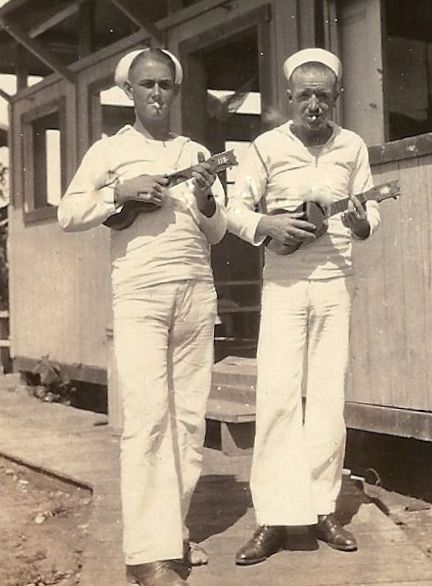
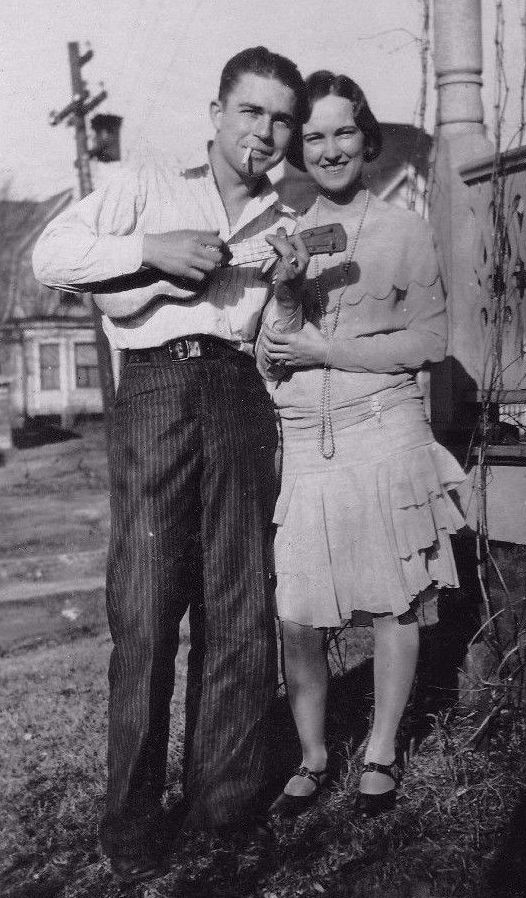
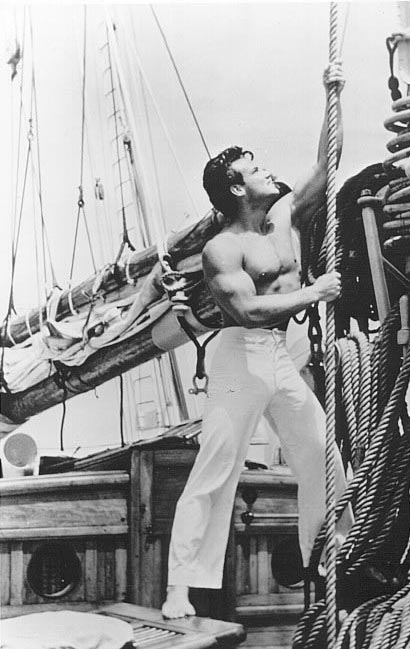
Now we have to dig into the collection of ukulele photos to take a peek at some of the glamorous guys with their omnipresent cigarettes! As they say, “there’s something about a sailor!”

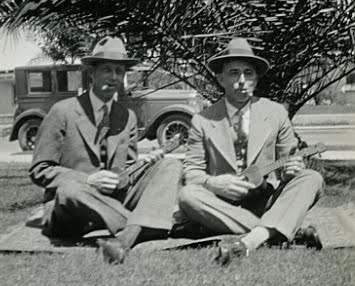
Landlubbers too!

And of course some of the big names of ukuleledom. Here’s Arthur Godfrey “making love, ukulele style.”

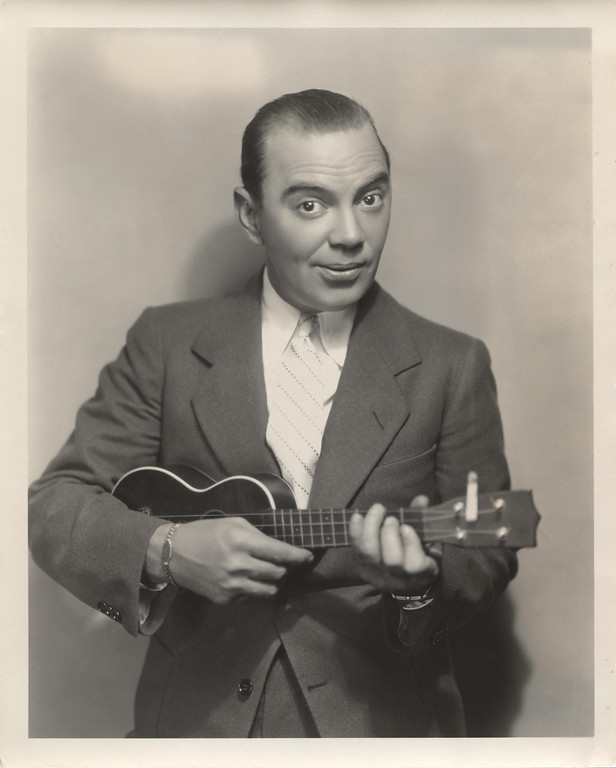
And, finally, a new use for a ukulele–a cigarette holder! He’s not called “Ukulele Ike” for nothing.

Fair warning: This little journey into the mix of tobacco and music is certainly not an endorsement of consuming tobacco products in any form.  Tobacco, smoking, and related songs are part of musical history but, unlike history, we don’t have to inhale. 

But the music sure was fun, so let me repeat a tune and make sure to leave you with a musical earworm! Click on the triangle in the next image for a good old-time banjo version of our first song by nonother than “Grampa Jones.”

Where there’s fire, there’s smoke in music land. So, stay safe, stay home, stay busy, stay viceless (sort of), and STAY TUNED!  

ANOTHER MUSICAL MUSING, 31 March 2023: A Counterpoint To Waaaay Too Much News!

For those of you who—like Alison and me—are glued to (stuck with?) the news these days, it seems that everything is being split into EXTREMES!  There is right/left, red/blue, old/new, whew/whew . . .

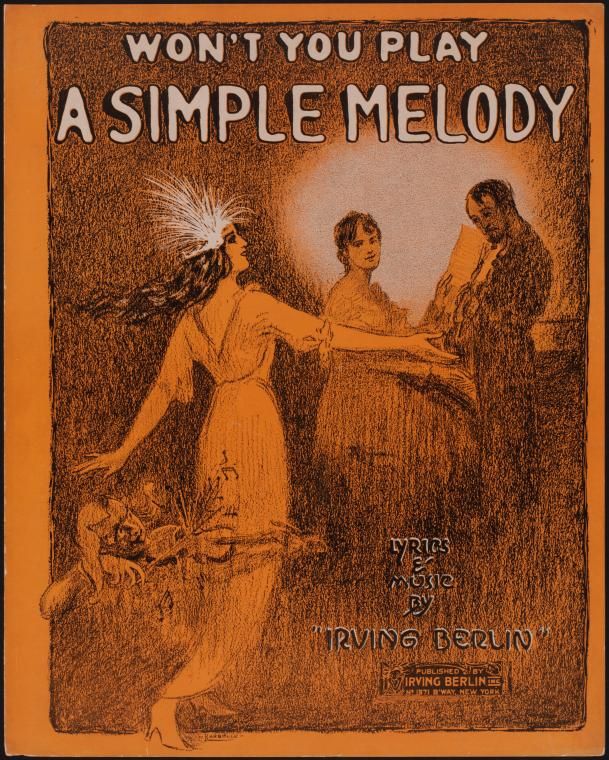
To clear my head a bit, I keep returning to another musical earworm of mine that pulls extremes together but into a harmonious whole.  The song that keeps sticking in my mind is simplicity itself but, nonetheless, complex—“Won’t You Play a Simple Melody” by the great Tin Pan Alley and Broadway songwriter Irving Berlin.   What could be simpler than that?  Old Time/Ragtime? Hmmm  . . .

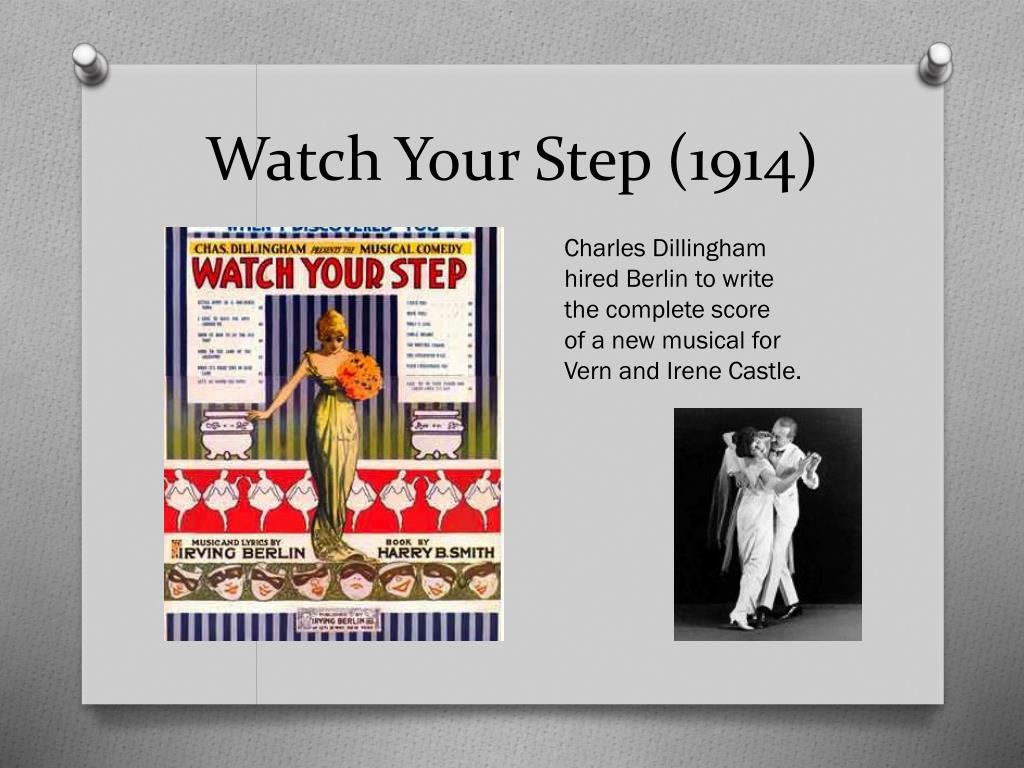
Won’t You Play a Simple Melody” is a song from the 1914 Broadway musical “Watch Your Step,” with all the songs and music written by Berlin himself. 

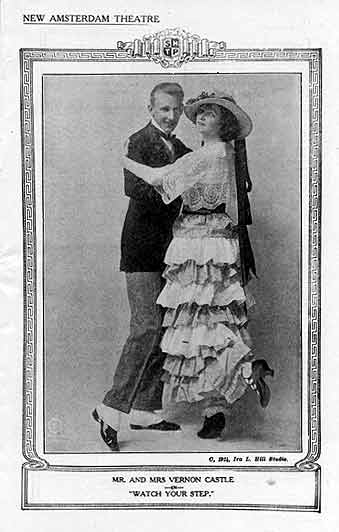
The show was the first stage musical he wrote and the production was conceived primarily to show off the fancy footwork of the famed ballroom dancers Irene and Vernon Castle, as well as Berlin’s songs. 

As a bit of background fun, click or tap on the triangle in the next image to take a look at this once most popular dancing duo in action in a 1915 silent movie. Dubbed in music, of course!

That YouTube was a bit fuzzy, so here are Fred and Ginger doing their interpretation of Vernon and Irene in the 1939 bio-pic about the Castles. Click or tap on the triangle in the next image for a clearer view!

But, I digress. So, now back to our song. Not surprisingly, the most well-remembered and still performed song of the show “Watch Your Step” was a non-dancing number.

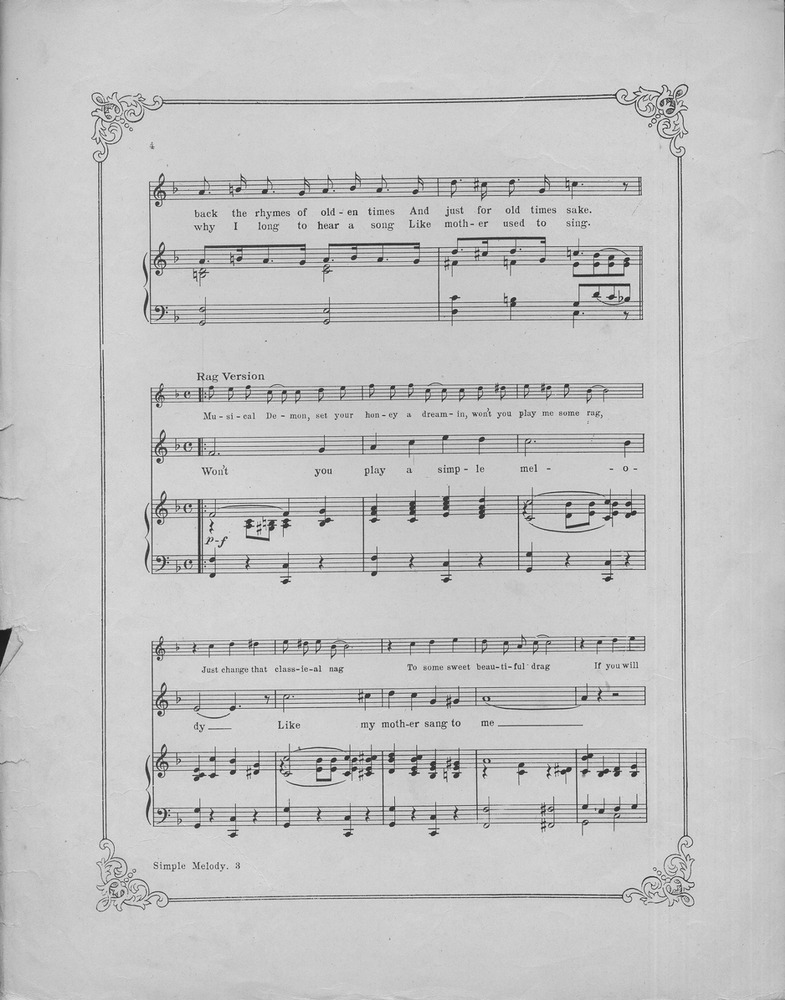
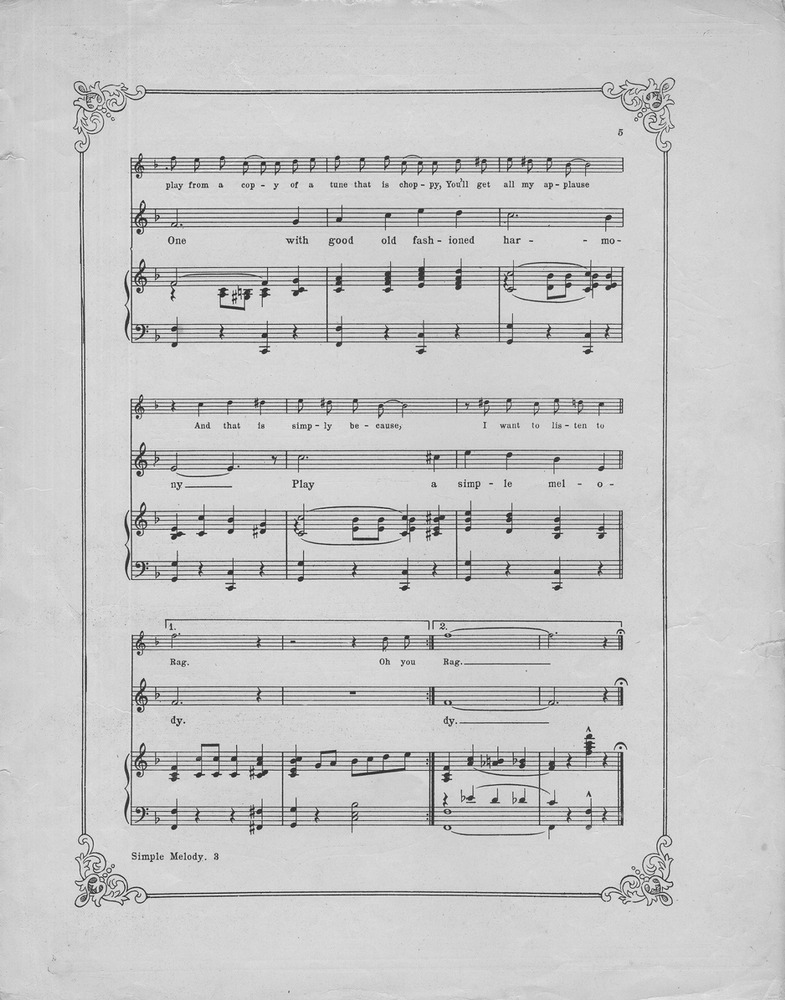
This song is one of musical extremes—called “contrapuntal” by musicians or, more commonly, “counterpoint.”  While often used in opera, our song was one of the earliest examples found in American popular music.  Unlike in a “round” that uses the same lyrics and melody offset and overlapping, counterpoint uses a first melody played against a different melody, each with independent lyrics but with the same key and chord progression.  Berlin was a master of these so-called “double songs” and several of his are written this way. For those of you who are musically curious, here’s a look at the original sheet music.

After an intro “verse” to set the scene, the “simple melody” plays alone. Then comes the contrasting melody and lyrics.

Finally, the two play together, both within the same key and chord progression!

The lyrics of “Won’t You Play a Simple Melody” also track  a counterpoint duet as one singer yearns for the music which “mother” sang (the style of a bygone generation), while the other singer disdains such classic fare as lacking interest and rhythm.  That is to say, “It ain’t ragtime!”

The score’s roadmap is a bit tricky to follow, but you’ll catch on once you listen to the YouTube. 

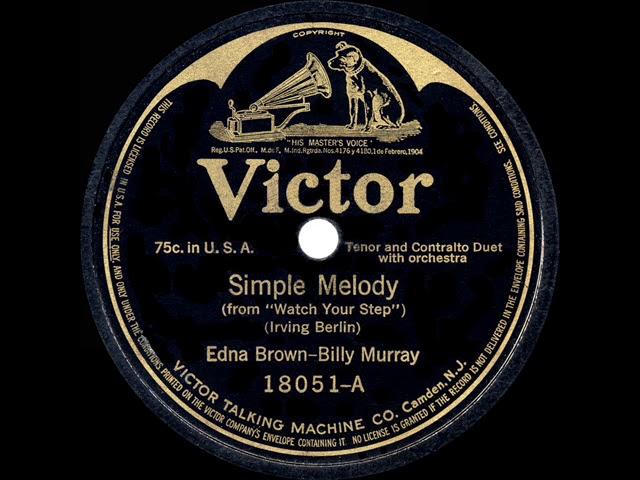
Here’s a recording of our song made way back in 1916.  Most subsequent recordings skip the intro verses but it’s worth a listen.  Tap or click on the triangle in the next image to tune in to this scratchy but original recording.

Moving on, here are a few more “counterpoint songs” just for fun—a couple more by Berlin and then one by Meredith Willson from “The Music Man.” 

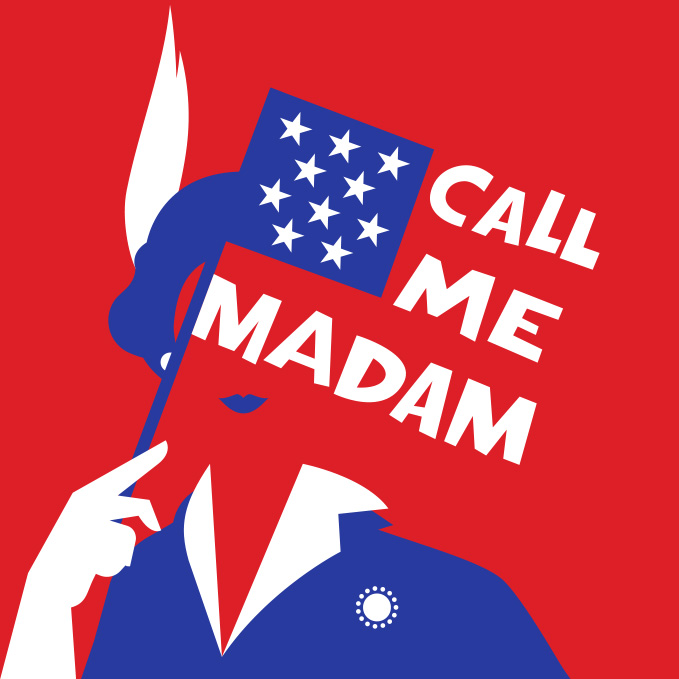
Click or tap on the triangle in the next image for a tune from the 1950 Broadway musical and subsequent film “Call Me Madam” that has become a popular “dueling duet” over the years–“You’re Just in Love.” Here’s a lovely country/jazz, father/daughter take on this classic.

And, yet another one by Berlin.

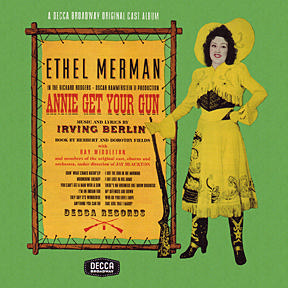
Tap or click on the next image or link for a 21st Century, Washington, DC, take on Berlin’s song “Old Fashioned Wedding” from his 1946 musical “Annie Get Your Gun.” As an aside, I remember hearing these guys performing at the Obama (not the Trump . . .) inaugural festivities! Counterpoint? You betcha!

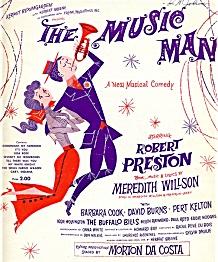
And here’s what has evolved into a barbershop standard, “Lida Rose” from Meredith Willson’s 1956 musical “The Music Man.”

Click or tap on the triangle in the next image to take a peek at how folks can come together in counterpoint. Could but we all!

So, in these too-hectic and too-newsy days, let’s think “counterpoint” rather than “conflict.”  Needless to say, gentle readers, it’s much prettier that way!

Now, to wind (tune?) things up this week, let’s go back to our original song and listen to a 1990s recording of “Won’t You Play a Simple Melody” sung by Jean Stapleton, with the Muppets, and—oh, yes—a ukulele (sorta) accompaniment.  Click or tap on the next image or link to chuckle along with this one!
So, as we all move along to the next week of “news to be glued to,” let’s all keep an eye on the capitol . .

. . . Don’t get lost and confused!

.  .  .  and remember the musical gifts of a Jewish immigrant from Russia who gave us those other simple earworm melodies of “Easter Parade,” “White Christmas,” and “God Bless America.

and, STAY TUNED!

ANOTHER MUSICAL MUSING, 24 March 2023, Songs of the Great Depression–From the Dark Side to the Sunny Side

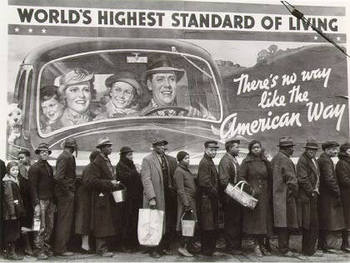
I don’t know about you, gentle readers, but I am increasingly finding the news of the day disheartening if not depressing; too much “this and that,” too little “that and this.”  I thinking not just of the deeply worn depressions found in too many of the streets in our little part of New England, but also thinking back on that rocky rubble of American history known as the “Great Depression.”

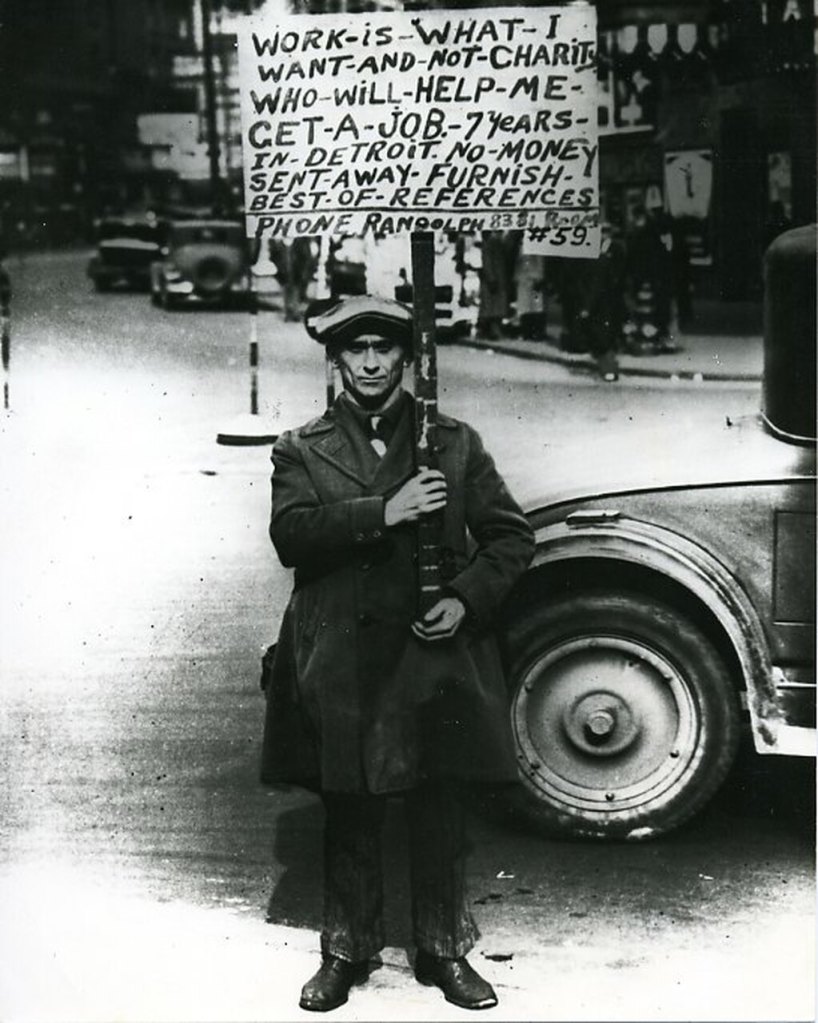
Few of us around today lived through those days, but all of us have heard the admonitions of our parents or grandparents: “Make do or do without;” “Poor folks have poor ways;” or “Think about the poor children from—wherever—who don’t have enough to eat.” 

However, there were silver linings on the dark clouds and those fit right in with these musical musings I have been posting for the past five or six years. It’s in many of the songs we remember, play, and sing today as we troll through our songbooks and strum, saw, tap, or toot away on our favorite musical instruments.

There were Dozens and Dozens and DOZENS of songs written in the time span between presidents Hoover and Roosevelt. 

As would be expected, many of these were in the blues, country, and protest song traditions. They reflected in song the woes of the time. 

Still others, mostly in the jazz and popular traditions, focused on the optimism that everyone needed to survive. 

After all, songs on the radio (if you were lucky enough to have one in those days) were free and (it was said by many) that: “You can’t be sad when you’re dancing!” 

So, let’s take a look at just a few of these songs–from both sides of the cloud, of course–to illustrate my point and, then hopefully, give us a bit of cheer once we set aside our newspapers (screens today) and sing along!  

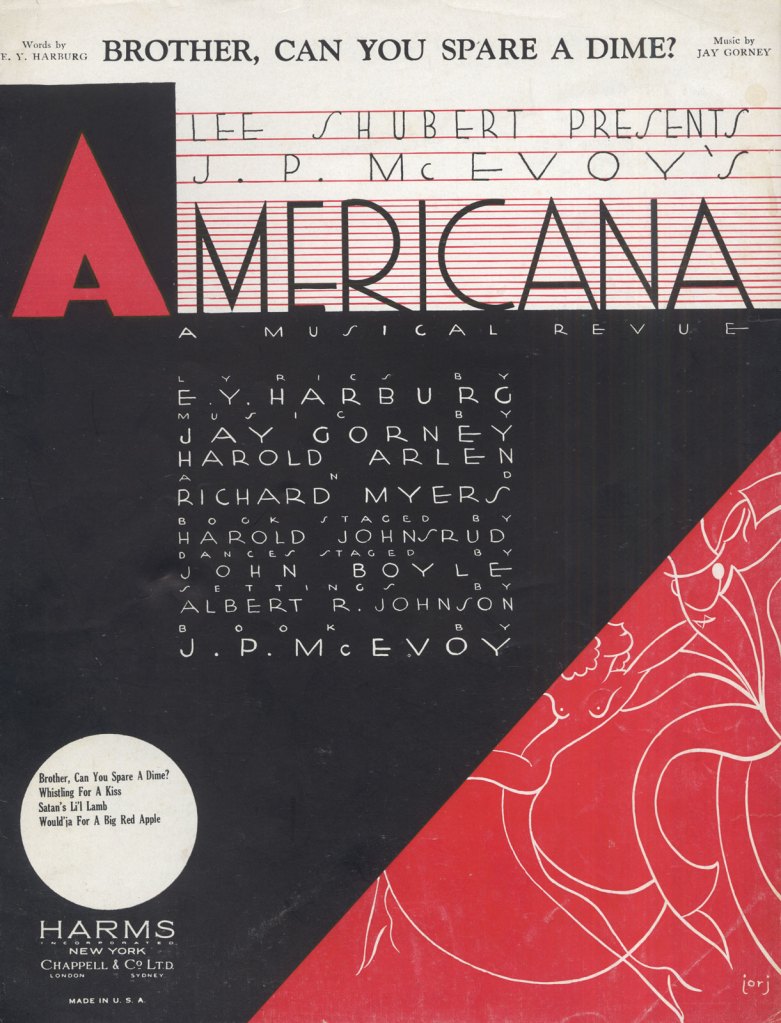
To begin, gentle readers, let’s “eat our spinach before our desert” and look at the most quintessentially woeful song of the times, the one that defined the Great Depression: “Brother Can You Spare a Dime?

Without a doubt, this is one of the best-known American songs of the era of bread lines and soup kitchens and, in effect, has become THE anthem of the Great Depression. Written in 1931 by lyricist Yip Harburg (who, incidentally, wrote all the songs for “The Wizard of Oz”) and composer Jay Gorney, the song was part of the 1932 Broadway musical revue “Americana.”

The melody begins in a minor key—unusual for a popular song at the time—and is based on a Russian-Jewish lullaby that Gorney had grown up with as a child. The song tells the story of the universal everyman, whose honest work was towards achieving the “American Dream.” 

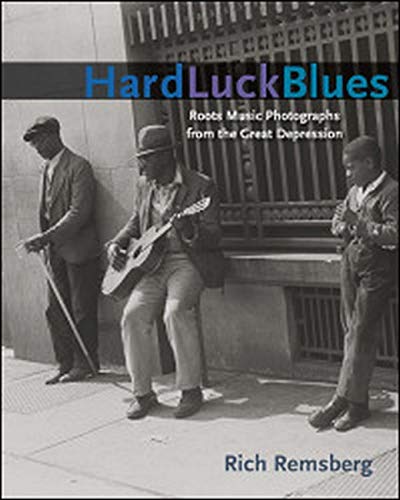
Although blues songs often reflected a dark, more rural or racially oriented take on the times, . . .

. . . Brother Can You Spare a Dime” became one of the few Tin Pan Alley or Broadway songs of the era to shine on the darker aspects of the county’s collapse.

Click or tap on the triangle in the next image or to listen to this song that defines the dark side of the era.

But, enough of the dark side!  Let’s, indeed, move over to the—shall we say—sunnier side of the street. 

American popular music reacted to the Great Depression with optimism—albeit guarded—and a spate of lighter songs became radio, movie, and Broadway hits.  Many of these have endured and, in fact, have found their way into our songbooks.

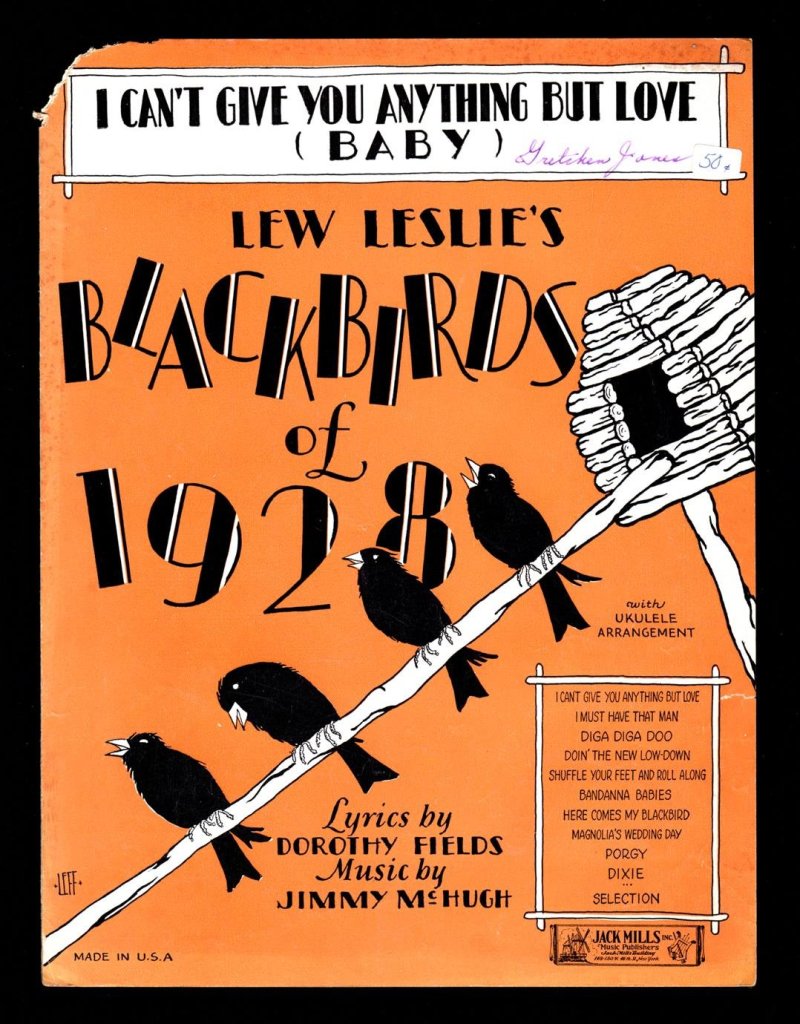
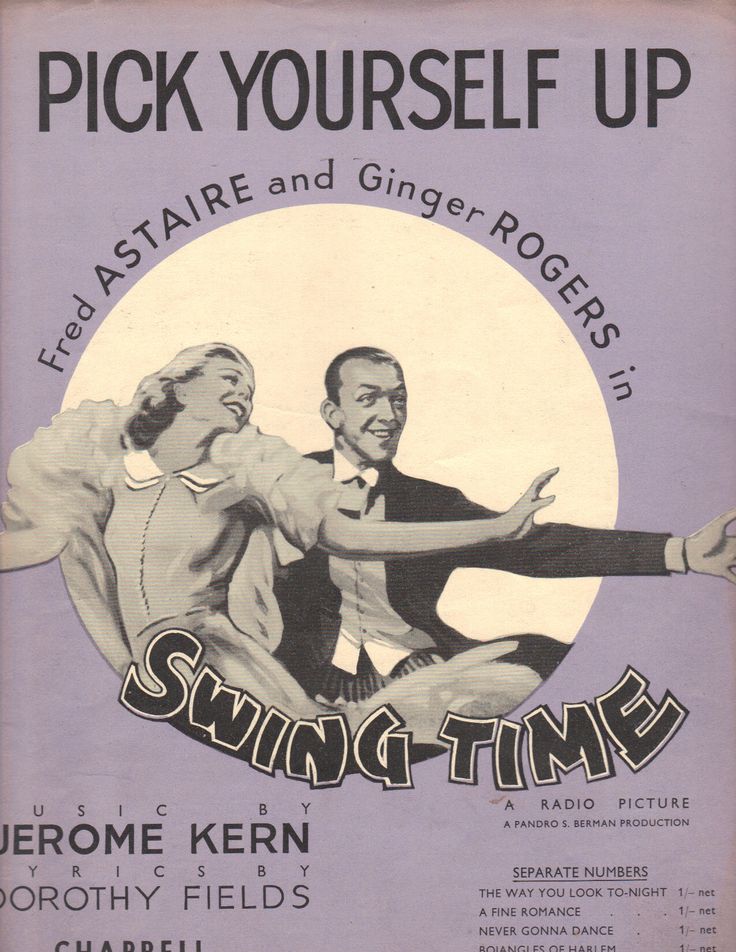
A happy song from the sad days is “On the Sunny Side of the Street,” a 1930 tune composed by Jimmy McHugh, who wrote another great depression era song, “I Can’t Give You Anything But Love,” with lyrics by Dorothy Fields. Her other contribution to this “try to feel good” genre includes the lyrics for “Pick Yourself Up, And Start All Over Again.”  All three songs have been covered by scores of performers over the years. Click or tap on the triangle in the next image to hear a modern version of the “Sunny” song.   

Click or tap on the triangle in the next image or link to hear Cliff (“Ukulele Ike”) Edwards’ version of “I Can’t Give You Anything But Love” with the rarely included verse as well as the well-known chorus. 

Now, click or tap on the triangle in the next image for a Fred and Ginger take on “Pick Yourself Up.” Then, just for fun, click or tap on the triangle in the image after that one to see their phenomenal dance routine to our song.

Now here’s another happy tune from our songbooks. Although written a couple of years before the 1929 Stock Market Crash that sparked the Great Depression, “Side by Side” became one of the most popular songs of the 1930s and, today, is considered a standard. 

It was written by Harry Woods, who practiced songwriting only as a sideline, and, as a bit of trivia composed his songs on the piano despite the fact that he was born without fingers on his left hand!  He wrote a couple of other favorites: “When the Red, Red Robin Comes Bob, Bob, Bobbin Along,” and “I’m Looking Over a Four-Leaf Clover.”  

Click or tap on the triangle in the next image to see a movie version of “Side by Side”: 

Oh yes, here are a couple of Art Deco style ukuleles from my collection in a style that was popular, to say nothing of symbolic, during the Great Depression—an inexpensive uke fancied up with an inexpensive paint job.  What’s not to like?

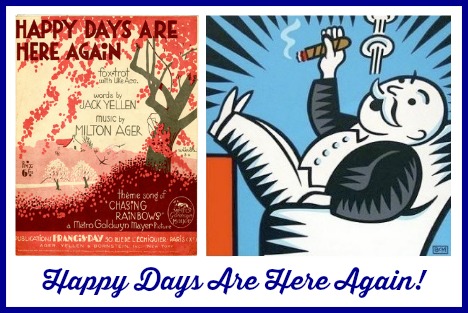
And, of course we have to end with probably the most optimistic song of the Great Depression—at least at the beginning of its end—you know what it is! 

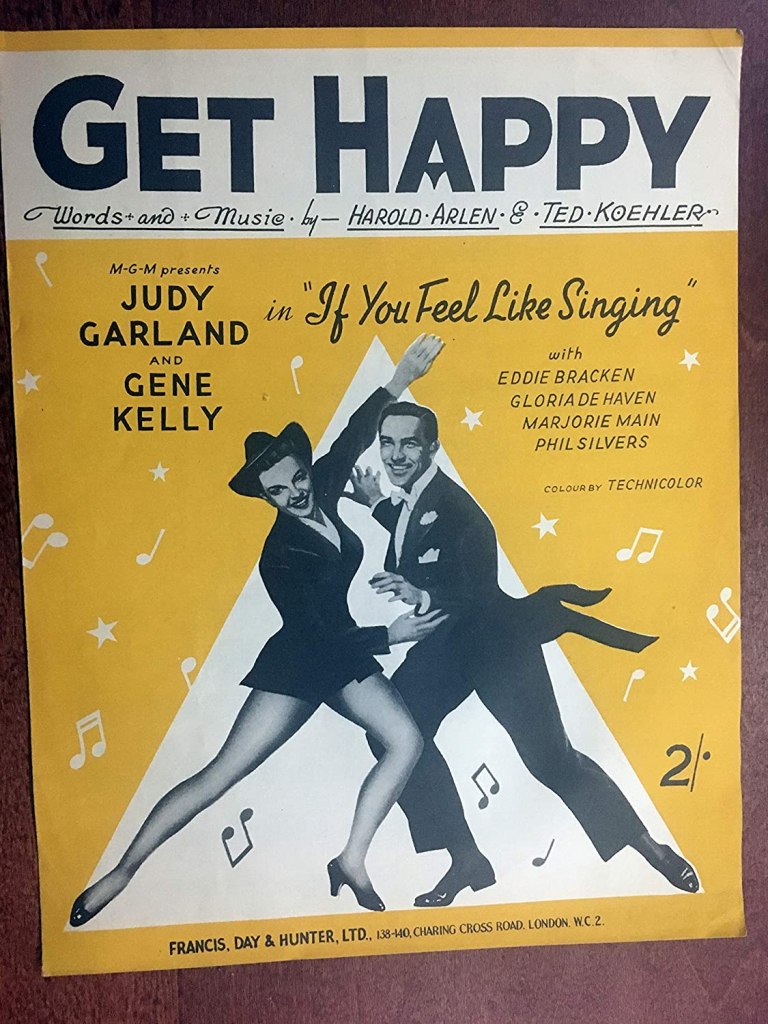
Here’s our happy days song in its original, Broadway version from 1930–before it became a campaign song. Click or tap on the triangle in the next image for a look and listen. Then, click or tap on the following image for a performance of our song from the 2000s coupled with another appropriate tune. Same optimism? We hope!

So, stay safe, stay un-depressed, keep up with those boosters, and STAY TUNED! Because, perhaps, hopefully . . .

If we all work together as a community!

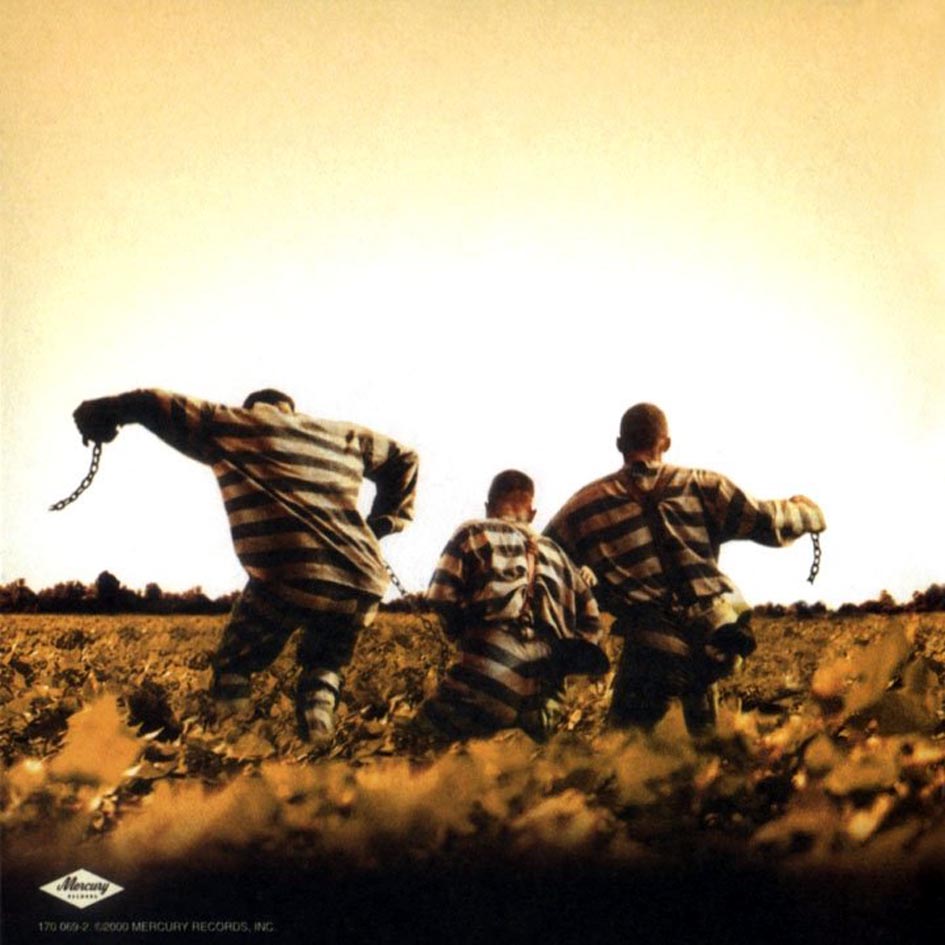
ANOTHER MUSICAL MUSING, 27 January 2023: Prison Songs, And A Tale of Musical Thievery, Sorta . . .

a

Since we are still deep in the New England Winter doldrums, it might be worthwhile to take a peek at some of the songs we play or sing that keep us “by the fireplace” on days like this. Anyone skimming through a list of early country and folk songs will run into a genre with a certain chilly greyness to them: “Prison Songs.” 

Songs about prisoners, jail time, and other forms of judicial restraint were well known by most folks—even if experienced by only a very few. 

A night spent in the “hoosegow” to dry out or as punishment for a bit of wanton revelry was common.

Less common were months, years, or a lifetime in the “pen” or on a chain gang. 

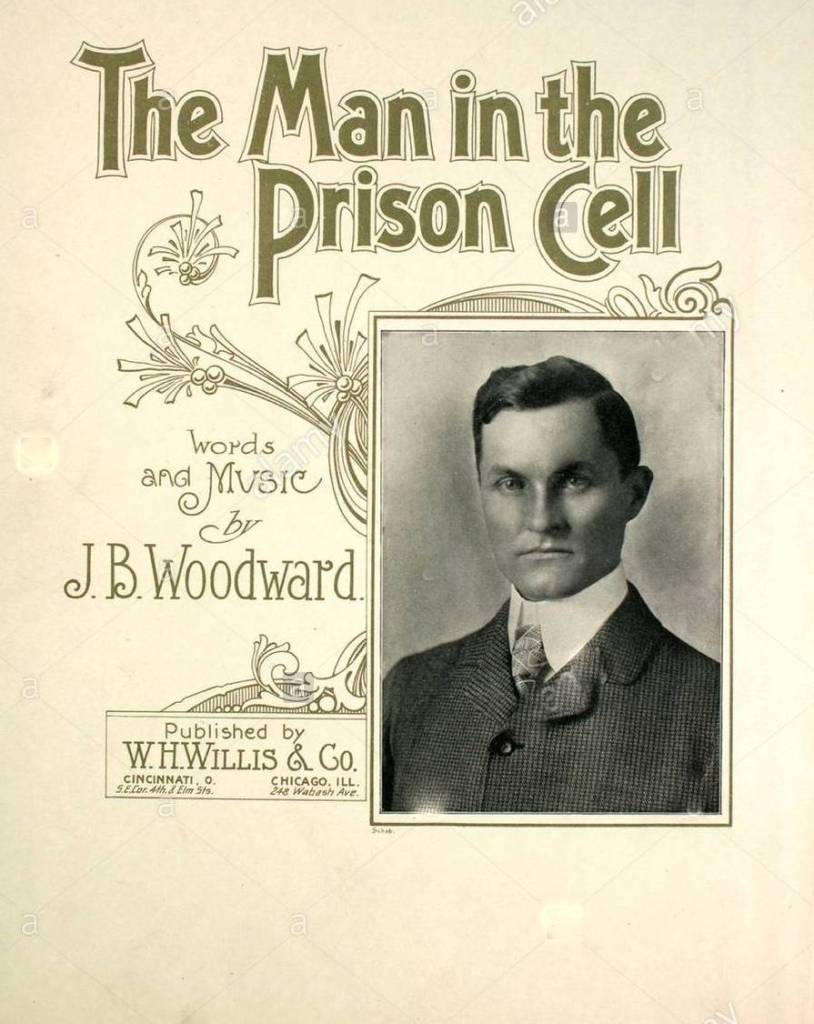
Newspapers, movies, and, needless to say, sheet music and songs on the radio kept folks reminded of the perils of punishment and, to a great extent, kept them on the right side of the law. 

As would be expected, many prison songs can be tear jerkers as well as admonitions to the potentially wayward. 

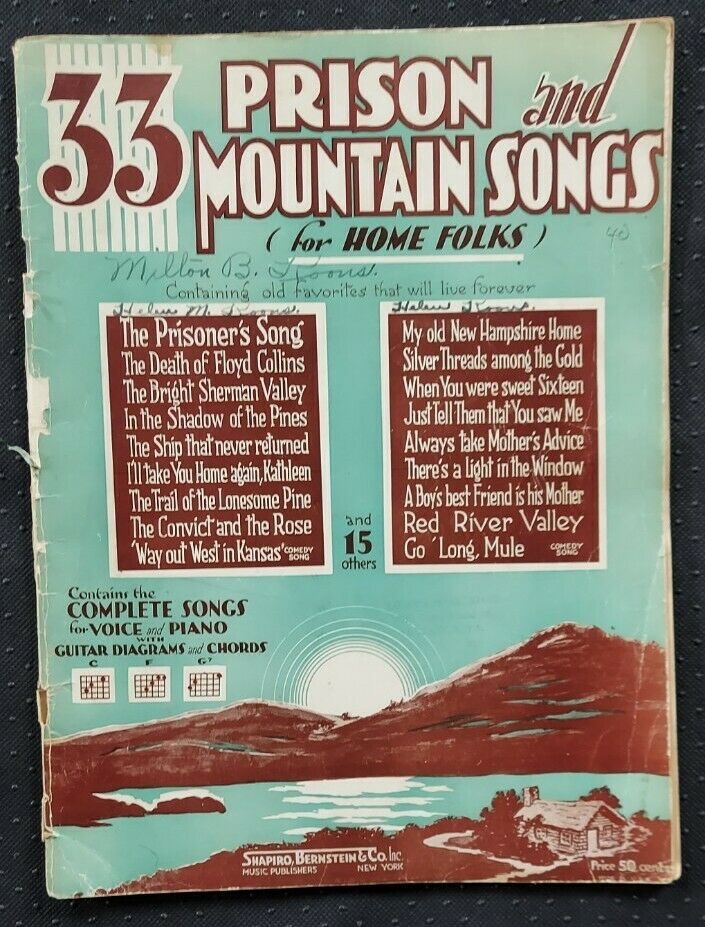
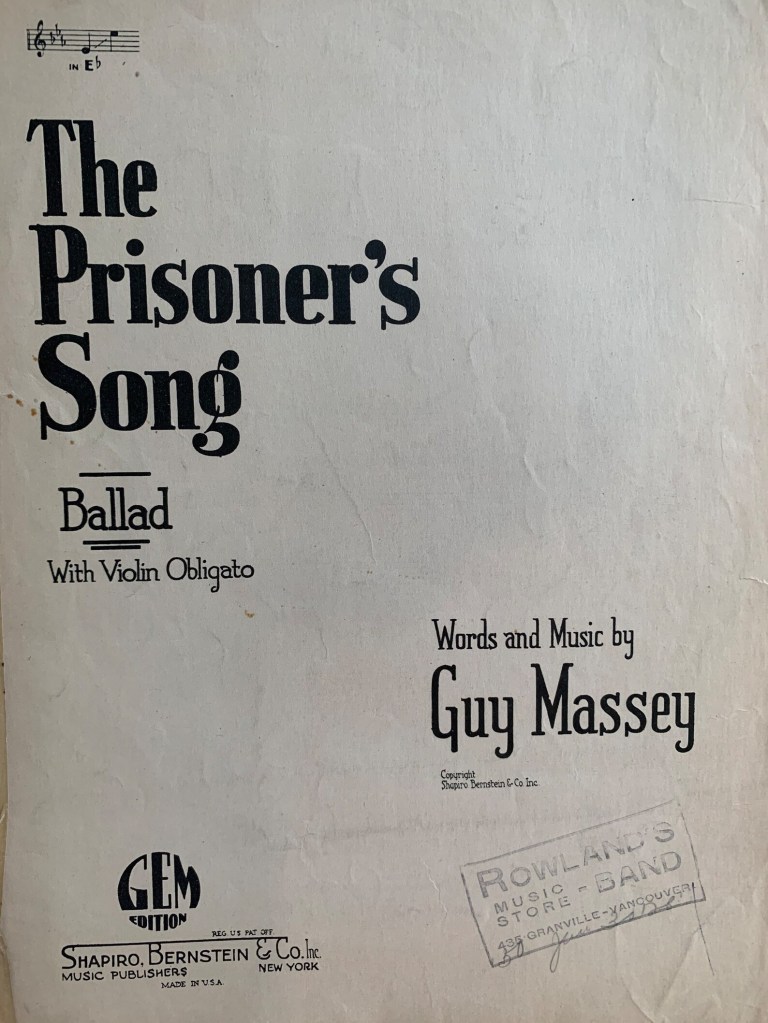
Click or tap on the triangle in the next image or link to hear one of the first recordings of what many believe to be the granddaddy of the prison song genre, appropriately named “The Prisoner’s Song.” This version was recorded in 1925 by Vernon Dalhart, one of the more popular country (or “hillbilly” as it was known then) singers of his day. Get ready to wipe a tear or two from your eyes!

It is said that Dalhart learned this song from a cousin who had learned it while in prison.  That gives the tune some cred and, perhaps, that’s why it became one of the most played songs of the early 20th century.  

And then, of course, there seemed to be just as many prison songs with a novelty or humorous touch

Click or tap on the triangle in the next image or link for this 1928 Jimmie Rogers yodeling interpretation of this much older jug-band standard: “In the Jailhouse Now”:

And, just for the fun of it, here’s a string band version of the tune, written much earlier than Roger’s opus but recorded just a few years ago by a group often appearing here in our “Happy Valley.” Remember them at the Iron Horse? Click or tap on the next image for a listen to this tune not about the perils of gambling but of voter fraud! How topical!

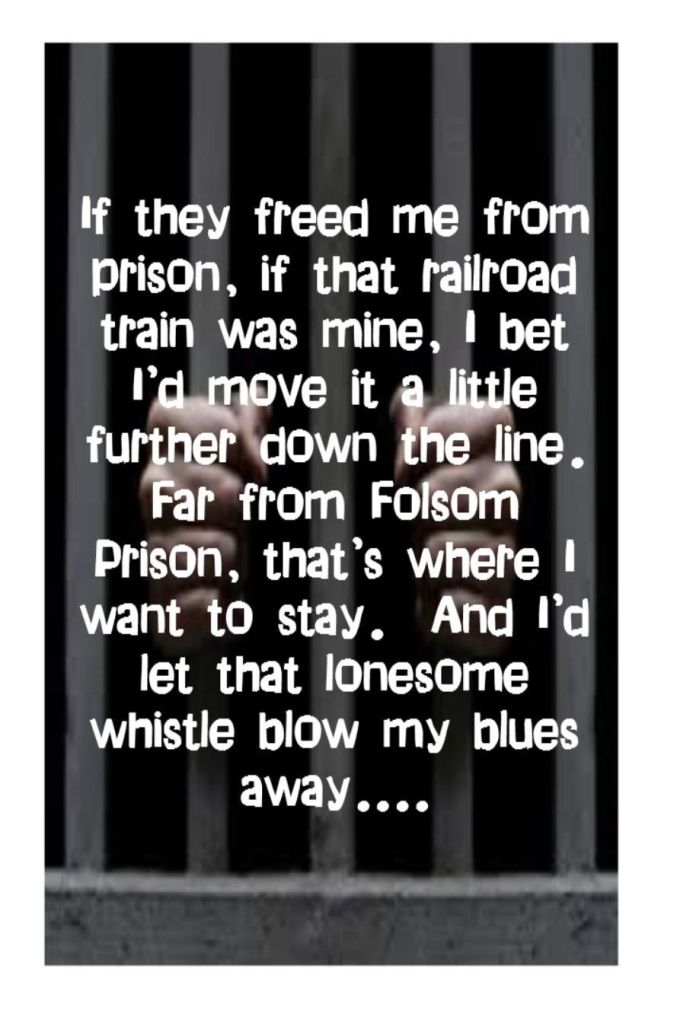
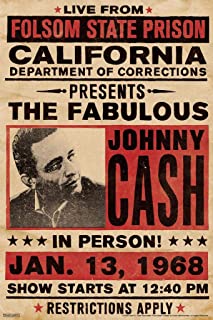
So, let’s move on with probably the most well-known—and certainly most covered—prison song out there:  “Folsom Prison Blues.”  This became Johnny Cash’s signature song since he first recorded it in 1955, and he opened nearly all of his concerts with this rhythmically pulsating—think “passing railroad train”—prisoner’s lament.

It is, however a tale of both Cash and cash–a bit of musical thievery, but with no jail time. That is unless you count Johnny Cash’s epic performance of the song at California’s Folsom Prison back in 1968.

Click or tap on the triangle in next image or link to listen in on one of his later prison concert presentations.

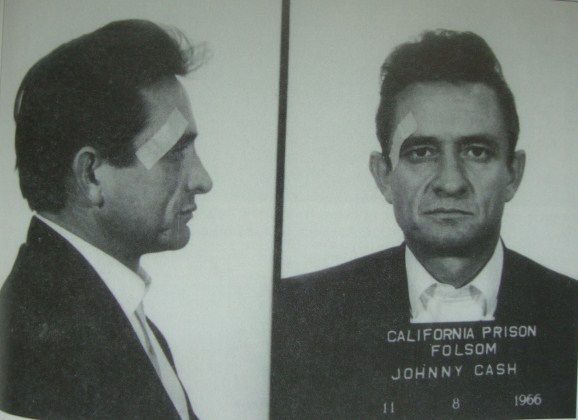
Although Cash cultivated a romantic outlaw image, he never served a prison sentence. Despite landing in jail several times for various misdemeanors, he was never locked up for more than one night at a time—and never in Folsom Prison!  Still credit goes with the territory. He did have this mug shot taken at Folsom Prison just to hand out as a souvenir. Creepy!

Now, on to the musical thievery!

The theme, and many of the lyrics Cash included in “his” signature song were actually lifted (stolen!) from an earlier song titled “Crescent City Blues” written in 1950 by one Gordon Jenkins, a composer and arranger. Cash had heard Jenkin’s song earlier while serving in the Air Force in Germany. 

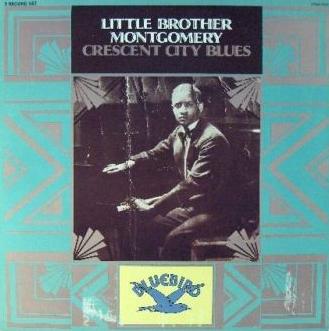
Jenkins, in turn, had based his melody (also used by Cash) and song title on a much earlier ragtime/jazz tune written and recorded by pianist “Little Brother” Montgomery.  Ah, evolution  .  .  .  

The upshot is that Cash, who readily acknowledged his “borrowing” but thought it unnecessary to mention it at the time, had to spend nearly $100,000 on the copyright infringement suit filed against him by Jenkins in the 1970s. Cash from Cash!

Whew  .  .  .  After all that, click or tap on the next image or link to listen to the 1953 recoding of Jenkin’s song by singer Beverly Mahr. Do these lyrics sound familiar?   

And, of course, there are a few hundred ukulele covers of the Cash version.  Click or tap on the next image or link just for a bit of fun!

Well, back to dreary reality . . .

But, as an escape from within the high stone walls, chain gangs, or work farms of this musical musing . . .

. . . stay safe, stay innocent, stay un-incarcerated, stay as masked as you should, and  .  .  .  STAY TUNED!

And, just to brighten things up for you musical scientists out there . . .

ANOTHER MUSICAL MUSING, 6 January 2023: A Marriage of Song and Sail! What Shall We Do?

Many of you gentle readers have visited Alison’s and my home over the years for various musical and social get-togethers.  Needless to say, I enjoyed showing off my collection of vintage ukuleles and banjos.  But, a few of the more curious of you may have noticed another hobby of mine—making scale models, particularly model ships.  I’ve been doing this off and on since the 1980s and, with the sequestration brought on over the past couple of years, contentedly continue.  With my instrument collection, I can hang them on the wall for all to see. Alas, my many (too many?) models are a bit bulkier to display and, as Alison has politely pointed out from time to time, just a tad (She may have used some stronger terms!) overwhelming.

Nonetheless, life goes on more smoothly when I can combine my two rather benign proclivities—collecting musical instruments and building model ships, hence the “marriage of song and sail.” 

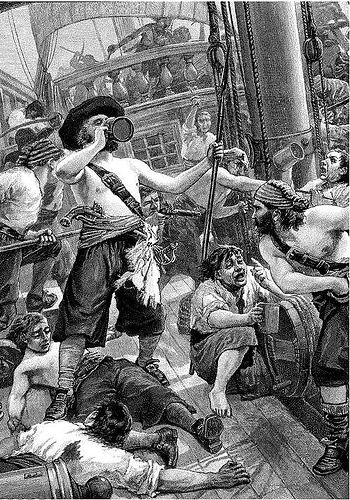
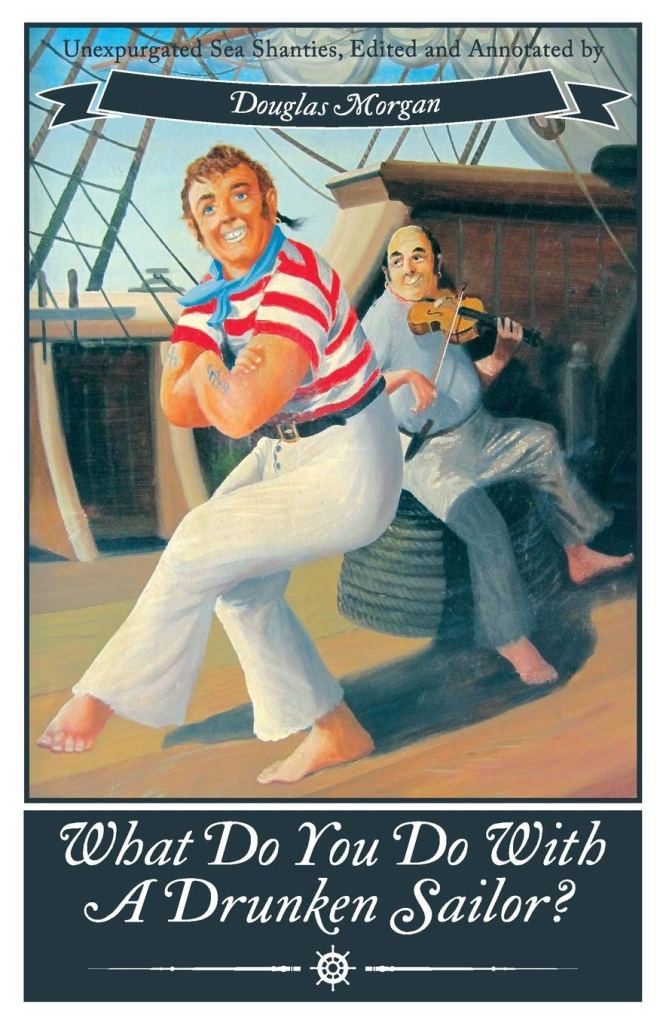
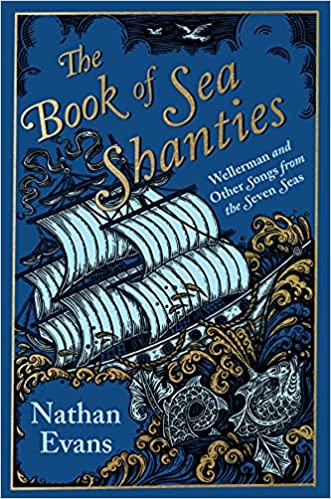
So, let’s take a look at that sailor song genre known as “Sea Shanties.” While most folksong books include a number of tunes with nautical themes, there is only one that has a special place on the wet wood deck of a working ship in the days of the daily “grog” ration: “What Shall We Do With a Drunken Sailor.” 

Just to get the old earworm going, click or tap on the triangle in the next image or link to follow the lyrics and hear an on-shore take on our tune.

More about our tune a bit further on, but first some background.

The origins of the traditional sailors’ Sea Shanty have been lost in the mists of time. Traceable from at least the mid-1400s, the shanty (or sometimes “chanty”) hails from the olden days of “wood ships and iron men.” 

To hoist up your mood and give you some salt-sea exposure, tap or click on the triangle in the next image or link to see and hear shanties sung as part of that great sea-going film of the 1950s, “Moby Dick.” Alas, this is a Spanish language version, except for the shanties!

The shanty was, quite simply, a rhythmic “work song” sung by sailors involved in heavy, tedious manual tasks, such as tramping round the capstan to raise an anchor or hoisting the sails for departure. 

In technical terms, this helped synchronize individual efforts to efficiently execute a collective task.  Simply, it made sure that each sailor pushed or pulled as needed and at precisely the same time.  The key to making this happen was to sing (or chant) each song, or shanty, in different rhythms for different tasks often to the beat of a drum, toot of a fife, or hum of a fiddle.  

For example, “Drunken Sailor” was considered a “short-haul” shanty designed for tasks requiring quick pulls over a relatively short time with a beat of four “pulls” per verse.  All hands roared out the song in unison, as they hoisted a sail or raised an anchor.  Hence the chorus: “Wey, hey, up she rises.

Tap or click on the triangle in the next image or link to listen to our song performed with more of an emphasis on the required beat–as well as a few more verses!

More often than not there would be a solo-singer, a “shanty man,” who would lead the singing with the crew joining in for the chorus—typical of the myriad of “call and response” work songs common on the farm or railroad in the days before machine labor.  Sometimes even a ukulele could be used! But I digress.

With no special requirements other than to hold a seaman’s attention, as well as make light of a hard and repetitive job, virtually any song could be adopted for this purpose, provided it was delivered at the required tempo—and, almost always, with some, shall we say, ribald or, in fact, downright raunchy innuendo. 

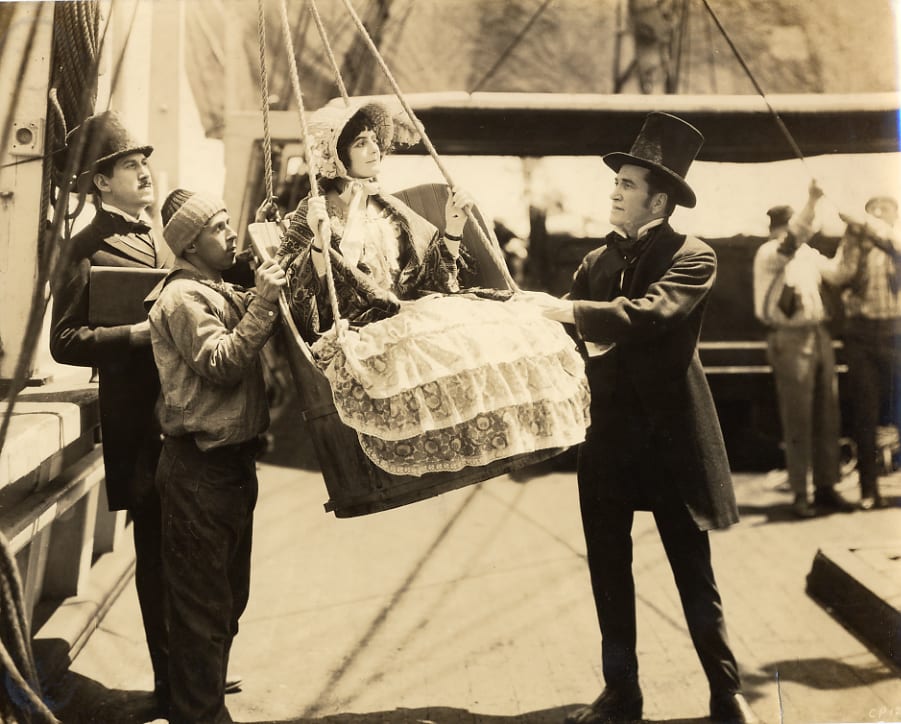
Far from delicate ears, boys will be boys and sailors will be sailors—especially on those long, lonely, and dangerous voyages.  The only exception, I assume, was when a captain’s wife and family, so-called “petticoat sailors,” were aboard.

Now, back to our song.  “Drunken Sailor” was sung aboard sailing ships at least as early as the 1830s and it shares its melody with the traditional Irish “welcome home” song “Oro Se do Bheatha Bhaile.” Click or tap on the triangle in the next image or link to hear this tune sung by Irish school children and get hints of the parallel melody line.  Cute kids, too! 

Our song’s lyrics will vary from ship to crew, but usually contain some variant of a discussion by fellow seamen of just what to do with an overly inebriated crew mate found still abed when he, like they, should be up and about. Each successive verse suggests a method, humorous or painful, of sobering or punishing the sodden seaman.  

Now, a disclaimer! Purged of the myriad anatomical, scatological, or sexual references one might find in other, more scholarly texts, I, good readers, have included YouTubes of only the most G-rated ones I could find. For the sake of tender ears, you’ll have to pursue other, more colorful examples on our own! Happy Googling!

Drunken Sailor” was revived as a popular song among non-sailors in the mid-20th century folk revival with recordings by groups like the Weavers and the Kingston Trio. It grew to become one of the best-known songs of the shanty repertoire among mainstream audiences. It has been performed and recorded by many musical artists and appeared regularly in popular culture. 

It has been said that the reason these old shanties have bobbed back to the surface in today’s culture, which finds many of us adrift one way or another, is that “everybody can join in and you don’t necessarily need to be able to sing.” Just for fun, click or tap on the triangle in the next image or link to see a dancing version of our song.

To haul things in, here is one of the best renditions of our song sung by real British seamen in the film “Fisherman’s Friend”—a must-see movie if you like these salty songs of the sea.  Click or tap on the triangle in the next image or link to give a listen and join the party.

And, finally, click or tap on the next image or link for a finger-picking ukulele version of our song just so you float away with the melody!

So gentle readers, stay safe, stay as sequestered if you must (with your crew, of course), stay as masked as comfort and conscience requires,

and STAY TUNED!

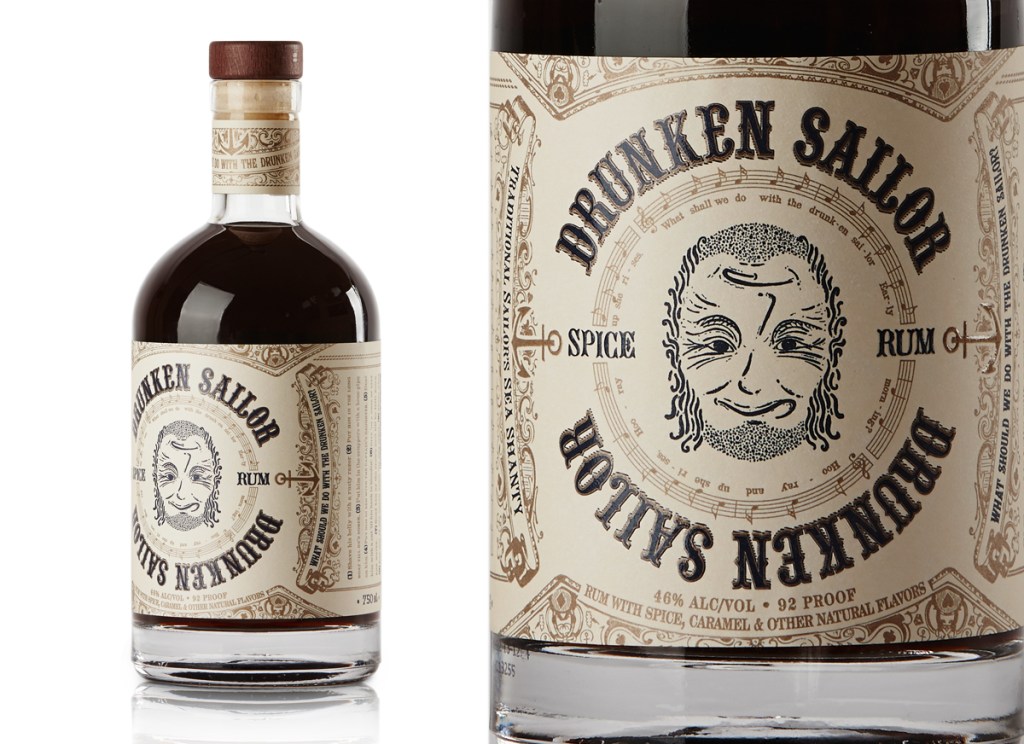
And, of course, enjoy a shanty or two—with rum of course! Or, if wine’s your thing . . .

UKULELE MUSINGS, 21 January 2022: A Bit of Musical Mythology–“Catgut” Strings

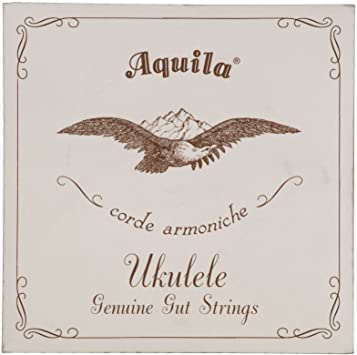
I ran across this photo of our cat, Sylvie, just waking from one of her snoozes in one of my ukulele cases.  The scene reminded me of one of those mythologies we have all been living with for generations—musical instrument strings made of so-called “catgut.” 

Understand, gentle readers, that what are more humanely called “gut” strings have never been made from a cat’s insides!    The word “catgut” may have been an abbreviation of the Old English word “cattlegut.” Alternatively, it may derive from the Welsh word “kit” meaning fiddle—certainly more bovine than feline!  Who knew?

While the word origin refers, more or less, to cattle, “catgut” strings for musical instruments are nearly always made from the intestines of sheep.  Out of sympathy to all those pet cats out there with ears perked up, let’s just call them “gut” strings from here on out.  OK?

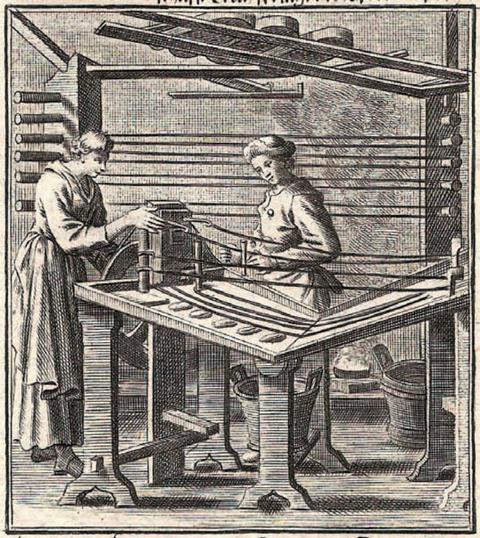
To prepare gut strings, workers clean the small intestines, free them from any fat, and steep them in water and potassium hydroxide. 

They are then cut, stretched, dried, smoothed, and twisted or woven—ready for musical instruments,

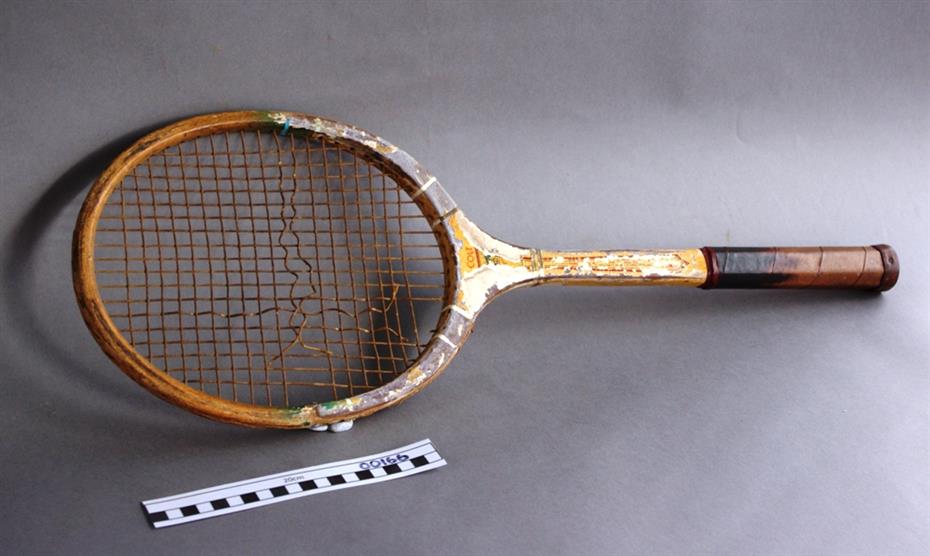
tennis racquets (in the past),

and surgical sutures (still today).   

After twisting and drying, workers polish the strings to the required diameter. For a long time, gut was the most common material for instrument strings and, not surprisingly, remain a natural choice for many classical and baroque string players. 

They find they give a richer, darker sound as well as withstanding high tension within lower alto, tenor, and bass ranges.  Worth a careful listen at the next concert you attend.

Click or tap on the next image or link to hear some rather nice sounds from a gut-strung guitar.  

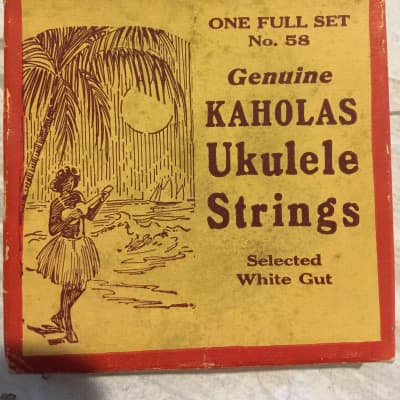
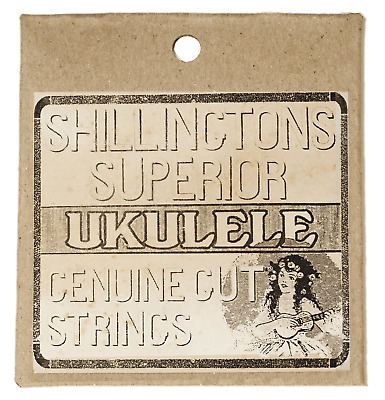
Gut strings were, of course, used for ukuleles until the advent of nylon and other polymers  that became standard right after World War II. 

You can still get gut strings for your uke and, just for fun, I keep a set on one of my older Martins. 

They sound great provided that you don’t mind retuning every time the humidity goes up or down a notch!

Click or tap on the next image or link to hear some commentary as well as strumming on a gut strung uke.

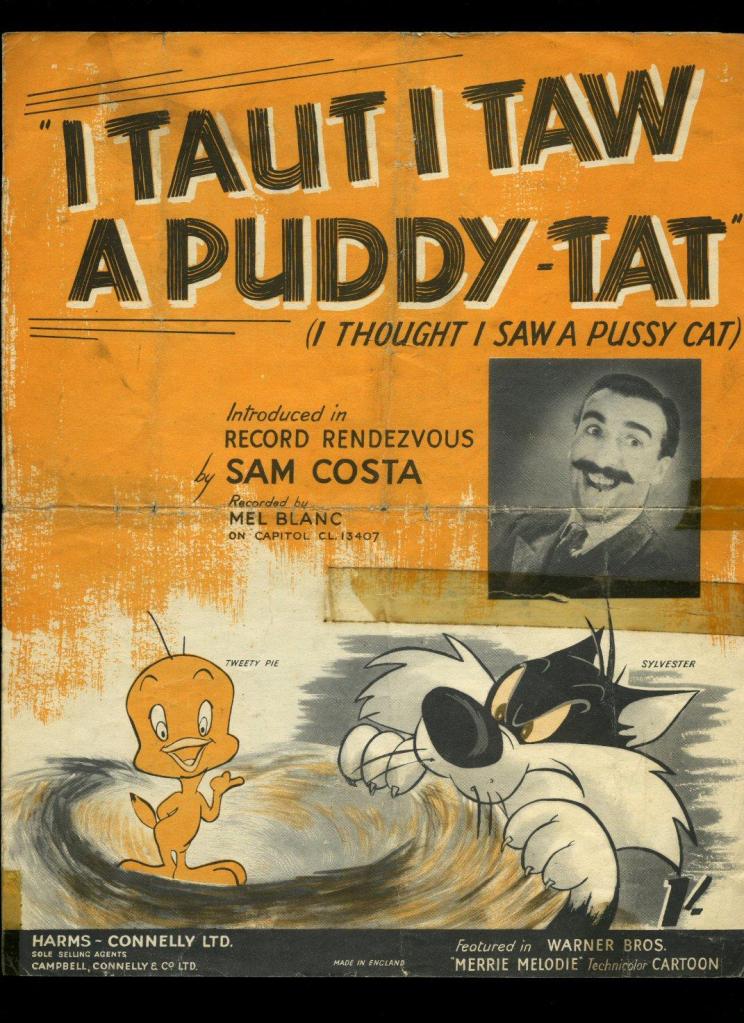
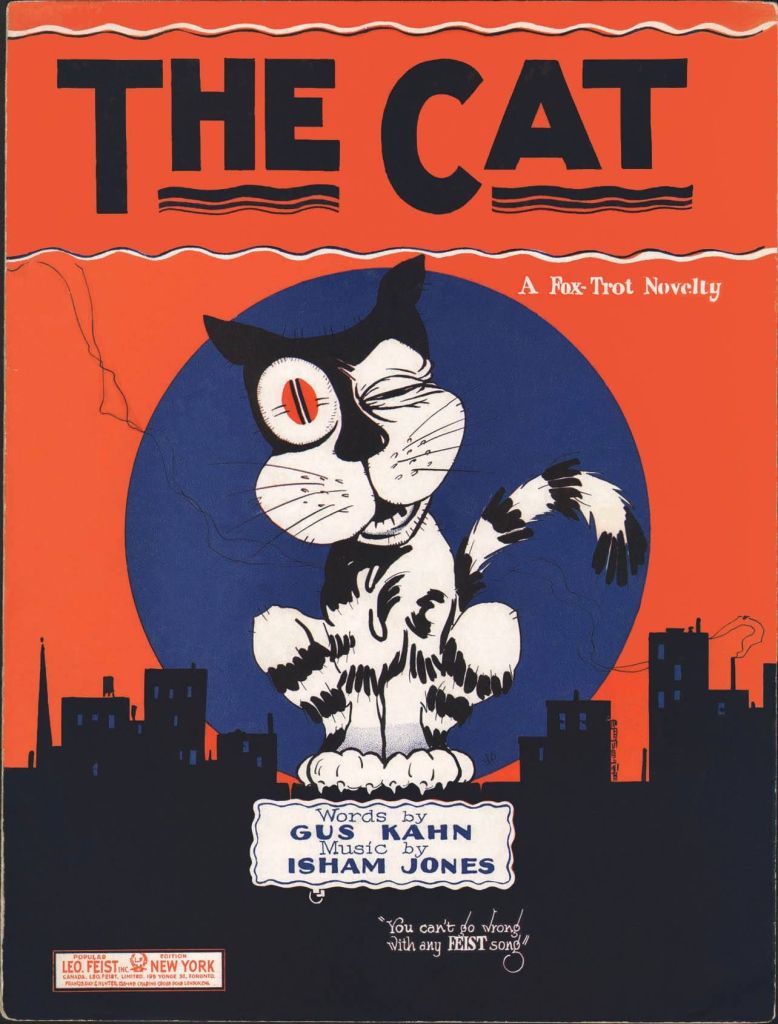
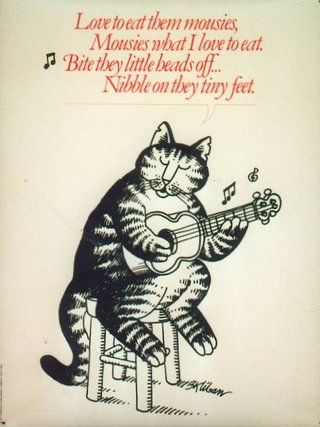
This bit of trivia leads me, as would be expected, into the vast and wild world of cat and kitty songs—a seeming staple of the Tin Pan Alley oeuvre. 

I touched that base in one of my musings from a couple of years ago so some of you might want to re-explore that.  Alas, few of these deal specifically with our, shall we say, gutsy subject. Here’s just another musical tidbit!

So, let me use a little intestinal fortitude to forego a rerun and focus on just a couple of gutsy gut and cat songs just for fun.  There is one song (only one!) from my aging musical memory bank that makes a direct, albeit somewhat oblique, reference to catgut.  Only one! 

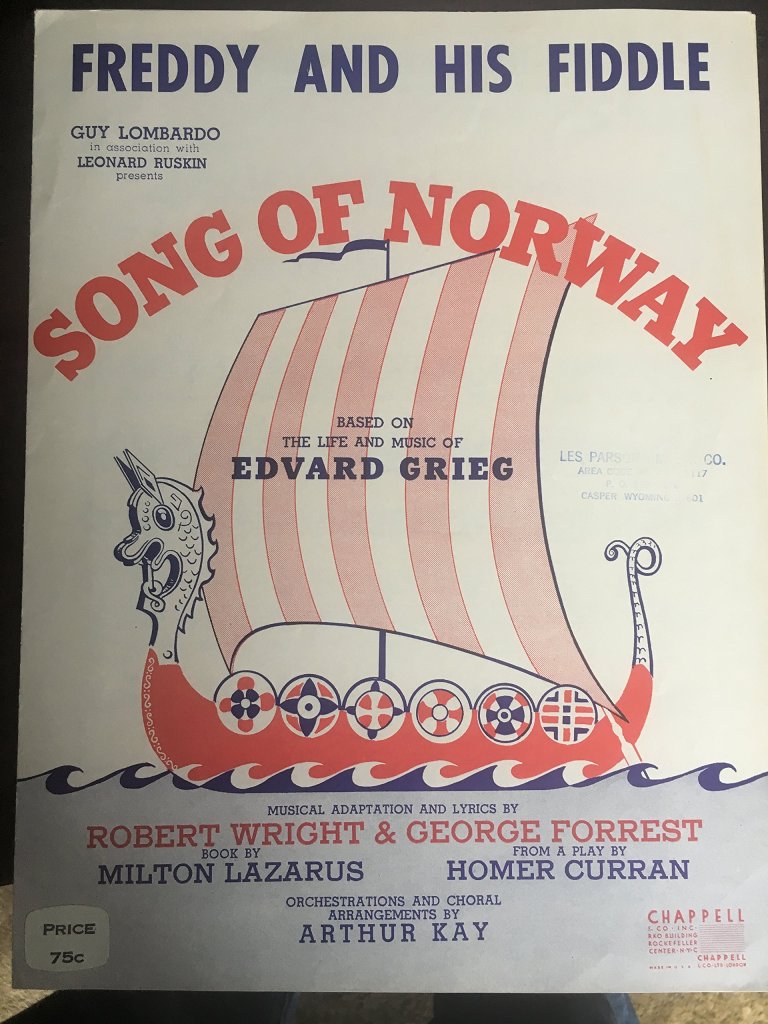
Click or tap on the next image or link to hear the song “Freddie and His Fiddle” from that 1940s musical homage to the great Norwegian composer Edvard Grieg.  Listen carefully to the playful, folksy lyrics to pick up the appropriate reference!

Let’s wind up this musing with a bit of ukulele “Cat” music (No cats were harmed or otherwise misused in the preparation of this video!) from our fellow strummers, the Ukulele Orchestra of Great Britain. Click or tap on the next image or link for a look and listen and laugh!

And now, gentle readers, let us return to our at-home, sequestered strumming sessions—complete, I’m sure, with safe and happy musical kittens. 

So stay safe, stay masked,

stay musically gutsy, and STAY TUNED!

UKULELE MUSINGS, 16 October 2021: “Sweetness; How Sweet it is!”

Well, fellow strummers,  it seems with the fine fall weather we’ve been having (amid the many raindrops, however) I’ve found time to do another one of my musical musings. 

Looking at the calendar, who knew that mid-October is the time for “National Sweetness Day.” 

In the olden days—when I was a bit younger than now, this was known as “National Candy Day” and bits of candy were to be handed out to friends and family as a token of thoughtfulness and friendship.  Like so much these days, this celebration has evolved with the intent of handing out bits of kindness to friends, family, and—for that matter—to all!  What’s not to like?

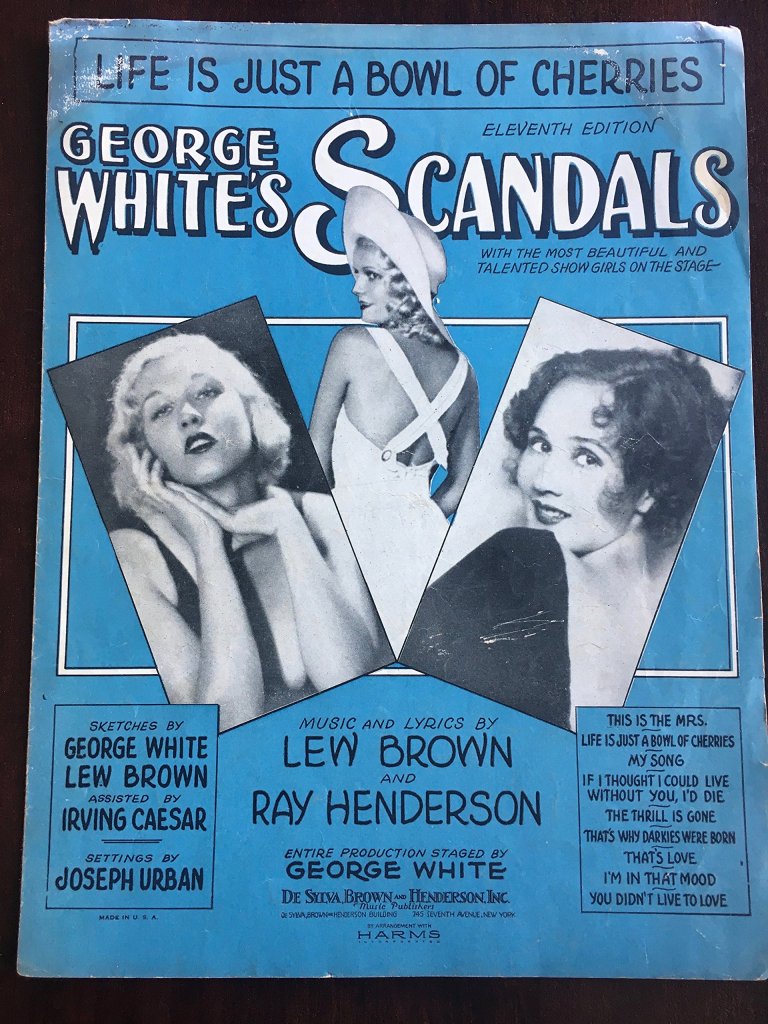
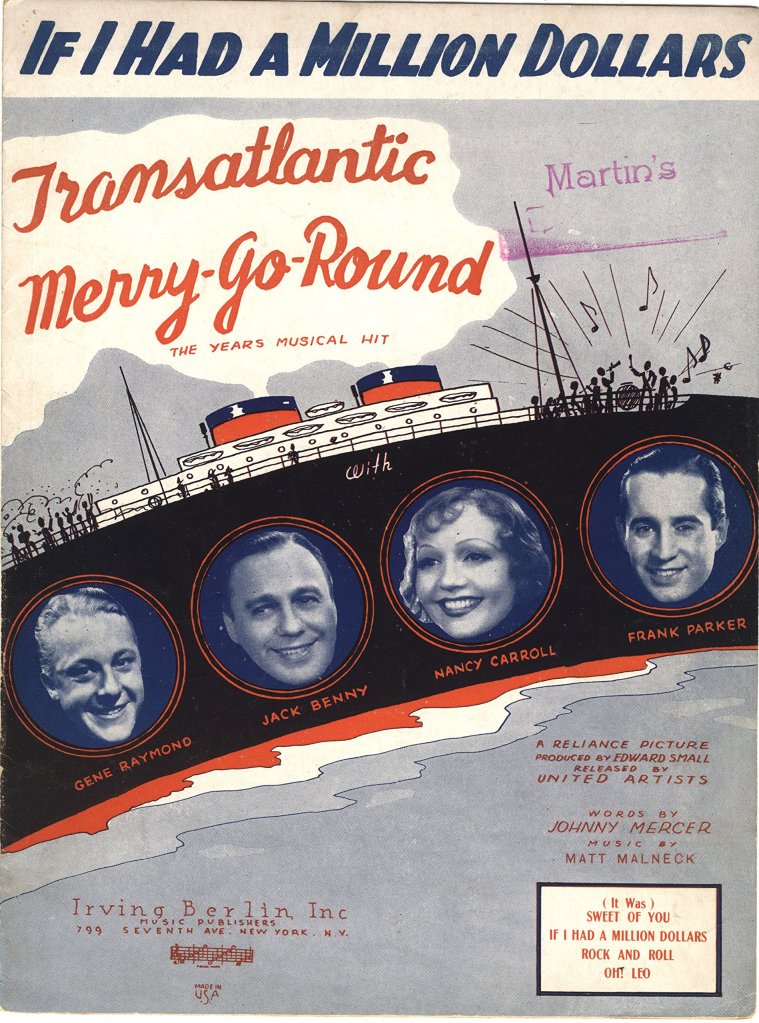
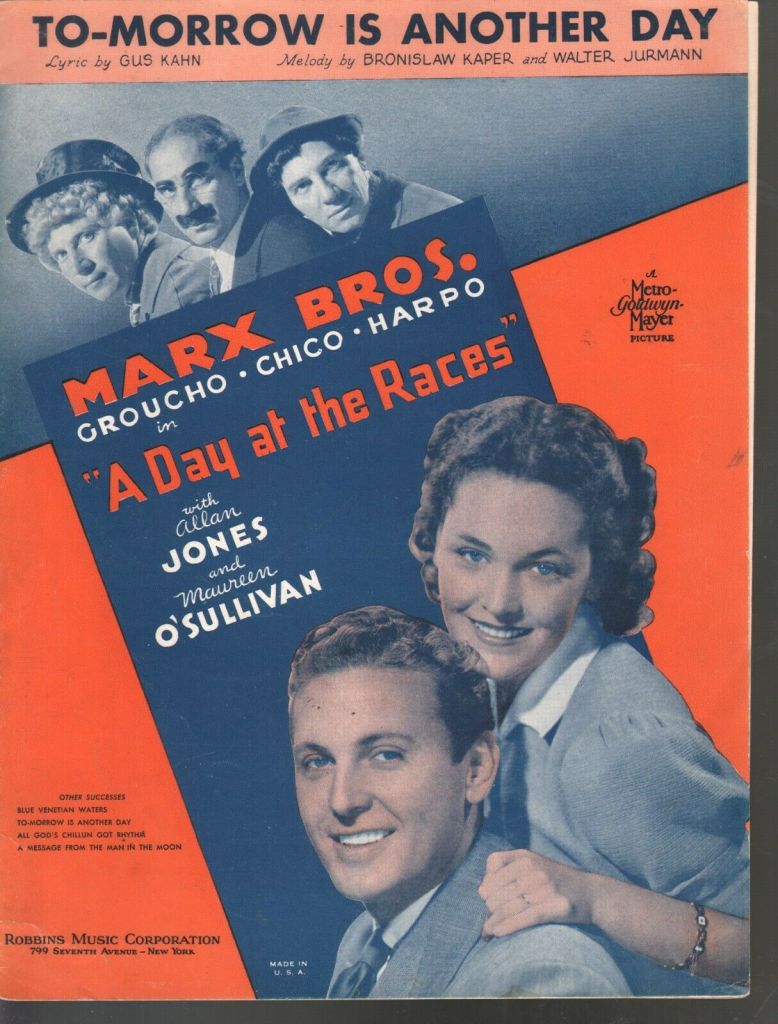
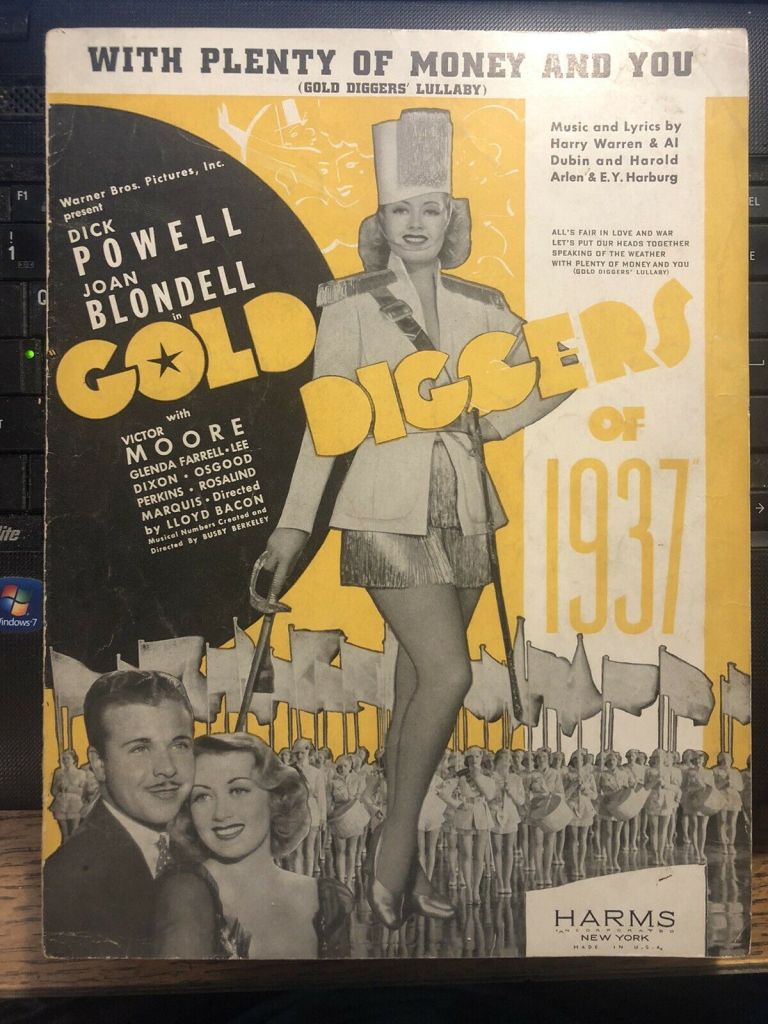
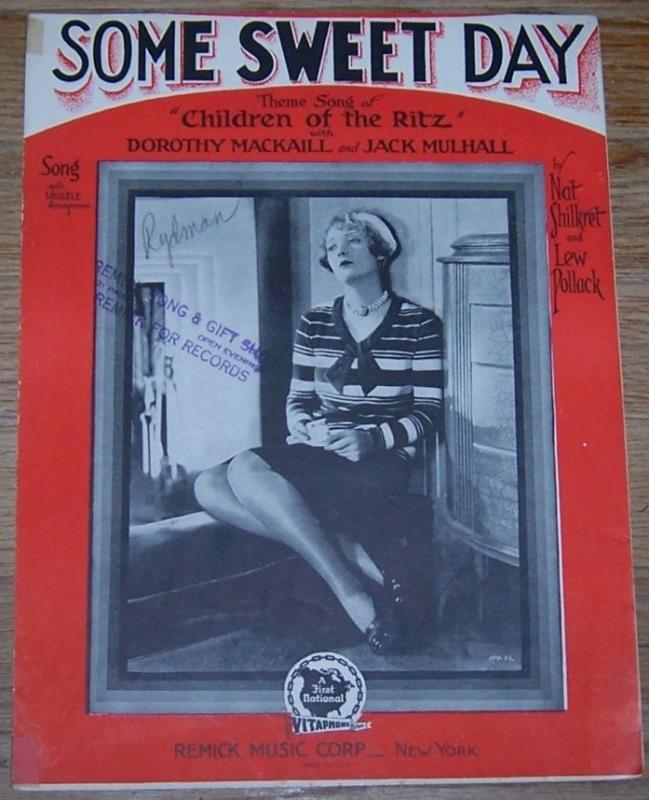
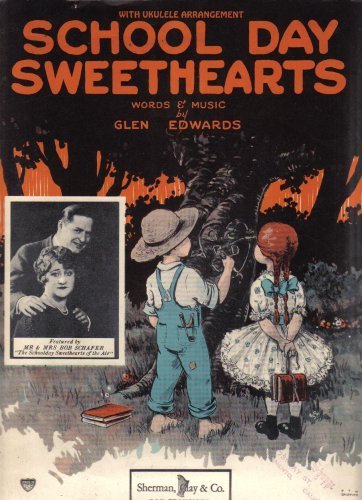
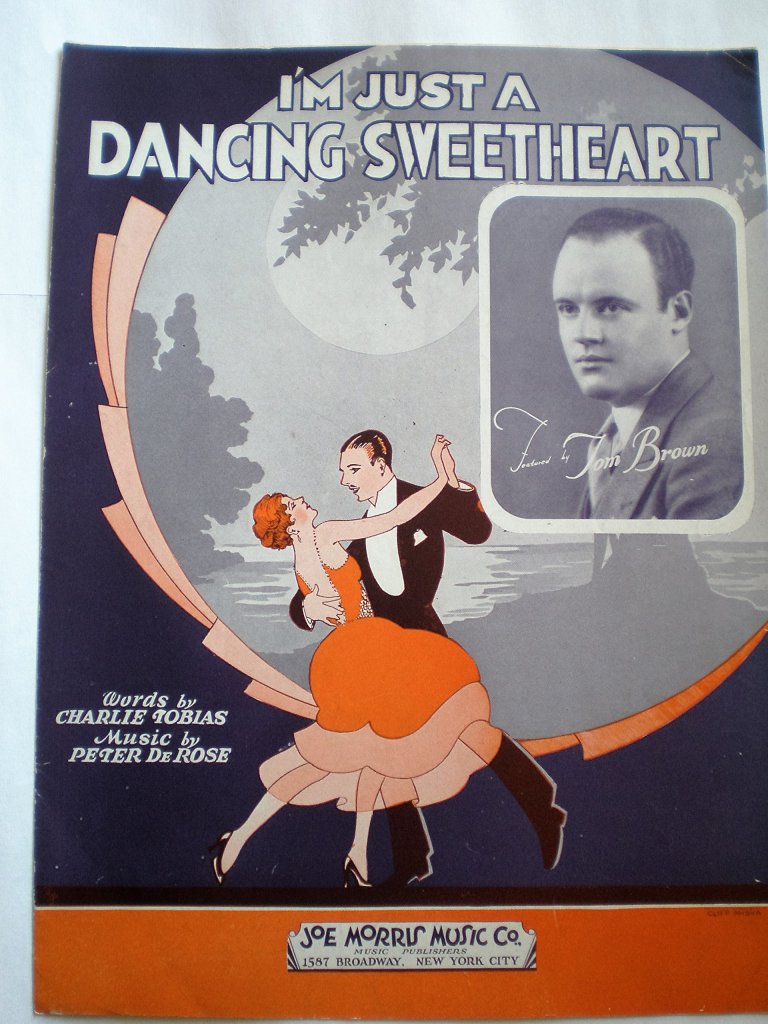
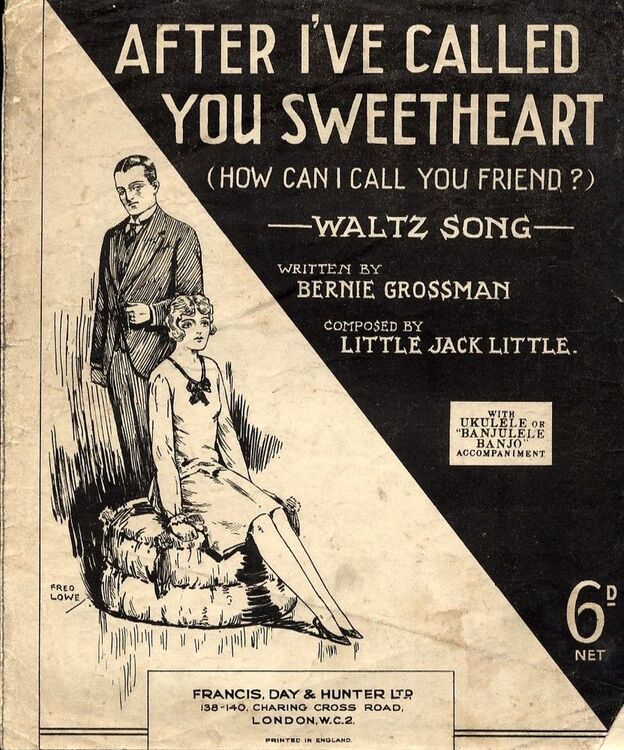
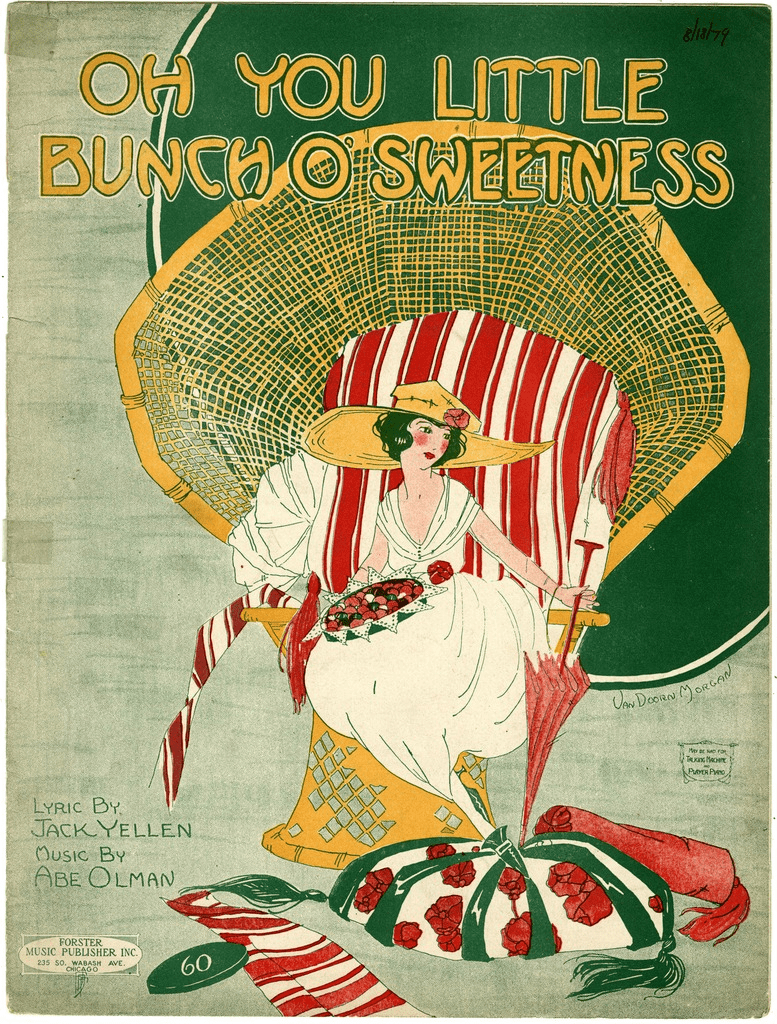
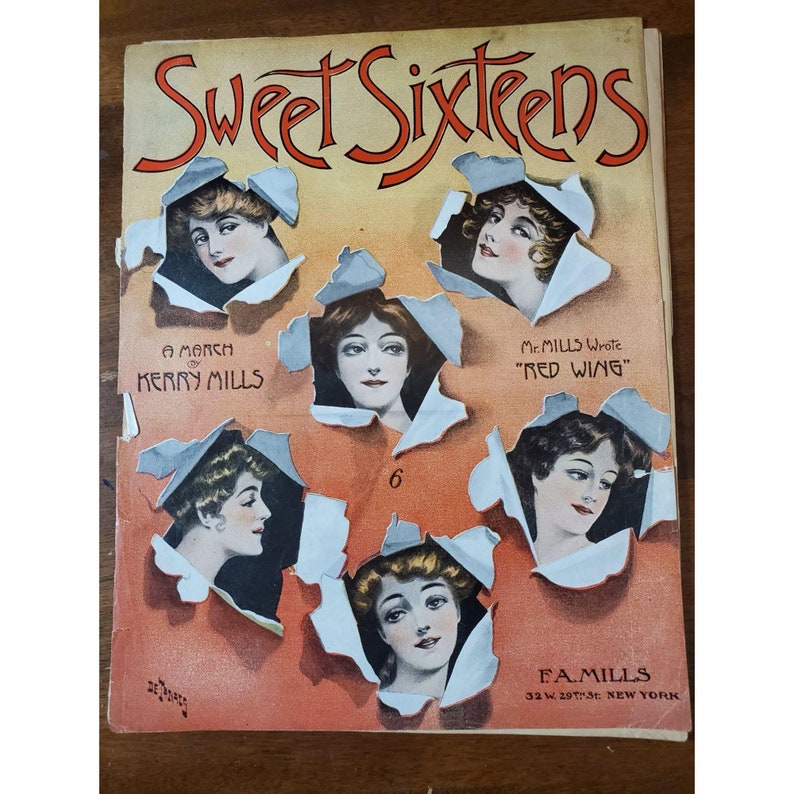
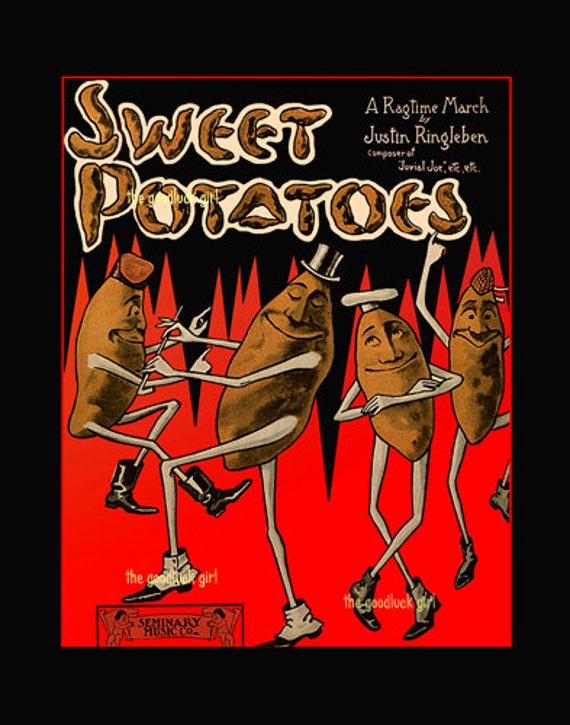
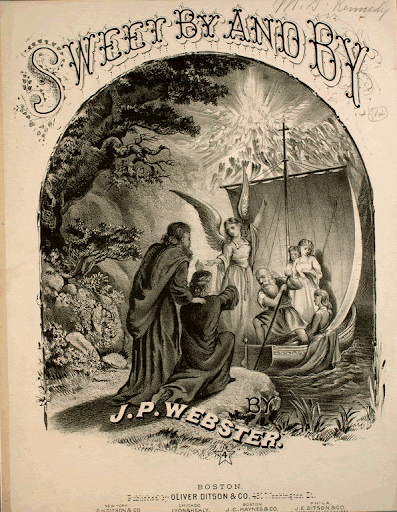
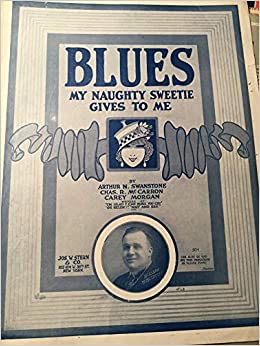
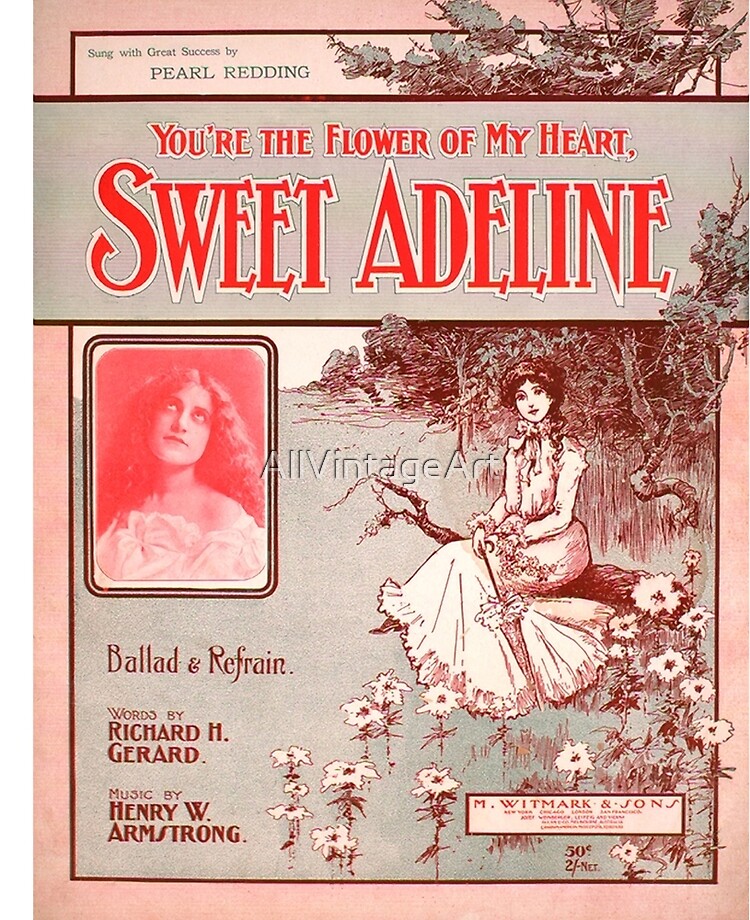
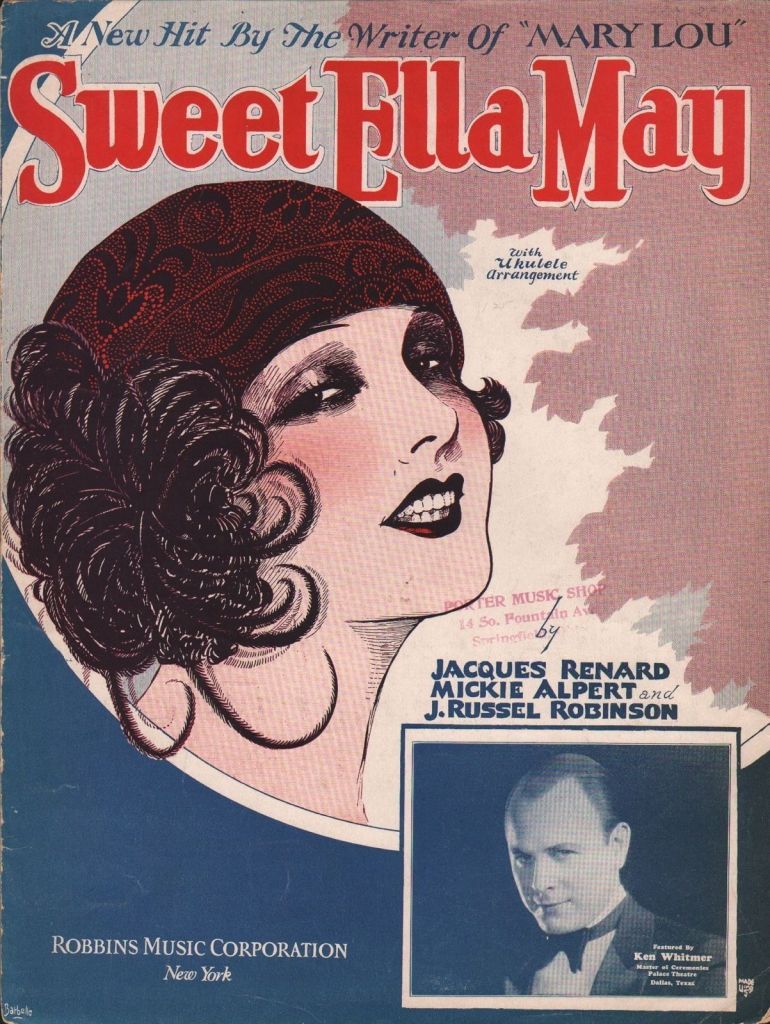
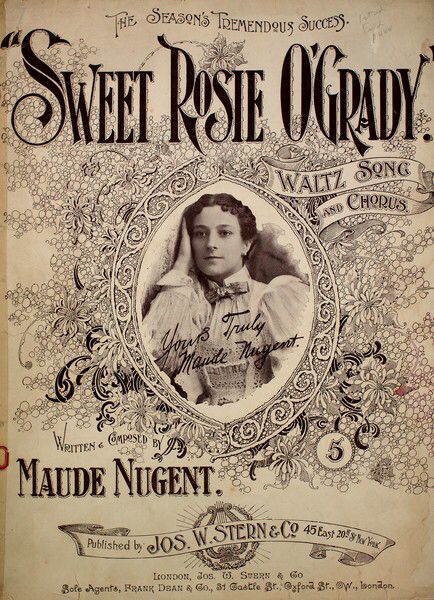
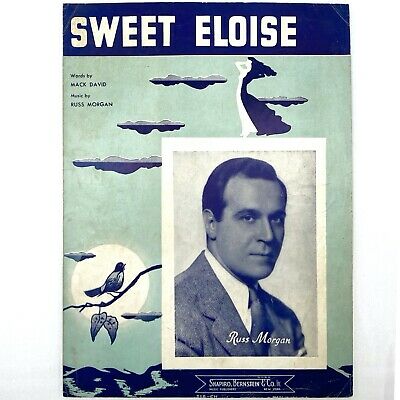
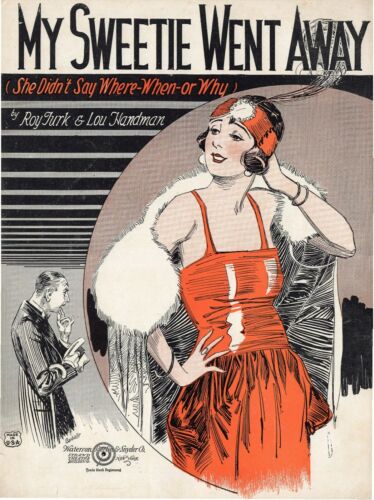
Needless to say, there are reams of sheet music touching on the “Sweetness” theme. Here are just a few of the more noteworthy–graphically if not musically speaking!

So, in keeping with the theme of this musing, I searched through our Blue and Yellow Books and found over a dozen songs with the word “sweet” or some derivative thereof in the title.  Who knew?  Anyway, with my penchant to avoid songs written more recently than the 1950s, I was surprised by the several that fit into my “oldie” category.  As you gentle readers might recall, I have mused over the years about two of the greatest of this genre—“Ain’t She Sweet,”

and “Sweet Georgia Brown.” 

If you want to re-read my thoughts on these two gems, just hit the link https://www.nohobanjoandukulele.blog and search through the entries until these two tunes show up—worth a visit if I do say so myself.

Just for a bit of fun, however, click or tap on the next link or image for a listen to a much, much newer—and with a ukulele, no less, version of this musical chestnut, “Ain’t She Sweet.” 

Let’s move a few decades back with a Blue Book favorite, “Kisses Sweeter Than Wine,” a song with lyrics written in 1950 by Pete Seeger and Lee Hays of the folk group, “The Weavers.”  Their tune was adapted from Huddie “Lead Belly” Ledbetter’s 1937 song “If it Wasn’t for Dicky,” which, in turn, was adapted from a traditional Irish tune “Drimindown / Drumion Dubh.” Who knows where the Irish got that one!

Here’s the “Lead Belly” tune.  Click or tap on the next link or image for a listen:  

  Now, click or tap on the next image for the Weaver’s revamp.

Now, for the sake of thematic purging and to stay in a lighter mood, let’s let the late 19th century, maudlin, death-bed, Sunday School staple from our Yellow Book, “In the Sweet By and By” go unsung. OK?

But, let’s move quickly on to a “Capital-C” Chestnut, also from our Yellow Book, “Let Me Call You Sweetheart.” Every barbershop quartet worth their pitch pipe sings this one so we should really give it a go.

Click or tap on the next image or link for a nostalgic listen to this 1910 oldie by Beth Whitson and Leo Friedman.  To attest to the long-lived popularity of this one, it has been used in hundreds of vaudeville reviews and over twenty movies or TV shows over the years ranging from The Waltons to Downton Abby!

 After that trip way, way down memory lane, let’s move on to a much more sprightly song from our Blue Book, the 1919 torchy “Blues My Naughty Sweetie Gives to Me.” 

This jazz standard was written by Tin Pan Alley regulars Charles Mc Carron and Cary Morgan and has become a Dixieland favorite.  Click or tap on the next image or link to hear this oldie but goodie!

As would be expected, the adjective “sweet” was used to modify girl’s names in dozens and dozens of songs from “Sweet Adeline” to “Sweet Caroline.” 

We’ll forgo the 1959 Fenway favorite of our Blue Books, “Sweet Caroline,” in favor of the ultimate barbershop quartet standard that is not found in either Blue or Yellow.   Go figure!  Anyway, click or tap on the next image or link for a one-man “quartet” version of this oldie!

And—why not?—a ukulele version.  Click or tap on the next image or link for a listen.   

I could go on and on with so-called “sweet, sweetie, and sweetness” songs and, if you have the time and are so inclined, here are a few more YouTubes just for fun;

Click or tap on the next image or link to hear Bessie Smith’s bluesy, torchy version of “My Sweetie Went Away.

And, for a bit of musical craziness, click or tap on the next image or link for a wild and wooly western take on “Sweet Little Buttercup.”

Now, let’s wind up this musing with one or our favorite Blue Book songs, “Roll in My Sweet Baby’s Arms,” an American traditional song developed from the cowboy song “My Lula Gal” which, in turn, is based on a bawdy British and Appalachian song known as “Bang Bang Rosie” or “Bang Away Lulu.”  Tap or click on the next image or link for a real downhome bluegrass version of “Lula . . .”

Of Course, the ultimate bluegrass version of “Roll In My Sweet Baby’s Arms” is, beyond a doubt, that by Earl Scruggs and Lester Flat from 1951.  Click or tap on the next image or link to be blown away with some lightning-fast finger picking.

 
And how about a ukulele version of this one!  Click or tap on the next image or link for a look.

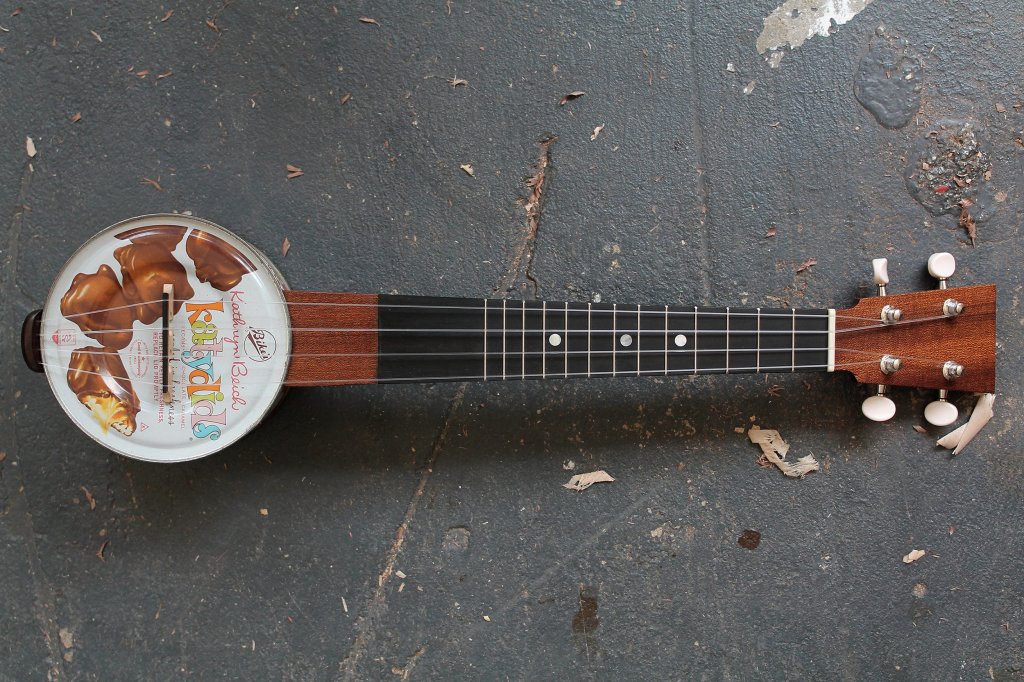
I would be remiss if I didn’t show a thematically appropriate ukulele from my collection   .  .  .

As well as another.

And, despite the vagaries of the times, stay as sweet as you are!

and—above all—STAY TUNED!  

And be safe with and for you and yours!